
Overview & First Impressions
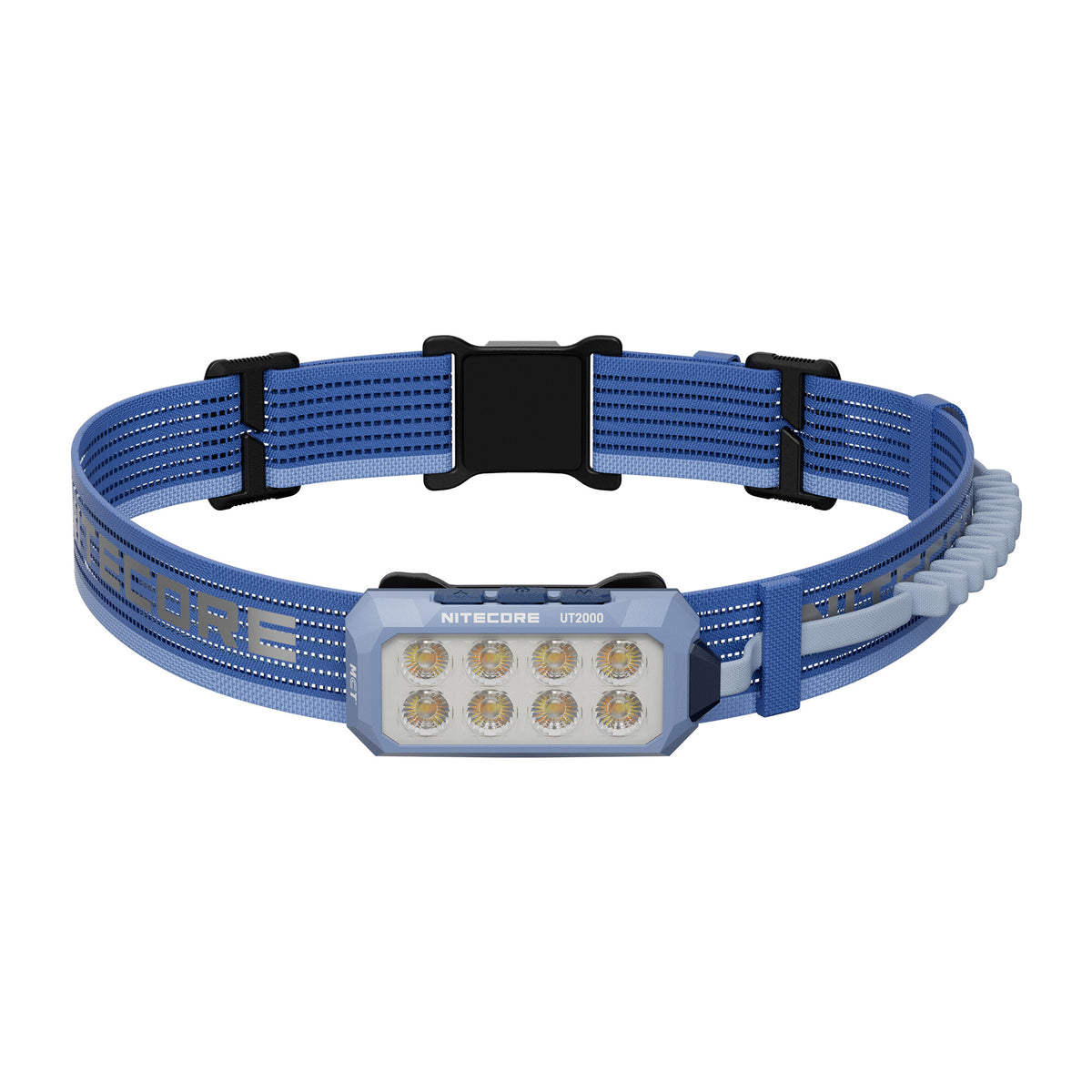
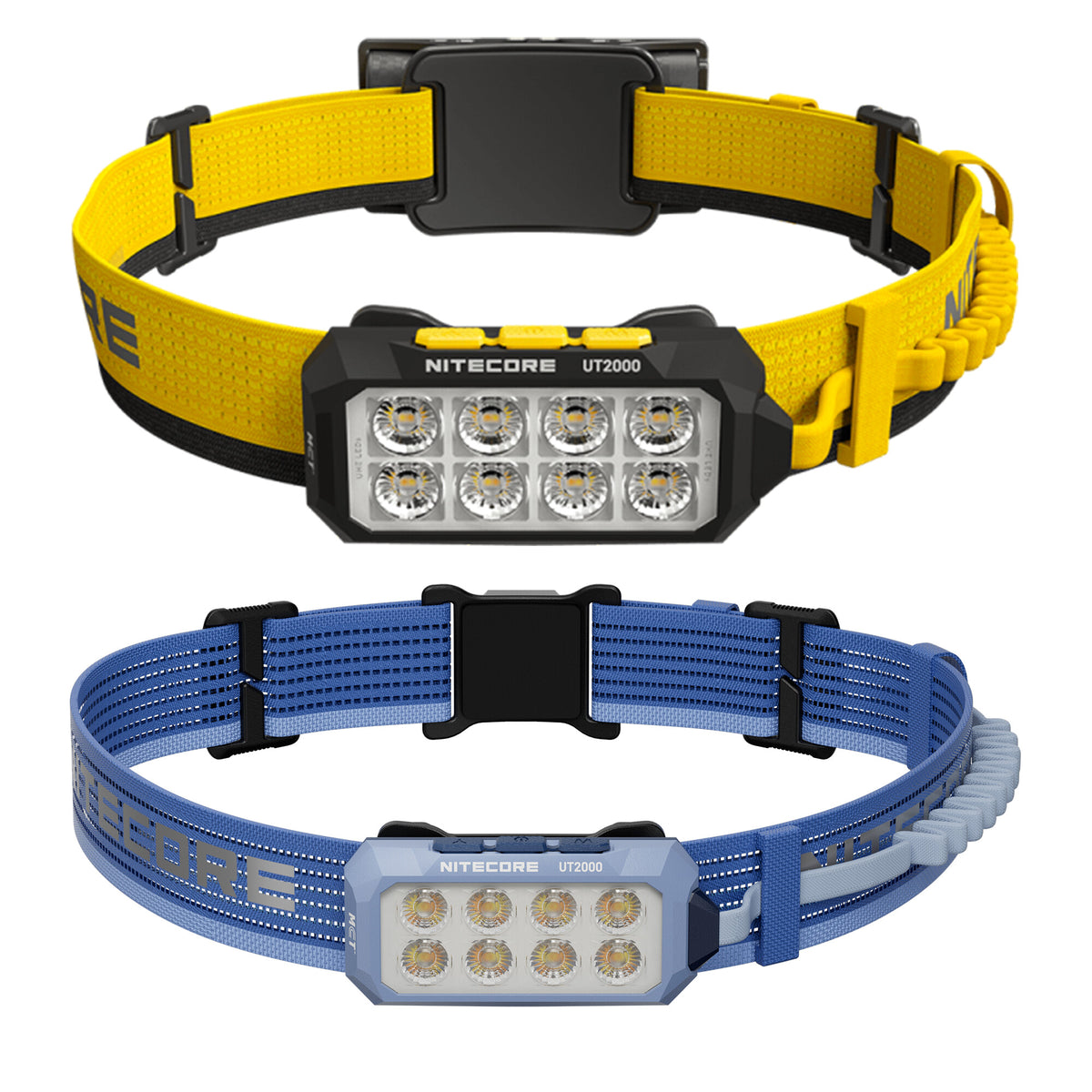
Two colours, one platform: the UT2000 Blue and the UT2000 Black are the same 2000-lumen split-style headlamp in different shells, so the choice between them is about visibility and vanity rather than performance. Both run Nitecore's MCT system, which shifts between 3000K warm, 4500K neutral and 6500K cool white, and both throw 240 yards on turbo. Nitecore flashlights have never chased the smallest possible body, and this lamp proves the point: the battery rides at the back of the head, so the front stays light.
Materials & Construction
The head unit weighs 4.3 ounces while the carbon battery pack sits in a cradle behind the skull, connected by a cable that runs along the strap. Splitting the mass is the whole trick: a single-block 2000-lumen lamp flops forward on descents, while this one stays put because the counterweight does the work. The strap is wide, silicone-backed and adjustable in two places, and the lamp head tilts through a detent range that holds position on rough ground. A rear red safety light rounds out a design built around a race vest rather than a campsite.

Design & Details
Three dedicated buttons handle colour temperature, output and the red rear light, so you never cycle through a menu at speed. Warm light cuts through fog and rain, neutral is the default for mixed terrain, and cool white gives the most contrast on rock. Turbo is momentary on a tap. The rear light can be set to steady or flash, which matters on a road section at four in the morning. A lockout prevents the lamp from waking inside a pack, and the battery charges over USB-C without being removed.
Real-World Use
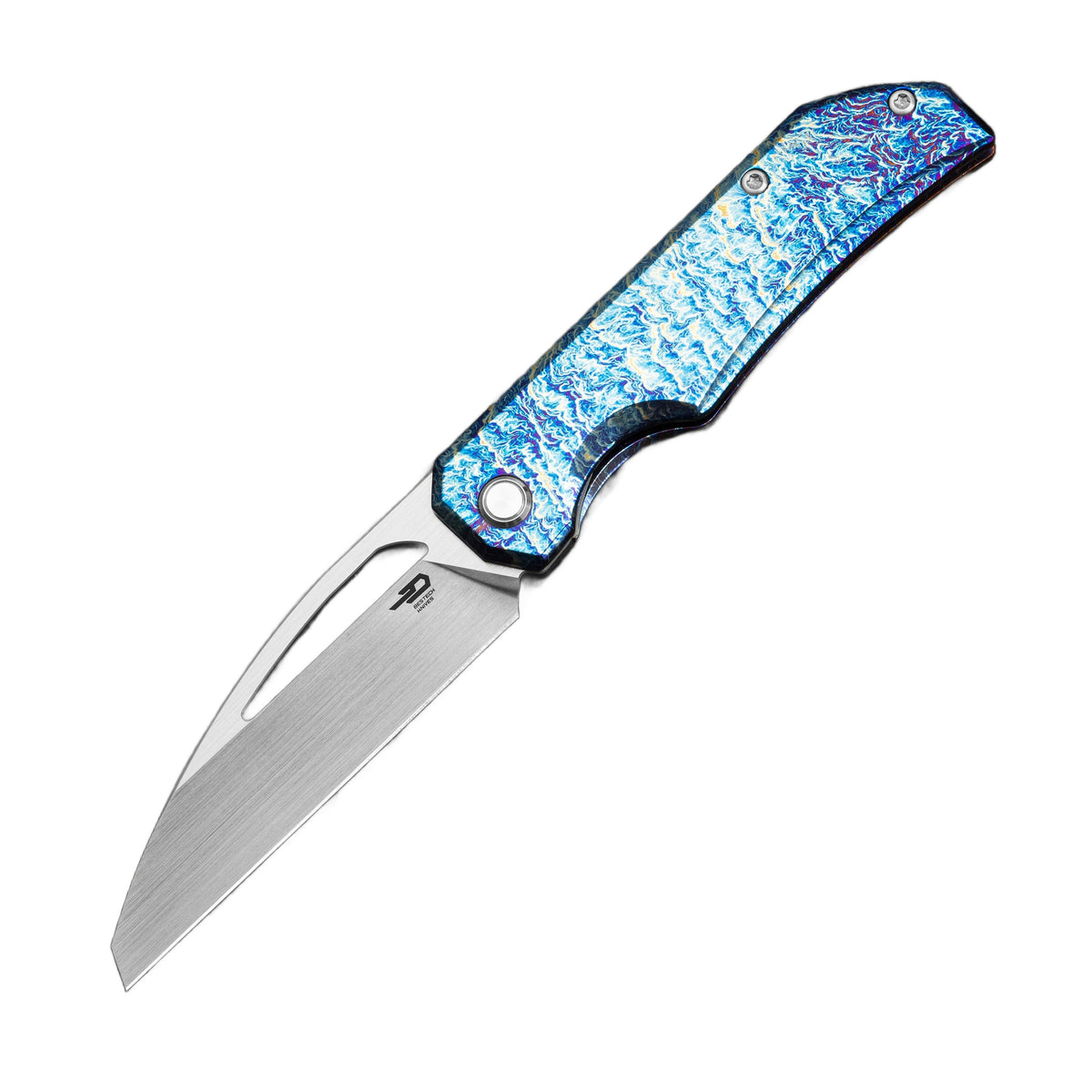
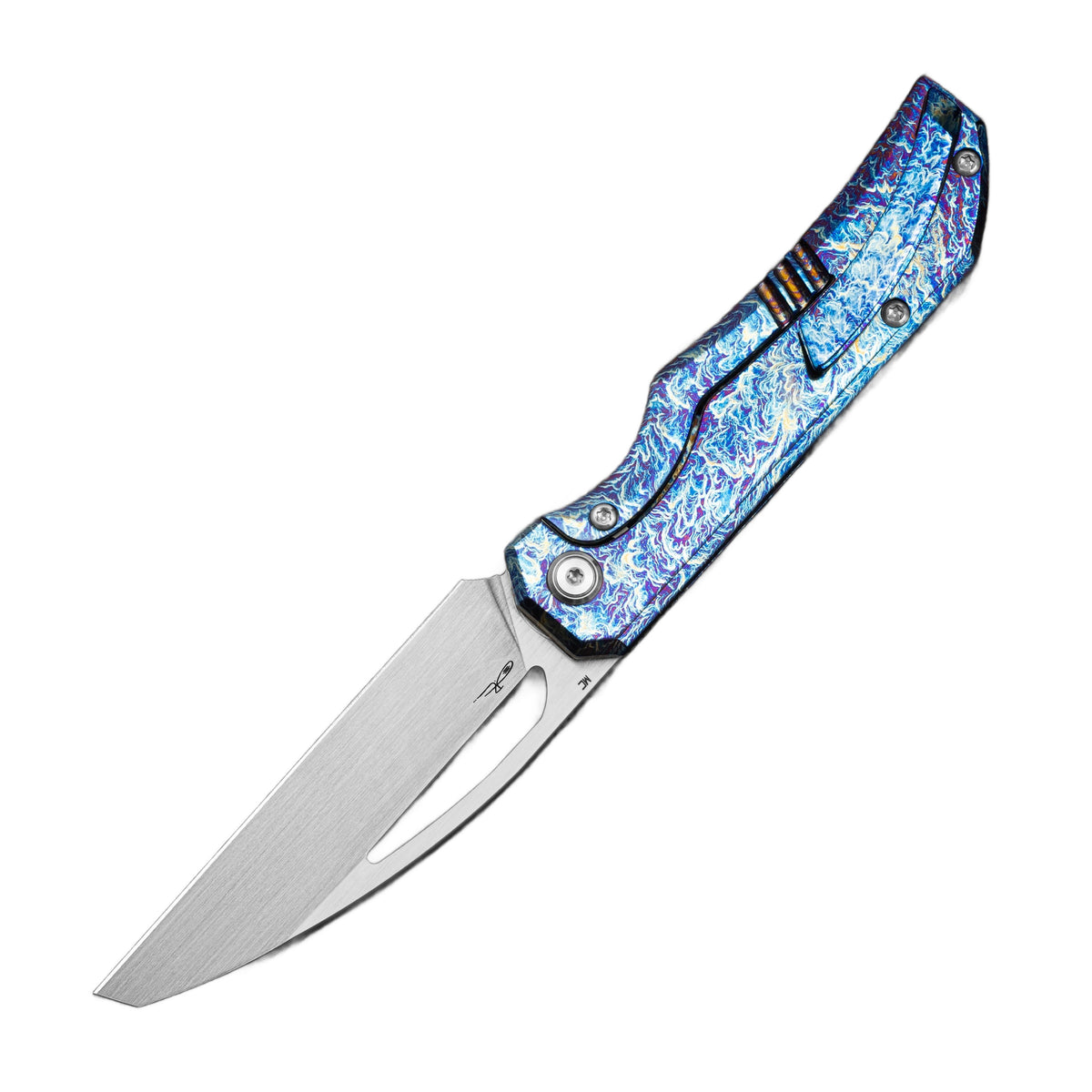
On a night trail the neutral setting is the honest default: it renders roots and wet rock in their real colours instead of washing them grey. Cool white is better for reading a map and worse for depth perception, and warm is the pick in rain. The beam is wide with a soft centre, so you see the next two steps rather than a tunnel three metres ahead. Runners who also carry folding knives in a vest will find the lamp balanced enough to forget, and the 240-yard reach is enough for a night descent.

Ownership Notes
Battery life depends entirely on discipline. Turbo is a burst mode, high is a timed compromise, and the middle settings will carry most people through a fifty-mile night. Charge the pack after every long run and store it at half capacity, because lithium cells dislike being parked full. The cable entry is the one weak point on any split design, so pack the lamp head separately rather than stuffing it into a shoe bag. Clip-on lanyard beads are not part of the design, and the strap does not need them. For anyone assembling a night kit, the honest advice is to buy the lamp first and the EDC flashlight second, because a headlamp frees both hands and a handheld only covers the gap when you need to point at something. EdcMall sells the UT2000 with the battery pack included, and the Blue shell is the one that survives being dropped in leaf litter at three in the morning.
Who Is This For?
Trail runners doing anything over two hours, fastpackers, and hikers who hate a hot lamp pressed against the forehead. It also suits anyone who has been blinded by a cheap headlamp's cool-white tunnel. If you only walk the dog after dinner, a smaller lamp is plenty. For racers who need to see the course at speed, the split layout and the three-button control scheme are worth the extra bulk.
Final Verdict
Choose Blue if you want a lamp that is easy to find in a dark tent, and Black if you would rather it disappear against a pack. Performance is identical, so the decision is colour and nothing else. Both versions ship with the carbon battery pack and a USB-C cable, and both belong beside the best Nitecore flashlights for sustained output. Learn the neutral setting first, then add warm for wet weather.