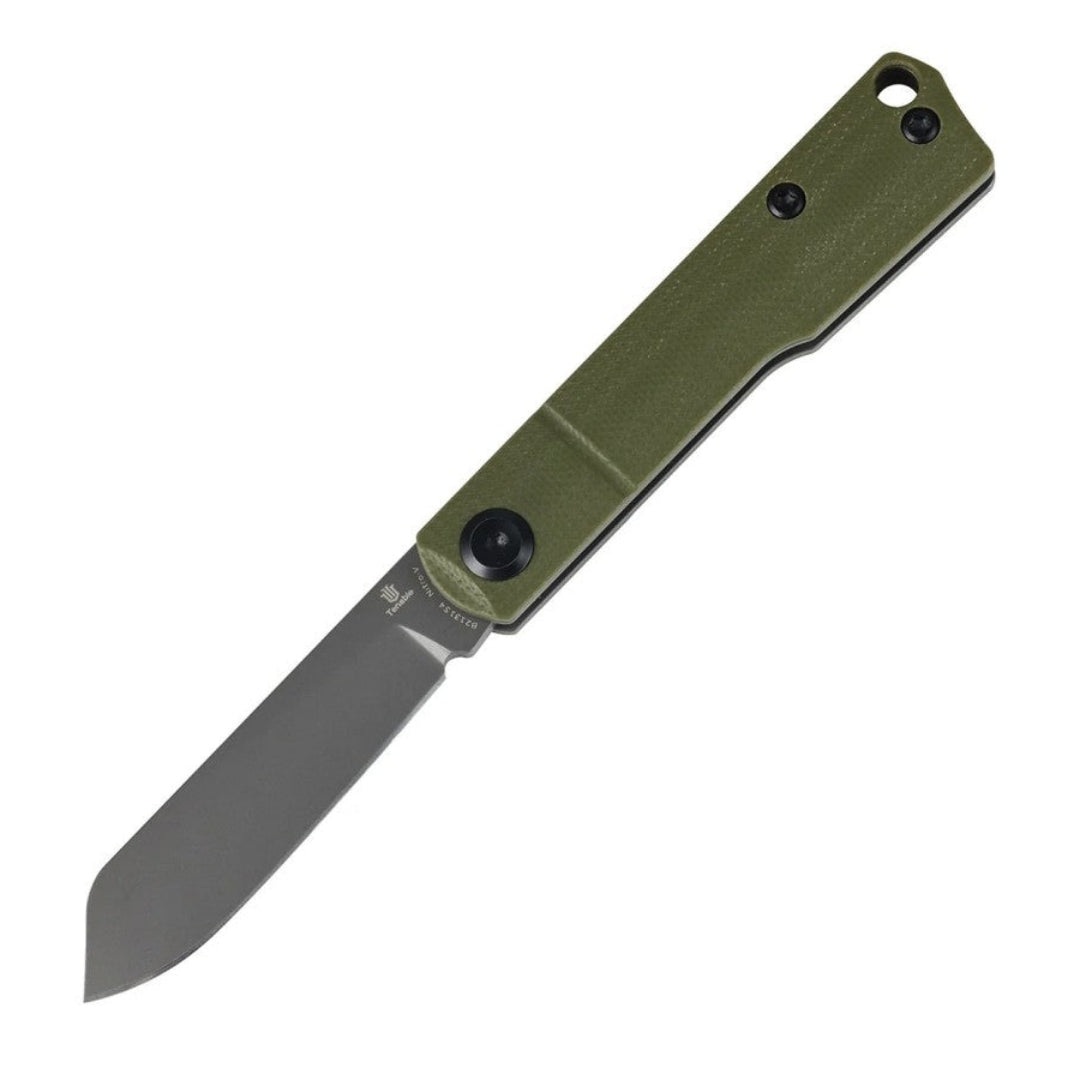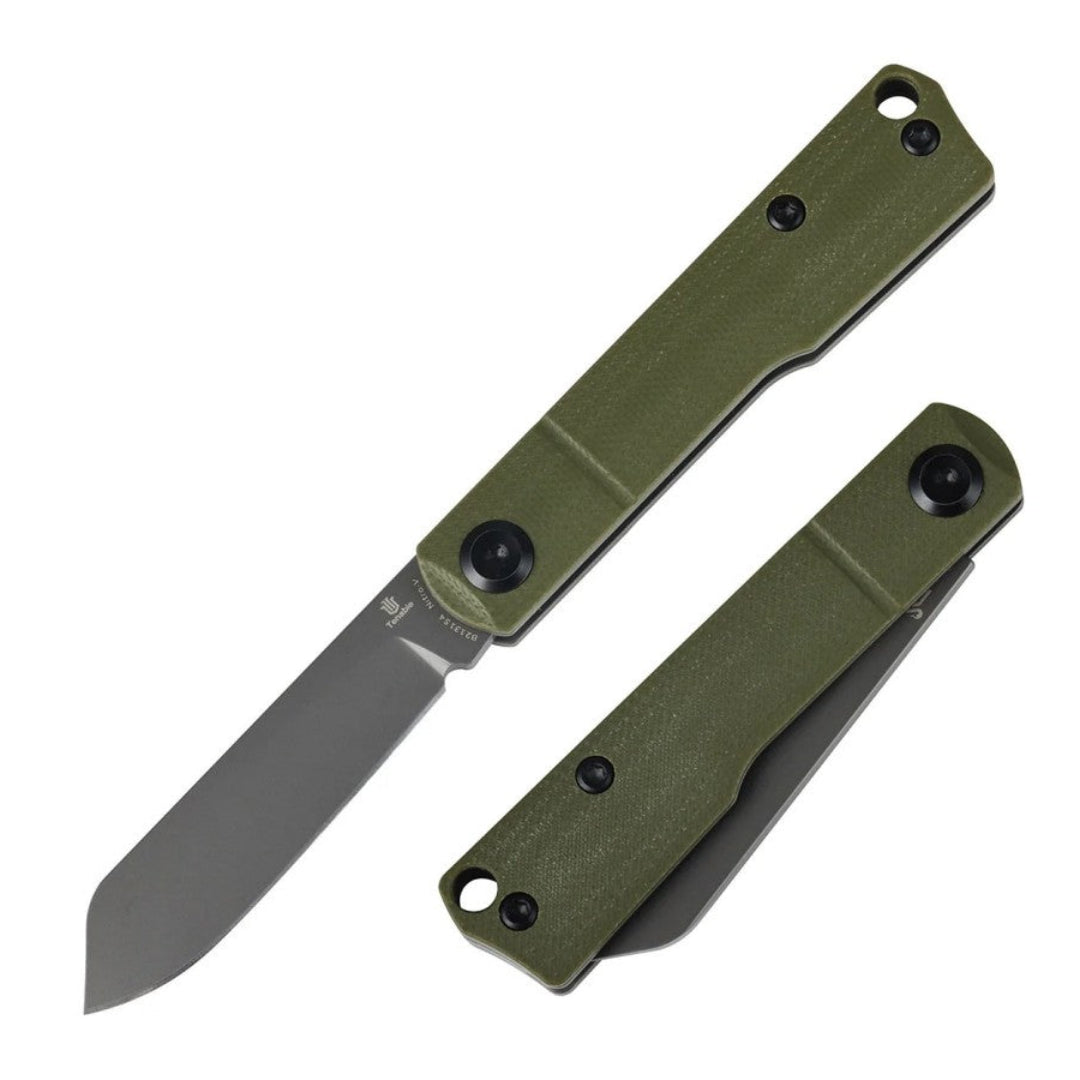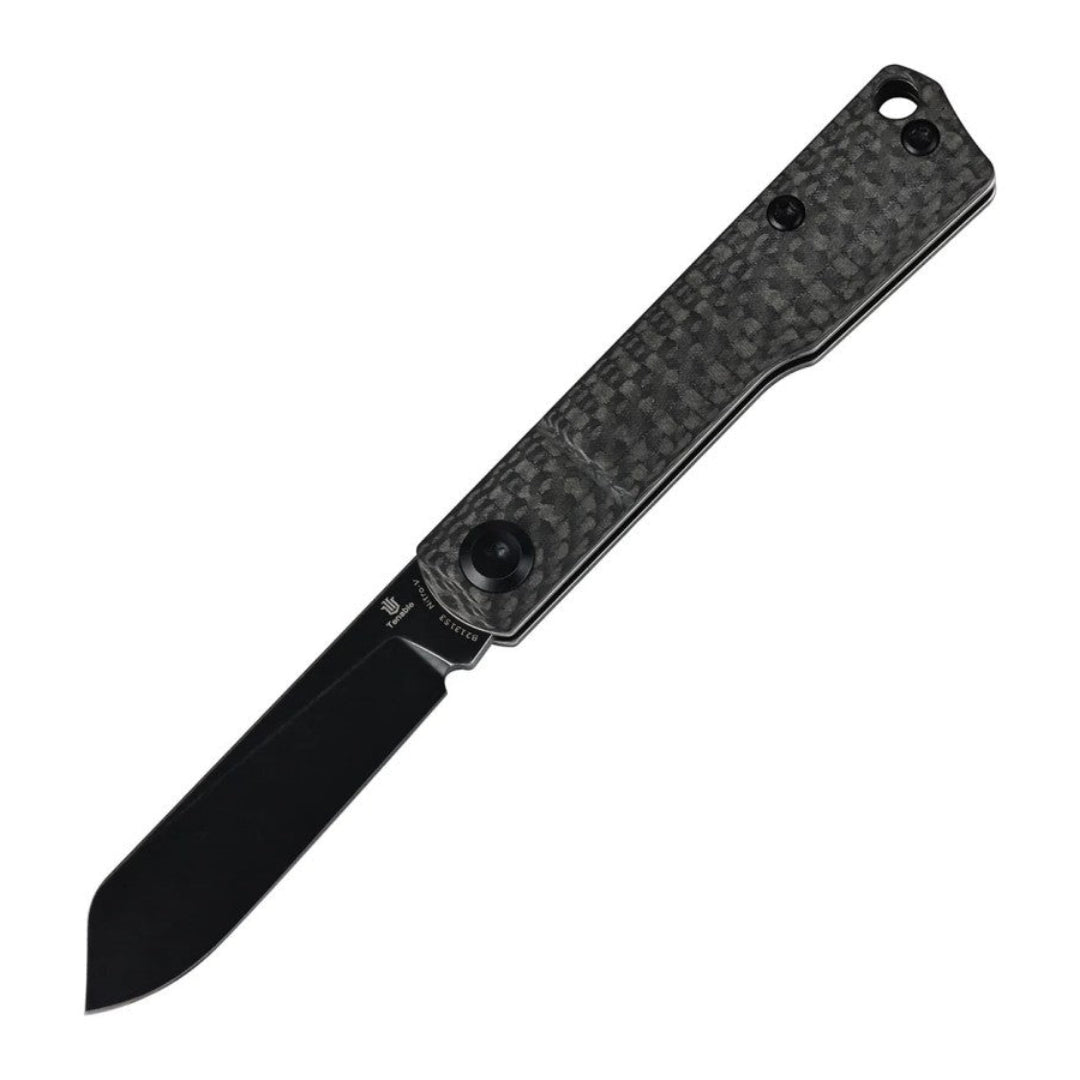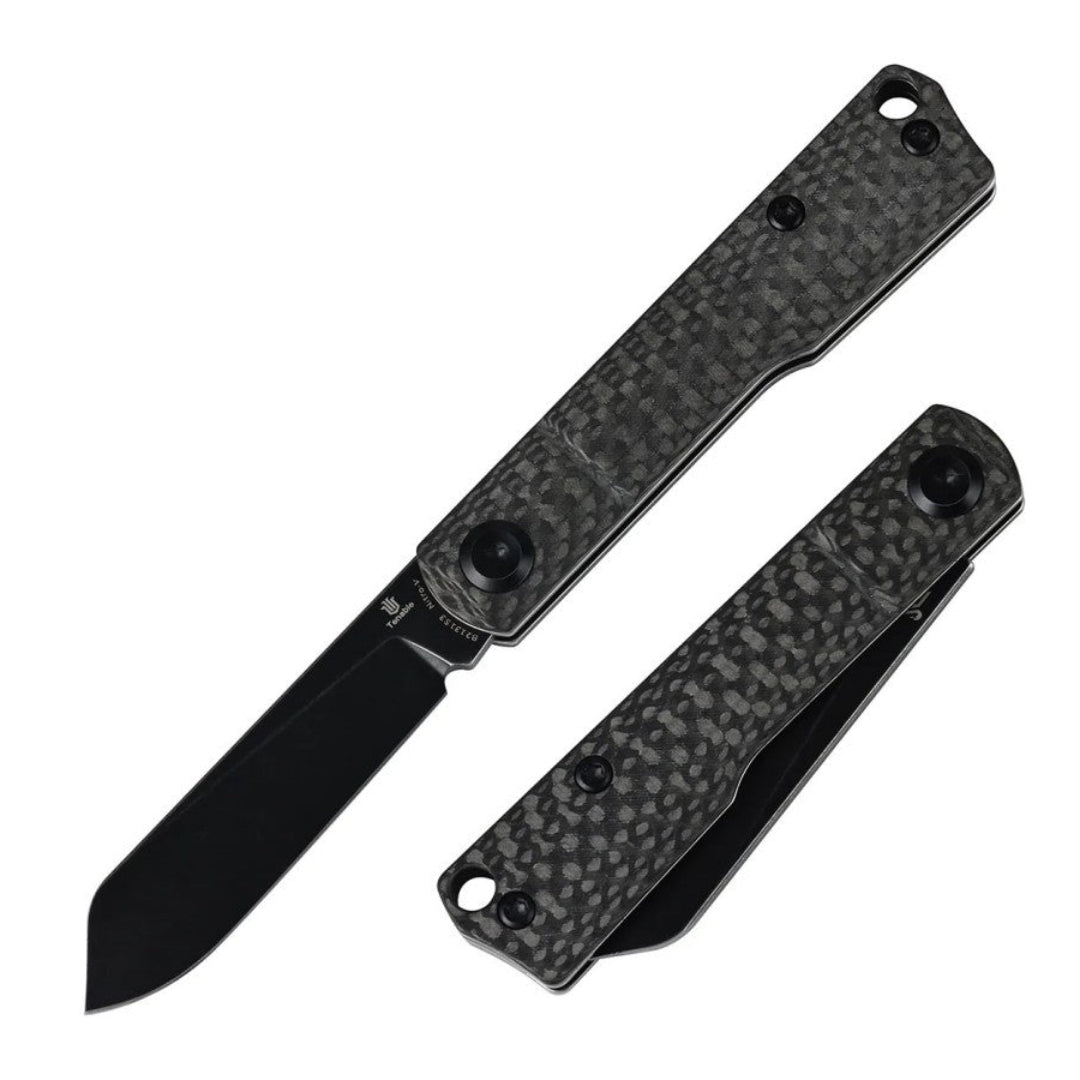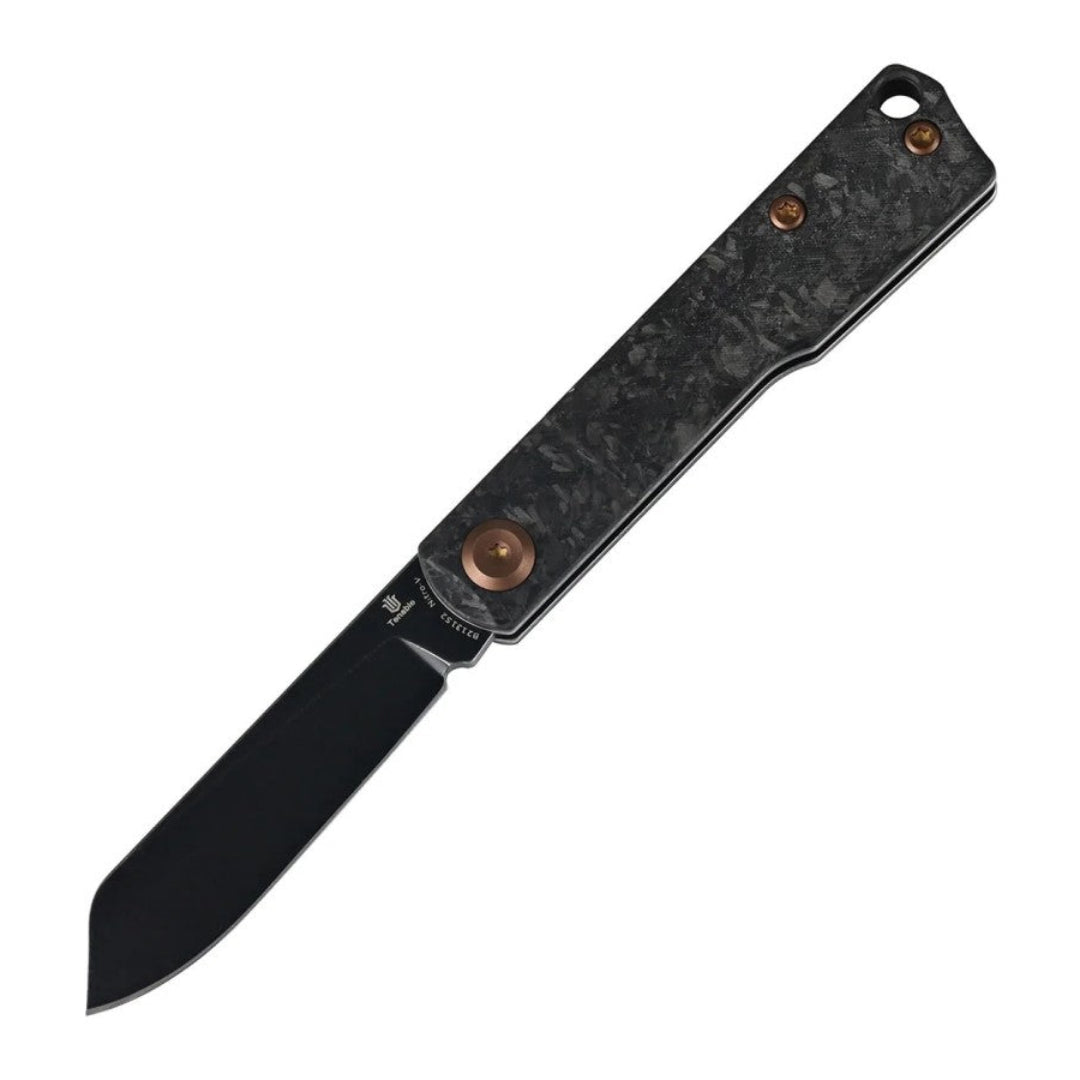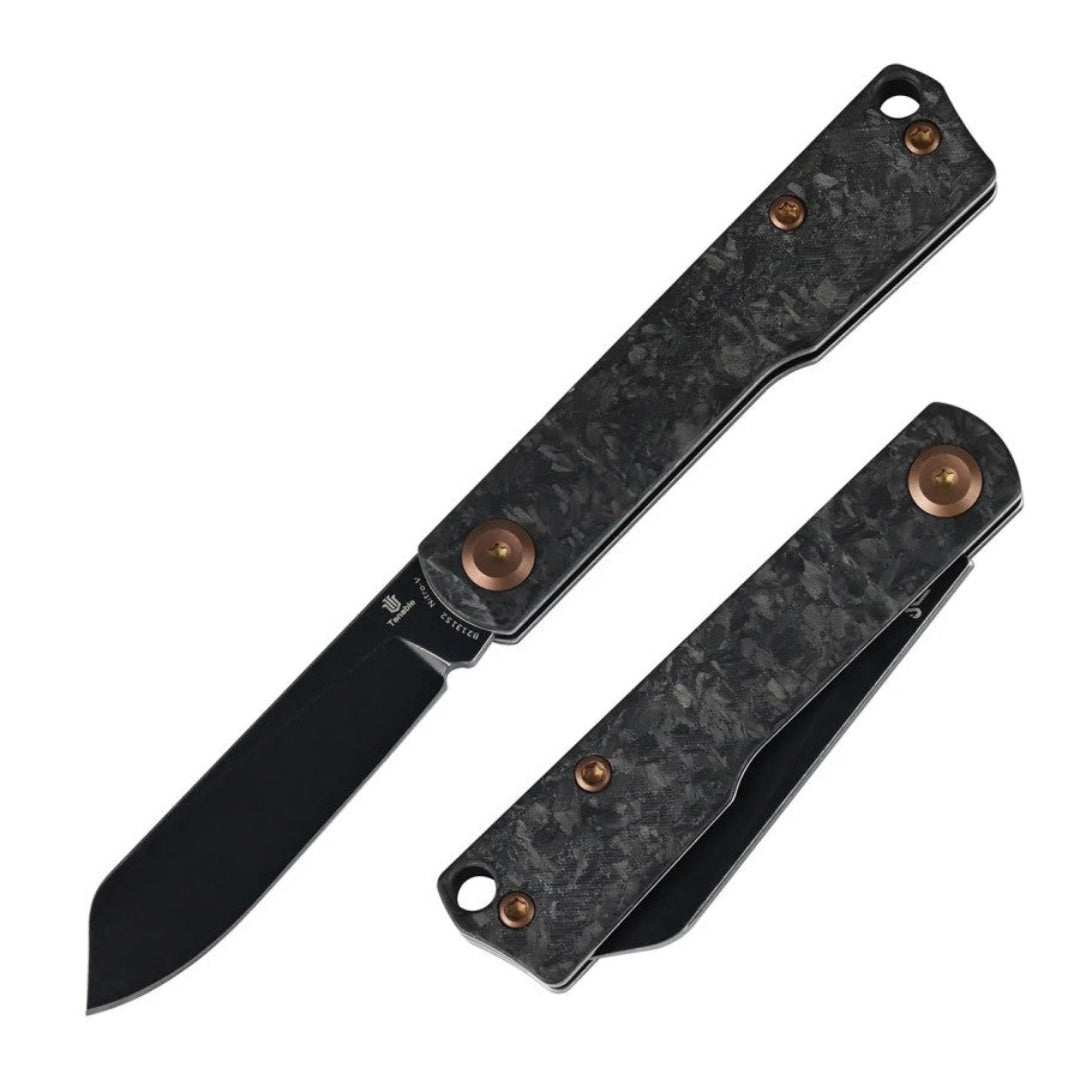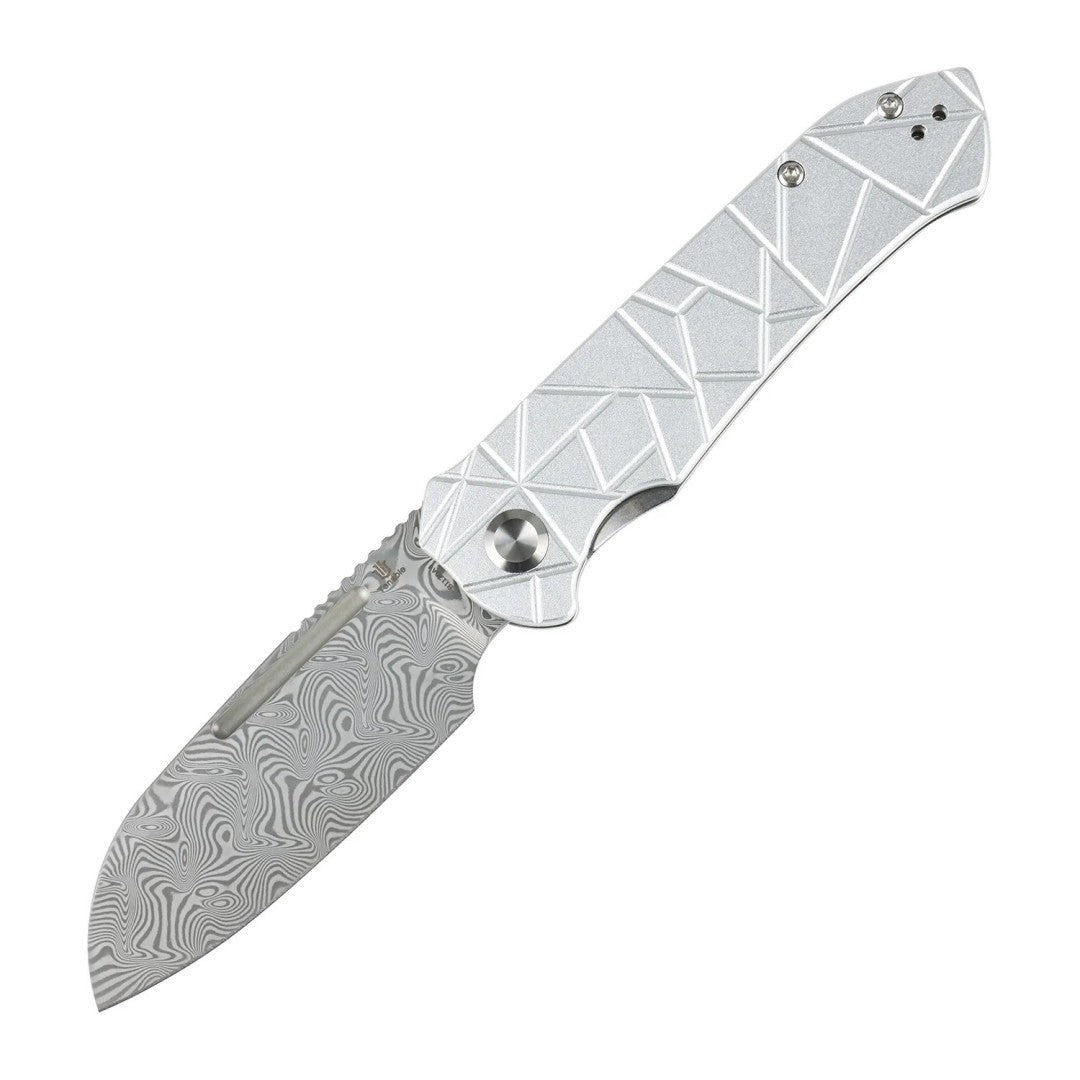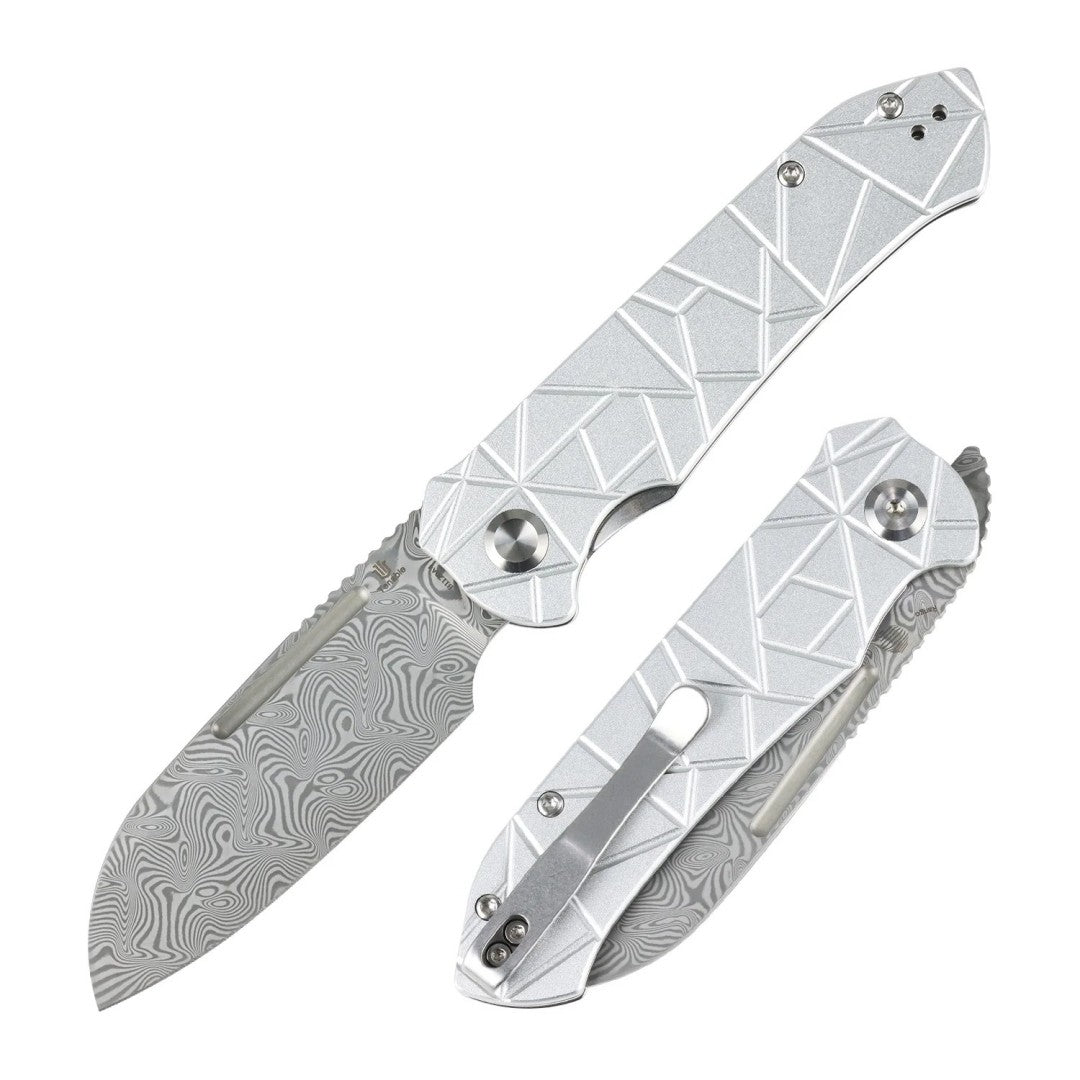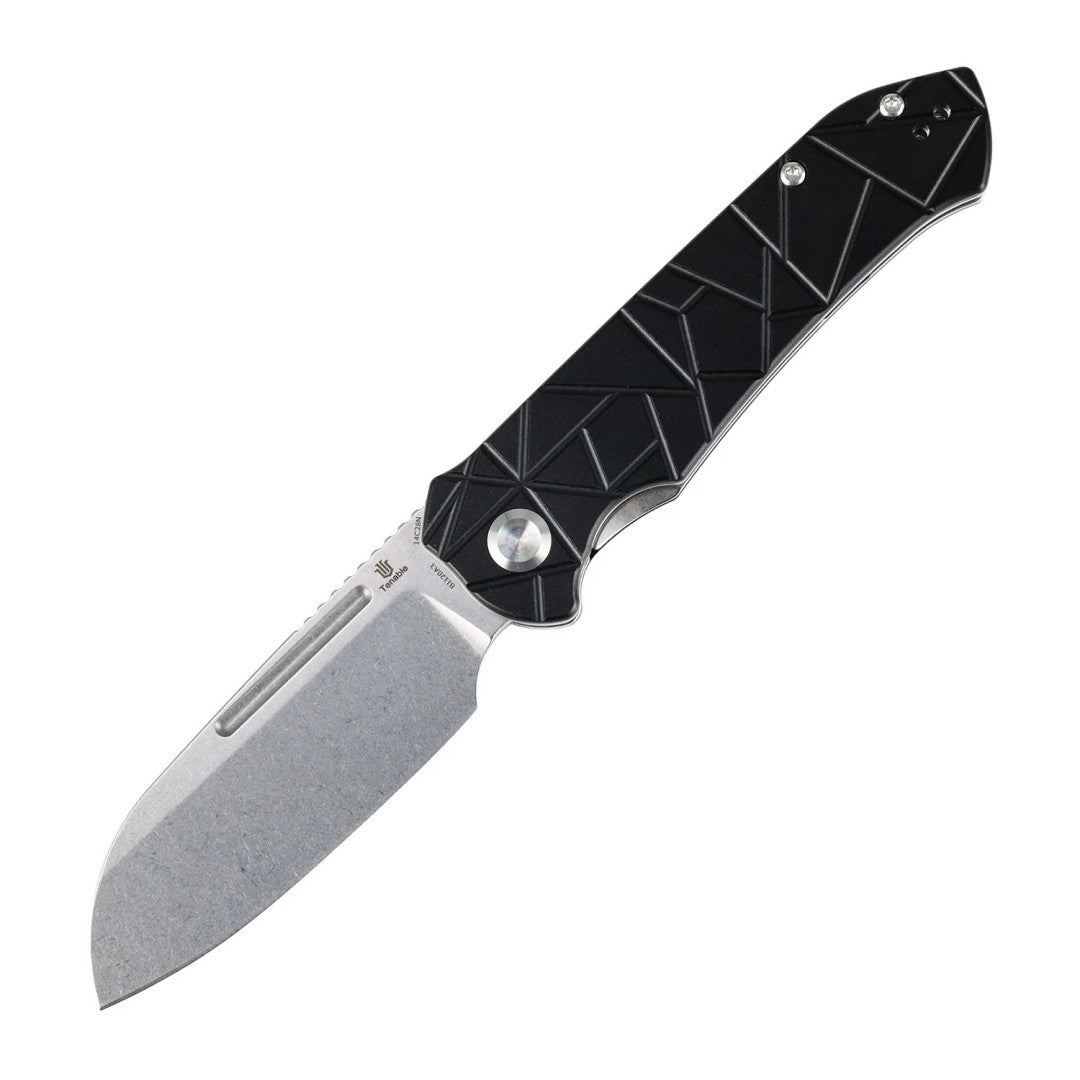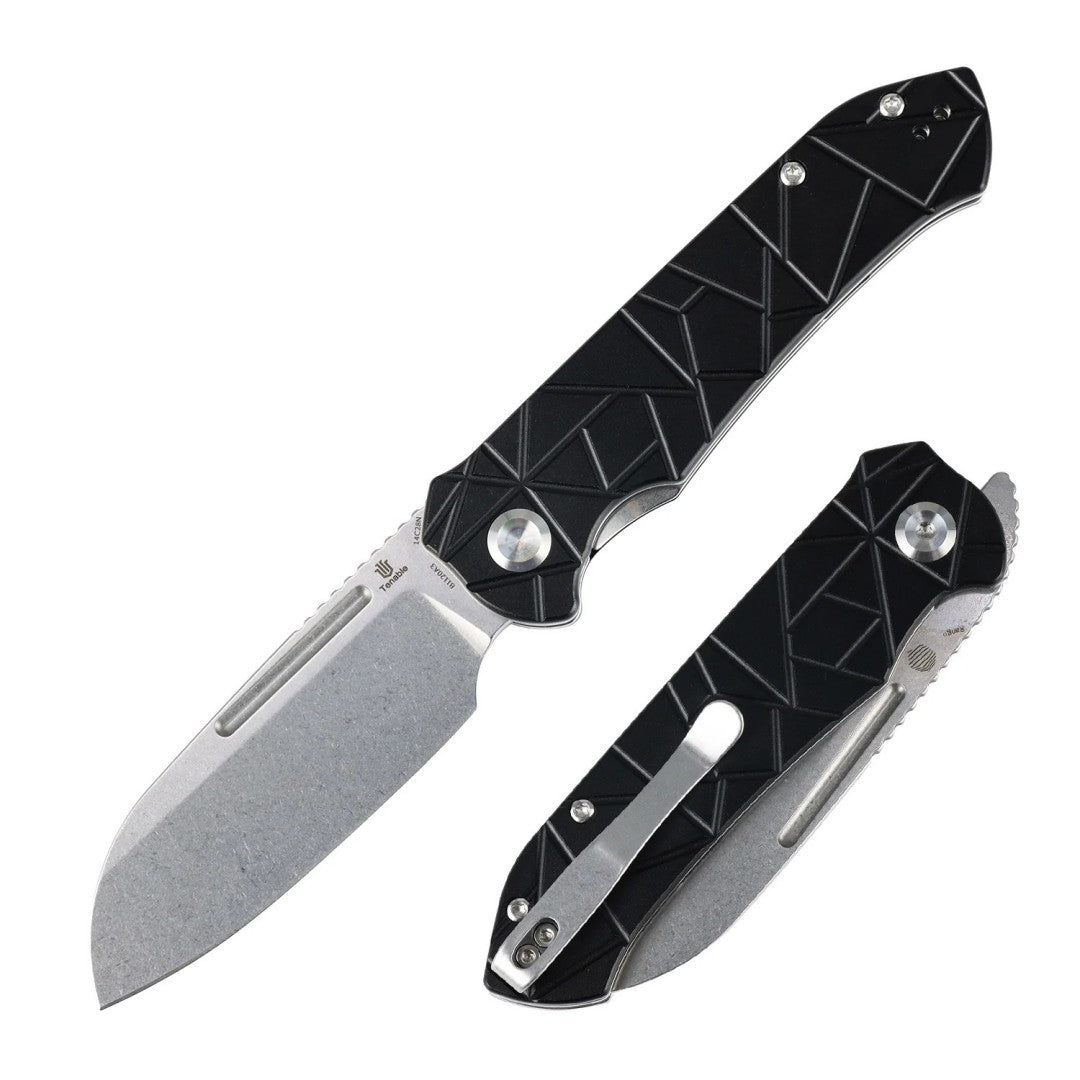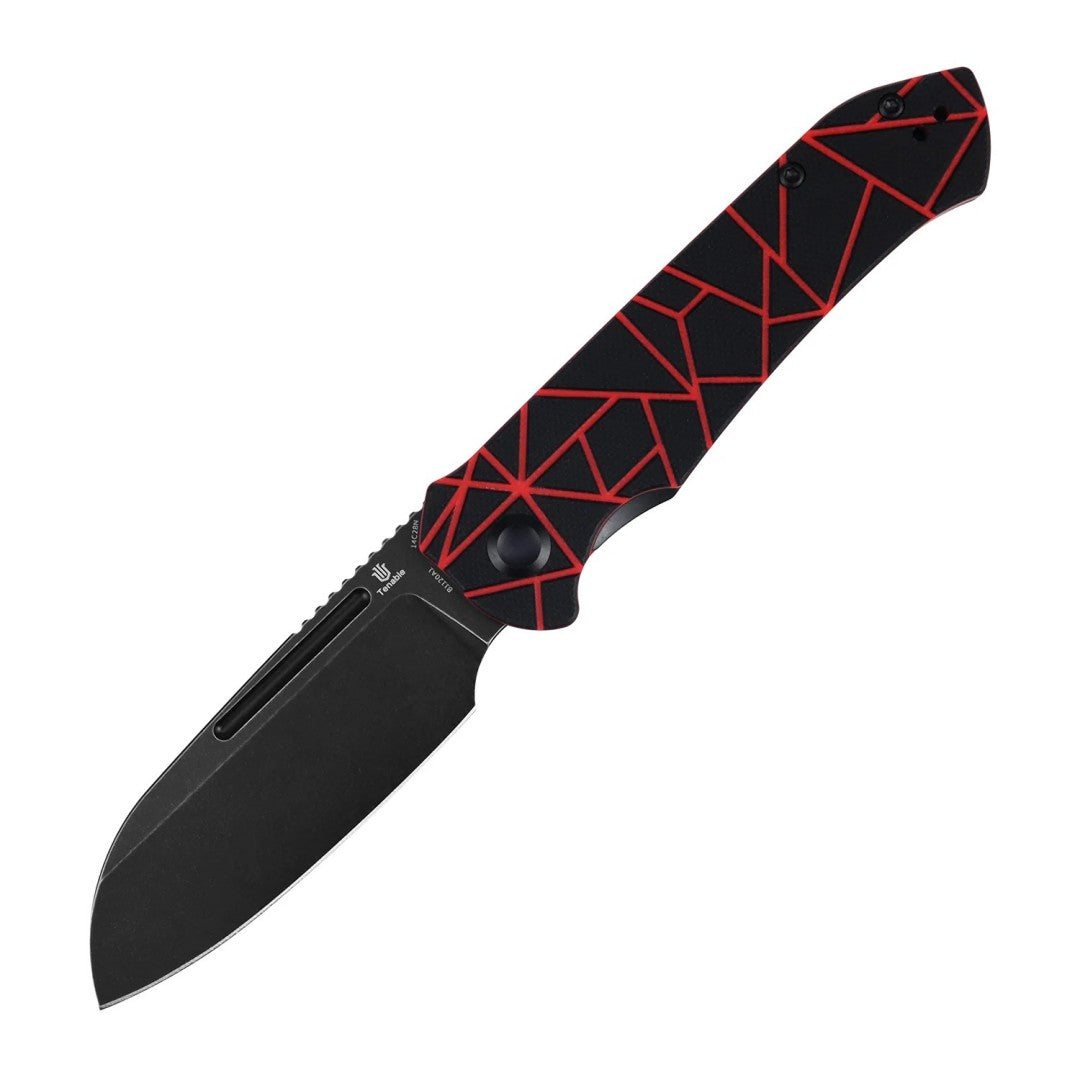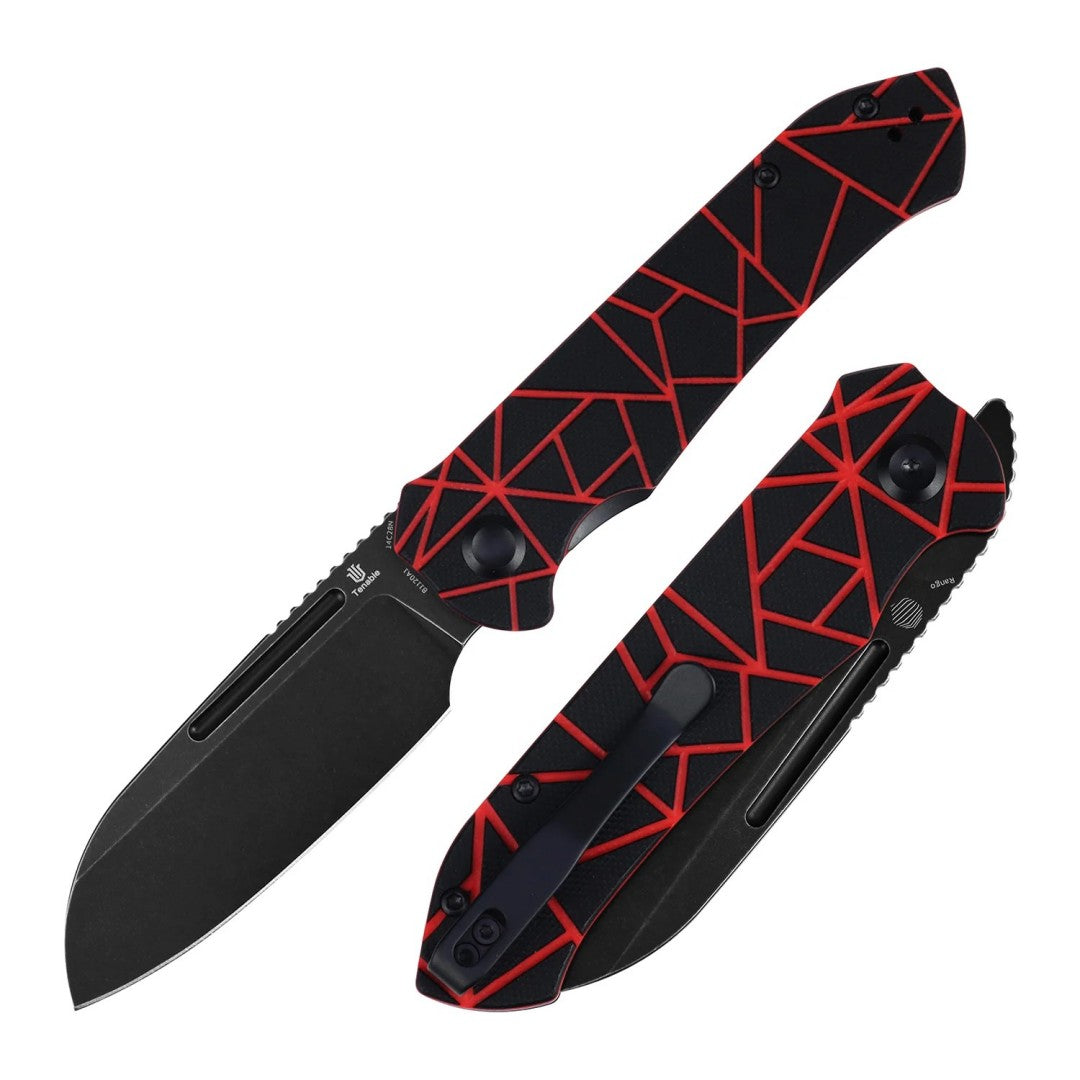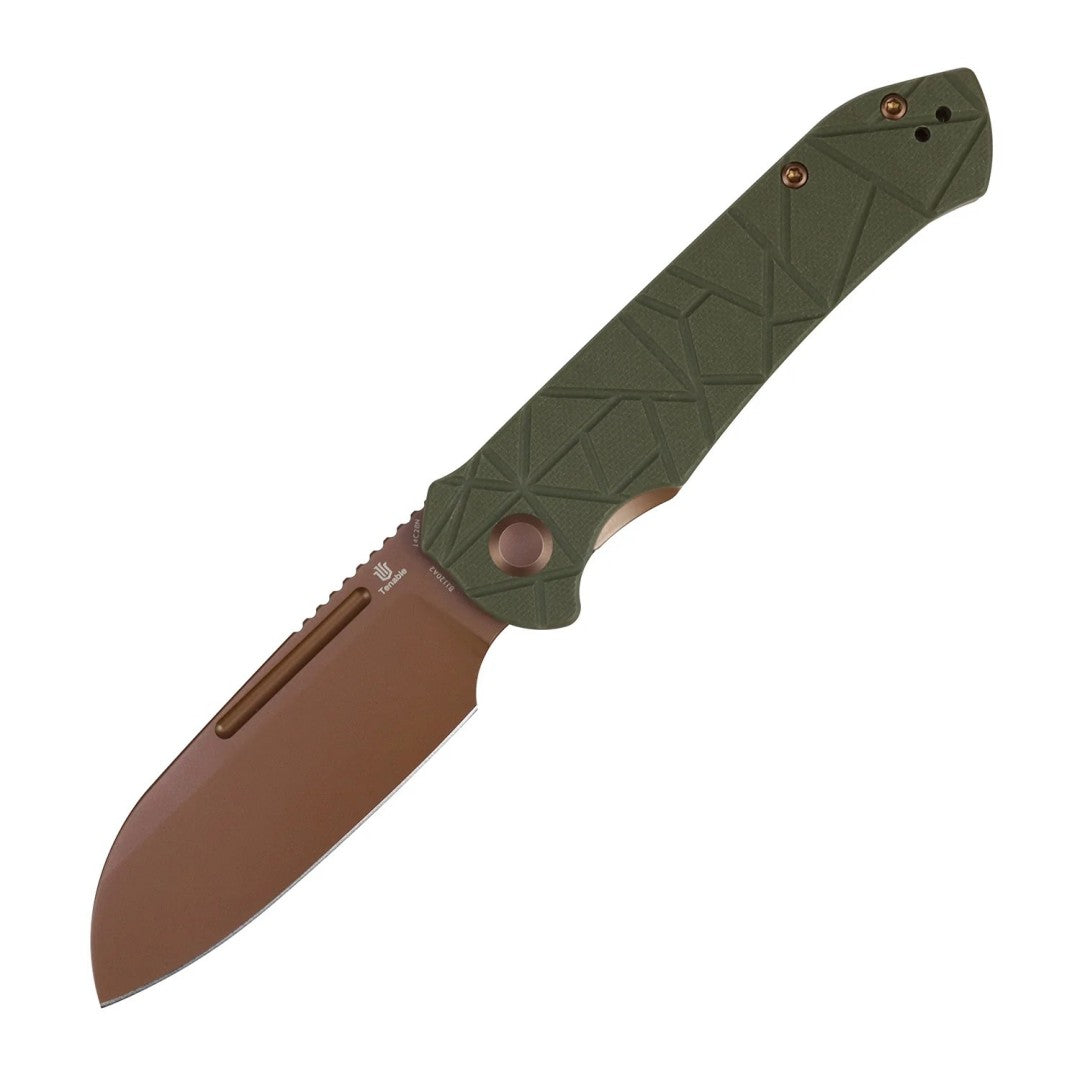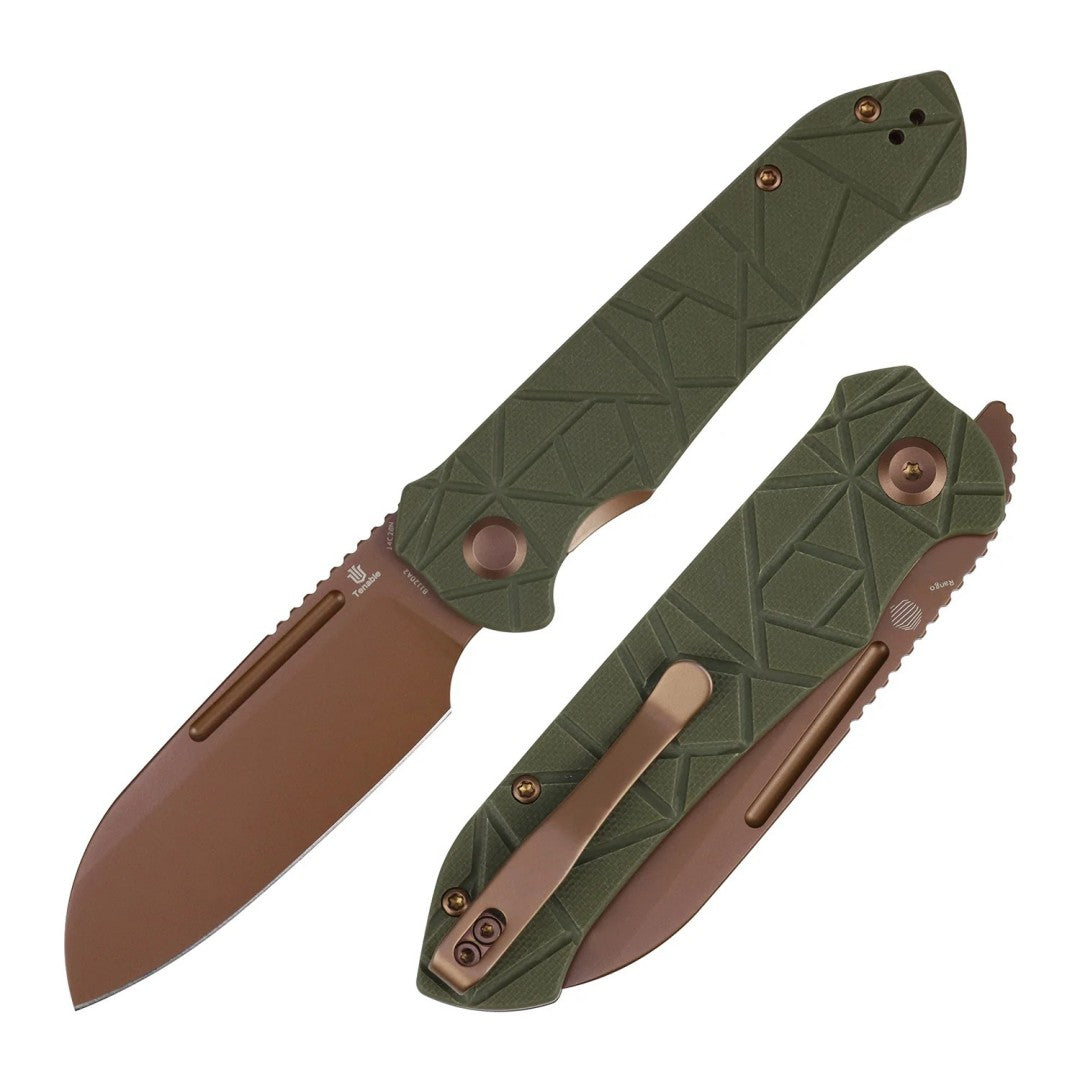
Selecting a high-quality pocket knife often comes down to a single, critical decision: choosing the right blade steel. The Tenable Deadite, a sleek and angular folding knife designed by the legendary custom knifemaker Geoff Blauvelt of TuffKnives, presents buyers with this exact choice.
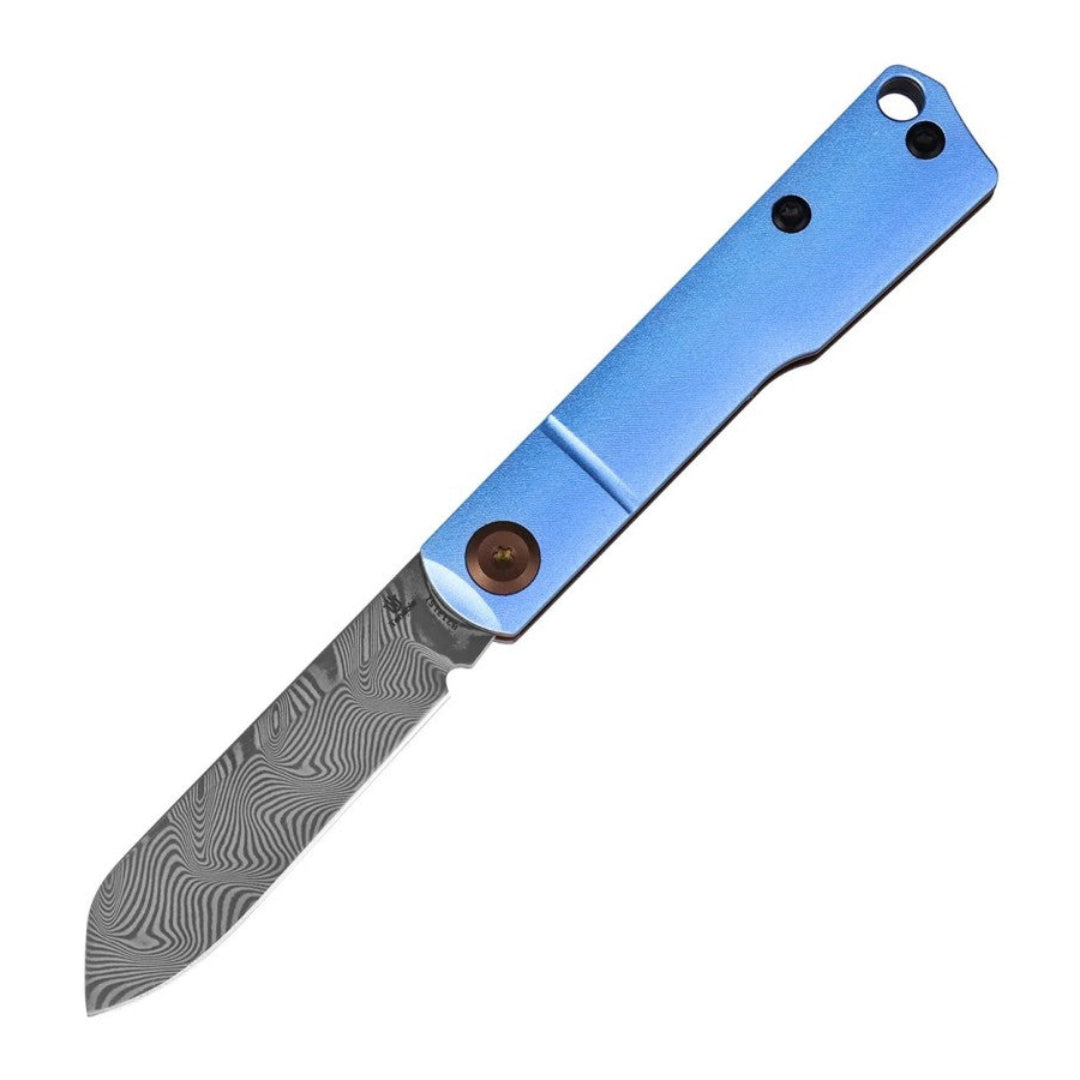
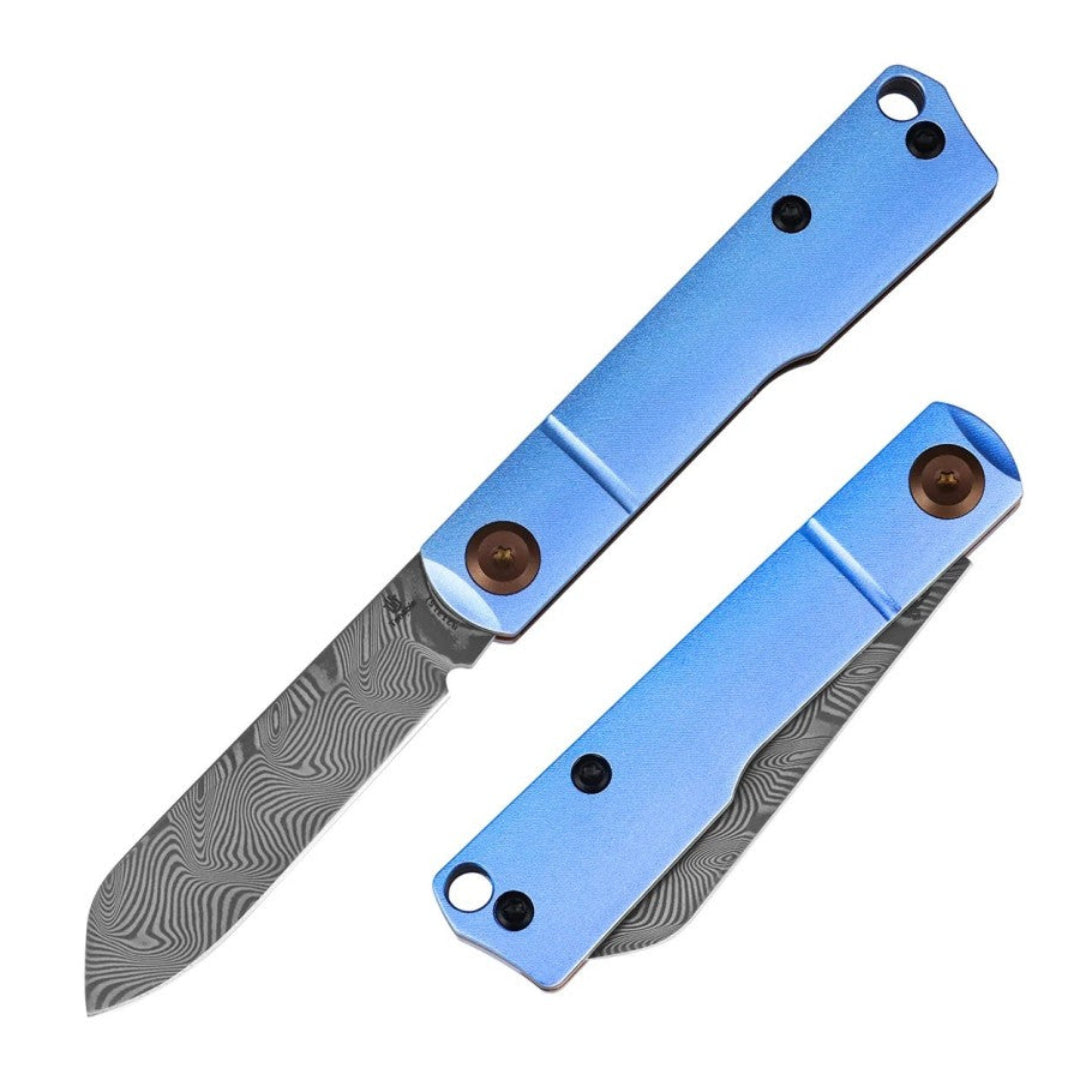
The Deadite lineup splits into two distinct categories: the visually captivating Water Ripple Damascus Steel variants (found on the light blue aluminum V1 and amber PEI V4 models) and the ultra-reliable Sandvik 14C28N Stainless Steel variants (featured on the silver aluminum V2 and black Micarta V3 models).
Both options share the exact same tactical-forward 3.52-inch blade profile, snappy thumb-stud deployment, and vault-like crossbar lock mechanism. However, they serve completely different cutting needs, maintenance habits, and stylistic styles. This guide breaks down the performance, ergonomics, durability, and upkeep of Damascus versus 14C28N to help you choose the best material for your pocket.
 Understanding the Metallurgy
To make an informed choice, it helps to understand what makes each steel option unique from a metallurgical and manufacturing standpoint.
Water Ripple Damascus Steel
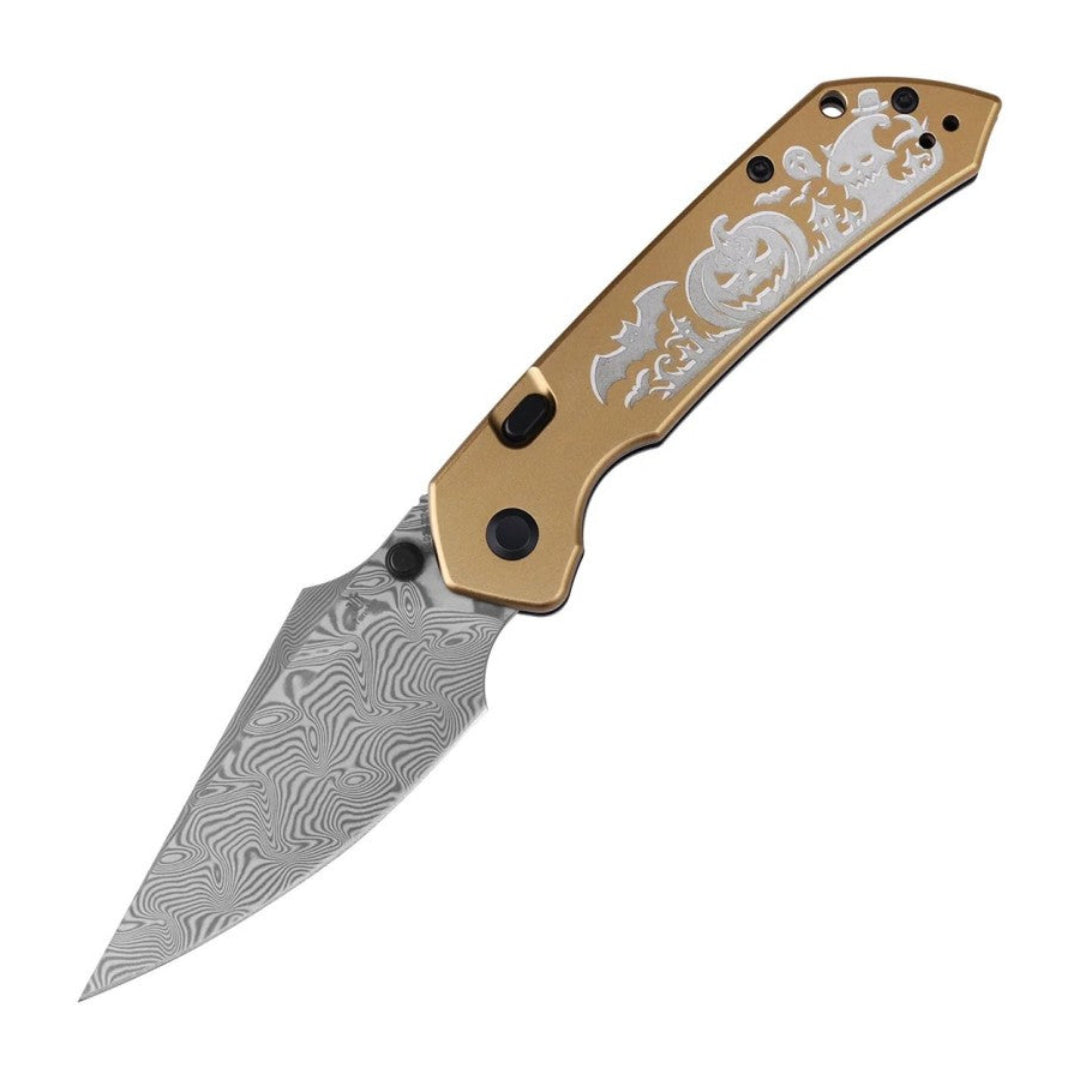
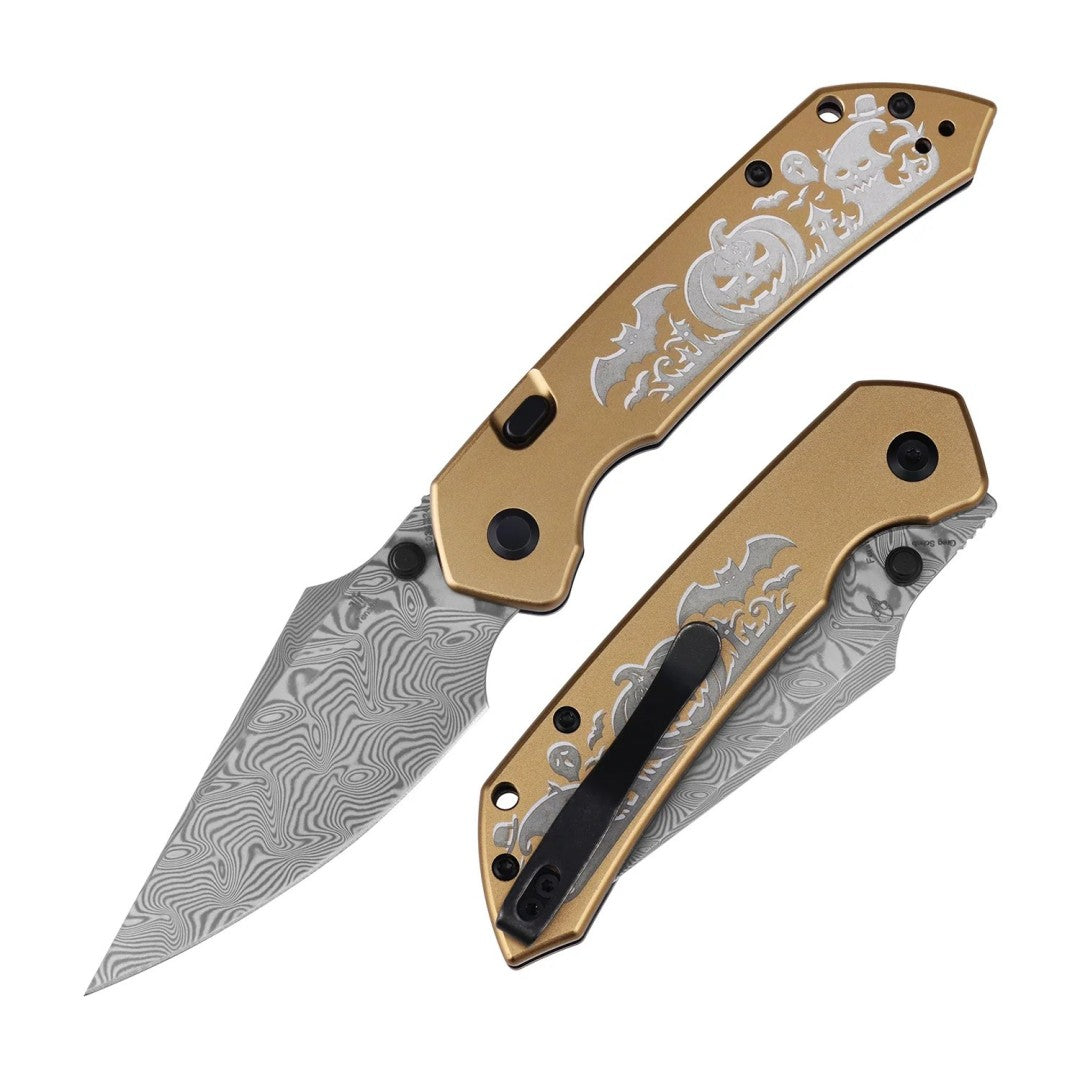
The Damascus steel utilized in the Tenable Deadite is a high-performance layered steel. It is created by forge-welding multiple layers of distinct steel alloys together, folding them repeatedly, and acid-etching the final blade to reveal high-contrast, swirling "water ripple" patterns.
-
The Look: No two wave patterns are exactly alike; your blade is completely unique.
-
The Structure: Because it is composed of alternating hard and soft layers of steel, the cutting edge naturally develops microscopic serrations that excel at slicing.
Sandvik 14C28N Stainless Steel
Sandvik 14C28N is a premium, highly optimized Swedish stainless steel developed specifically for high-quality knife blades. To elevate the aesthetics and protect the steel, the Deadite V2 features a stealthy gray TiCn (Titanium Carbo-Nitride) coating, while the V3 boasts a striking rose gold finish.
-
The Chemistry: It features a unique chemical composition that incorporates nitrogen to boost corrosion resistance and hardness without making the steel brittle.
-
The Reputation: In the modern EDC world, 14C28N is widely considered one of the absolute best budget-to-mid-tier stainless steels due to its perfectly balanced attributes.
 Head-to-Head Performance Breakdown
How do these two steel options stack up in real-world everyday use? We compare them across four essential categories.
1. Edge Retention (Winner: Tie)
Edge retention determines how long a knife stays sharp before needing maintenance. Both the Damascus and the 14C28N versions of the Deadite are heat-treated to an ideal hardness rating. 14C28N offers a highly uniform molecular structure that holds a razor-sharp push-cutting edge exceptionally well. Meanwhile, the modern Damascus blend matches this longevity, using its layered composition to continue slicing long after a standard budget steel would go dull.
2. Corrosion Resistance (Winner: Sandvik 14C28N)
If you live in a humid climate, work near saltwater, or frequently cut acidic items like fruit, corrosion resistance is paramount.
-
14C28N Stainless Steel wins this category easily. Its high chromium and nitrogen content makes it highly resistant to rust. Furthermore, the TiCn coating on the V2 and the rose gold finish on the V3 add an extra layer of structural protection against environmental moisture.
-
Damascus Steel requires a bit more care. While modern Damascus blends are far more stainless than historical carbon-steel variants, the acid-etching process leaves the surface slightly more susceptible to ambient moisture and pocket humidity.
3. Toughness and Impact Resistance (Winner: Sandvik 14C28N)
Toughness measures a steel’s ability to resist chipping or cracking under heavy impact or torsional stress (prying/twisting). Sandvik 14C28N is renowned for its incredible structural elasticity; it will flex under extreme strain rather than chipping out. While the Damascus steel is plenty tough for all daily cutting tasks, its layered boundary points make it slightly more specialized for pure slicing rather than hard tactical abuse.
4. Ease of Sharpening (Winner: Sandvik 14C28N)
No matter how good a steel is, it will eventually need to be sharpened. 14C28N is a dream on the sharpening stones. It takes a polished edge quickly and responds beautifully to a leather strop. Damascus can be slightly trickier to sharpen uniformly due to the alternating hardness of its layers, and frequent heavy sharpening can eventually fade the surface contrast of the acid-etched pattern, requiring a re-etch down the road to restore its original look.
 Handle Pairings: Matching Material to Your Style
Tenable has perfectly paired these steel configurations with custom-inspired handle materials to create cohesive functional aesthetics:
-
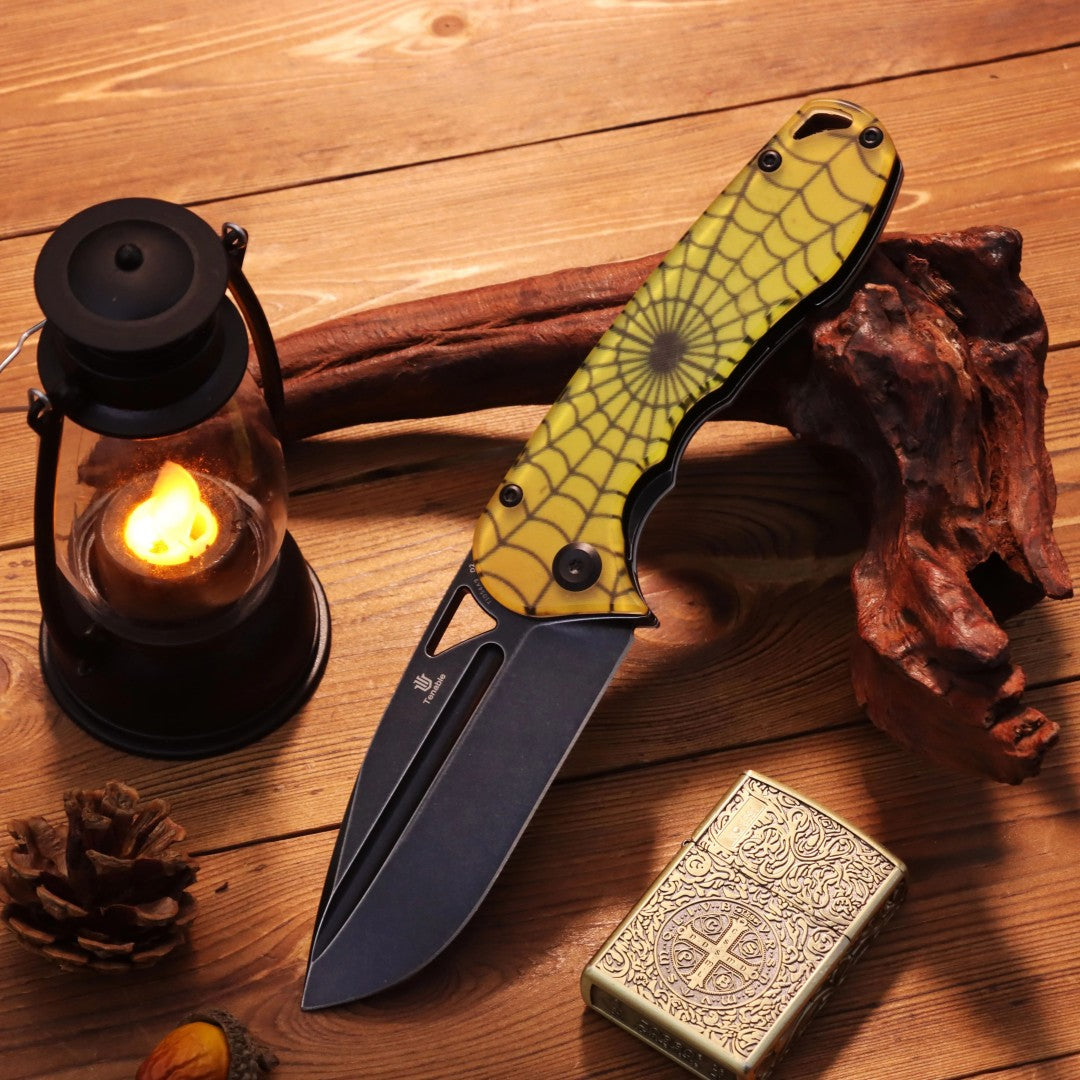
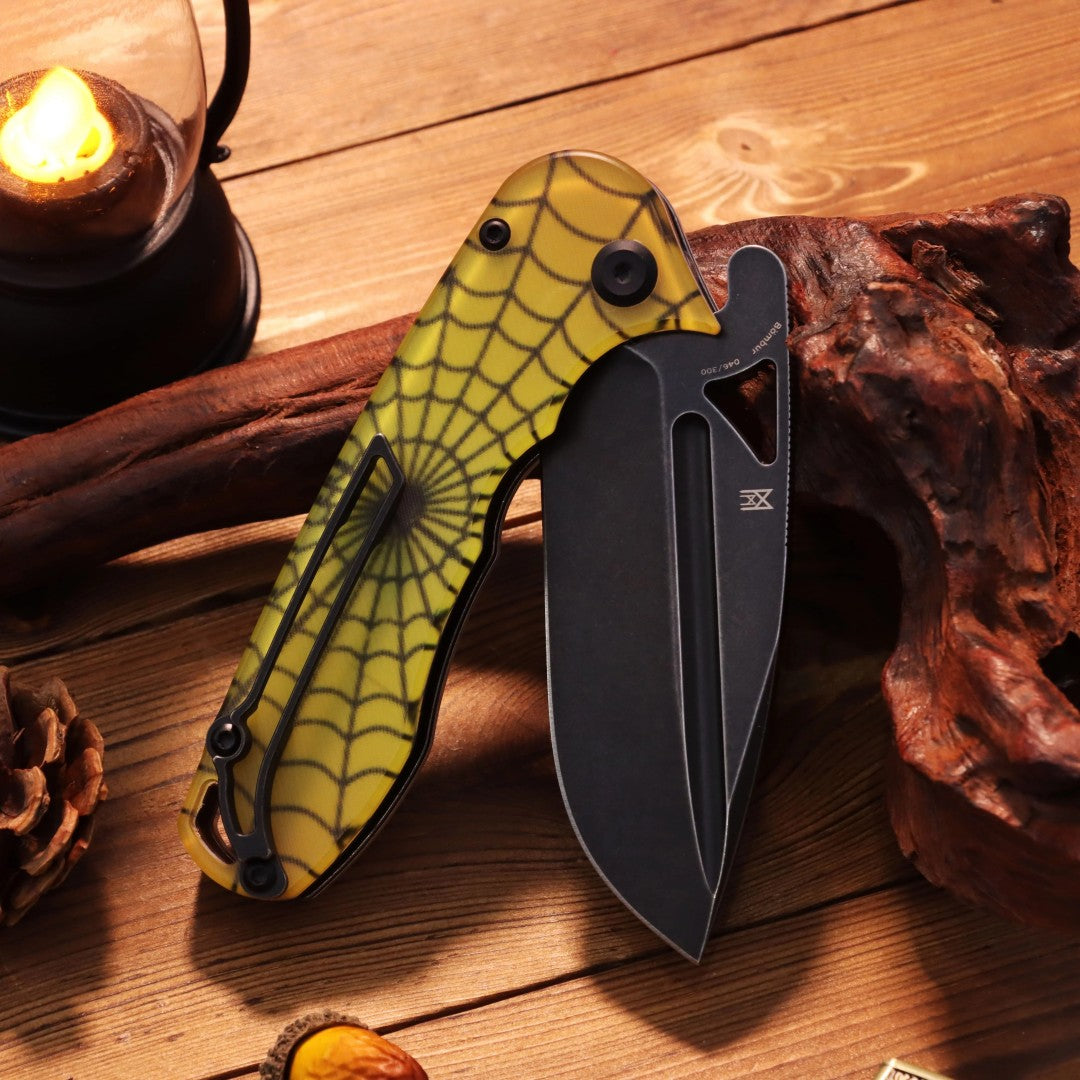
The Showstoppers (Damascus): The Damascus blade is paired with a striking light blue anodized aluminum handle (V1) or a futuristic, semi-transparent Amber PEI/Ultem handle (V4). These are designed for knife enthusiasts who want their tool to stand out as a piece of high-tech art.
-
The Workhorses (14C28N): The 14C28N blades are paired with tactical silver aluminum handles (V2) or an ultra-grippy, organic black canvas Micarta handle (V3). These configurations are optimized for raw utility, offering excellent hand ergonomics and a reliable grip in wet conditions.
 The Verdict: Which Deadite Steel is Right For You?
Choose the Water Ripple Damascus (V1 or V4) if you look at your pocket knife as a blend of functional tool and collectible art. If you prioritize visual distinction, love to show off your gear, and don’t mind wiping the blade down with mineral oil occasionally, the Damascus Deadite is an incredible value that delivers custom-level style.
Choose the Sandvik 14C28N (V2 or V3) if you want a pure, uncompromising daily user. If your knife frequently encounters water, cardboard boxes, dirt, or heavy abrasive materials, the 14C28N models provide maximum corrosion resistance, hassle-free sharpening, and the rugged peace of mind required for demanding environments.
Frequently Asked Questions (FAQ)
Will the pattern on the Damascus Deadite rub off with heavy use?
No, the water ripple pattern goes entirely through the blade layers. However, heavy slicing through abrasive materials can lightly scuff or dull the surface contrast over time. The pattern can be restored using a mild acid etch if necessary.
Do the coatings on the 14C28N models protect against rust?
Yes. The Titanium Carbo-Nitride (TiCn) gray coating on the V2 and the rose gold finish on the V3 create a highly durable physical barrier that completely isolates the underlying steel from moisture, sweat, and corrosive materials.
Is the Damascus version more expensive than the 14C28N version?
Generally, yes. Due to the complex manufacturing process of forge-welding layered steels and the specialized acid-etching required to bring out the water ripple patterns, Damascus variants command a slight premium over standard stainless models.