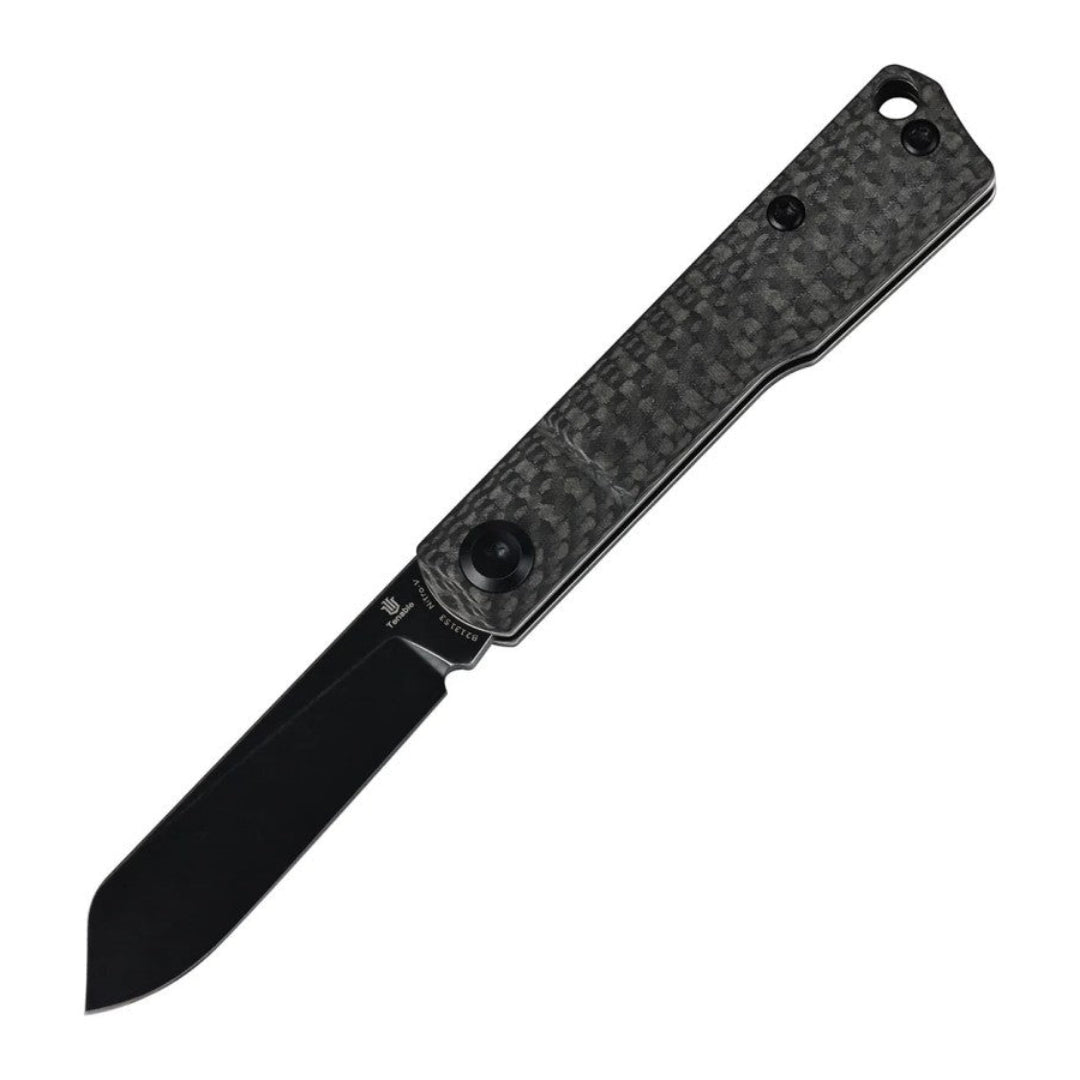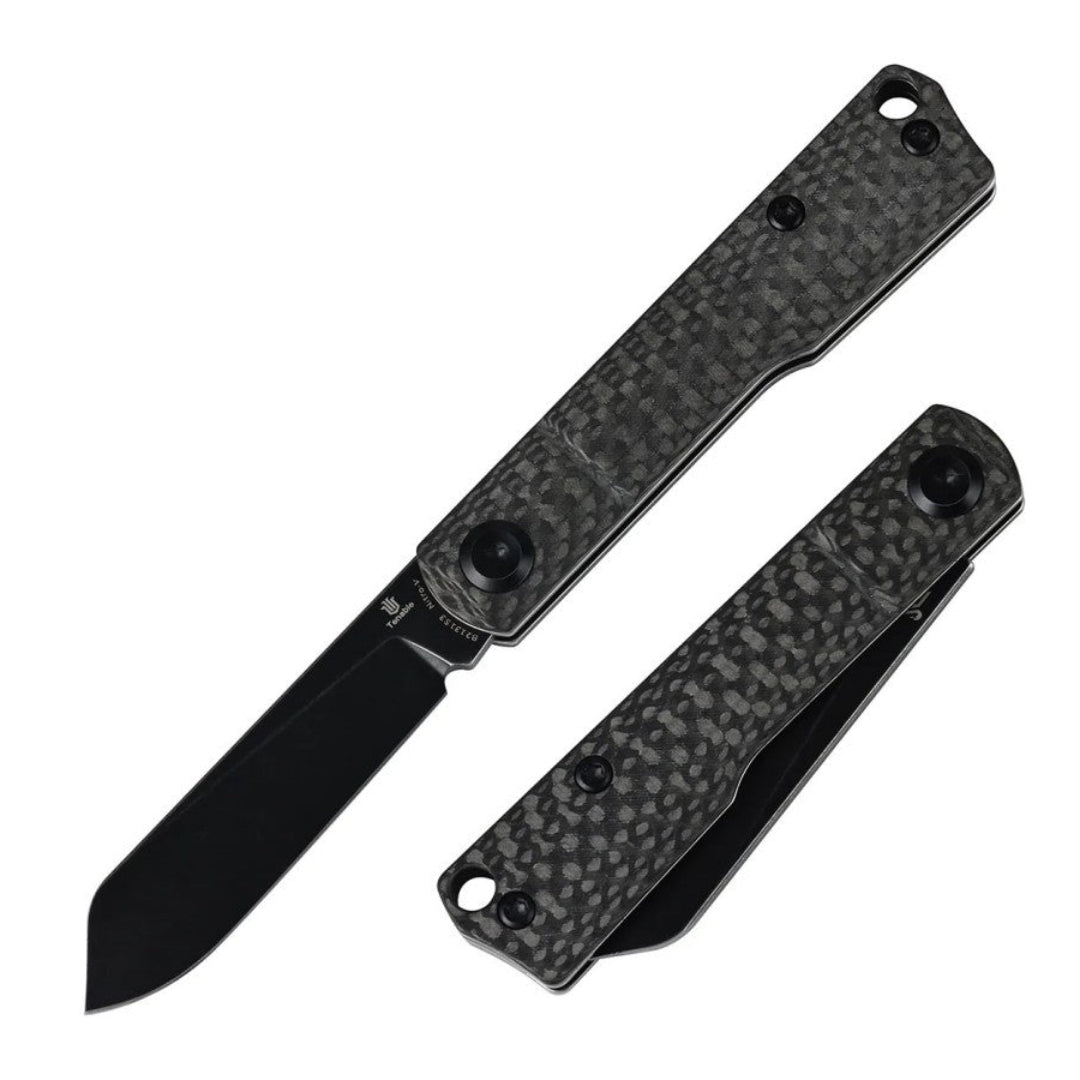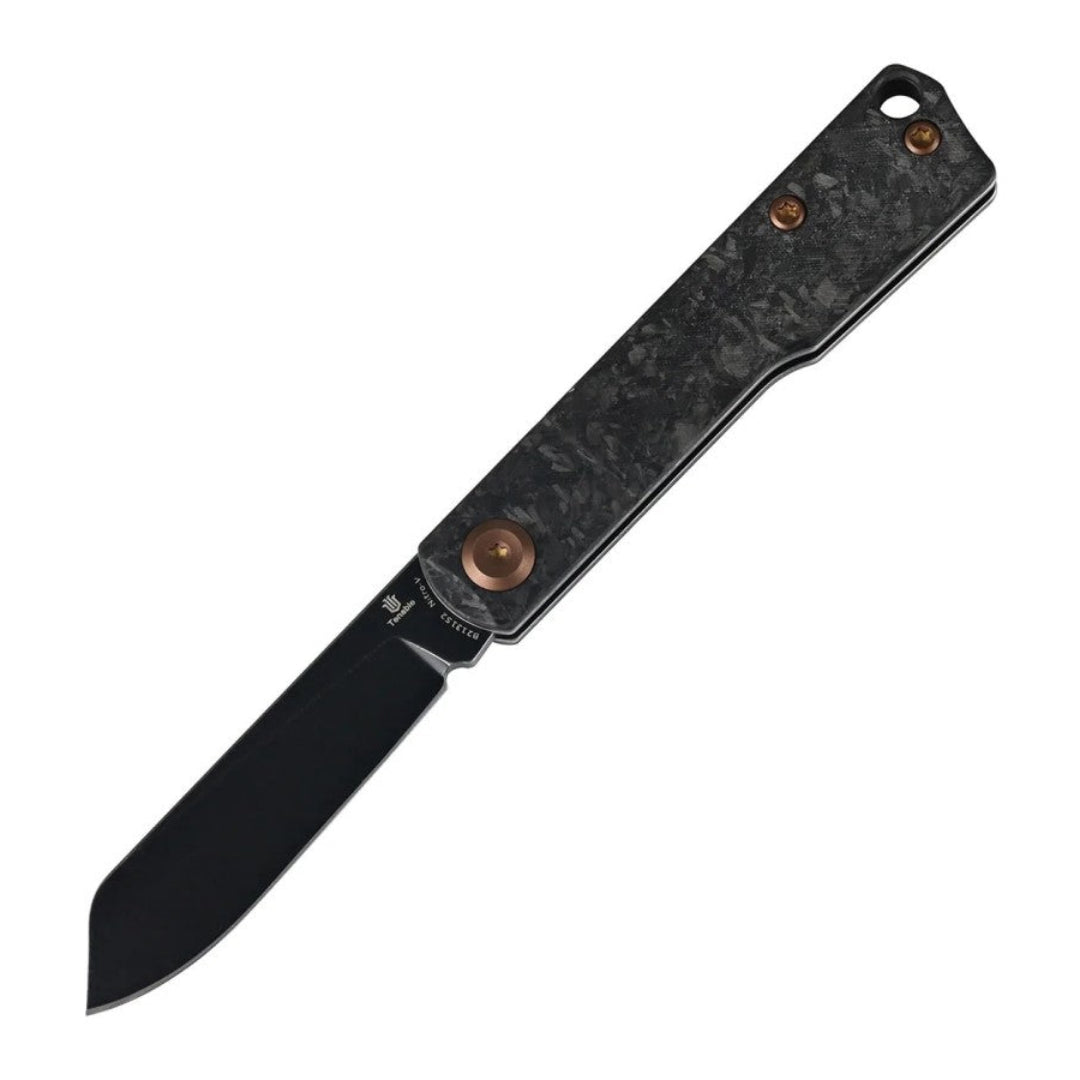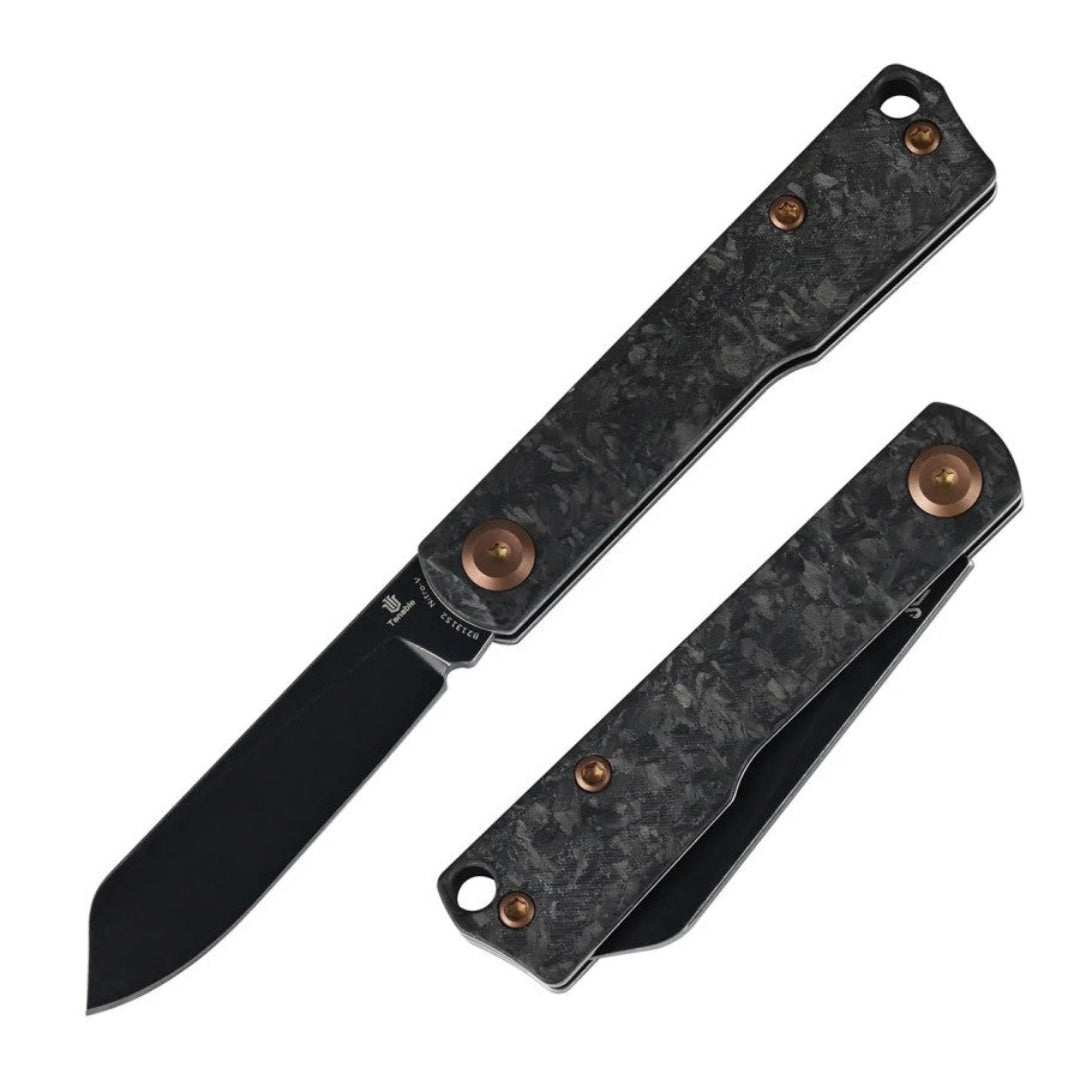

Overview & First Impressions
A small fermentation business runs on sugar, water and hygiene. Honey is weighed, must is mixed, yeast is pitched, carboys are racked and bottles are capped. Everything gets sticky, everything gets rinsed and every surface is wet for most of the working day. There is no shortage of small cutting jobs either: opening bags of nutrient, cutting tubing for a blow-off tube, trimming a length of hose, cutting shrink capsules and opening cartons of bottles. The knife on the production bench has to survive constant moisture.
Materials & Construction
M390 is the right steel for a wet food-production floor. Its very high chromium content gives it excellent corrosion resistance, and its wear resistance means the edge survives cardboard, shrink film and plastic tubing without constant attention. The GEO Knife Strix presents that blade in a titanium handle with a crossbar lock. Crossbar locks are popular in food-adjacent settings because the blade can be opened and closed with one hand, without fingers crossing the edge path, which matters when the other hand is holding a hose.

Design & Details
Food production gear must be easy to clean. A handle with a smooth, non-porous surface wipes down quickly, an open-back construction lets rinse water drain out of the frame rather than sitting in a channel, and a blade that runs slightly short keeps the knife from being an obvious hazard on a crowded bench. Among folding knives, a fine drop point is ideal for cutting tubing squarely and opening bags without spilling.
Real-World Use
Across a production day the knife opens a sack of yeast nutrient, cuts a blow-off tube to length, trims a racking cane hose, slices shrink capsules for a bottling run, opens a case of empty bottles and cuts the tape on a honey delivery. A clipped EdcMall light is used to read a hydrometer in a dim cellar and to check the fill level in a carboy against a light.

Ownership Notes
Fermentation floors demand a hygiene routine around the knife. Wipe the blade and handle with sanitiser after every use, never set it down on a wet bench, and dry it before it goes back in a pocket. Oil the pivot weekly because sugar residue is sticky and abrasive. EdcMall carries the corrosion-proof folders and compact lights that suit a working brewhouse. A production bench needs EDC knives that can be sanitised as easily as a mixing paddle. Choose models with smooth, non-porous scales and an open frame that drains rather than traps rinse water, and keep a second knife dedicated to opening cartons so the food-contact blade never touches shipping cardboard.
Who Is This For?
This is for meadery and kombucha producers, small craft breweries, cidermakers and home fermentation enthusiasts who have outgrown a kitchen. Softer drinks operations with a full utility-knife station need less. If your bench is wet all day, buy the high-chromium steel.
Final Verdict
A wet production floor is a corrosion environment with a hygiene requirement. A high-chromium stainless blade, a crossbar lock and a rinse-after-use habit keep a benchtop knife ready for years of bottling runs.