
Overview & First Impressions
A natural dye house smells of woad, madder root and iron water, and everything in it gets stained eventually. Dyers cut fabric into test swatches, trim yarn hanks, open bundles of plant material and slice through cloth that has been folded for shibori. The work is wet and alkaline, and the tools need to survive vats of indigo that stain hands and blade alike.
Materials & Construction
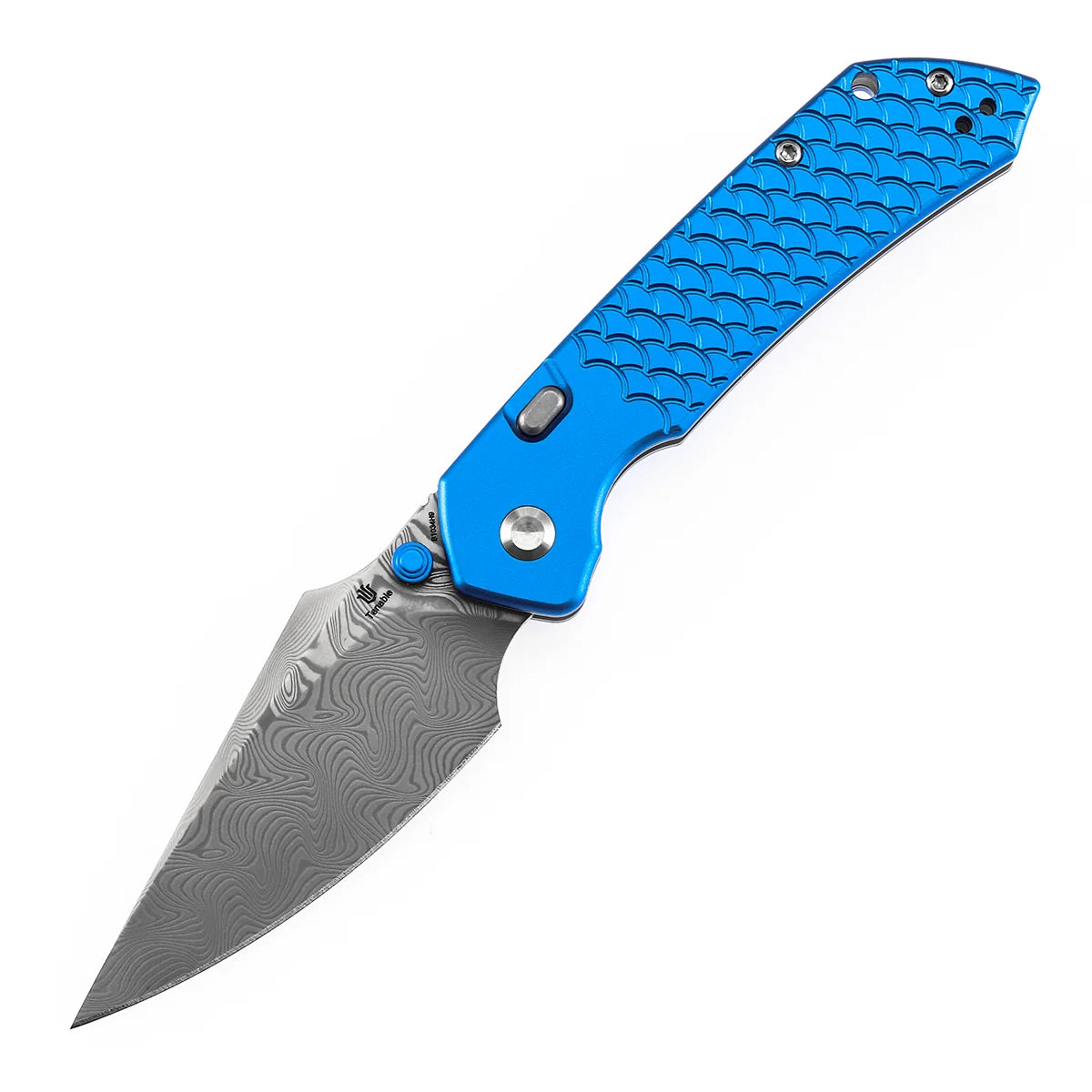
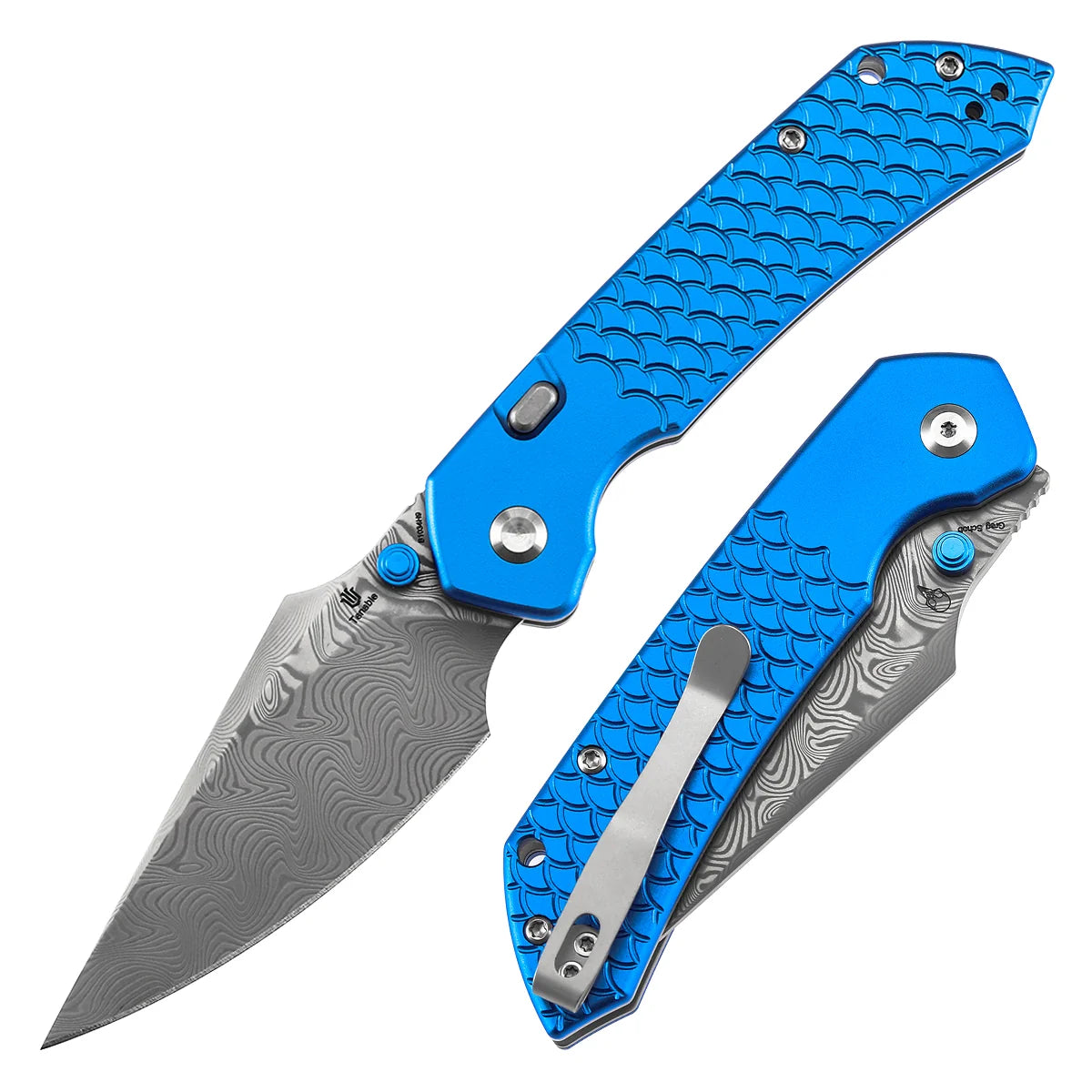
The Tenable Fenrir B1034H24 shows a water ripple Damascus steel blade in a golden anodised aluminium handle with a gothic patterned finish. Damascus steel gives a beautiful, layered surface, but the practical point is that the edge behaves like good high-carbon steel and cuts cloth crisply. Anodised aluminium is light and does not rust, which matters in a room where humidity rarely drops.

Design & Details
The Fenrir is a top liner lock with a slim, elegant profile. The lock sits on the spine side, so it releases without your thumb travelling across the blade path - a small thing that becomes significant when your hands are wet and blue to the wrist. The clean lines and patterned handle also make it the kind of knife a studio owner is happy to leave on the bench when clients visit. Any of the folding knives kept in a wet studio should be chosen for exactly this balance.
Real-World Use
In practice the knife cuts swatch squares, trims silk hank ties, slices through string used for shibori binding and opens bundles of bark and root. Because dye liquor is alkaline, the blade gets wiped far more often than it would in a dry workshop, and that is the right habit. A second, cheap utility blade is worth keeping for cutting iron-rich mordant bags that would stain a good knife.

Ownership Notes
Indigo is a pigment, not a dye that rinses away. Once it dries on a blade it forms a film that dulls the edge, so wipe the knife with a damp cloth immediately after every cut and dry it before closing. Water alone will not remove a lime and mordant residue; use a mild soap, rinse well and oil the pivot. For Damascus steel in particular, keep the surface lightly oiled to hold the contrast in the pattern. Tenable knives has given this model a mechanism that is easy to clean, which is the single most useful attribute in a wet studio, and the same is true of most EDC knives that survive years of dye work.
Who Is This For?
This suits natural dyers, textile artists, shibori practitioners and small dye houses. It also suits anyone running workshops where tools are handled by students. Skip it if you need a knife for heavy craft work such as cutting heavy canvas in volume, because this is a refined cutter. Choose the Fenrir when the studio is wet, colourful and constantly in use.
Final Verdict
The Fenrir B1034H24 is a dye house knife with an artist's finish. The Damascus steel edge cuts cloth and cord cleanly, the anodised handle shrugs off humidity, and the top liner lock stays easy to operate with wet hands. Wipe it after every cut, oil it weekly and it will keep its pattern and its edge through many seasons of indigo.