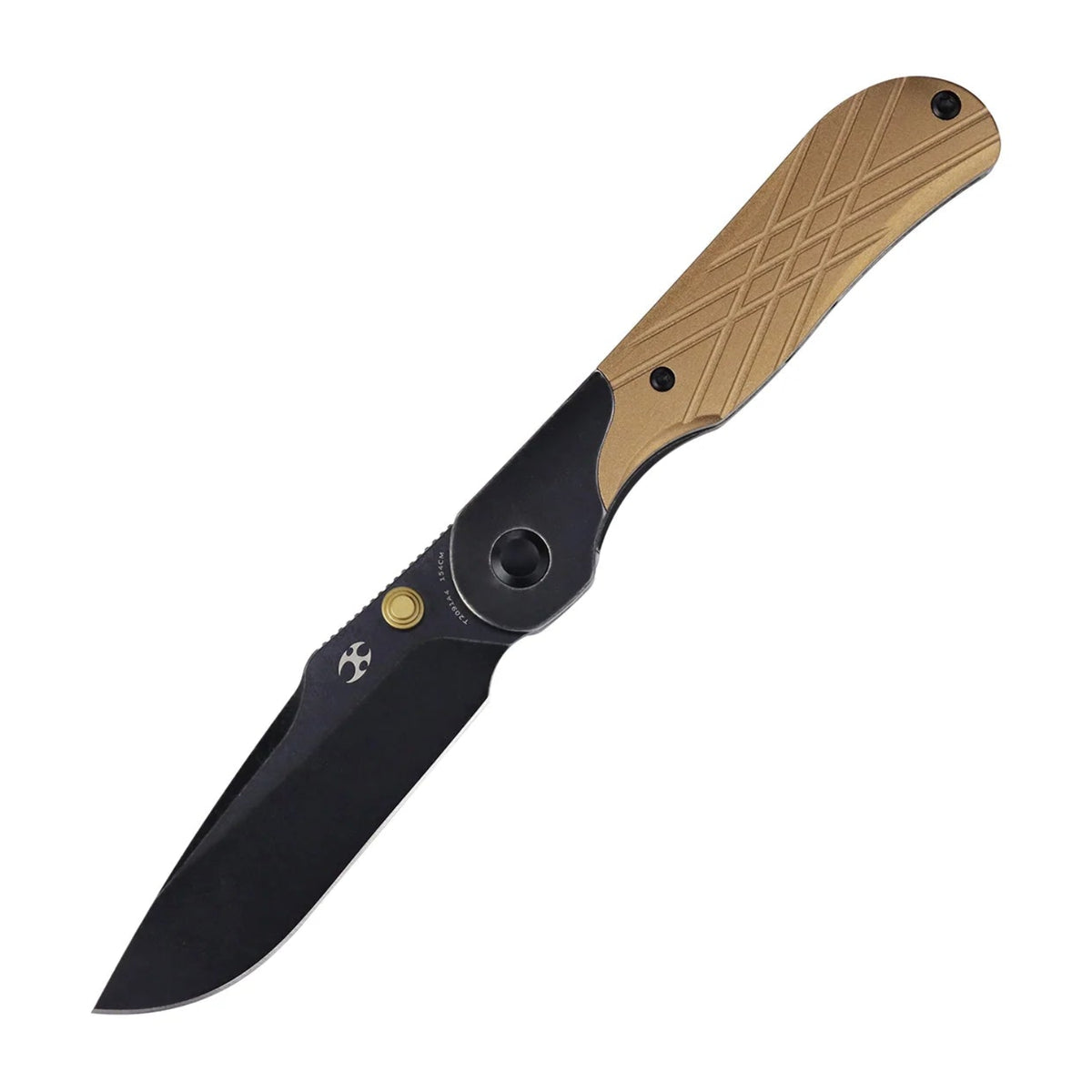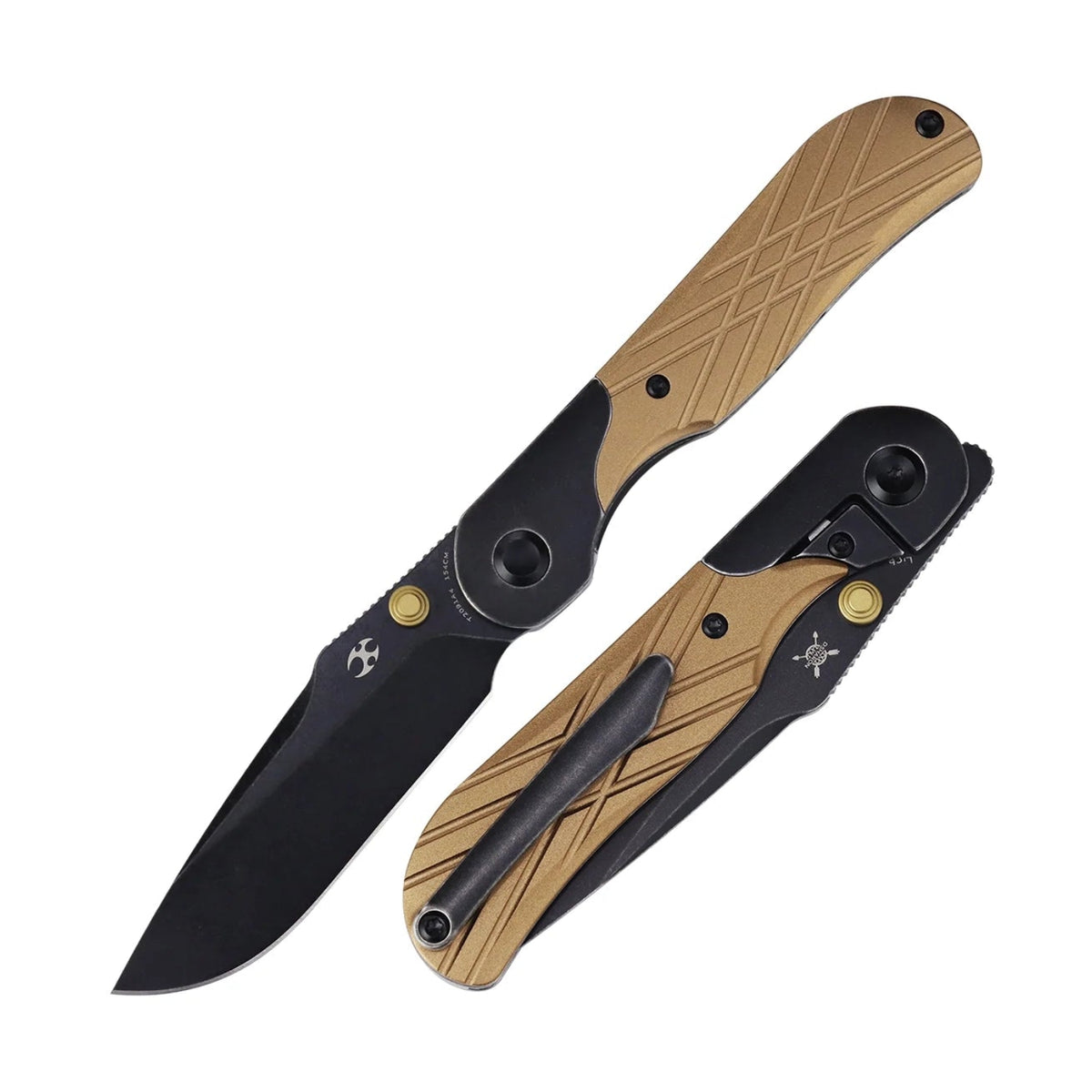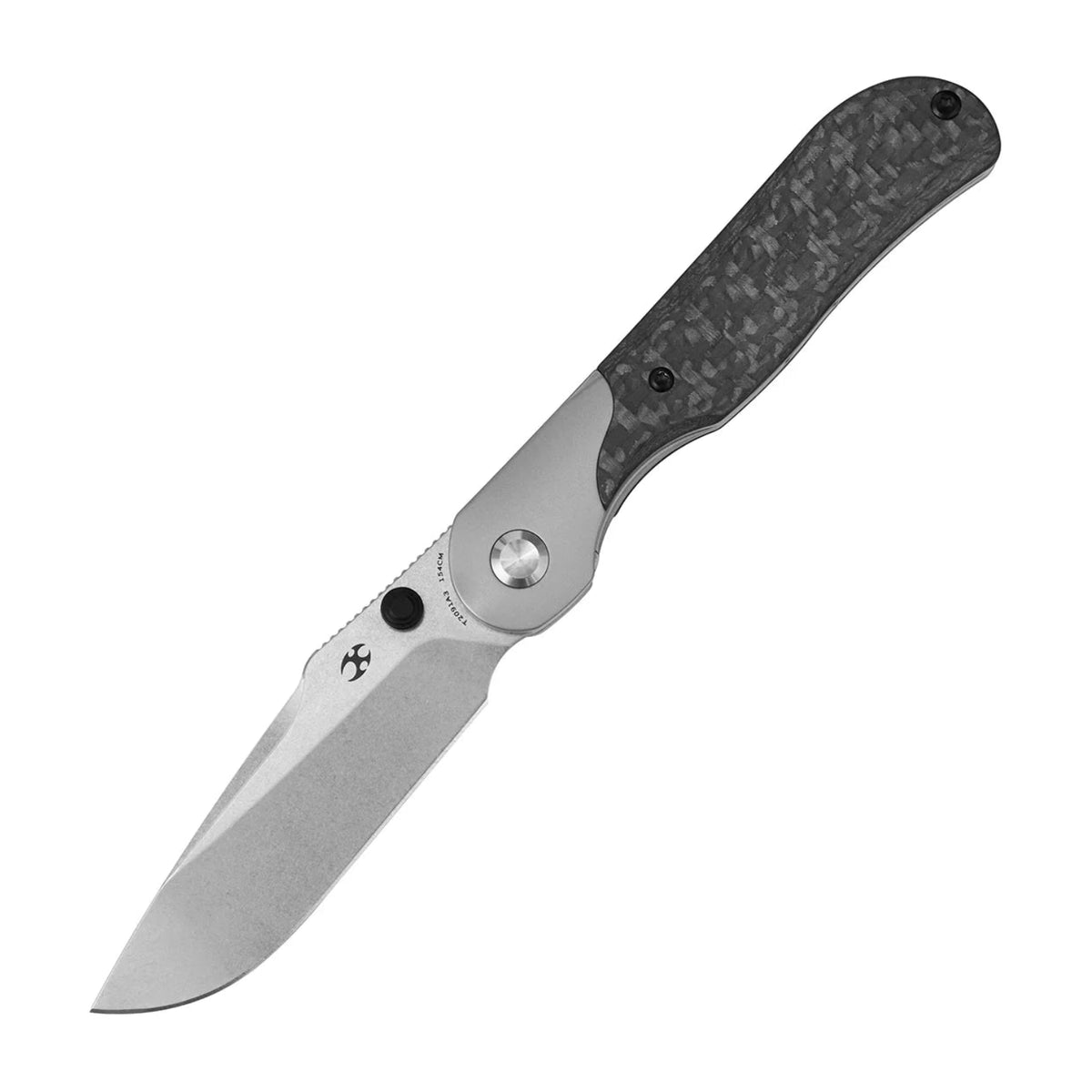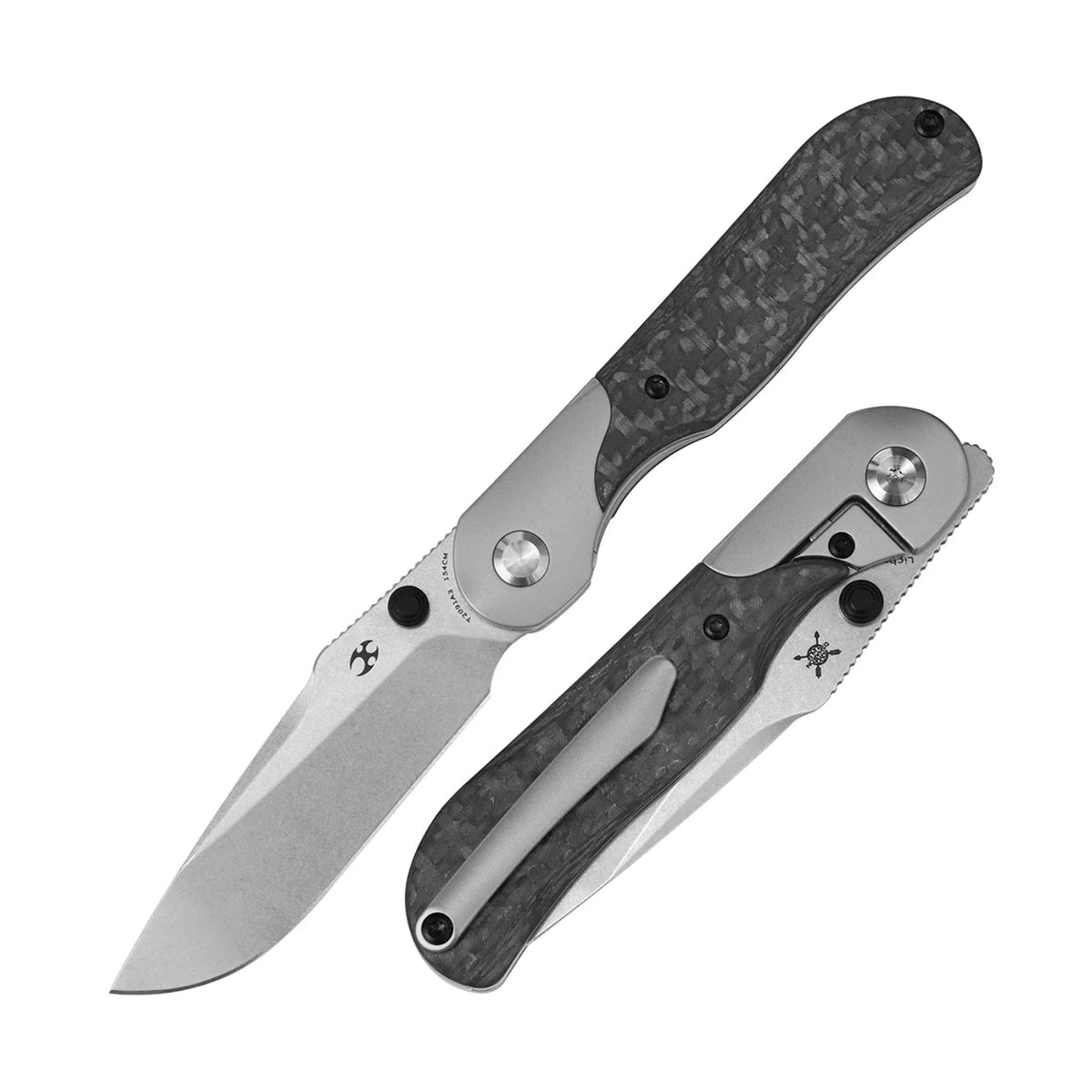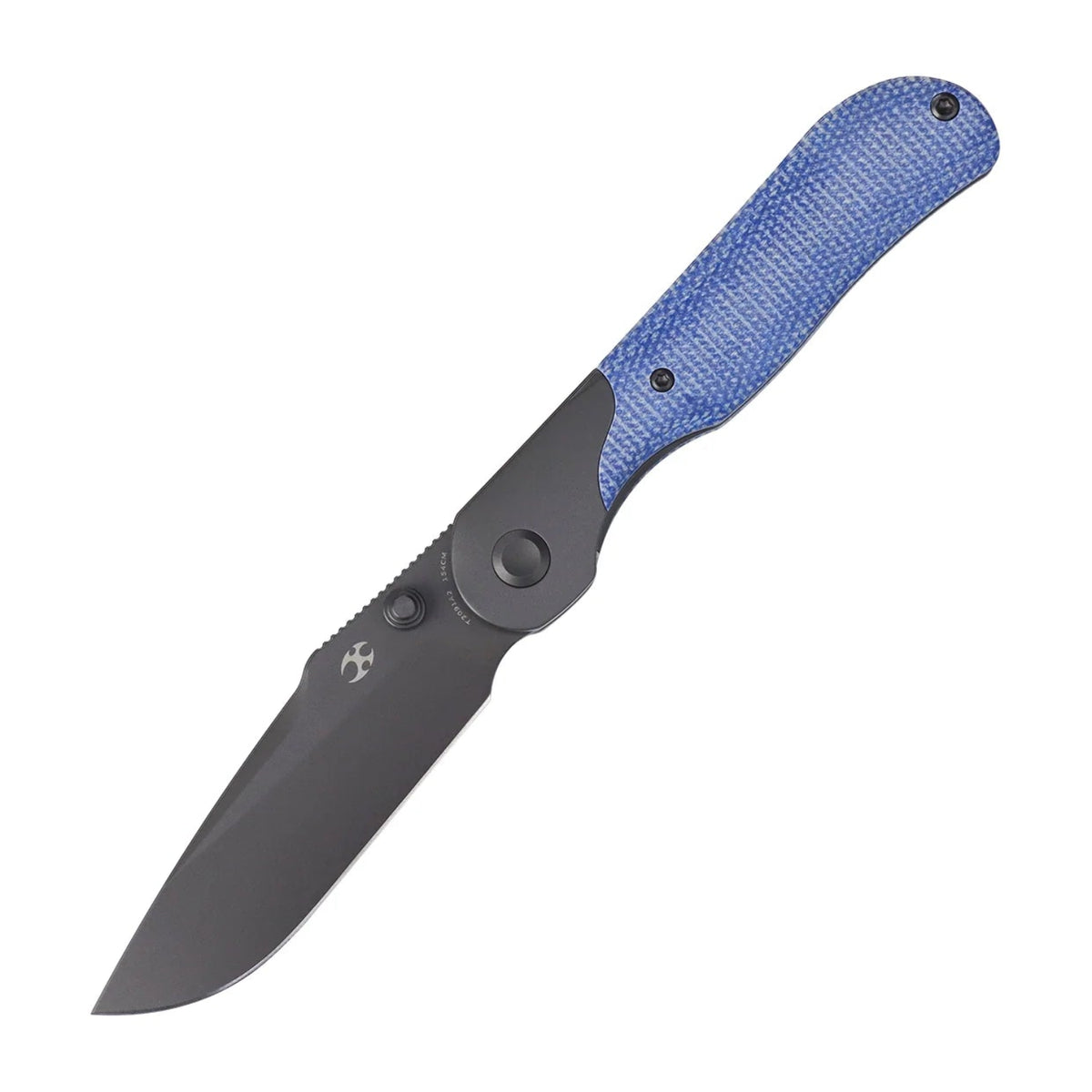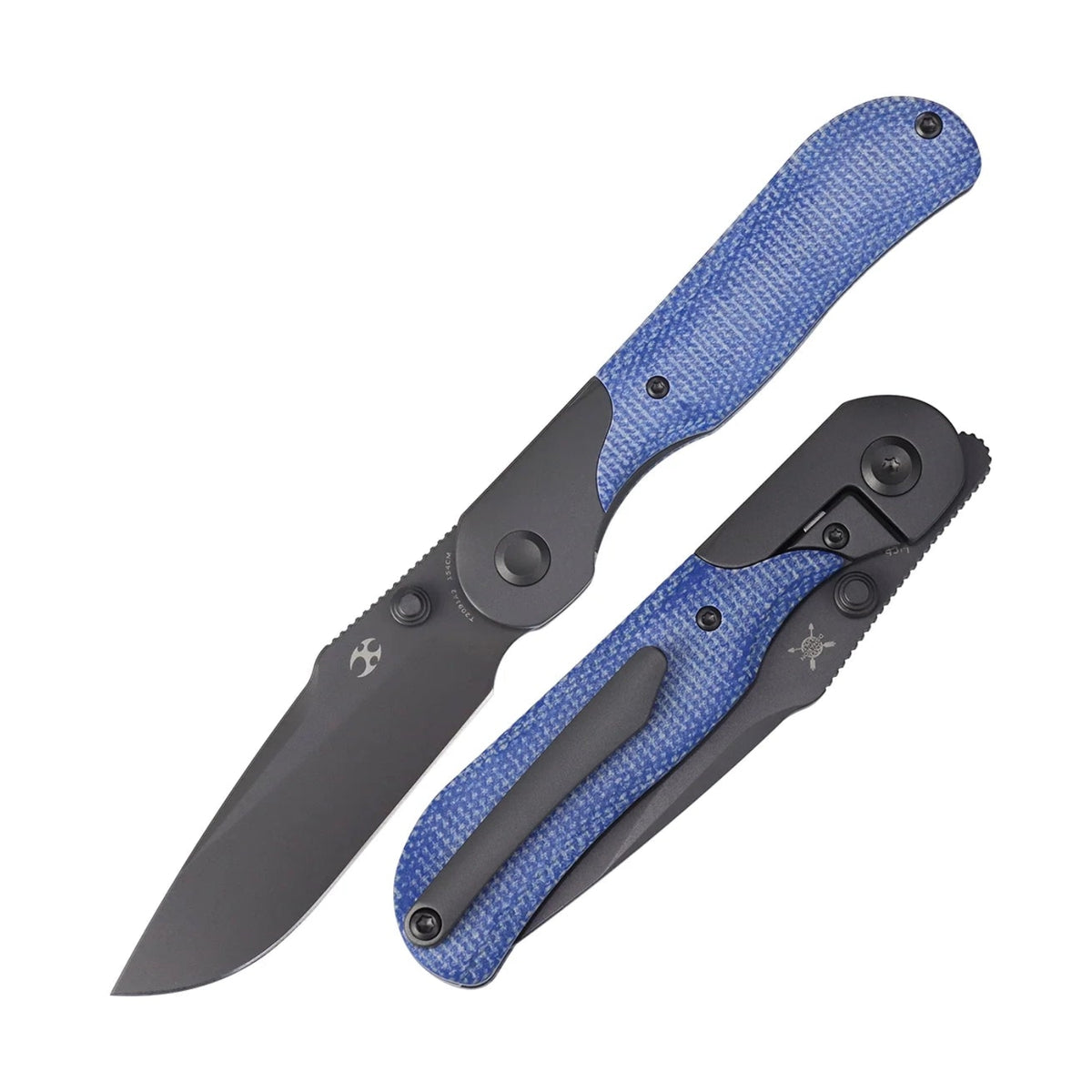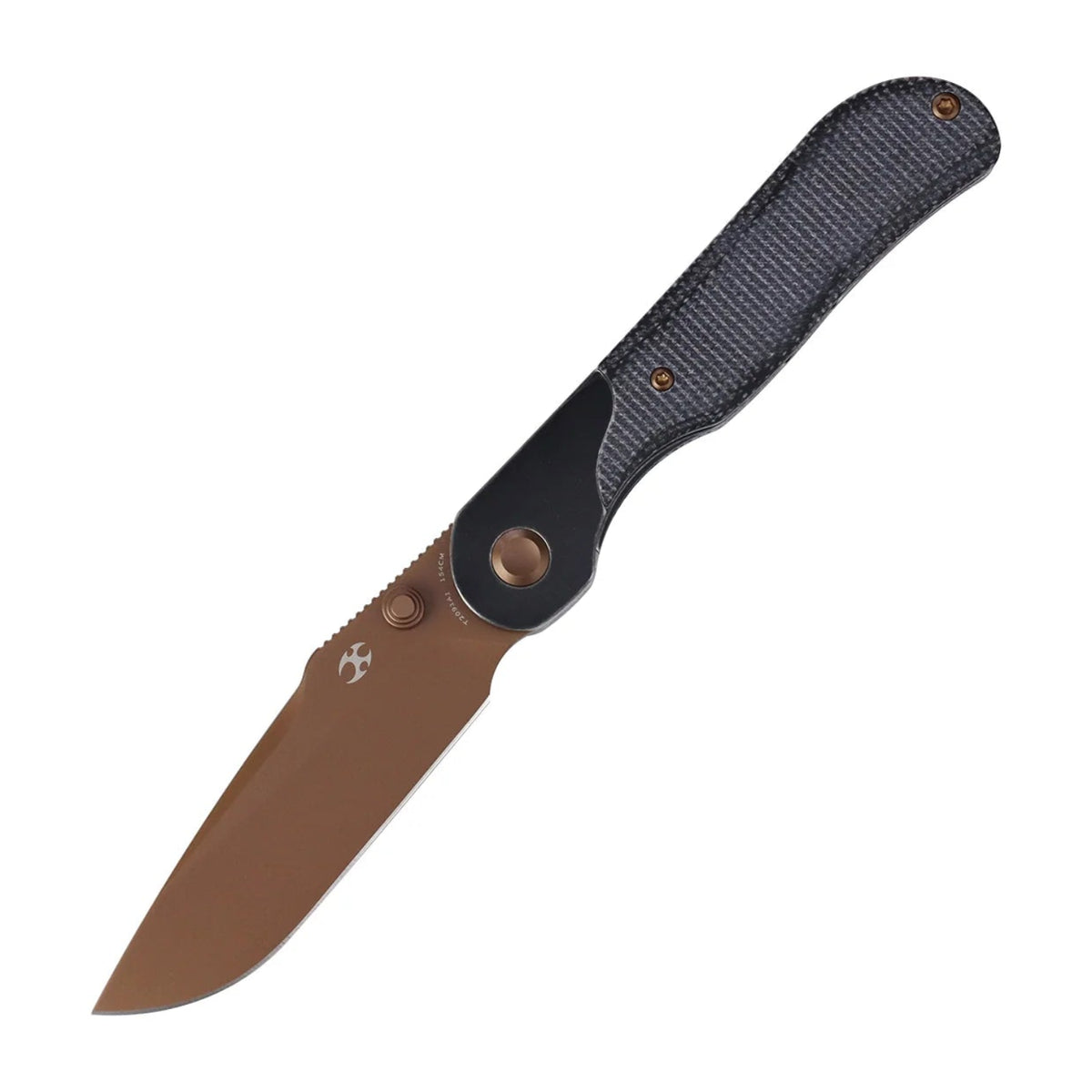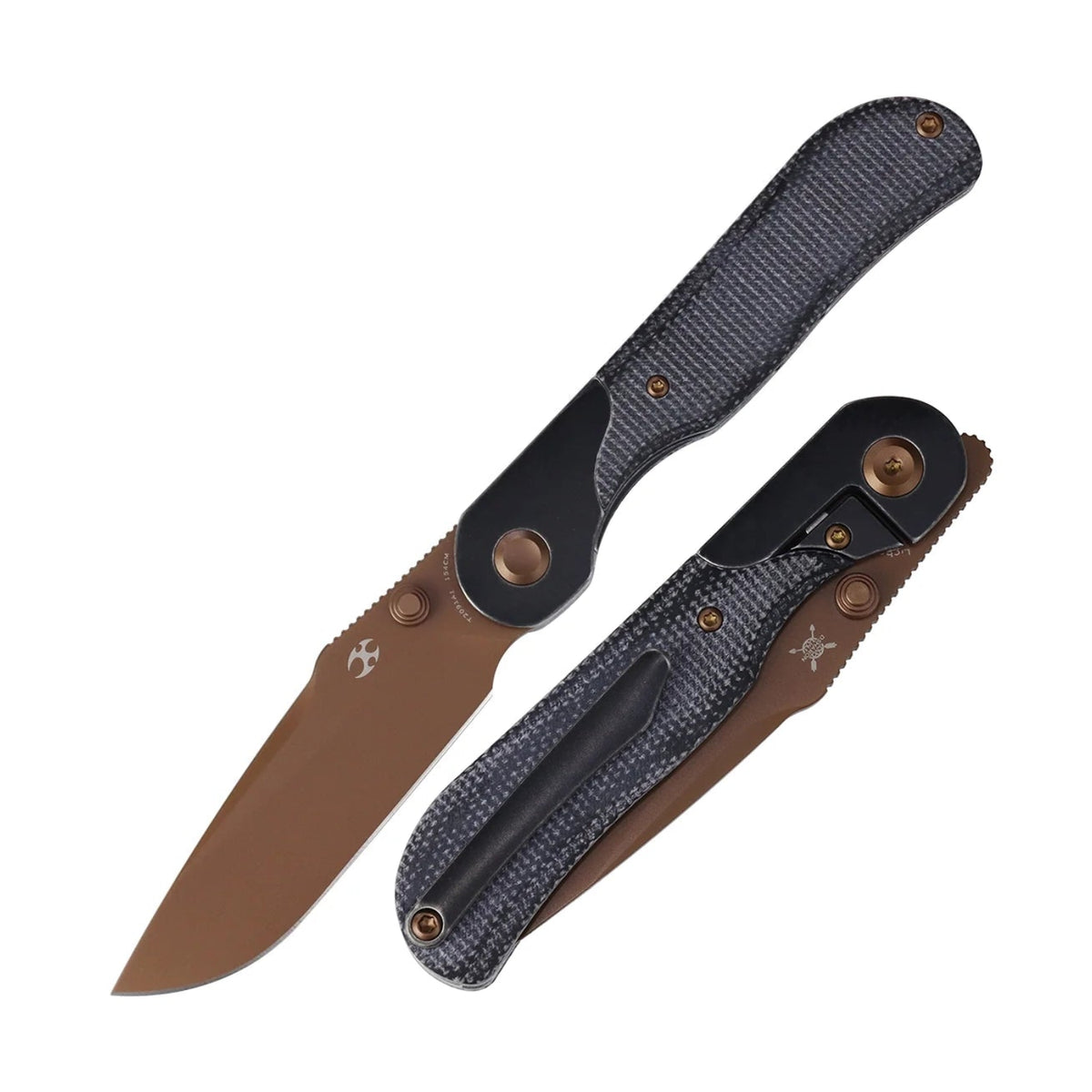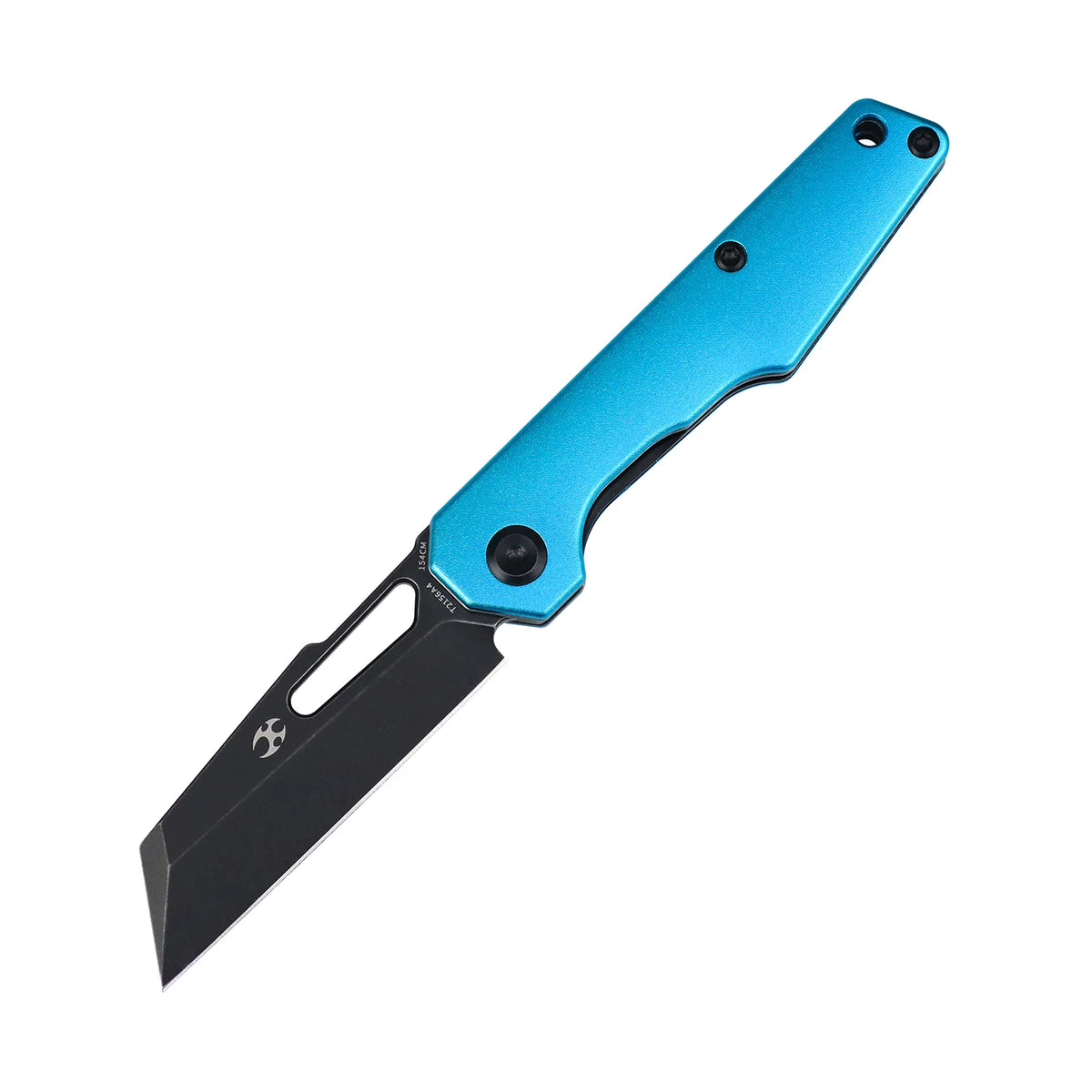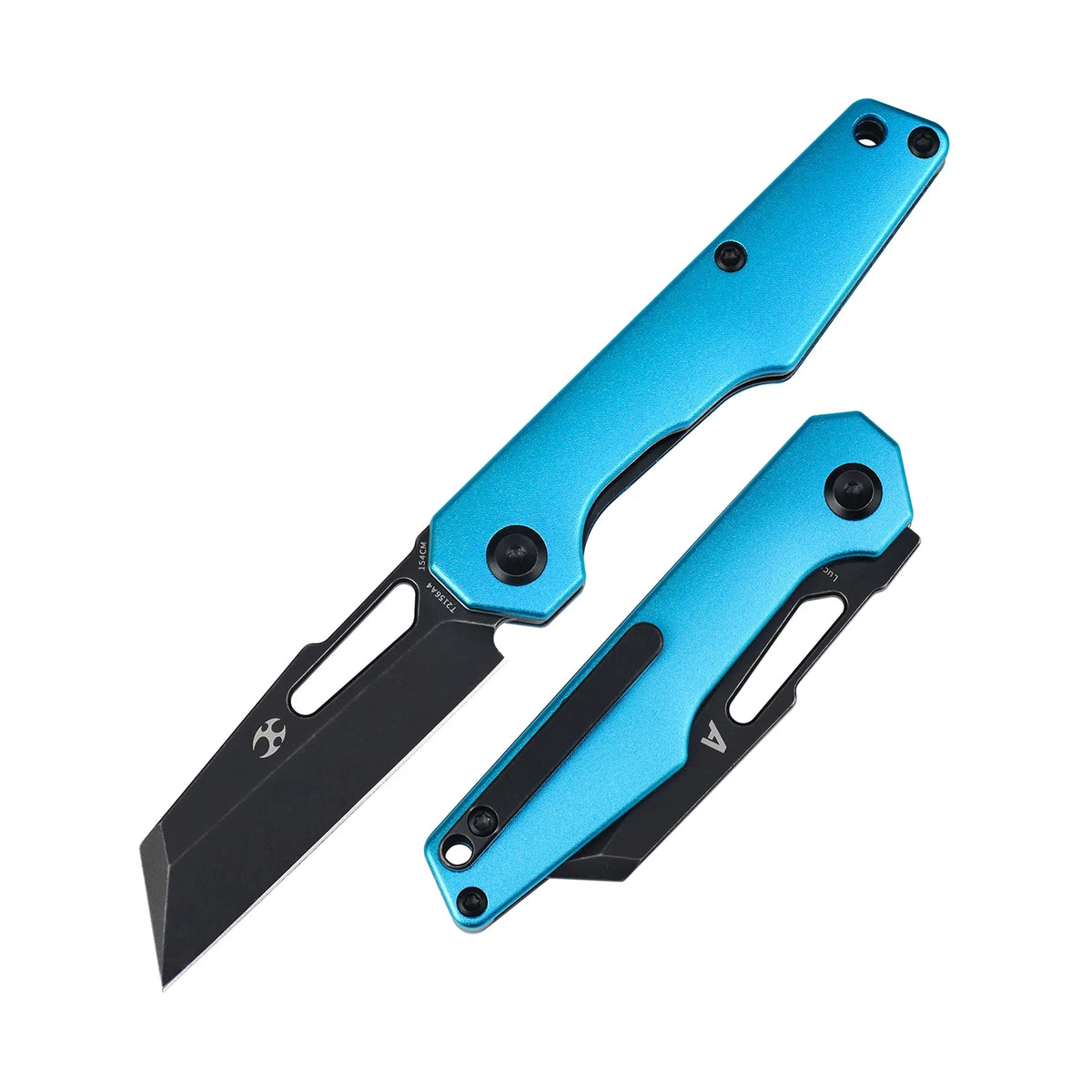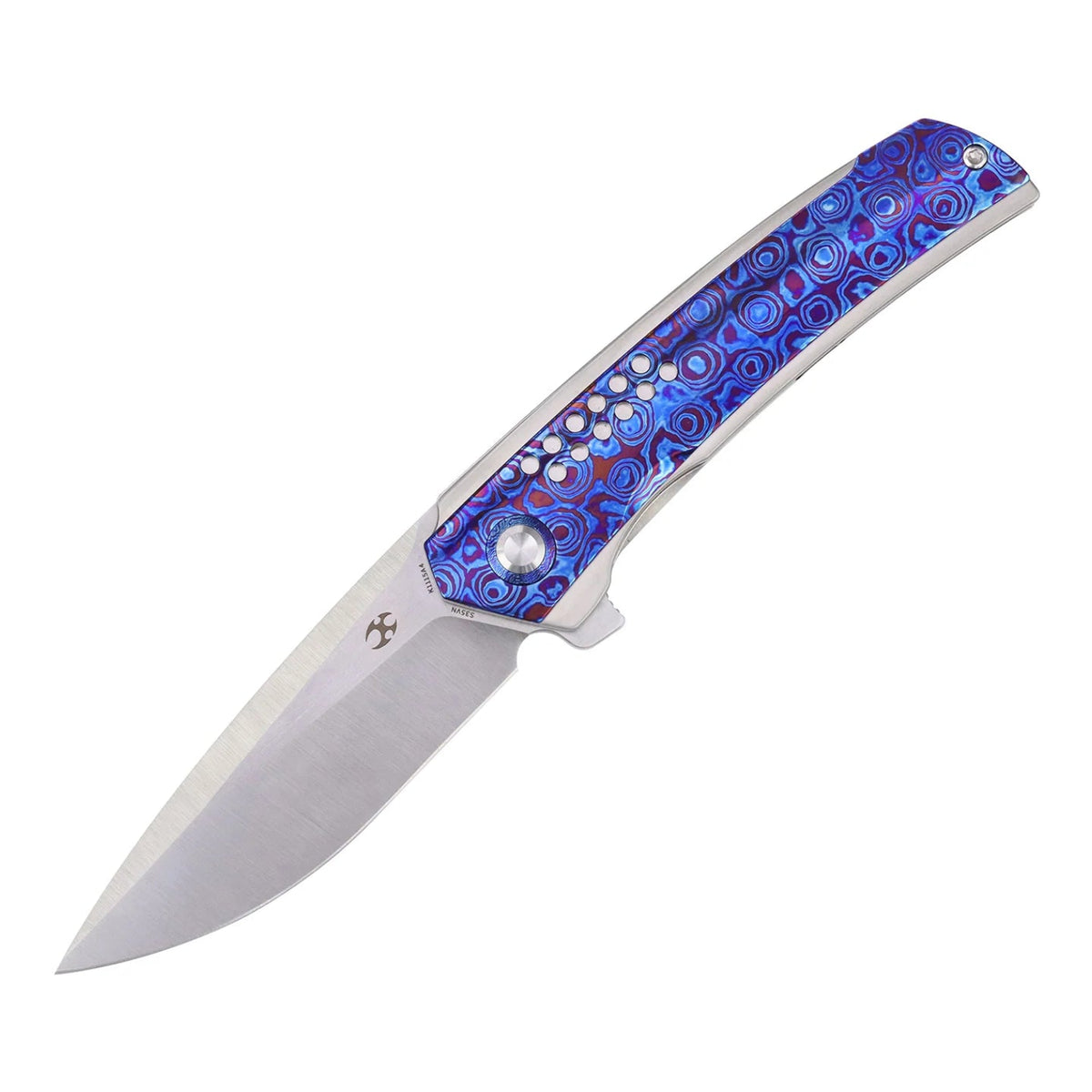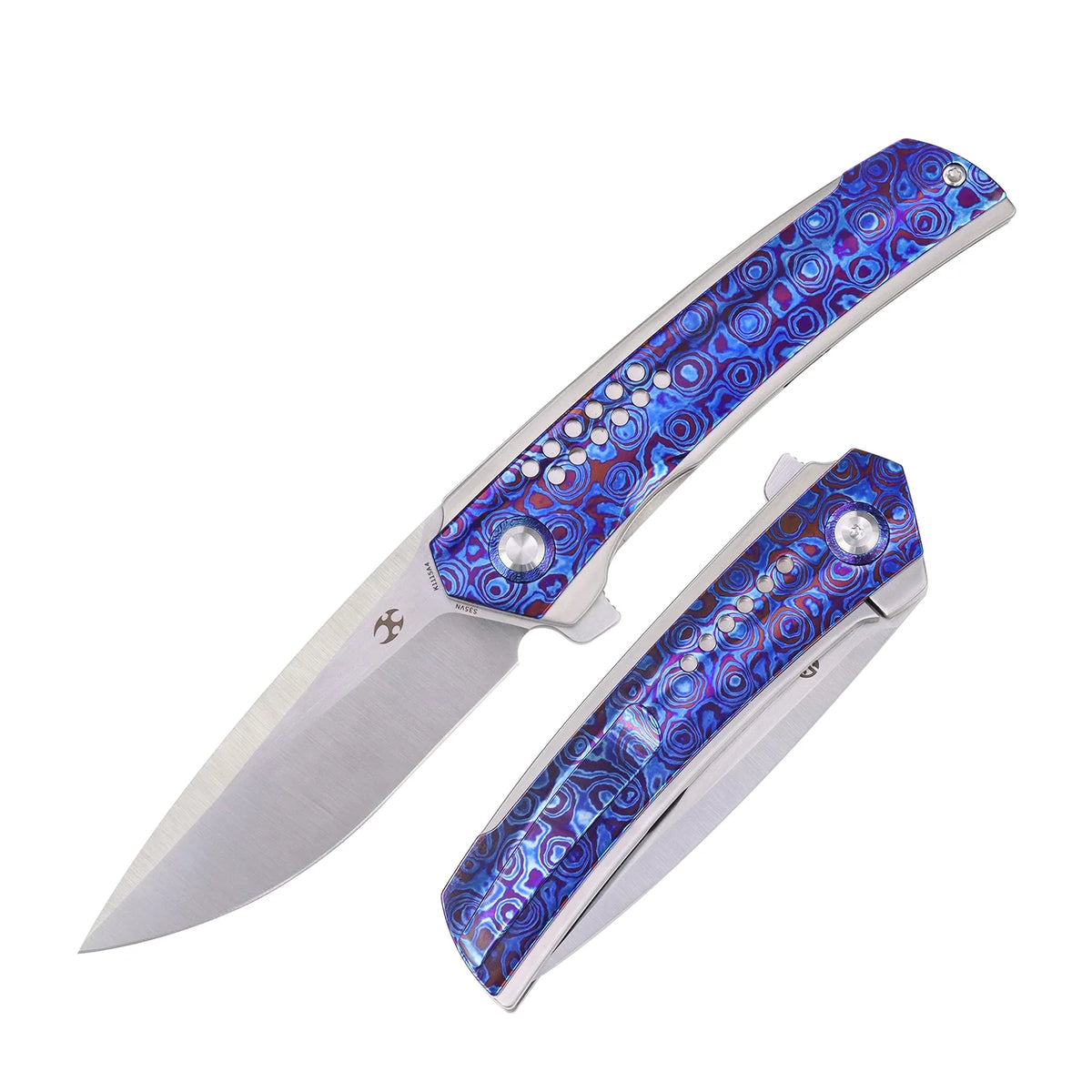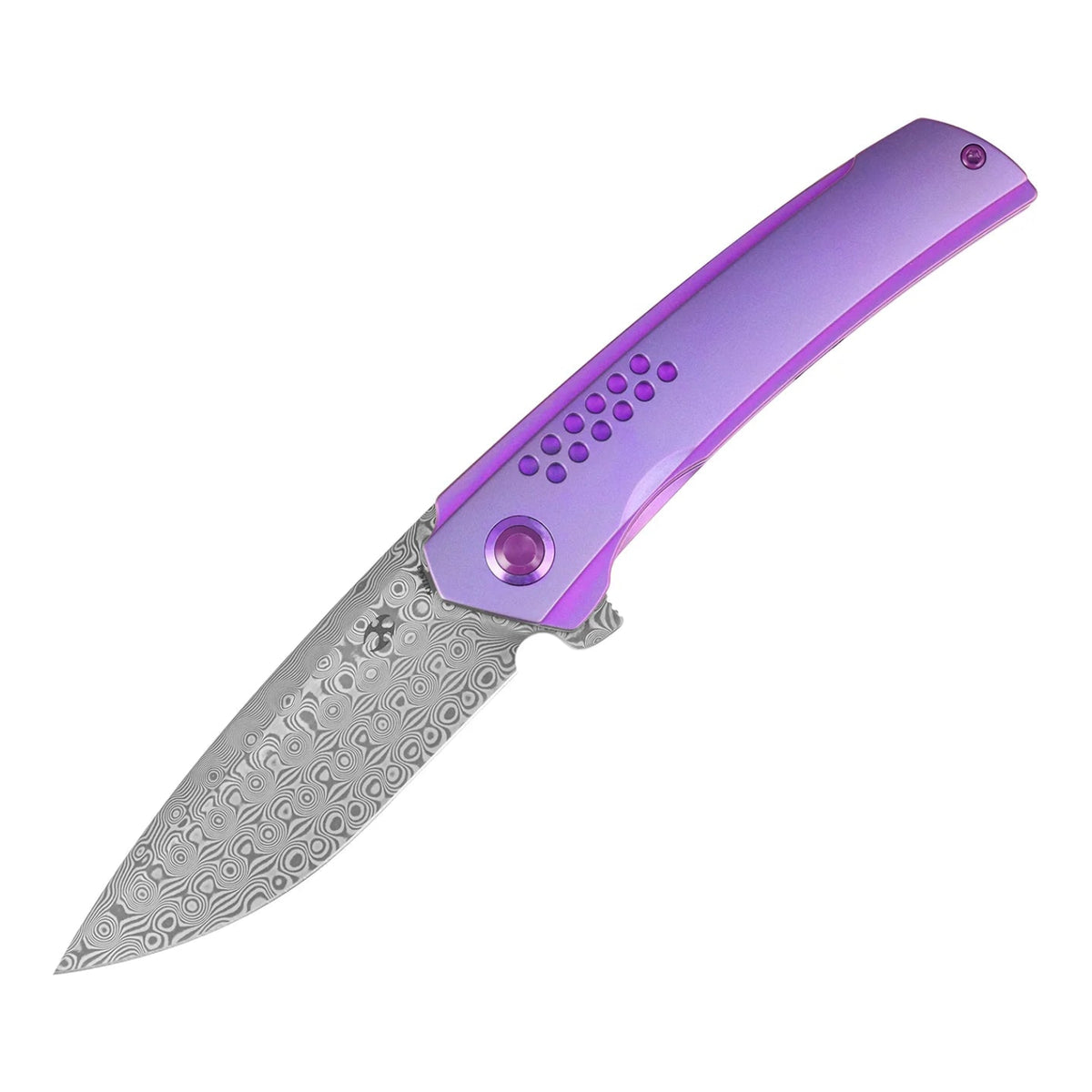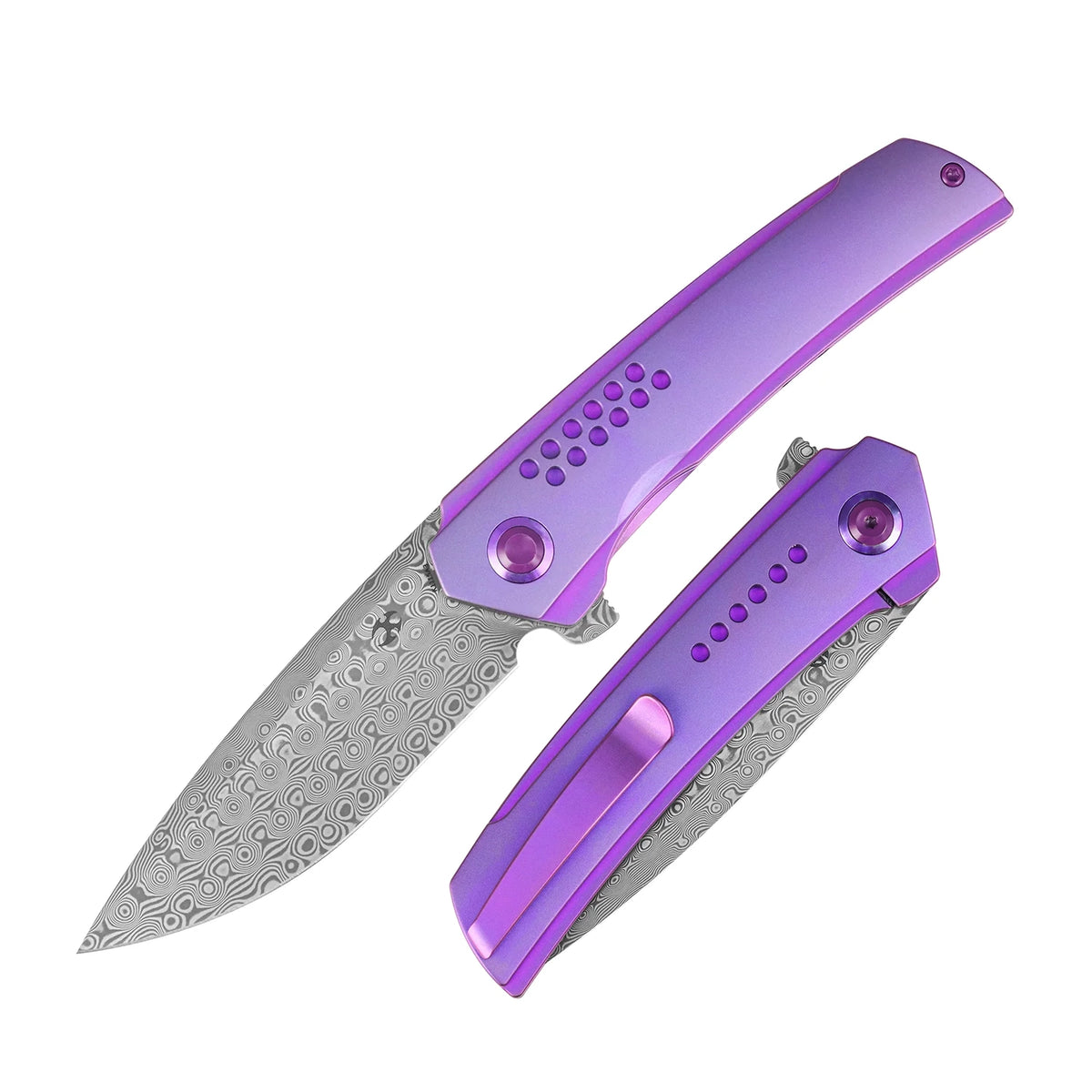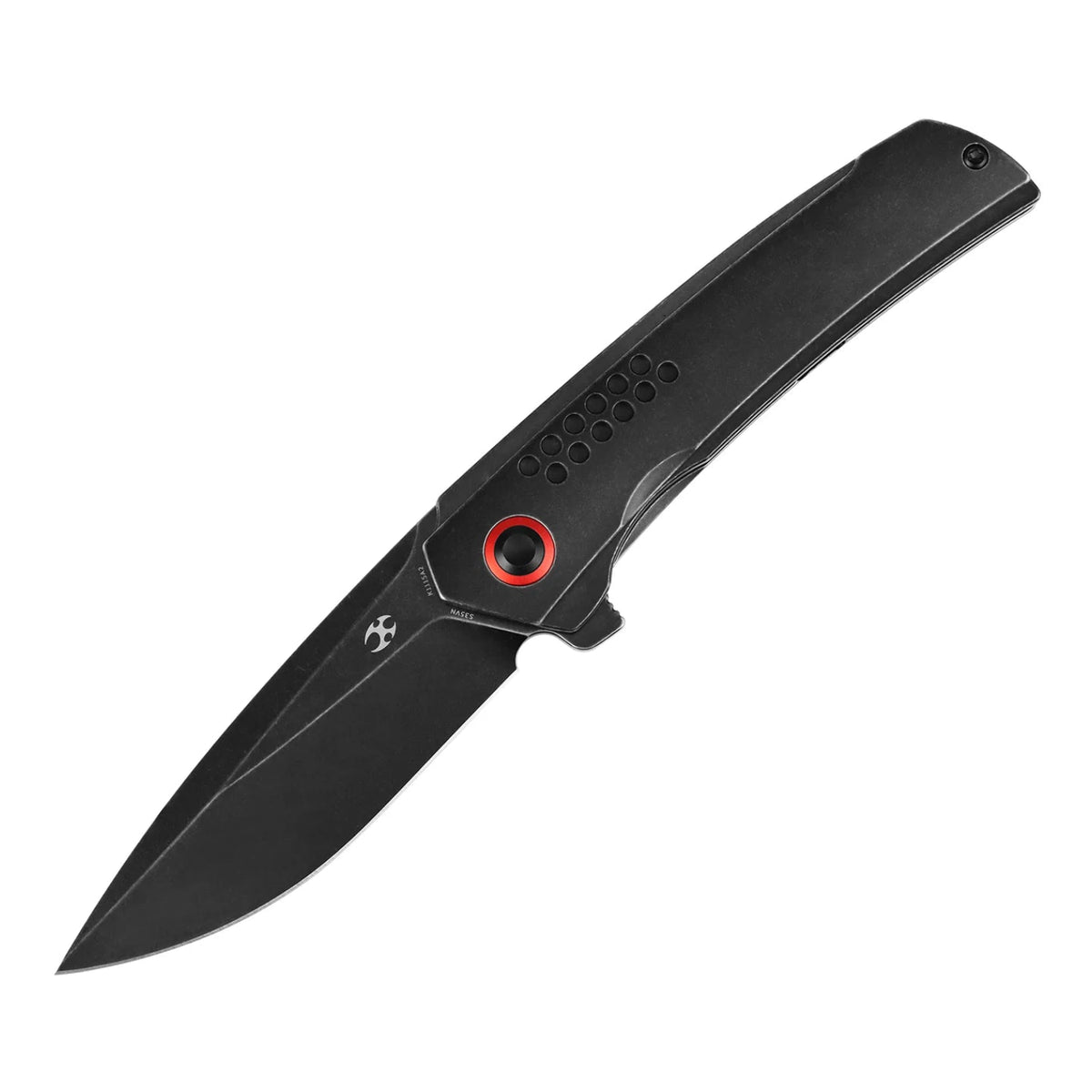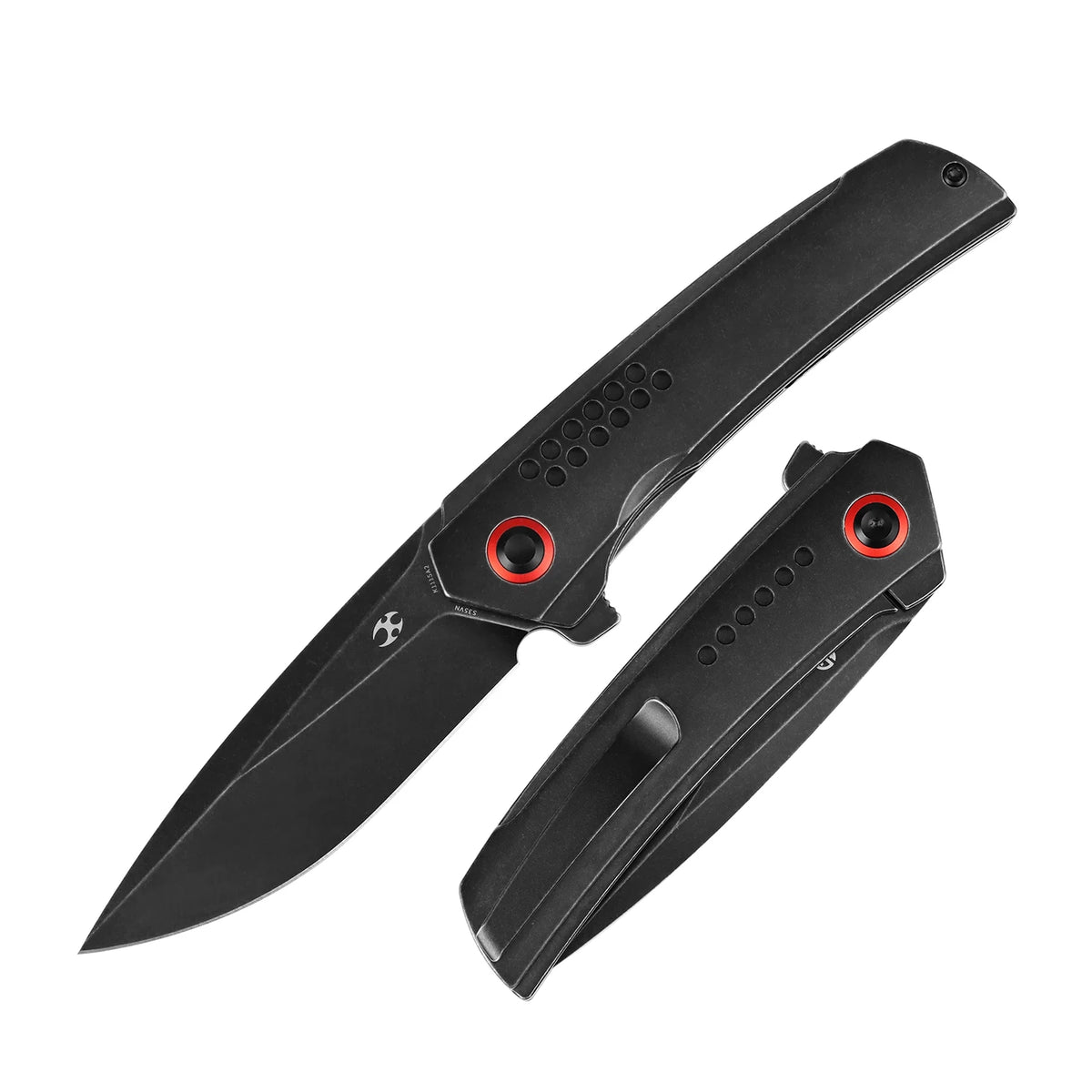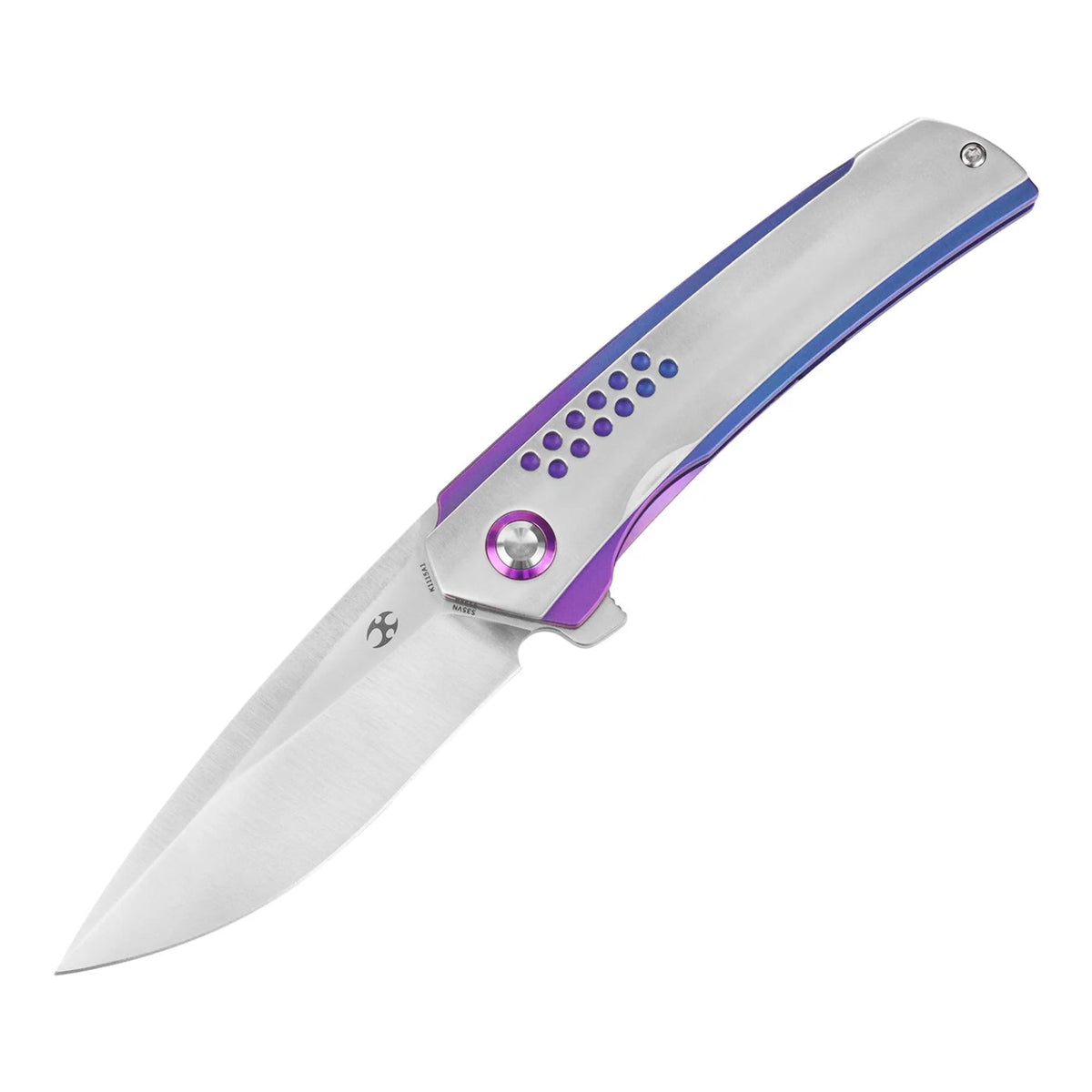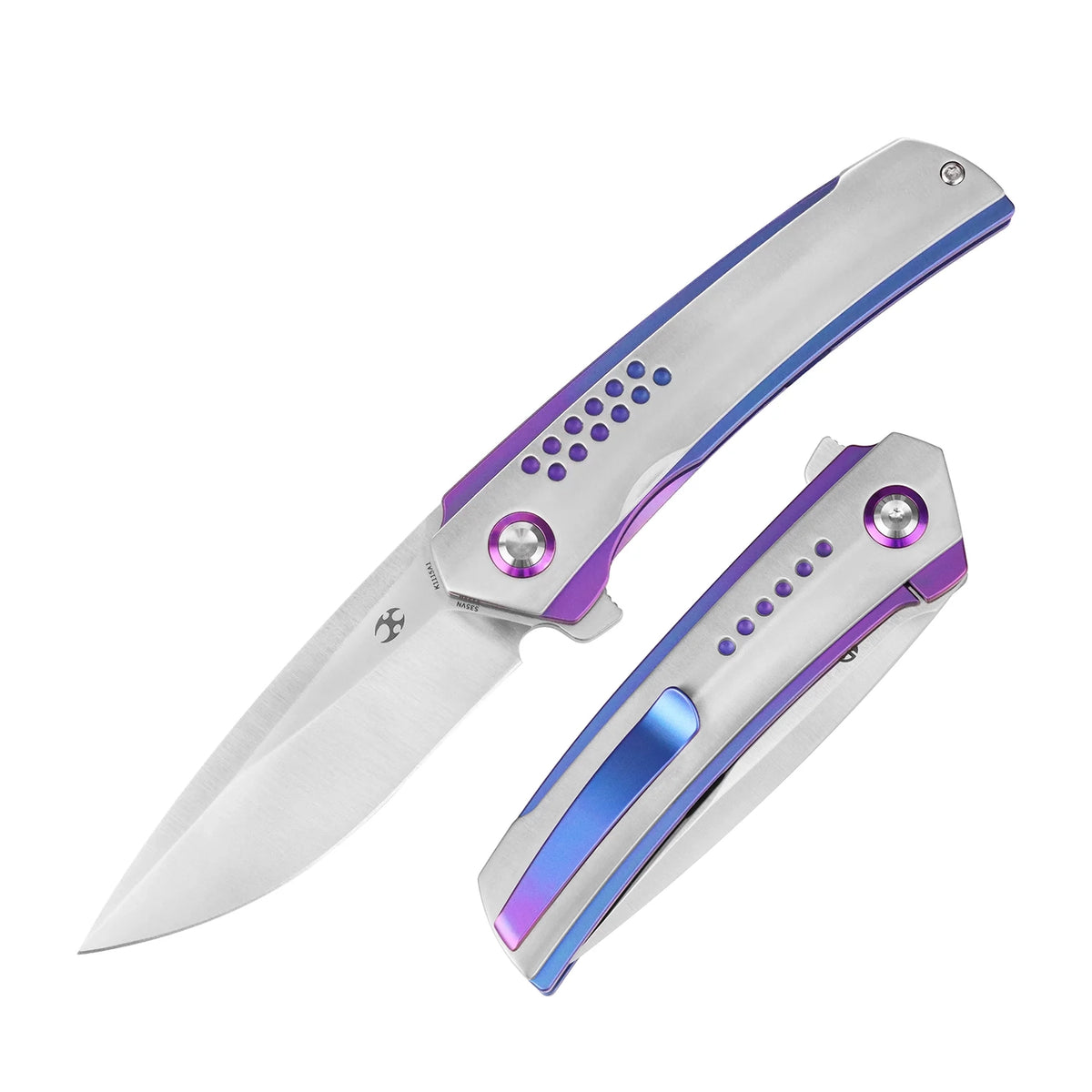

Overview & First Impressions
Shibori is resistance made visible: folds, clamps and stitches that keep indigo out of chosen places, then unfold to reveal pattern. Between dye baths, the fabric worker's blade does quiet essential work: trimming stitching from resisted areas, cutting clamp boards' rubber bindings, slicing tied bundles open without nicking the cloth beneath, and trimming finished panels square for hemming. One dedicated folder moves through all of it.
Materials & Construction
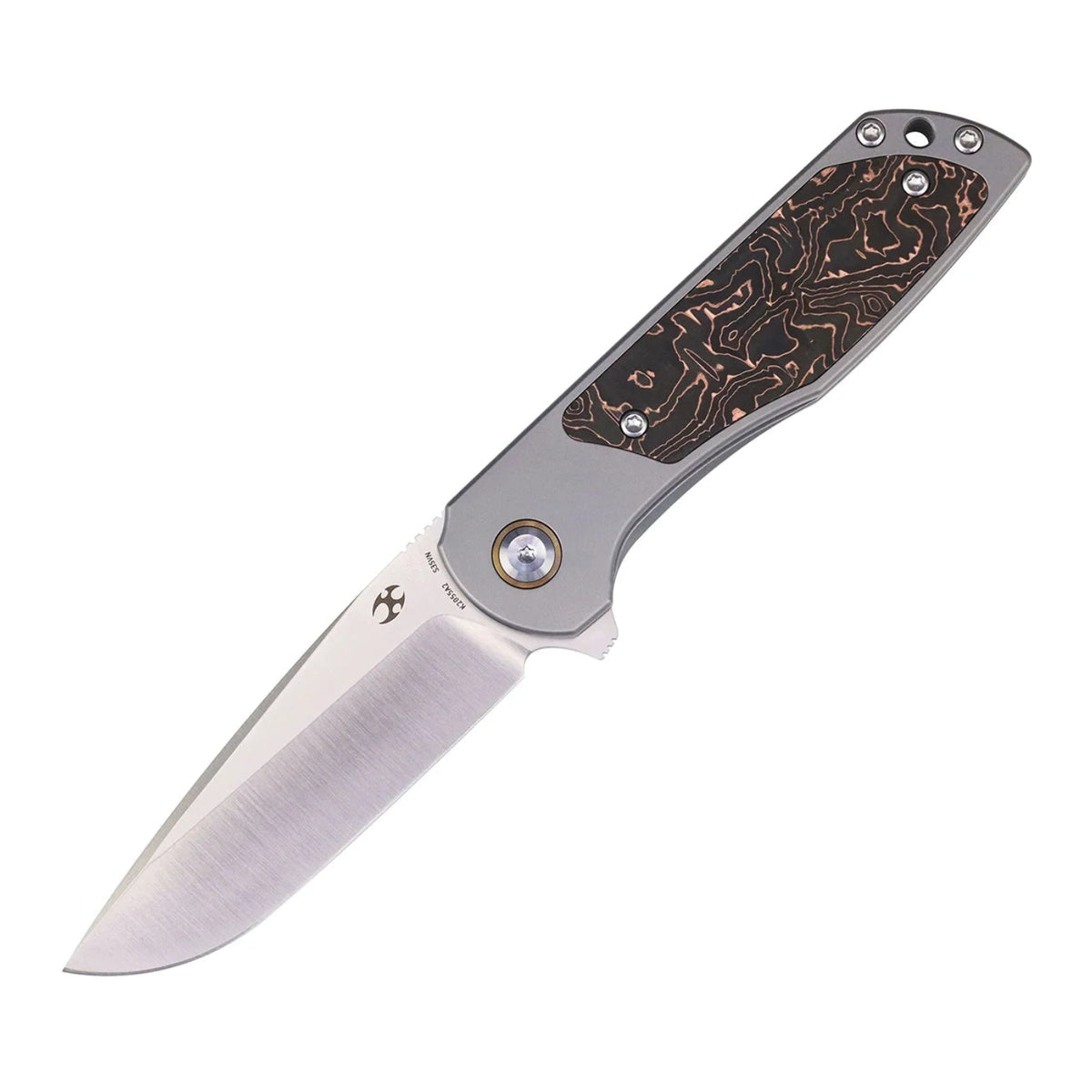
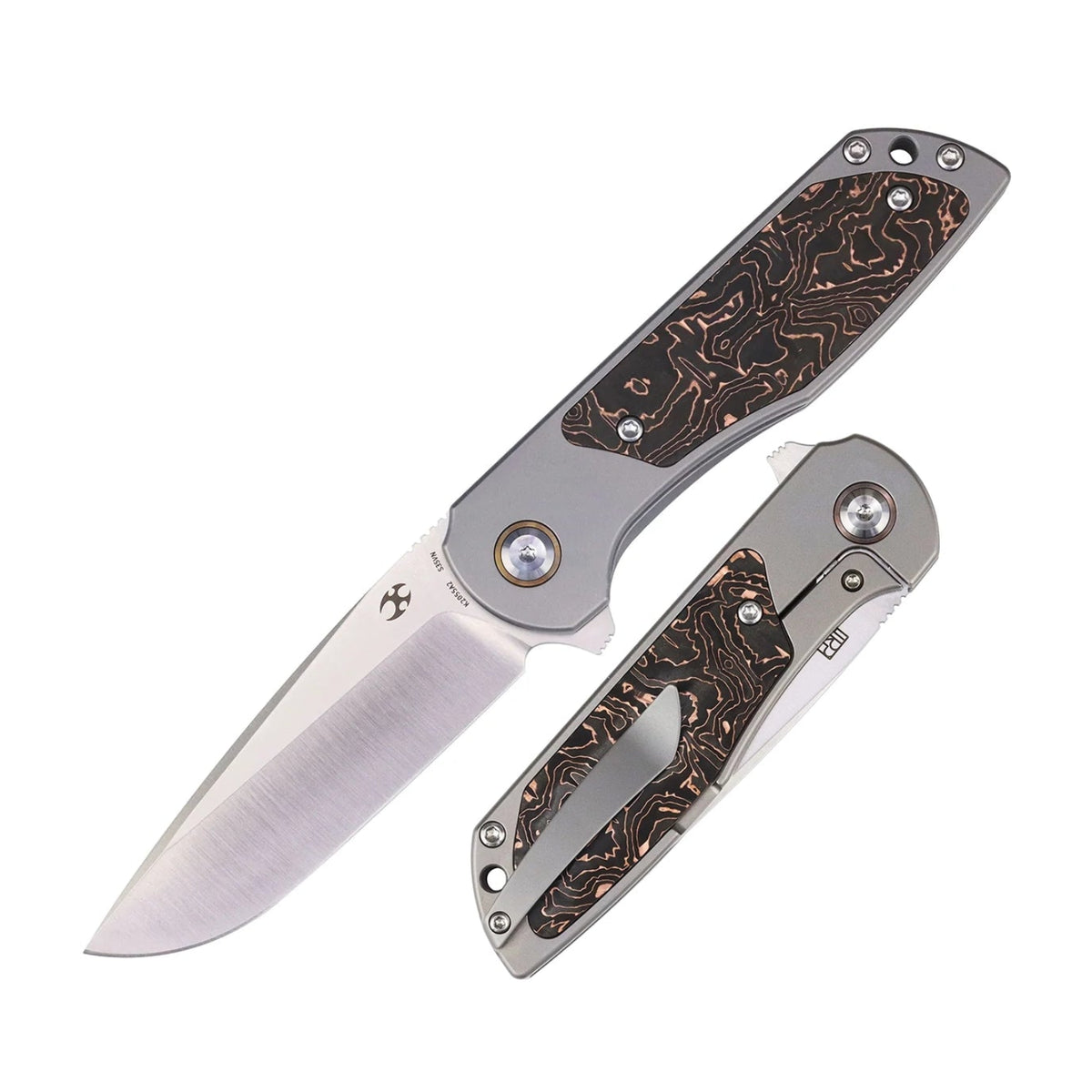
Indigo vats are chemistry: alkaline, reducing, and mildly corrosive to ordinary steel edges left wet overnight. 154CM shrugs off a rinse-and-dry routine, holding its edge through session after session of trimming. The Falko BL01D pairs that steel with a carbon fibre and G10 handle that neither swells nor fades in the humid, dye-spattered environment of a working studio, and Bestech knives' fit and finish keeps dye out of the pivot.

Design & Details
The liner lock engages with a click that a wet-gloved hand can confirm by feel, useful when the other hand holds a dripping bundle. The G10 side grips when everything else is slick, the carbon fibre presentation face cleans of dye with a wipe, and the blade's fine point slips between resist stitches without dragging the surrounding cloth. It is a studio tool disguised as a gentleman's folder.
Real-World Use
Four cuts repeat across shibori work. Opening tied bundles after the final bath needs a tip used with patience, since one nick ruins weeks of resistance planning. Trimming resist stitching needs a fresh, shallow edge. Cutting rubber bindings from clamp work needs force and a stable lock. Squaring finished panels needs a long, straight slicing pass. A folder that holds its apex through all four earns its place beside the vat.

Ownership Notes
Textile studios are wet, dye-stained places where gear either survives or quietly rots, which is why practitioners get opinionated about their folding knives. Anyone browsing EDC knives for studio duty should look at the Falko at EdcMall: the 154CM blade resists the vat's aftermath, and the handle materials laugh at humidity that would swell wood or dull chrome-plated bargain steel. Studios that mix shibori with other textile work tend to keep their folding knives and shears strictly separate, because indigo residue travels on any shared blade.
Who Is This For?
Buy it if you dye, bind or trim fabric professionally and want one blade for bundles, bindings and hemming that survives alkaline vats and humid air. It suits shibori artists, indigo dyers, and quilt studios that cut resist bindings daily. Skip it if your textile work is dry pinning only, since shears own that. For wet, dye-heavy studios, this is the folder that keeps working between baths.
Final Verdict
Shibori rewards patience, and the Falko BL01D rewards the patience of owning the right blade: 154CM steel that shrugs off vat chemistry, a liner lock that confirms itself by feel, and handle materials that clean with a wipe. It opens bundles without nicking, trims stitching without fraying, and squares panels without wandering. Dedicate it to the studio and it will outlast a shelf of disposable blades.