
In the realm of high-end cutlery, few phrases capture the imagination quite like "Damascus Steel." It evokes images of ancient warriors, legendary blades that could slice silk in mid-air, and the mysterious art of the forge. But in the modern era, particularly when discussing the Mcusta MC-0037D Shinra Katana, Damascus is more than just a legend—it is a sophisticated metallurgical achievement.
If you have ever wondered what "33-layer Damascus" actually means for the performance of your knife, or why the Mcusta Shinra series is considered a pinnacle of Japanese craftsmanship, this guide is for you.
What Exactly is 33-Layer Damascus Steel?
To the untrained eye, Damascus steel is defined by its beautiful, watery patterns. However, the true value lies in the construction. Modern Damascus, often referred to as pattern-welded steel, is created by layering different types of steel and forging them together into a single billet.
In the case of the Mcusta MC-0037D, the "33-layer" designation refers to a specific "San Mai" (three-layer) style construction with a decorative twist:
-
The Core (1 Layer): A central core of high-performance VG-10 steel.
-
The Cladding (32 Layers): 16 layers of alternating stainless steel on each side of the core.
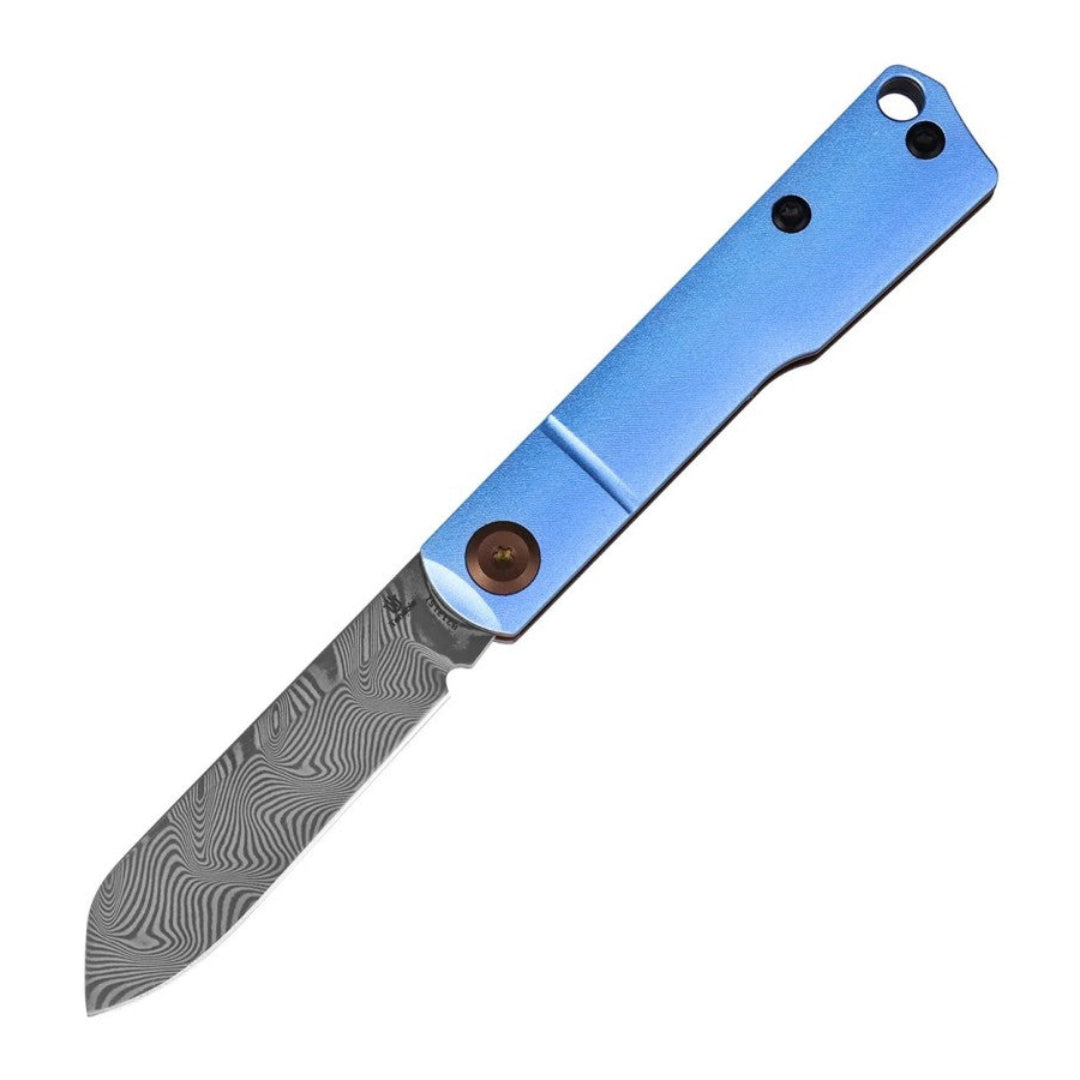
When these 33 layers are forged, ground, and then acid-etched, the different alloys react differently to the acid. This reveals the stunning, high-contrast ripples that make each Mcusta knife a unique work of art.
The Core of the Matter: Why VG-10?
While the 32 outer layers provide the beauty, the single core layer provides the "bite." Mcusta utilizes VG-10 stainless steel, a premium Japanese alloy often called "Gold Steel."
VG-10 is prized for its specific chemical composition, featuring high carbon for hardness, chromium for corrosion resistance, and cobalt for structural strength. By using VG-10 as the core of a Damascus blade, Mcusta ensures that the knife possesses a Rockwell Hardness of 60-61. This allows the blade to maintain a "scary sharp" edge far longer than standard stainless steels, making it a reliable tool for daily tasks.
The Aesthetic of the Shinra Katana (MC-0037D)
The Mcusta MC-0037D is a tribute to the traditional Japanese sword. The "Shinra" name translates to the "Universe" or "All Creation," suggesting a tool that is in harmony with the natural world.
All-Damascus Luxury
Unlike knives that feature a Damascus blade paired with a wooden handle, the MC-0037D is an all-steel folder. Both the blade and the handle scales are crafted from 33-layer Damascus steel. This creates a mesmerizing visual continuity. The handle is precision-milled with finger grooves that mimic the Tsuka-maki (handle wrapping) of a Samurai's Katana, offering a secure grip and a timeless silhouette.
The Discontinued "No Clip" Elegance
This specific version of the MC-0037D is the highly sought-after discontinued model that lacks a pocket clip. For the true gentleman collector, the absence of a clip is a feature, not a flaw. It allows the hand to fully appreciate the textured Damascus steel without obstruction and ensures the knife slips into a pocket or a suit jacket with absolute discretion.
Technical Specifications: A Masterpiece in Detail
For those who appreciate the finer points of EDC gear, the MC-0037D offers impressive dimensions:
-
Overall Length: 6.31"
-
Closed Length: 3.56"
-
Blade Length: 2.75"
-
Blade Material: 33-Layer Damascus with VG-10 Core
-
Handle Material: Matching Damascus Steel
-
Locking Mechanism: Precision Liner Lock
-
Origin: Made in Seki, Japan
Why Choose a 33-Layer Damascus Knife?
Beyond the obvious visual appeal, there are several functional reasons to invest in a Damascus blade from Mcusta:
1. The "Seki" Heritage
Every Mcusta knife is born in Seki City, the historical capital of Japanese sword-making. Mcusta (Machine Custom) combines modern laser cutting technology with traditional hand-finishing. This ensures that every blade has the soul of a handmade knife with the tight tolerances of a machine-made one.
2. Structural Integrity
The layering process doesn't just look good; it creates a blade that is inherently tough. The softer stainless cladding protects the hard VG-10 core from being brittle, acting as a shock absorber for the cutting edge.
3. A Collector's Heirloom
Because the Damascus pattern is a result of the forging process, no two knives are identical. Your MC-0037D will have a "fingerprint" of steel that is entirely its own. Combined with the Nishijin woven pouch included with the knife, it is an heirloom-quality piece ready to be passed down through generations.
Maintenance: Keeping Your Damascus Pristine
While the 33-layer Damascus used by Mcusta is highly resistant to the elements, a high-performance tool requires a bit of care:
-
Clean and Dry: After use, wipe the blade to remove any moisture or acids from food.
-
Periodic Oiling: A light coat of mineral oil on the pivot and blade will keep the action smooth and the steel vibrant.
-
Sharpening: Because of the hardness of the VG-10 core, we recommend using a high-quality whetstone or a professional service to maintain the original factory edge.
Conclusion: The Ultimate Gentleman's Folder
The Mcusta MC-0037D Shinra Katana is a masterclass in Japanese metallurgy. It takes the complex science of 33-layer Damascus steel and shapes it into a tool that is both a high-performance slicer and a cultural icon.
Whether you are a seasoned collector or a newcomer to the world of fine cutlery, the MC-0037D offers a tactile connection to the history of the Samurai, refined for the modern world. It is not just a knife; it is a testament to the belief that even the most functional tools should be beautiful.
Experience the precision of Seki today.
Shop the Mcusta MC-0037D Shinra Katana at EDCMALL and own a piece of the Damascus legend.