
If you’ve spent any time in the knife community, you’ve almost certainly come across the name 154CM. It’s a steel that carries a legacy—one forged in jet engines, battle-tested by elite forces, and refined by some of the most respected makers in the world. In an era where new “super steels” seem to appear every other month, 154CM has quietly endured as a gold standard for reliability, real-world performance, and value.
Whether you’re looking for a rugged everyday carry, a dedicated bushcraft tool, or a hard-use tactical knife, this guide will walk you through what makes 154CM so special—and introduce you to five of the best knives made from it.
What Is 154CM Steel?
154CM is a martensitic stainless steel originally developed by Crucible Industries in 1959 for the U.S. Air Force’s Wright Air Development Center. Its intended use? High-stress, high-heat applications—specifically, jet engine turbine blades. It was a bearing steel designed to withstand extreme conditions where ordinary steels would fail.
So how did a jet engine component become one of the most beloved knife steels of all time? Enter Bob Loveless.
In 1972, the legendary custom knifemaker Bob Loveless—widely regarded as one of the most innovative knife designers of the 20th century—recognized 154CM’s potential for blade making. He began using it in his custom knives, and word quickly spread throughout the industry. For much of the 1970s and 1980s, 154CM was the “super steel” of its era—one of the first stainless steels that could genuinely compete with high-carbon tool steels in edge retention and toughness. Loveless also popularized ATS-34 (Hitachi’s Japanese counterpart to 154CM), but 154CM remained the original American original.
Today, 154CM is still produced by Crucible Industries and remains a favorite among custom makers and major production brands alike.
Key Properties of 154CM
What makes 154CM so effective as a blade steel comes down to its carefully balanced chemistry and the real-world performance that chemistry delivers.
Chemical Composition
154CM’s composition is straightforward but potent:
-
Carbon (1.05%): Provides hardness and edge retention.
-
Chromium (14%): Delivers excellent corrosion resistance (far superior to non-stainless tool steels).
-
Molybdenum (4%): Enhances strength, wear resistance, and hardenability.
-
Manganese (0.5%) & Silicon (0.3–0.8%): Improve overall hardenability and strength.
This 4% molybdenum content is what truly sets 154CM apart from earlier stainless steels like 440C. The molybdenum significantly improves wear resistance and “hot hardness”—the ability to retain hardness at elevated temperatures.
Performance Characteristics
-
Edge Retention: 154CM holds an edge notably better than 440C while being easier to resharpen than many of today’s ultra-high-carbide “super steels” like S90V or Maxamet. It offers what many experienced users call “real-world edge retention”—enough to get through days or weeks of hard use without needing a touch-up, but not so extreme that you dread the sharpening session.
-
Corrosion Resistance: With 14% chromium, 154CM is highly stain-resistant. It won’t rust in humid environments or with exposure to sweat, moisture, or salt air—provided you practice basic knife maintenance. It’s not “rust-proof” like H1 or LC200N, but for 99% of users in 99% of conditions, corrosion simply isn’t an issue.
-
Toughness: Properly heat-treated 154CM offers excellent toughness and chip resistance. It can take lateral pressure and impact without fracturing or losing chunks of the edge—a critical quality for hard-use knives used in prying, chopping, or batoning.
-
Ease of Sharpening: This is where 154CM truly shines compared to many modern “super steels.” While it’s harder than 440C and holds an edge longer, it sharpens readily on conventional stones. You don’t need diamond abrasives or specialized equipment to bring a dull 154CM blade back to razor sharpness.
-
Hardness: After proper heat treatment, 154CM typically reaches 58–61 HRC on the Rockwell scale—an ideal sweet spot that balances wear resistance with toughness.
154CM vs. CPM-154: What’s the Difference?
A quick clarification is important here because the names are often confused. CPM-154 is a different product, though it shares the same chemical composition as 154CM.
The key difference lies in manufacturing: 154CM is produced using conventional ingot metallurgy (molten steel poured into molds), while CPM-154 uses Crucible’s proprietary Particle Metallurgy (CPM) process. In the CPM process, molten steel is atomized into fine powder and then consolidated under high pressure, resulting in a much more uniform carbide distribution.
What does that mean for you? CPM-154 offers slightly higher toughness and even better wear resistance than standard 154CM. However, properly heat-treated conventional 154CM remains an outstanding performer—and it’s typically more affordable than its powder-metallurgy cousin. Both are excellent. For this guide, we’re focusing on knives made with standard 154CM.
Why Choose 154CM in 2026?
In a market flooded with exotic steels like MagnaCut, S35VN, M390, and Elmax, why should a shopper in 2026 still consider 154CM? A few compelling reasons:
-
Proven Track Record: 154CM has been used by the U.S. military and special operations forces for over 30 years. It has been tested in every theater of combat imaginable. That kind of real-world validation matters.
-
Forgiving and User-Friendly: Unlike some ultra-hard steels that chip easily or require diamond stones to sharpen, 154CM is forgiving. It’s a steel that works with you, not against you—especially valuable if you’re not a professional sharpener.
-
Excellent Value: 154CM delivers premium performance at a lower price point than many newer powder-metallurgy steels. You get genuine quality without paying for the “latest and greatest” premium.
-
Great Balance: 154CM hits the “Goldilocks zone” of knife steel performance—enough edge retention for extended use, enough toughness to survive hard use, enough corrosion resistance for almost any environment, and enough sharpenability to keep the blade performing for years.
Five Best 154CM Steel Knives
Now let’s get to the main event. Here are five outstanding knives made with 154CM steel, representing different categories and use cases.
1. Benchmade 551 Griptilian (Folding / EDC / All-Rounder)
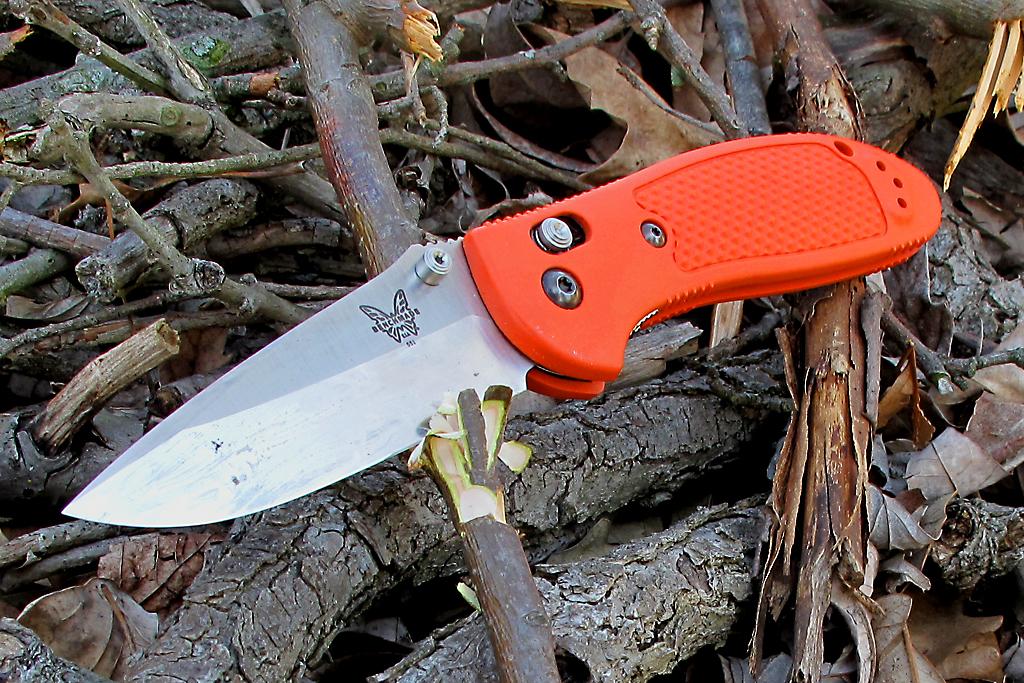
The Benchmade Griptilian is arguably one of the most iconic folding knives of the past two decades. The standard 551 model features a 3.45-inch 154CM drop-point blade with Benchmade’s legendary AXIS lock mechanism and textured nylon handle scales.
What makes the Griptilian special is its sheer versatility. It’s compact enough for daily pocket carry but substantial enough to handle serious cutting tasks. The blade hardness is rated at 58–60 HRC, and users consistently praise how razor-sharp these knives arrive out of the box. The AXIS lock allows for smooth, ambidextrous one-handed operation—flip it open with thumb studs, close it with a simple pull of the lock bar.
Whether you need to break down cardboard, cut rope, prepare food, or handle emergency tasks, the Griptilian does it all without complaint. It’s the knife that many enthusiasts buy first—and never stop carrying.
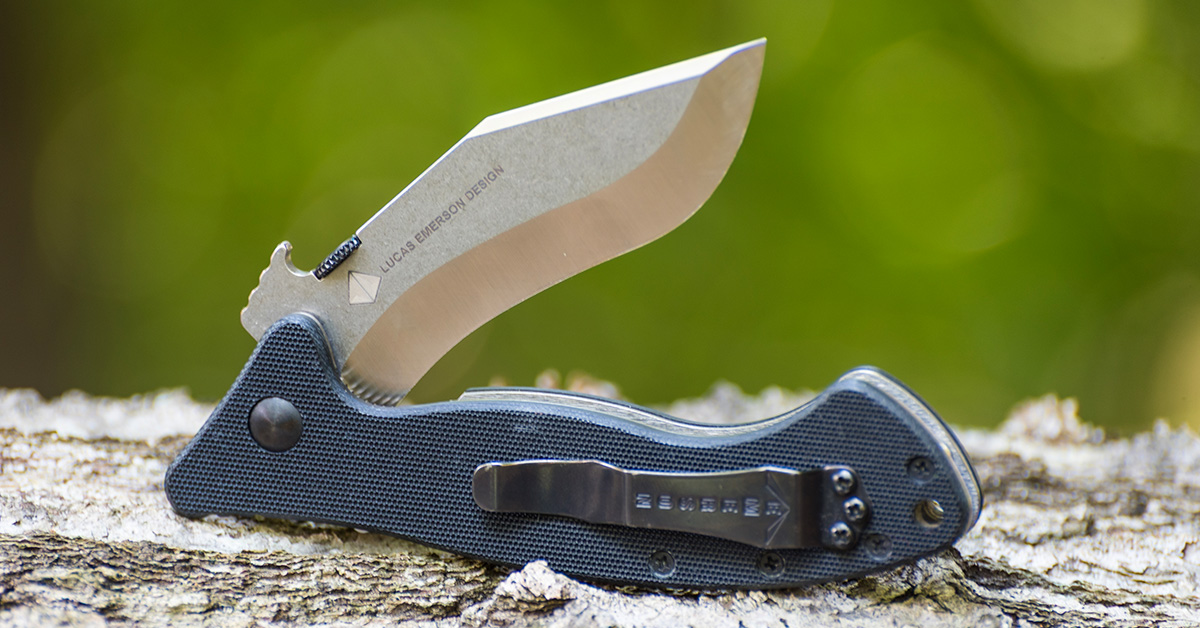
2. Emerson Knives MX-200 (Folding / Tactical / Hard-Use)
Emerson Knives has used 154CM as their “battle steel” for decades—and for good reason. Emerson states that 154CM has been “battle tested and proven by the US military war fighters and international special operations forces in every theater of combat for over 30 years”.
The MX-200 is a masterfully crafted Kukri-style folding knife designed by Lucas Emerson. It features a 3.7-inch 154CM blade with a distinctive V-grind and G-10 handle scales. The blade thickness is .125 inches, providing a robust platform for hard use without excessive weight.
What sets the MX-200 apart is its combination of Kukri-inspired geometry (excellent for slicing and chopping) with the portability of a folding knife. Emerson’s proprietary heat-treating process pushes 154CM to 57–59 HRC, optimized for toughness under extreme lateral pressure. The Thunderstorm finish option (a subdued, scratch-resistant coating) adds both visual character and practical durability.
This is a knife for people who actually use their blades hard—military, law enforcement, outdoor professionals, and serious enthusiasts who demand absolute reliability.
3. Gerber Gator 154CM Drop Point (Folding / Outdoor / Heavy-Duty)
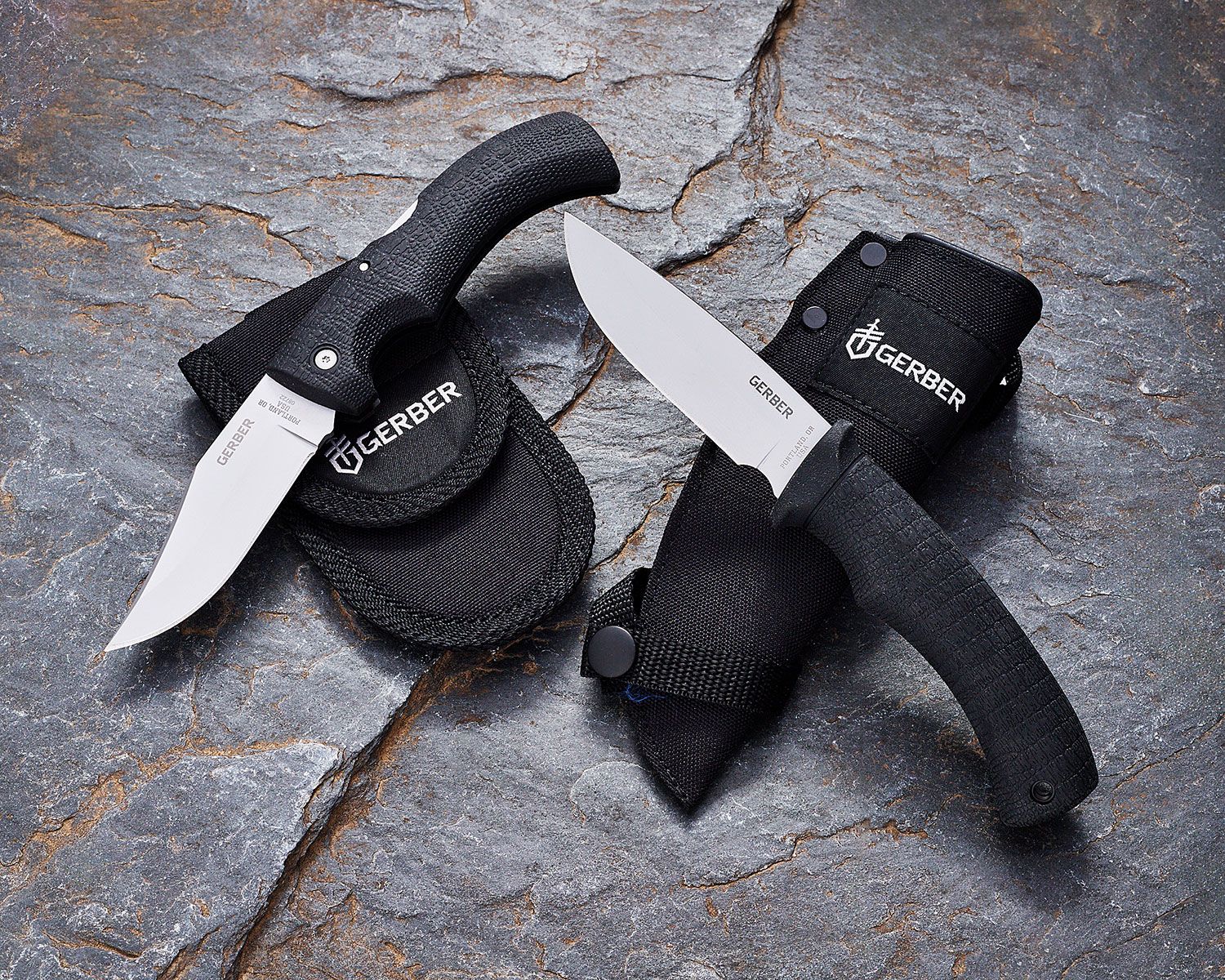
The Gerber Gator has been a trusted name in outdoor knives for years, and the 154CM version takes its performance to another level. This folder features a 3.74-inch (approx. 95mm) drop-point blade made of 154CM stainless steel, paired with Gerber’s signature Gator Grip handle—a textured rubber overmold over a glass-filled nylon core.
The Gator Grip handle is a standout feature. Even when your hands are wet, muddy, or gloved, the textured surface provides a secure, non-slip grip that inspires confidence during demanding tasks. The lock-back mechanism is solid and reliable, with zero blade play when open.
At approximately 8.5 inches overall when open, the Gator gives you real cutting reach without being cumbersome in a pack or on a belt. The included ballistic nylon sheath adds safe carry options for trail use. This knife excels in hunting, camping, fishing, and general outdoor work—any environment where reliability and grip matter.
4. Bestech Knives Syntax Linerlock (Folding / EDC / Lightweight)
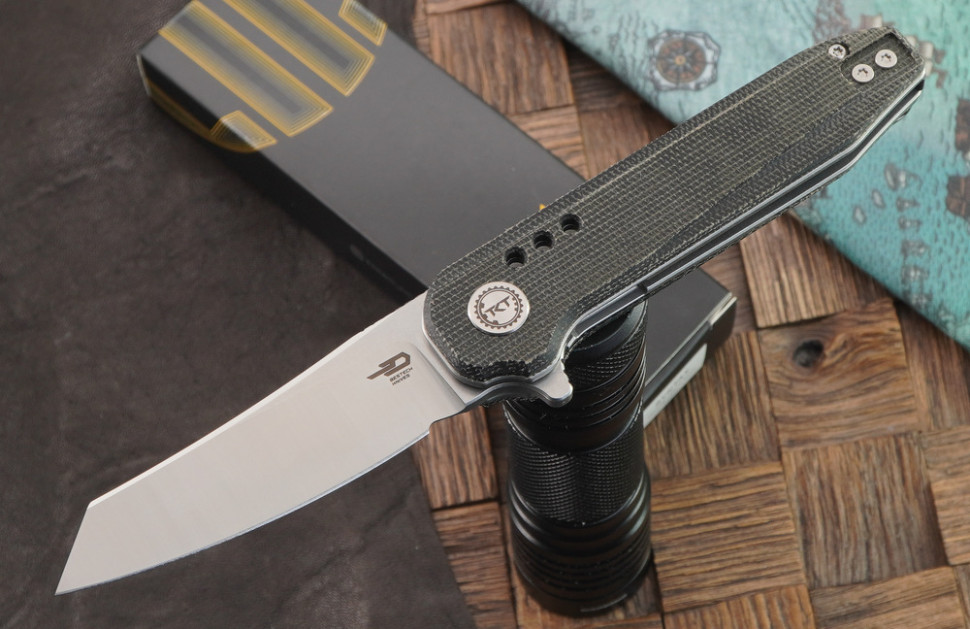
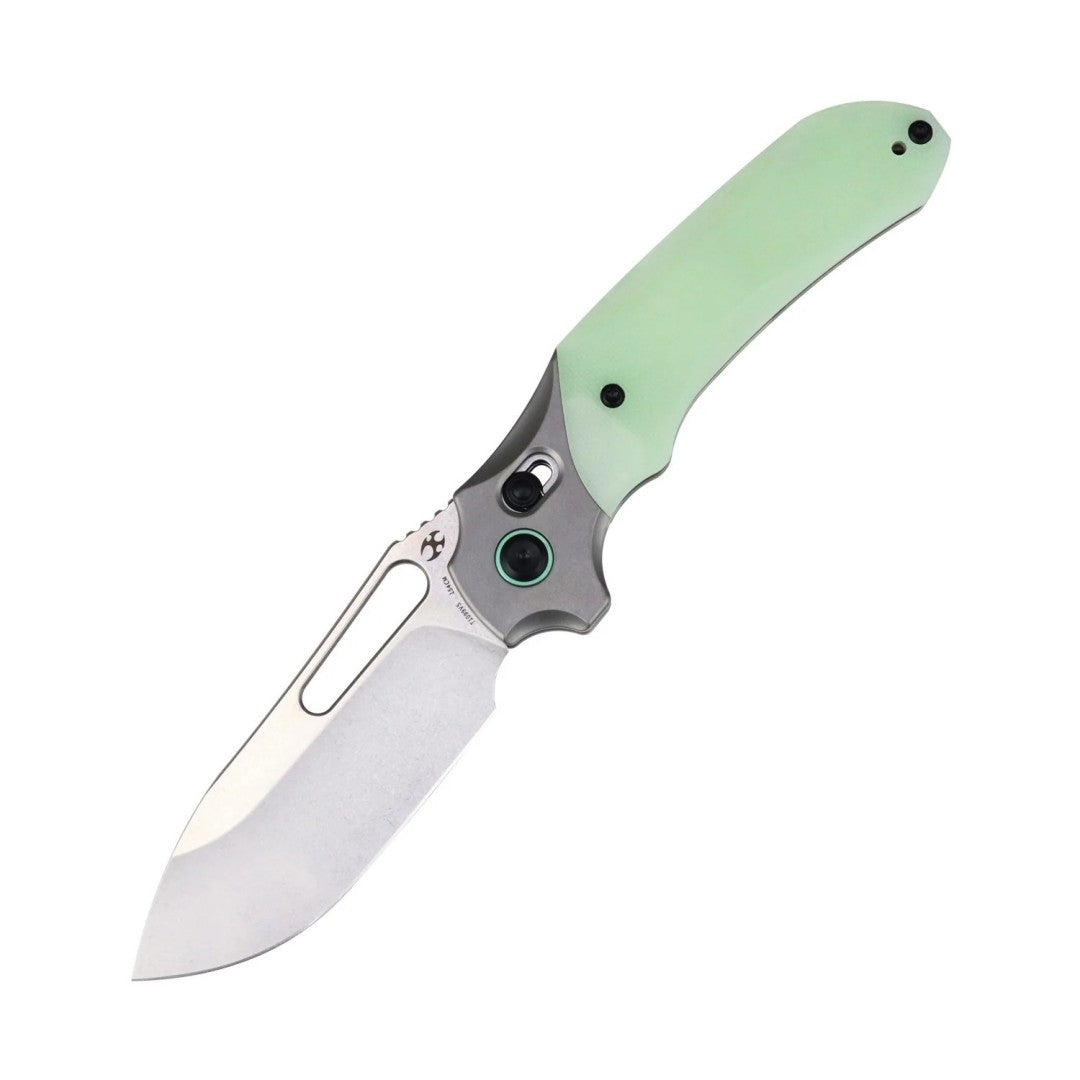
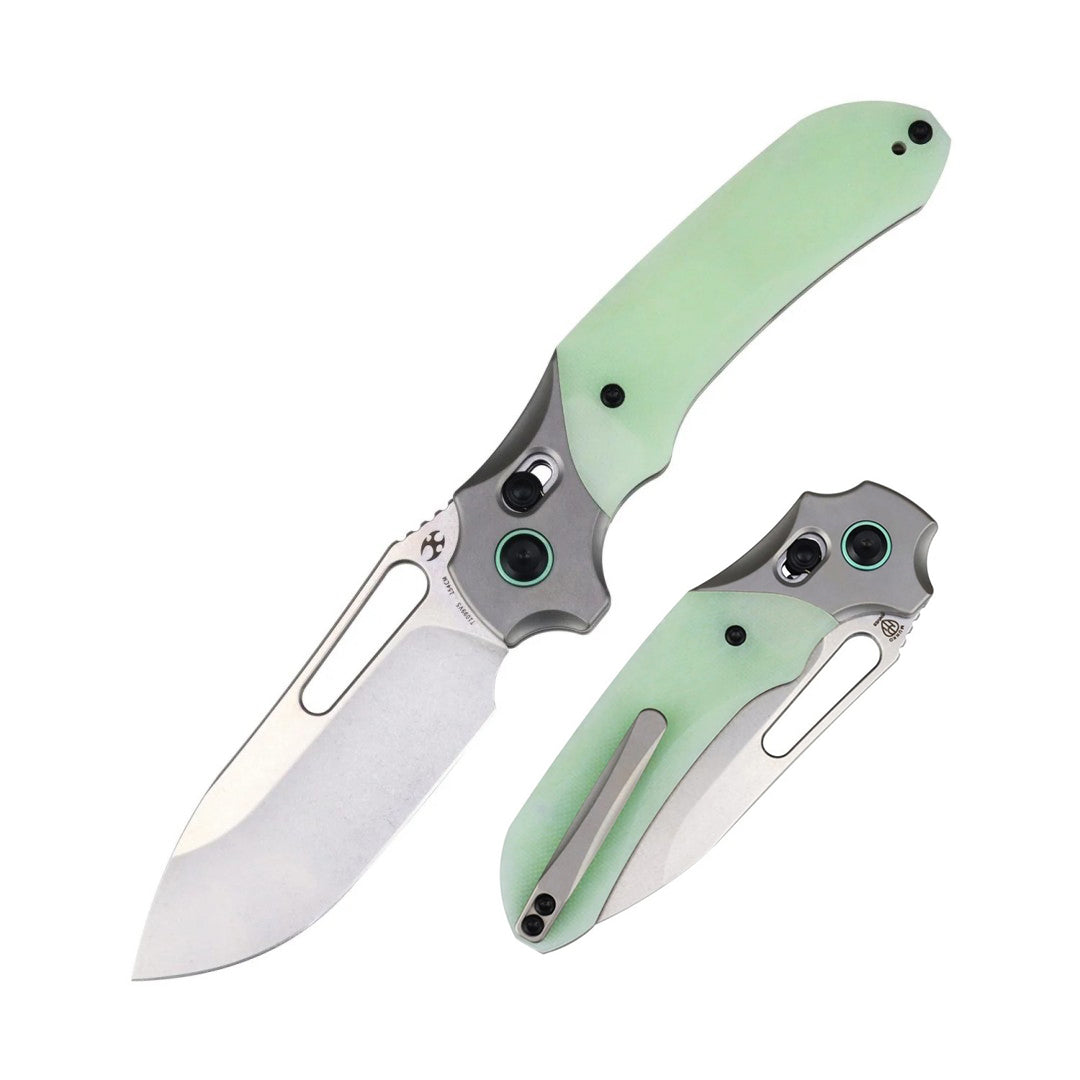
If you’re looking for a modern, slim, visually distinctive EDC knife that still delivers serious performance, the Bestech Syntax Linerlock is an excellent choice. The blade is made from 154CM stainless steel with a black stonewash finish, known for its “excellent balance of toughness, edge retention, and corrosion resistance”.
The Syntax features a jade G10 handle that provides a secure grip while adding a unique, eye-catching aesthetic. The linerlock mechanism is easy to operate with one hand, and the blade deploys smoothly with either thumb studs or a wrist flick. Despite its solid construction, the Syntax remains lightweight and discreet—perfect for office carry or environments where a bulky tactical knife would be out of place.
What really impresses about the Syntax is how well it handles detailed tasks. The clip-point blade offers a sharp, precise tip for everything from opening clamshell packaging to removing splinters or making fine cuts. It’s a knife that proves 154CM isn’t just for heavy-duty work—it excels at everyday utility too.
5. TOPS Brothers of Bushcraft (BOB) Fieldcraft (Fixed Blade / Bushcraft / Survival)
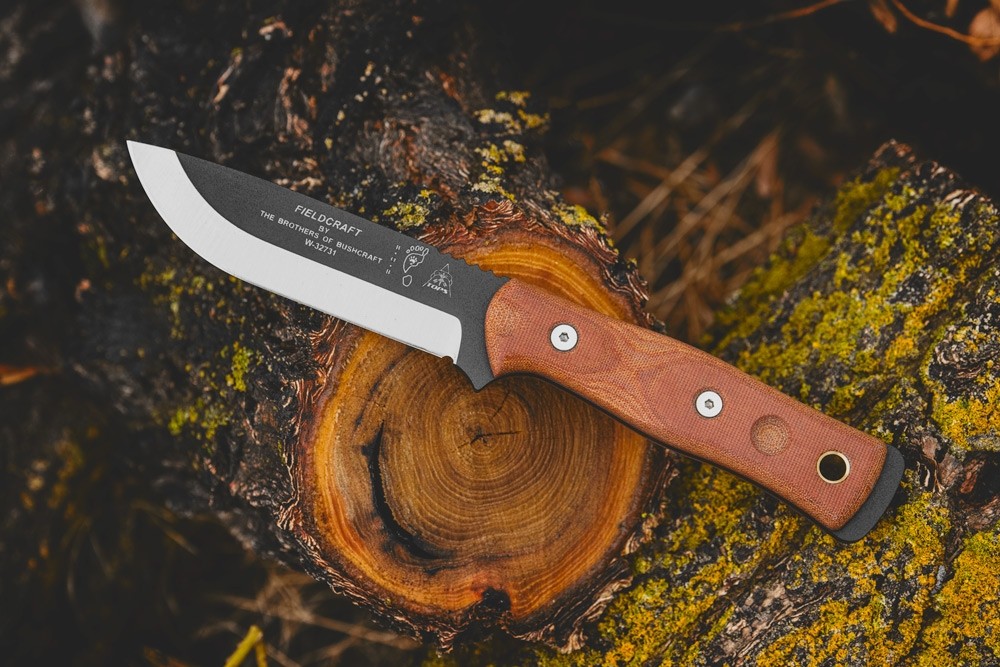
For those who prefer a fixed-blade knife—and for bushcraft, camping, and survival applications, a fixed blade is often the right choice—the TOPS Brothers of Bushcraft (BOB) Fieldcraft in 154CM is a superb option.
TOPS originally built the Fieldcraft (also known as the BOB or Brothers of Bushcraft) using 1095 high-carbon steel. Recognizing the demand for a stainless option, TOPS introduced this 154CM version, and the knife community took notice. The blade is 4.75 inches long, .190 inches thick, with a Scandi grind and tumble finish. Hardness is rated at 58–60 HRC, with cryogenic treatment for enhanced performance.
The Scandi grind is particularly valuable for bushcraft tasks. It provides a razor-sharp edge for precision carving, woodworking, skinning, and general camp chores. The full-tang construction and black linen micarta handle ensure durability and a secure grip even in wet or cold conditions.
At 10 inches overall and 10.5 ounces, this knife has substantial heft without being unwieldy. The included Kydex sheath features a belt clip and even a ferro rod attachment point, turning the whole package into a minimalist survival kit. If you spend serious time in the backcountry, this knife will become your most trusted companion.
Caring for Your 154CM Knife
One of the great advantages of 154CM is how low-maintenance it is compared to many other premium steels. However, a few simple practices will keep your blade performing at its best for years:
-
Clean after use: Wipe the blade down after cutting food, wet materials, or anything acidic. Soap and water work fine for general cleaning; just dry thoroughly afterward.
-
Oil occasionally: A drop of mineral oil or a dedicated knife lubricant on the pivot and blade surface every few weeks (or after exposure to salt water) prevents corrosion and keeps the action smooth.
-
Sharpen as needed: 154CM sharpens well on conventional stones. Start with a medium grit (600–1000) for edge restoration, then move to a fine grit (3000–6000) for polishing. A leather strop with compound can maintain the edge for a long time between actual sharpening sessions.
-
Avoid abuse: No knife is indestructible. While 154CM is tough, using the blade as a pry bar, screwdriver, or hammer will eventually damage any steel. Use the right tool for the job.
Final Thoughts
154CM steel has earned its reputation the hard way—through decades of real-world use by military personnel, outdoor professionals, and knife enthusiasts who demand performance they can trust. It’s not the newest steel on the market, and it doesn’t have the most exotic chemistry. What it has is balance: excellent edge retention without brittleness, strong corrosion resistance without specialized maintenance, and ease of sharpening that makes it a joy to own and use.
The five knives featured here represent the best of what 154CM has to offer. From the iconic Benchmade Griptilian to the battle-proven Emerson MX-200, the rugged Gerber Gator to the sleek Bestech Syntax, and the bushcraft-ready TOPS Fieldcraft, there’s a 154CM knife for every hand and every mission.
Whether you’re a first-time buyer looking for a quality EDC or a seasoned collector adding another reliable tool to your rotation, 154CM delivers. It’s the steel that keeps going—and keeps cutting—long after the hype around newer alloys has faded.