In a knife world dominated by stainless super-steels and powder metallurgy marvels, O1 tool steel stands as a quiet testament to a simpler, more analog era of blade making. This oil-hardening, high-carbon alloy has been the silent workhorse of the cutlery industry for decades, earning its place in workshops and on trails through sheer reliability. It’s a steel that rewards effort with performance—taking a razor's edge with ease and holding it long enough to get real work done. Whether you're a EDC enthusiast who values tradition, a bushcrafter seeking a dependable tool for the wild, or a collector who appreciates the warm patina of a well-loved carbon blade, understanding what makes O1 special is the key to unlocking a different kind of cutting experience.
In this guide, we'll explore the unique metallurgy of O1 steel, compare it to other popular blade materials, and showcase five of the best O1 fixed blade knives under $300 from different brands that put this timeless material to work.
What Is O1 Steel?
O1 is a general-purpose, oil-hardening tool steel with a carefully balanced composition that has made it a staple for knife makers for generations. It typically contains around 0.90% carbon, 0.50% chromium, 0.20% vanadium, along with tungsten and manganese. The high carbon content allows it to be heat-treated to a respectable 57–62 HRC, striking an excellent balance between edge retention and toughness.
Key performance characteristics include:
-
Exceptional Sharpenability: O1’s true superpower is how easily it takes a razor-sharp edge. Its fine grain structure responds beautifully to stones, and it is fairly easy to sharpen compared to other high-carbon steels. This makes it a favorite among users who maintain their own edges in the field.
-
Solid Edge Retention: Despite being easy to sharpen, O1 holds a fantastic working edge. Its wear resistance is sufficient for most heavy-duty utility work, and it will maintain sharpness over a long period with proper care.
-
Good Toughness: O1 offers a high level of toughness that prevents chipping or breaking, even in thin, finely honed blades. This makes it suitable for tasks like wood carving and moderate batoning.
-
Low Corrosion Resistance: With very little chromium, O1 is not a stainless steel. It will develop a rich patina with use—and eventually rust if neglected. This is a steel for users who enjoy a "living" blade and are committed to proper care: keep it clean, dry, and occasionally oiled.
How O1 Compares to Other Popular Knife Steels
To fully appreciate O1’s position in the knife world, here's how it stacks up against other common blade materials:
O1 vs. 1095
This is the classic comparison between two high-carbon workhorses. Both are simple carbon steels with similar toughness at the same hardness, but O1 has a finer grain structure due to additional alloying elements like tungsten and vanadium. In practical use, this means O1 takes a finer, more aggressive edge and holds it longer than 1095.
O1 vs. D2
D2 is a high-carbon, high-chromium tool steel often classified as "semi-stainless." It offers excellent wear resistance and edge retention that often exceeds O1 in abrasive cutting tasks. However, O1 is significantly tougher than D2, making it far less likely to chip or crack under impact. O1 is also dramatically easier to sharpen. Choose D2 for maximum edge retention in dry conditions; choose O1 for better durability and user-friendliness.
O1 vs. A2
Both are popular tool steels in the custom knife world. A2 is known for its exceptional toughness, making it a favorite for heavy choppers. At 60 HRC, A2 would take about 40 ft. lbs of impact force compared to O1's 30 ft. lbs. O1, however, offers better edge retention and is easier to sharpen to a screaming sharp edge. Choose A2 for maximum impact resistance; choose O1 for superior cutting performance and easier maintenance.
O1 vs. CPM-3V
CPM-3V is a powder metallurgy tool steel that represents the modern pinnacle of toughness. It offers impact resistance approaching shock steels while maintaining excellent edge retention. O1 cannot match 3V in pure toughness or wear resistance. However, O1 is dramatically easier to sharpen, less expensive, and offers a more "traditional" feel that many users prefer.
Five Exceptional O1 Fixed Blade Knives Under $300
Here are five standout fixed blade knives from different brands that showcase the remarkable performance of O1 steel. Each represents a unique design philosophy, perfect for a range of EDC and outdoor tools.
1. LT Wright GNS Scandi — The Quintessential American Bushcrafter
The LT Wright GNS (General Purpose Knife) Scandi is a field-proven workhorse built to handle the toughest bushcraft and survival tasks with ease. Its 4.25-inch drop point blade is crafted from O1 tool steel, a favorite among bushcrafters for its toughness, edge retention, and ease of sharpening in the field. The Scandi grind excels at wood carving and precise cuts, while the contoured Micarta scales provide a comfortable, secure grip in all conditions. Handmade in the USA, the GNS Scandi is a reliable companion for any adventure, from splitting kindling to campfire cooking.
2. Brisa (EnZo) Trapper 95 — The Scandinavian Classic
The Brisa Trapper 95 embodies the finest traditions of Scandinavian knife making. The 3.74-inch blade is crafted from O1 carbon steel and features a zero-ground Scandinavian (Scandi) bevel, hardened to 58-59 HRC for an ideal balance of edge retention and ease of sharpening. The stabilized curly birch handle provides a warm, comfortable grip that only improves with age, and the full-tang construction ensures durability. The included leather sheath completes a package that feels both timeless and thoroughly capable. For those seeking a classic European bushcraft knife with proven O1 performance, the Trapper 95 is an outstanding choice.
3. NCC Knives Micro Kiridashi — The Ultralight EDC Neck Knife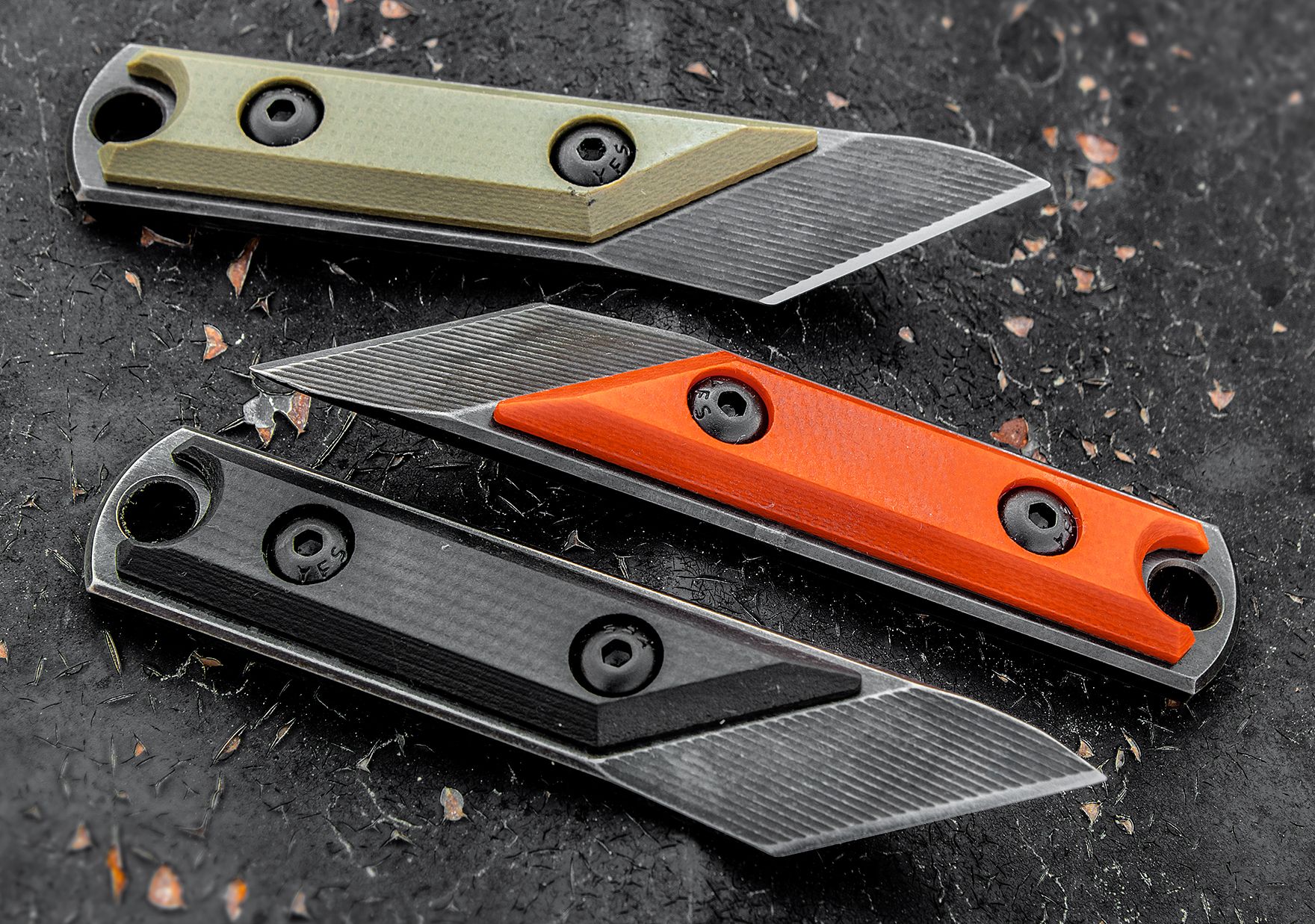
NCC Knives brings a minimalist, EDC-focused approach to the O1 fixed blade category. The Micro Kiridashi is a compact Kiridashi-style blade designed specifically for comfortable everyday carry. The 1/8-inch thick blade is made from O1 tool steel, heat-treated to approximately 63 HRC for excellent edge retention in a small package. A G-10 scale on one side provides a comfortable gripping surface, and the skeletonized design keeps the overall weight minimal. At just over an ounce, the Micro Kiridashi disappears when carried as a neck knife, yet it's ready for everything from opening packages to detailed utility work.
4. Hinderer Ranch Bowie — The Heavy-Duty Vintage Workhorse
The Hinderer Ranch Bowie from the Vintage Series is a robust, no-nonsense fixed blade that pays homage to classic American designs. The 5.31-inch blade is crafted from classic O1 tool steel with a traditional Parkerized finish for corrosion resistance. At 3/16-inch thick, this full-tang blade is built to withstand heavy-duty use and maintain its cutting edge for extended periods. The walnut handle provides a warm, secure grip, and the included leather sheath completes the vintage aesthetic. For those seeking an overbuilt, hard-use tool with old-school character, the Ranch Bowie delivers uncompromising performance.
5. Battle Horse Knives Feather Stick — The Compact Wilderness Companion
Battle Horse Knives' Feather Stick is a purpose-built fixed blade designed for precision bushcraft tasks. Its 4-inch full-tang blade is crafted from O1 tool steel with a slight clip point that tackles heavy-duty tasks and precision cuts with ease. The black Micarta handle scales provide a comfortable, secure grip, and the included leather sheath ensures safe carry. Handmade in the USA, the Feather Stick excels at carving, making feather sticks for fire starting, and general camp utility. For bushcrafters seeking a compact, reliable companion that's as tough as it is sharp, the Feather Stick is an excellent choice.
Comparison at a Glance
| Feature | LT Wright GNS Scandi | Brisa Trapper 95 | NCC Micro Kiridashi | Hinderer Ranch Bowie | BHK Feather Stick |
|---|---|---|---|---|---|
| Blade Steel | O1 Tool Steel | O1 Carbon Steel | O1 Tool Steel (63 HRC) | O1 Tool Steel | O1 Tool Steel |
| Blade Length | 4.25" | 3.74" | 0.75" (cutting edge) | 5.31" | 4.0" |
| Overall Length | ~9.0" | 8.25" | Compact | ~10.5" | ~8.5" |
| Weight | Varies | Varies | ~1.2 oz | Varies | Varies |
| Handle Material | Micarta | Curly Birch | G-10 | Walnut | Black Micarta |
| Sheath Type | Leather | Leather | Kydex (Neck) | Leather | Leather |
| Made In | USA | Finland | USA | USA | USA |
| Best For | Bushcraft, Survival | Traditional Bushcraft | Ultralight EDC | Heavy-Duty Work | Precision Bushcraft |
Why O1 Belongs in Your EDC and Tool Collection
The fixed blade knife is a cornerstone of any serious EDC or outdoor gear collection, valued for its strength, reliability, and instant deployment. Pairing this format with a blade of O1 steel gives you a tool that connects you to the traditions of knife making while delivering performance that remains entirely relevant today.
O1 knife steel is an excellent option for knife makers and EDC enthusiasts who value hardiness, edge retention, and toughness in their blades. It is a popular choice among enthusiasts and makers for its excellent balance of hardness, toughness, and workability. The high carbon content contributes to its ability to maintain a sharp edge even after repeated use, yet O1 remains fairly easy to sharpen compared to other high-carbon steels.
In a market saturated with stainless super-steels that promise everything, O1 offers something different: simplicity, reliability, and character. It's a steel that develops a unique patina telling the story of your adventures. It's a steel that rewards you at the sharpening bench rather than punishing you. And it's a steel that has stood the test of time because it simply works.
The knives featured in this guide—from the American craftsmanship of LT Wright and Battle Horse, to the Scandinavian classic Brisa Trapper, the ultralight NCC Kiridashi, and the vintage-styled Hinderer Ranch Bowie—demonstrate the remarkable versatility of this legendary tool steel. Whether you're a dedicated bushcrafter, a passionate hunter, or simply someone who appreciates the warm character of a carbon steel blade, an O1 fixed blade deserves a place in your collection.
Frequently Asked Questions
Is O1 steel good for EDC?
Yes, for the right user. O1 offers excellent sharpenability, solid edge retention, and good toughness, making it ideal for everyday carry tools. The main consideration is that it is not stainless and requires care to prevent rust. If you're willing to keep your blade clean and dry, O1 is a fantastic EDC steel.
How does O1 compare to 1095?
O1 takes a finer edge and holds it longer than 1095 due to additional alloying elements like tungsten and vanadium. Both are high-carbon, non-stainless steels requiring similar maintenance, but O1 is the clear performance upgrade.
Do O1 knives require special maintenance?
Yes. With very little chromium, O1 is not stainless. It will develop a patina and can rust if neglected. Basic care—wiping the blade clean and dry after use and occasionally applying a light coat of oil—is essential.
Is O1 hard to sharpen?
No—this is one of O1's greatest strengths. Despite its good edge retention, O1 is fairly easy to sharpen compared to other high-carbon steels. It responds well to a variety of abrasives, making it a favorite among users who maintain their own edges.
Can O1 be used for hard-use outdoor tasks?
Yes. O1 offers a high level of toughness that prevents chipping or breaking, even in thin blades. It is suitable for bushcraft, camping, hunting, and general outdoor utility tasks. While not as impact-resistant as dedicated toughness steels like CPM-3V, it handles typical outdoor chores with confidence.
How does O1 compare to D2?
O1 is significantly tougher than D2, making it less likely to chip under impact. O1 is also dramatically easier to sharpen. D2 offers better edge retention in abrasive cutting tasks. Choose O1 for durability and user-friendliness; choose D2 for maximum edge retention.
Are these knives good for beginners?
Yes. All five knives are approachable options for users of any experience level. The NCC Micro Kiridashi offers an ultralight EDC-friendly option for newcomers. The LT Wright GNS Scandi, Brisa Trapper 95, and Battle Horse Feather Stick are excellent choices for those interested in bushcraft. The Hinderer Ranch Bowie provides a robust vintage-inspired option. Each is a fantastic introduction to the rewarding experience of owning and maintaining a high-quality O1 carbon steel blade.