In the world of knife steels, where super-steels with exotic alloys and powder metallurgy origins often dominate the conversation, O1 tool steel stands as a quiet legend — a material that has earned its place through decades of proven performance rather than marketing hype. For those who value tradition, sharpenability, and raw cutting performance, O1 remains one of the most rewarding blade materials available. Whether you are a bushcraft practitioner, a collector of traditional folders, or simply an EDC enthusiast who appreciates a steel that takes a screaming-sharp edge, O1 deserves your attention.
In this comprehensive guide, we will explore what makes O1 steel exceptional, compare it with other popular blade materials, and introduce five outstanding knives across folding and fixed blade categories that showcase this classic alloy at its absolute best.
What Is O1 Tool Steel?
O1 is an oil-hardening, general-purpose tool steel originally developed for industrial applications such as dies, punches, shear blades, and precision measuring instruments. Manufactured to ASTM A681 specifications, O1 is a low-alloy cold work tool steel that must be quenched in oil during heat treatment — hence the "O" designation in its name.
The steel contains small but strategically important amounts of manganese, tungsten, and chromium, which together contribute to its well-balanced properties. When properly heat treated, O1 typically achieves hardness in the range of 58 to 62 HRC, though it can reach up to 64-65 HRC depending on the specific heat treatment protocol. What sets O1 apart from many other carbon steels is its fine grain structure and deep-hardening characteristics, which translate directly into a blade that can achieve exceptional sharpness while maintaining adequate toughness for demanding cutting tasks.
One of O1's most celebrated attributes in the knife community is its response to heat treatment. Unlike more complex alloys that require precise temperature control and specialized equipment, O1 is relatively forgiving to heat treat, making it a favorite among custom knife makers and production shops alike. The steel also arrives from mills in precision-ground, spheroidized condition — free from scale and decarburization — which simplifies the blade-making process and contributes to consistent results.
Key Properties at a Glance:
-
Edge Retention: Excellent for a non-stainless carbon steel, thanks to the presence of chromium, tungsten, and vanadium carbides that help maintain a sharp cutting edge longer than plain carbon steels
-
Corrosion Resistance: Low — O1 is a true carbon steel and will rust if not properly maintained; this is a feature for those who appreciate the organic beauty of a natural patina, not a flaw
-
Toughness: Good to very good, with higher toughness than D2 and better impact resistance under moderate shock loads
-
Ease of Sharpening: Outstanding — O1 is widely praised for its ability to take an exceptionally keen edge with minimal effort, a quality that makes it beloved by bushcrafters and traditional knife users
-
Edge Stability: Excellent — O1's fine grain structure allows it to support a very refined, thin edge without crumbling or chipping prematurely
The combination of these attributes makes O1 particularly well-suited for bushcraft and woodworking tools, where a keen, easily maintained edge is more valuable than absolute wear resistance. It is also a favorite for traditional slip joint folders, where its ability to achieve high hardness while remaining relatively easy to sharpen aligns perfectly with the expectations of discerning collectors and users.
O1 Steel Compared: How It Stacks Up
Understanding how O1 compares to other popular knife steels provides valuable context for making an informed purchase decision:
O1 vs. 1095: These two carbon steels are often mentioned in the same breath, and compositionally they share significant similarities. However, O1 generally offers better edge retention than 1095 while maintaining comparable sharpenability. In practical terms, a well-heat-treated O1 blade will stay sharp longer than an equivalent 1095 blade performing the same cutting tasks. The trade-off is minimal — both require similar maintenance attention — making O1 the more performance-oriented choice for discerning users.
O1 vs. D2: This comparison highlights a fundamental trade-off in knife steel selection. D2 offers superior edge retention and significantly better corrosion resistance (though still not truly stainless), but it is considerably more difficult to sharpen and can be more brittle depending on heat treatment. O1, by contrast, is much easier to sharpen, takes a finer edge, and is tougher — making it the better choice for bushcraft knives that may encounter impact forces from batoning or chopping. As one experienced user noted, "D2 will hold an edge better than 01 or 1095, but it is much more brittle. 1095 or 01 for 'bushcraft' knives that will baton, chop, and do more strenuous things".
O1 vs. A2: These two tool steels occupy similar performance territory, with the primary distinction being their hardening method: O1 requires oil quenching, while A2 is air-hardening. Both deliver comparable toughness and edge retention, and the choice between them often comes down to maker preference rather than any significant performance gap for the end user.
O1 vs. CPM 3V: This comparison illustrates the value proposition of O1. CPM 3V is a premium powder metallurgy steel offering exceptional toughness — among the best available. However, O1 counters with significantly easier sharpenability and a much more accessible price point. For users who prioritize ease of maintenance and traditional character over maximum impact resistance, O1 is often the more practical choice.
Top 5 O1 Steel Knives for EDC and Outdoor Use
After thorough research into recent releases from respected manufacturers, we have curated a selection of five outstanding O1 steel knives that represent the best this classic alloy has to offer.
1. Böker Barlow Prime Castle Burg Limited (Folding Knife)
The Böker Barlow Prime Castle Burg Limited is a stunning tribute to traditional cutlery craftsmanship, handmade in the Böker Manufactory in Solingen, Germany. This special version of the classic Barlow pattern features a drop point blade executed in acid-washed and tumbled O1 carbon tool steel, paired with handle scales crafted from ancient solid oak planks sourced from the historic Castle Burg restoration project. The combination of short nickel silver bolsters, brass liners, and the character-rich oak handles creates a knife that bridges the gap between functional everyday tools and collectible heirlooms. The slip joint mechanism operates with a smooth, snappy action, featuring a traditional long pull and a reassuring half-stop. Slim, elegant, and remarkably pocketable, the Barlow Prime Castle Burg Limited is an excellent choice for those seeking a refined EDC companion with genuine historical significance and premium materials.
2. Enzo Trapper (Fixed Blade)
The Enzo Trapper is a fixed blade that speaks directly to the traditions of Scandinavian knife making, purpose-built for bushcraft, wood carving, and outdoor utility. The blade is crafted from O1 carbon steel and features a true Scandinavian (Scandi) grind — a geometry revered for its exceptional carving control and ease of field sharpening. The handle scales are made from curly birch, a wood prized for both its striking visual character and its comfortable, warm-in-hand feel during extended use. The knife arrives with a leather sheath that complements the traditional aesthetic while providing secure carry. Users consistently praise the Enzo Trapper for its razor-sharp edge, outstanding edge retention, and natural ergonomics. For those who appreciate the organic beauty of a developing patina and demand a reliable cutting tool for wilderness adventures, the Enzo Trapper stands as a benchmark in the category.
3. NCC Knives EDC Kiridashi (Fixed Blade)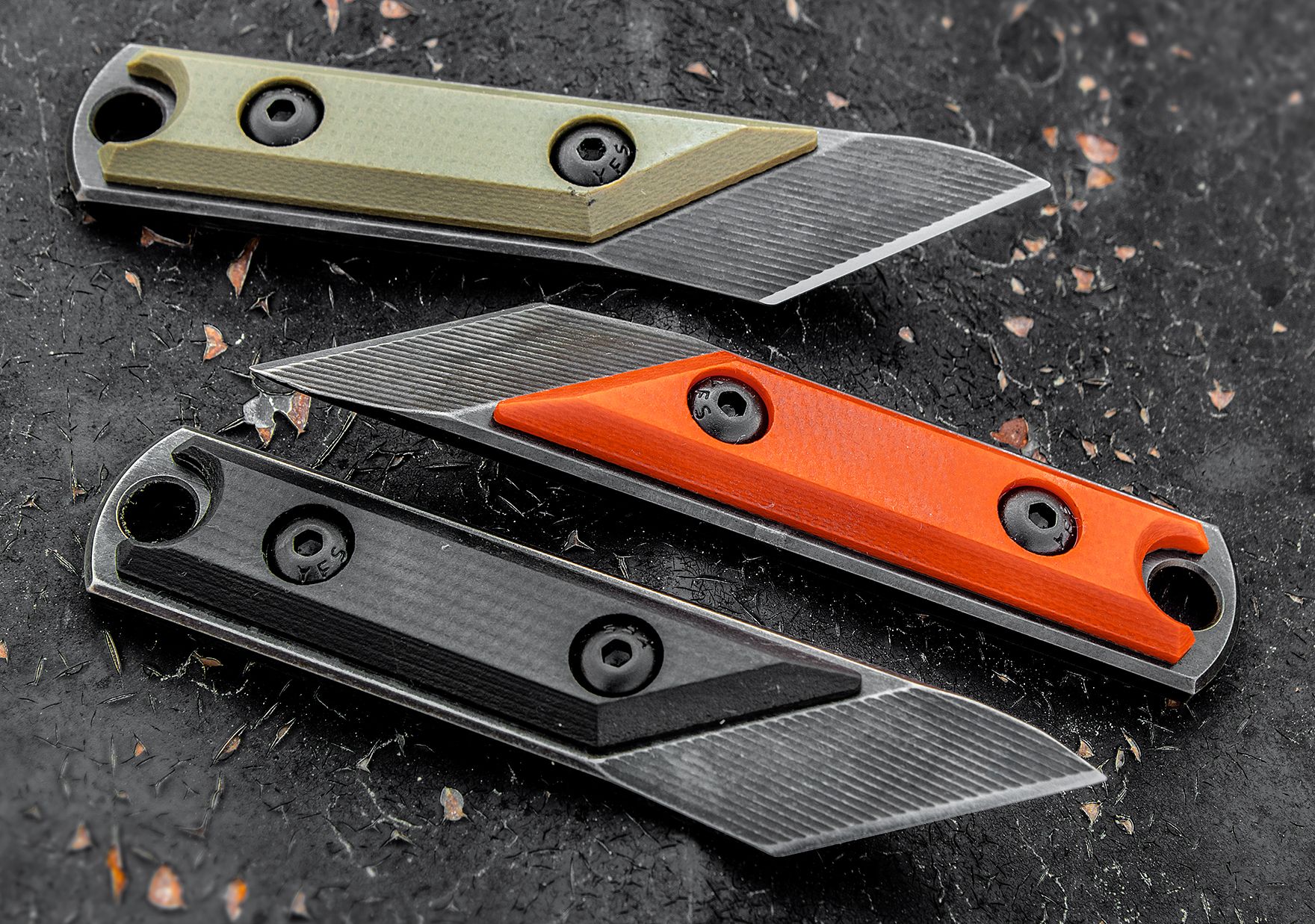
For EDC enthusiasts seeking a compact fixed blade with exceptional utility in a minimalist package, the NCC Knives EDC Kiridashi delivers. The blade is crafted from 1/8-inch thick O1 tool steel, heat treated to an impressive 63 HRC — a hardness specification that takes full advantage of O1's ability to support a refined, durable edge. The chisel-ground edge provides a full inch of precise cutting length with a fine tip that excels at detailed tasks such as opening packages, scoring materials, and light-duty carving. The handle is constructed from milled G10, keeping the overall design slender and lightweight while maintaining excellent grip security. A Kydex sheath with secure retention completes the package, allowing for discreet pocket or belt carry. This custom-quality kiridashi represents one of the most practical and space-efficient ways to carry a fixed blade tool daily.
4. Vegas Forge x Syco.X Copperhead San Mai (Fixed Blade)
The Vegas Forge x Syco.X Copperhead San Mai fixed blade is a collaboration piece that combines aggressive performance with high-impact aesthetics. The blade features a solid O1 tool steel core, san mai-laminated between outer jackets of 1075 carbon steel, nickel, and copper — resulting in a distinctive pattern with deep black waves and subtle copper highlights that catch the light. A hollow recurve grind adds bite and control to the cutting geometry, making this knife as functional as it is visually striking. The handle is wrapped in paracord for a secure, locked-in grip in wet or dry conditions, and the included black Kydex sheath features an Ulticlip for versatile carry options. Built as a hard-use fixed blade that embraces its custom heritage, this piece is designed for real-world use in camp, shop, or daily carry rotations.
5. Battle Horse Knives Frontier Valley (Fixed Blade)
The Battle Horse Knives Frontier Valley is a purpose-built EDC fixed blade that prioritizes compact carry without sacrificing cutting capability. The blade is constructed from 1/8-inch thick O1 tool steel with a sabre grind, delivering a robust edge geometry suited for everyday cutting tasks. With an overall length of just over 6.5 inches and a cutting edge under 3 inches, the Frontier Valley disappears on the belt while remaining instantly accessible when needed. The handle features polished green Micarta scales that provide excellent grip and develop character over time, while the included leather sheath offers secure retention. This knife excels as a low-profile fixed blade option for those who prefer the absolute reliability of a full-tang design over a folding mechanism. As users note, the natural patina that develops on the O1 blade only adds to the knife‘s charm and individuality over time.
Why Choose an O1 Steel Knife?
After examining the technical specifications, comparative performance data, and real-world knife offerings, the advantages of O1 steel become abundantly clear:
-
Exceptional Sharpenability: O1 is widely regarded as one of the easiest steels to sharpen to a razor edge, making it ideal for users who prefer to maintain their own blades without specialized equipment. This quality is particularly valuable in field settings where a simple sharpening stone may be the only available option.
-
Fine Edge Stability: Thanks to its fine grain structure, O1 can support an extremely refined, thin edge without premature degradation. This translates into superior slicing performance and carving control — qualities especially prized by bushcrafters and woodworkers.
-
Time-Tested Reliability: O1 has been used in knife making for generations, with a proven track record across countless cutting tasks and environments. Its performance characteristics are well understood and consistently reproducible when proper heat treatment is applied.
-
Character and Patina: For many enthusiasts, the organic patina that develops on O1 carbon steel blades is a feature, not a flaw. This natural oxidation layer not only protects against further corrosion but also tells the unique story of each knife‘s use — a quality that stainless steel simply cannot replicate.
-
Accessible Value: Compared to premium powder metallurgy steels like CPM 3V or M390, O1 delivers remarkably compelling real-world performance at a significantly more accessible price point — making it an excellent choice for value-conscious buyers who refuse to compromise on cutting performance.
Caring for Your O1 Steel Knife
O1 steel requires modest but consistent maintenance to perform at its best. After each use, wipe the blade clean with a dry cloth to remove moisture and debris. If the knife encounters acidic materials such as fruit, food residue, or sap, a quick rinse and thorough drying are recommended. Applying a light coat of mineral oil or specialized blade protectant will prevent unwanted rust and encourage the development of an attractive, protective patina. With minimal care, an O1 steel knife will provide decades of faithful service.
Conclusion
O1 tool steel has rightfully earned its place as a cornerstone material in traditional and functional knife making. Its exceptional balance of sharpenability, edge stability, and time-tested reliability makes it a compelling choice for folding knives and fixed blades alike. Whether you are drawn to the historical elegance of the Böker Barlow Prime Castle Burg Limited, the bushcraft prowess of the Enzo Trapper, the minimalist utility of the NCC Kiridashi, the artistic statement of the Vegas Forge Copperhead San Mai, or the compact practicality of the Battle Horse Frontier Valley, each of these exceptional tools showcases O1 steel at its finest.
For EDC enthusiasts and outdoor adventurers who value a keen edge, traditional character, and a steel that rewards proper care with unparalleled cutting performance, an O1 steel blade is a choice steeped in heritage and proven by generations of use. The right tool makes all the difference — and with O1, you are equipping yourself with a blade material that has stood the test of time.