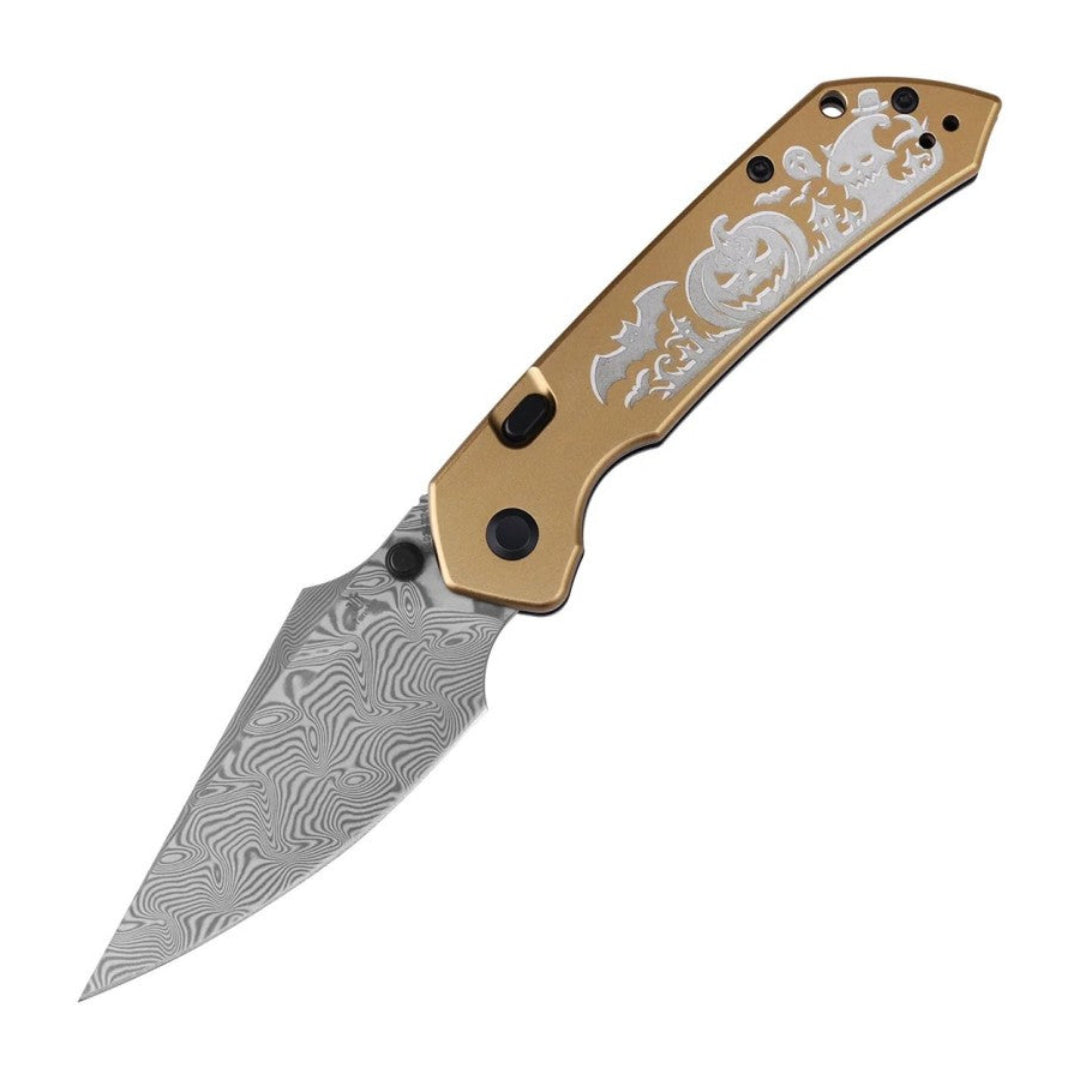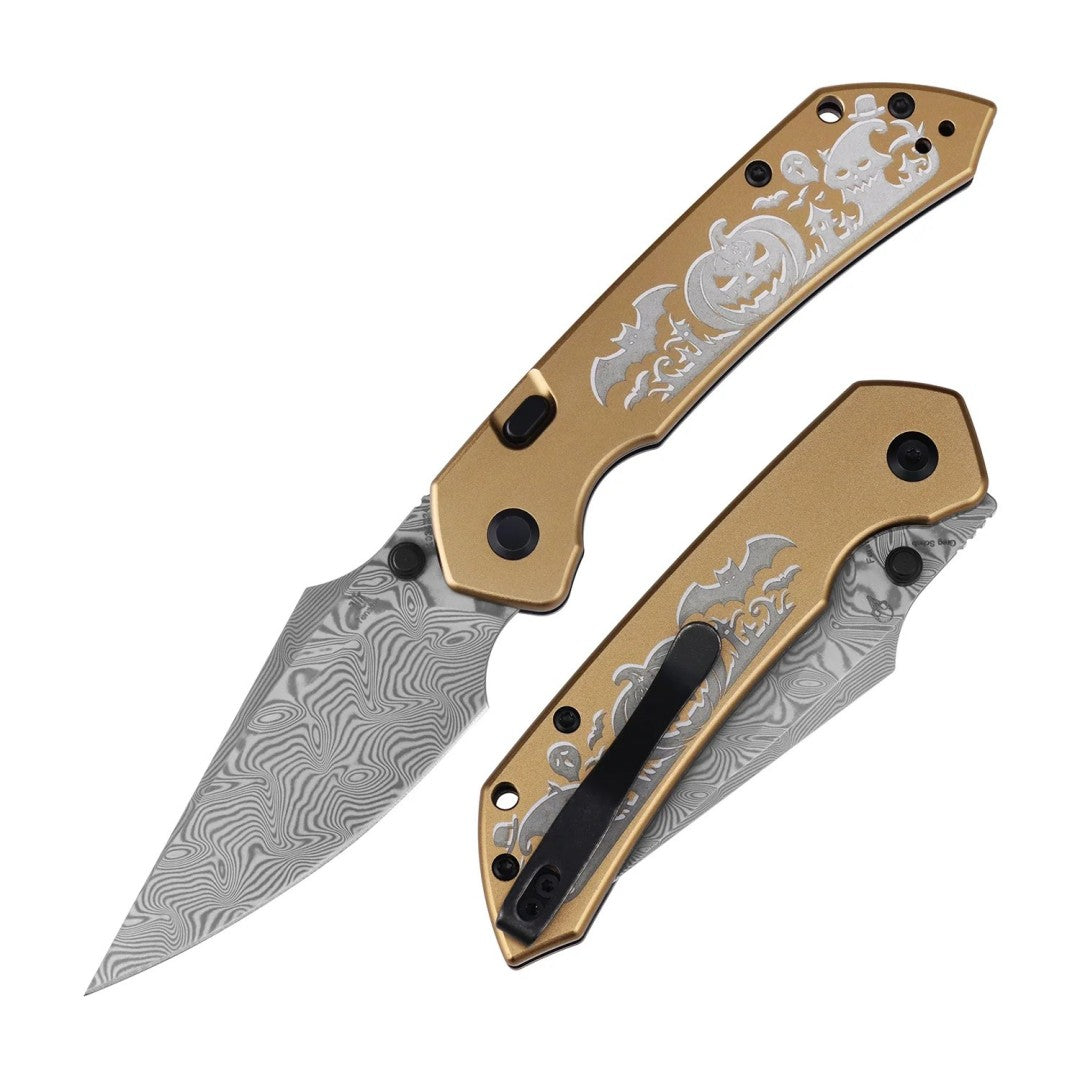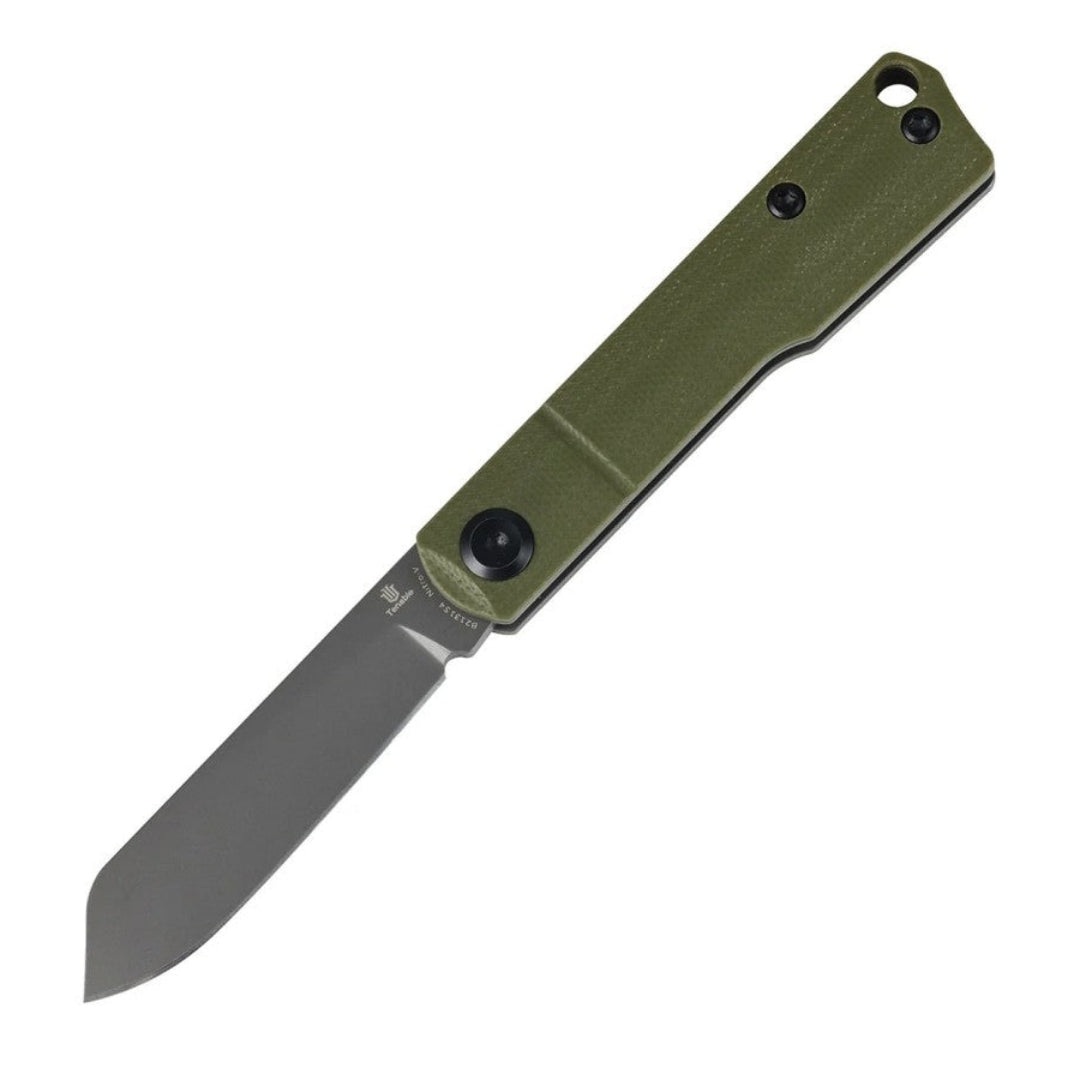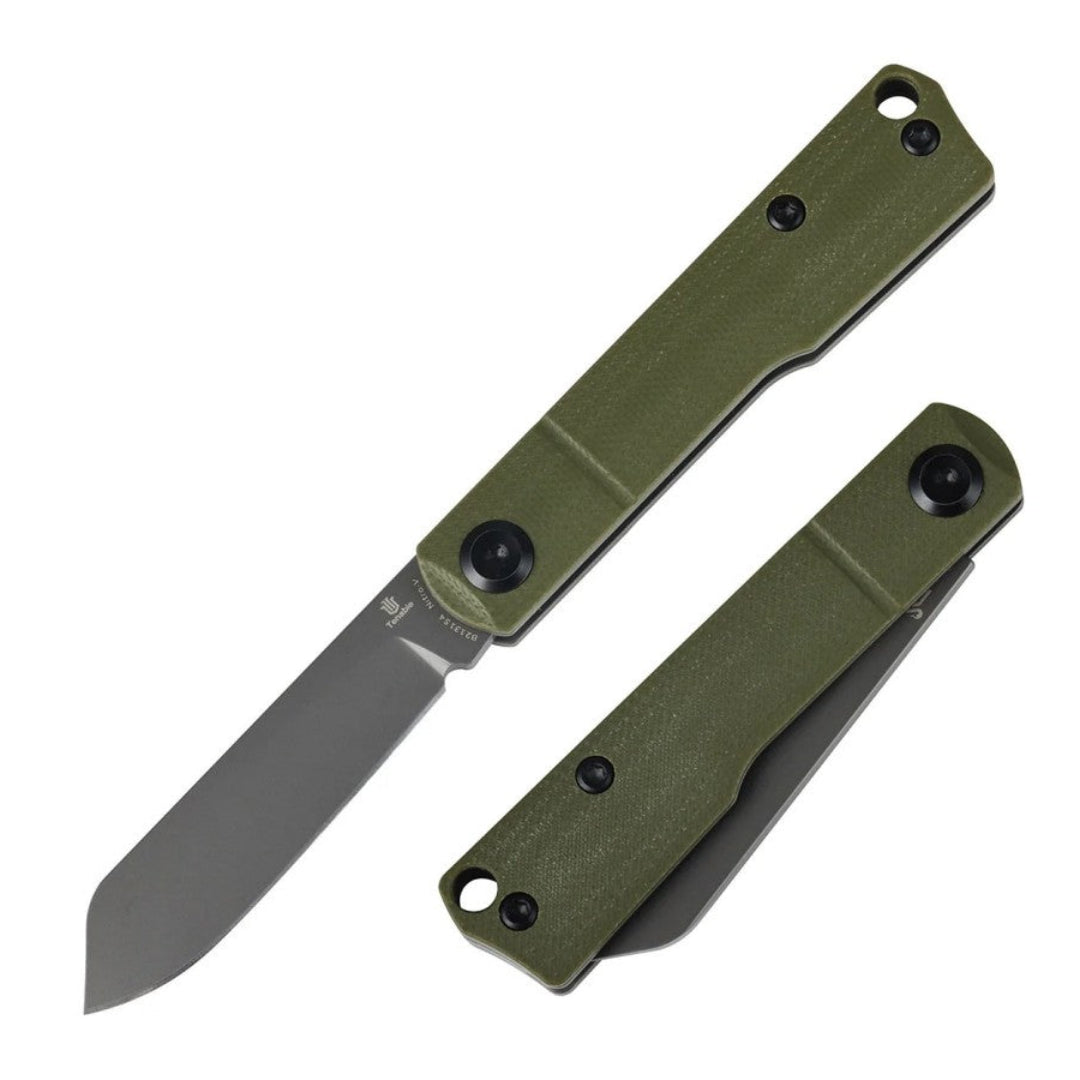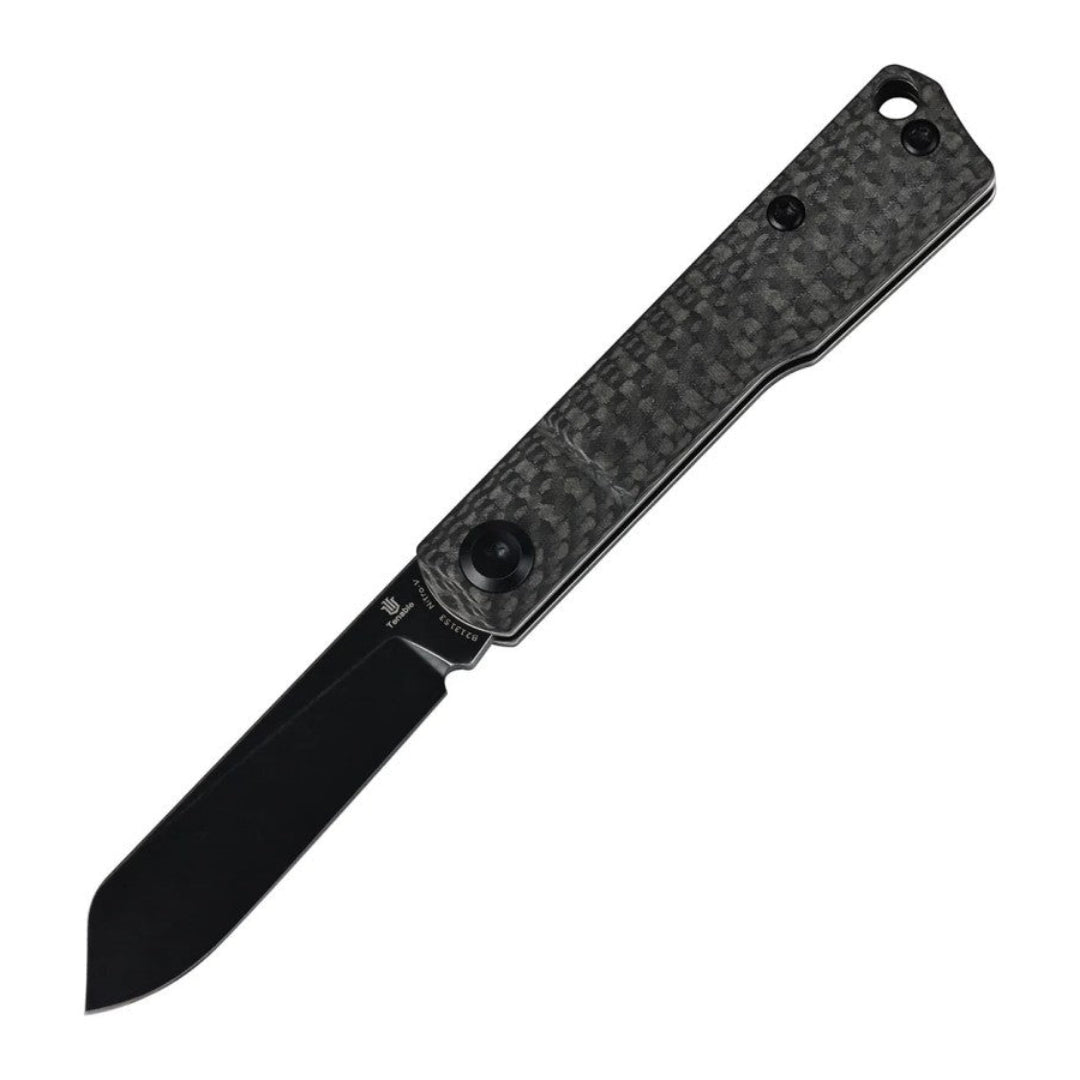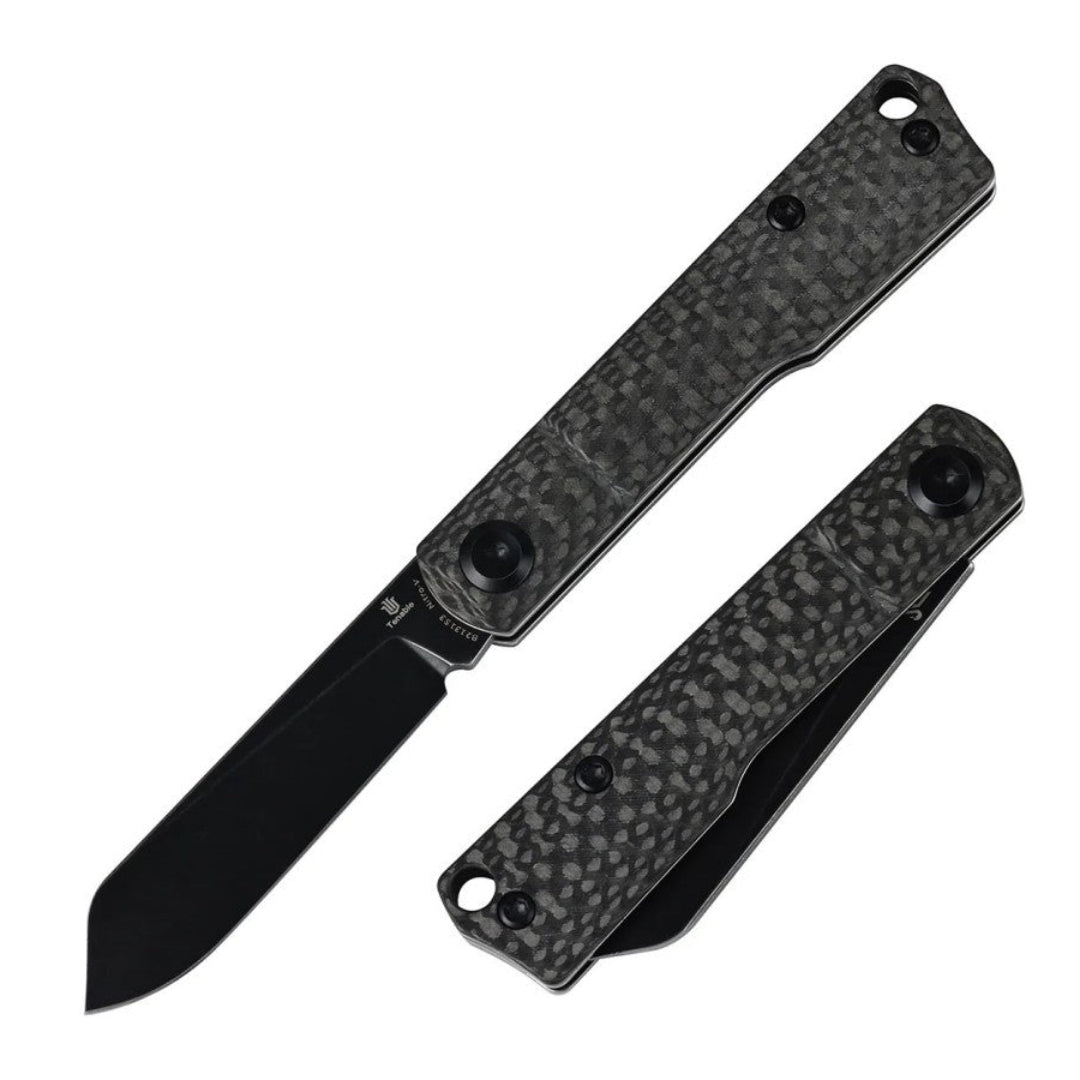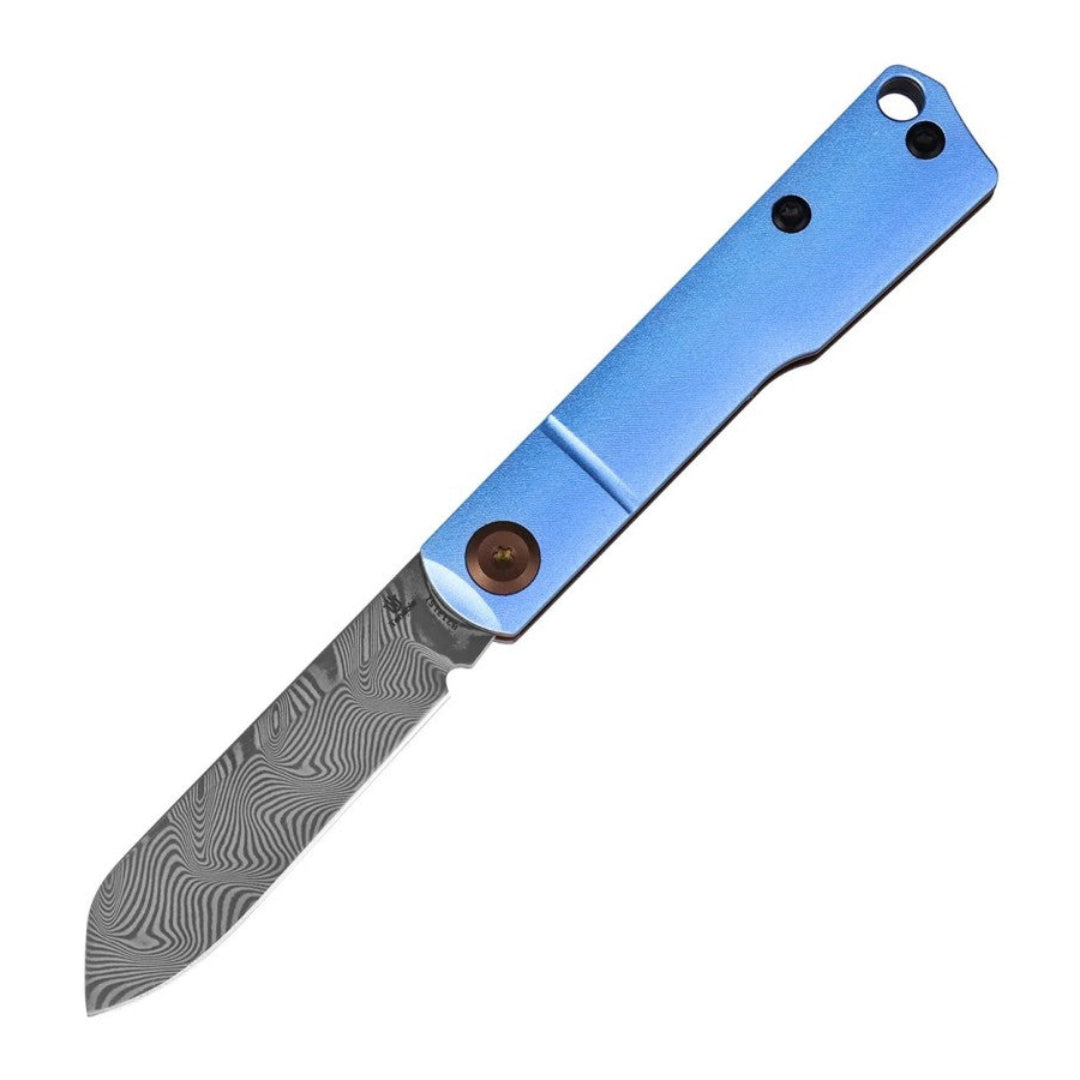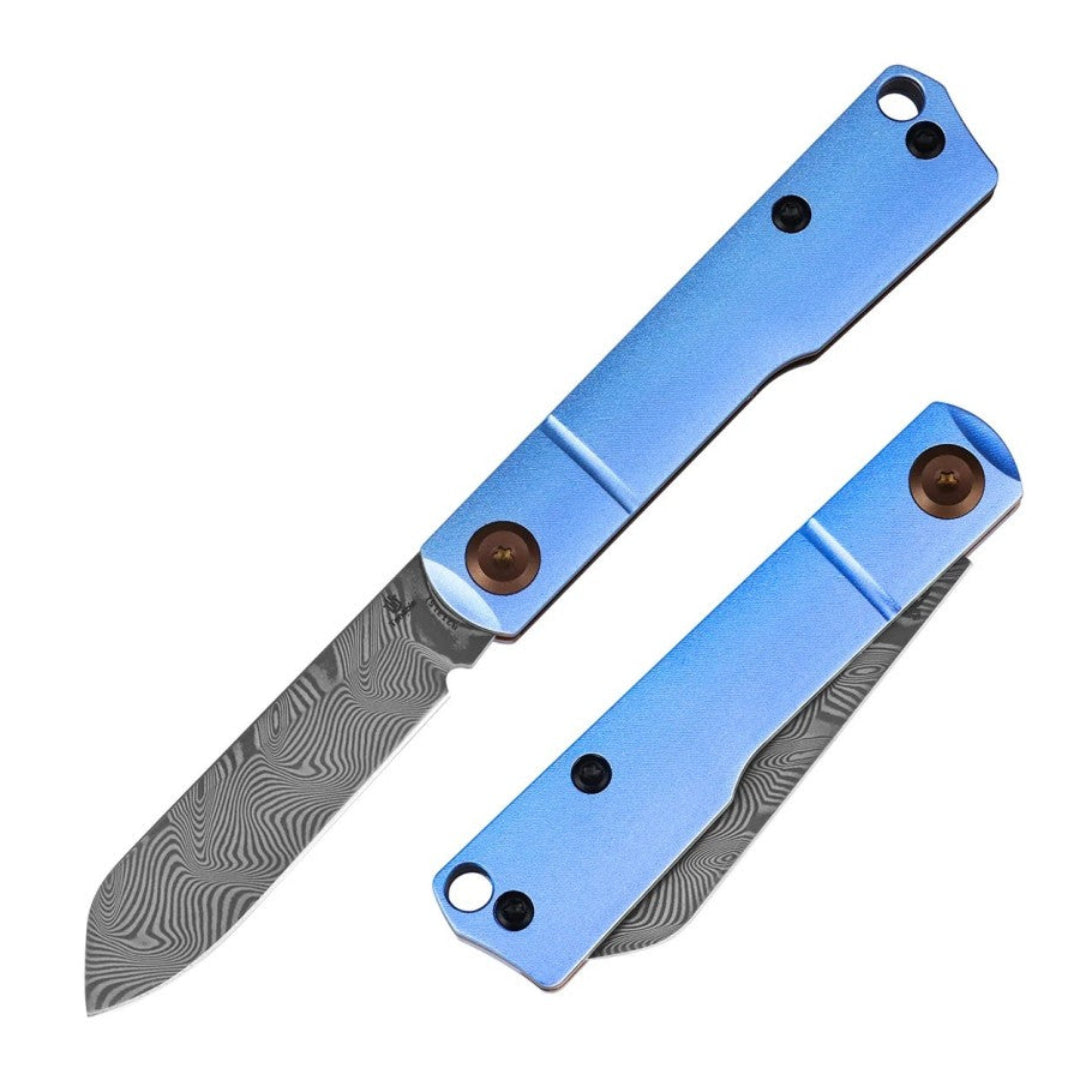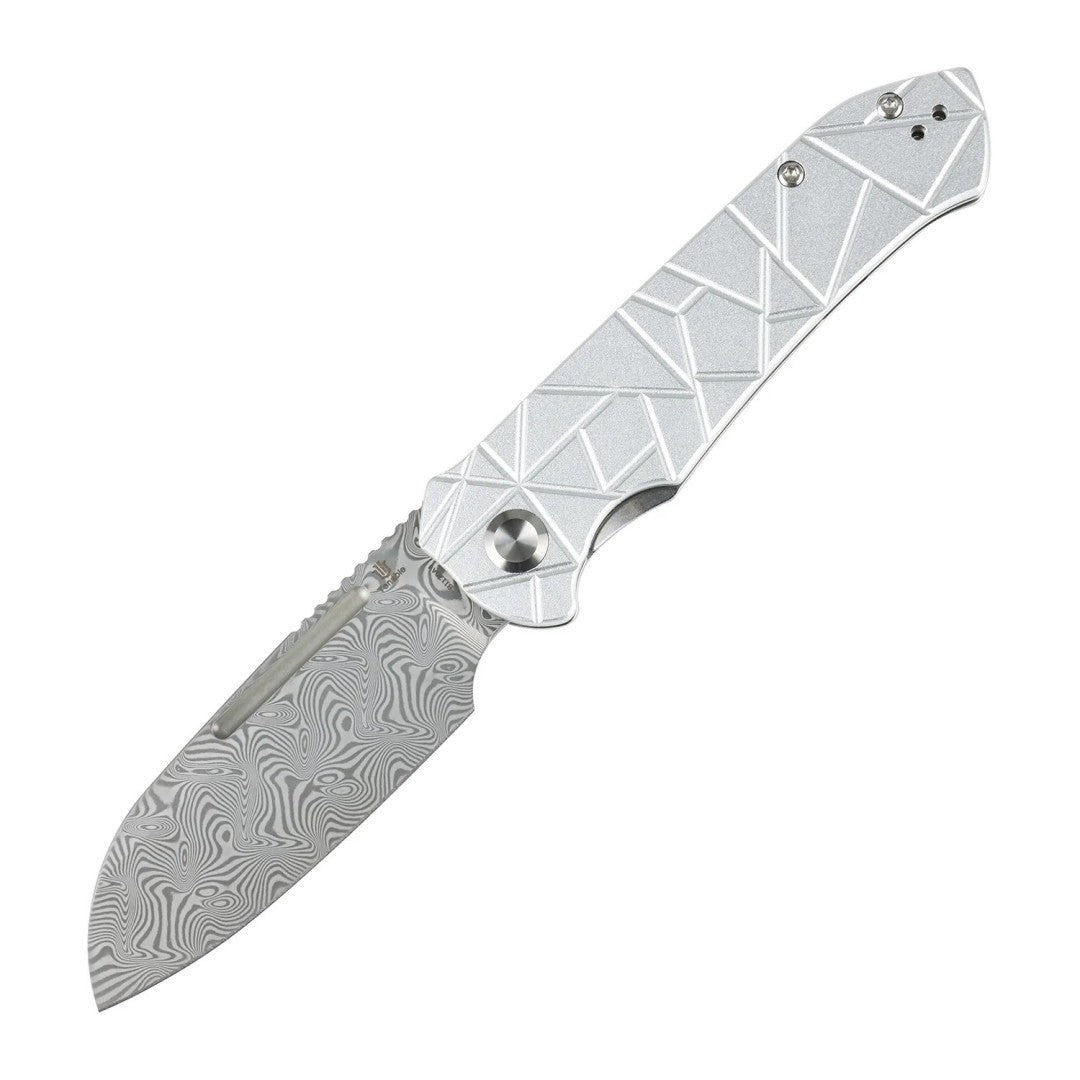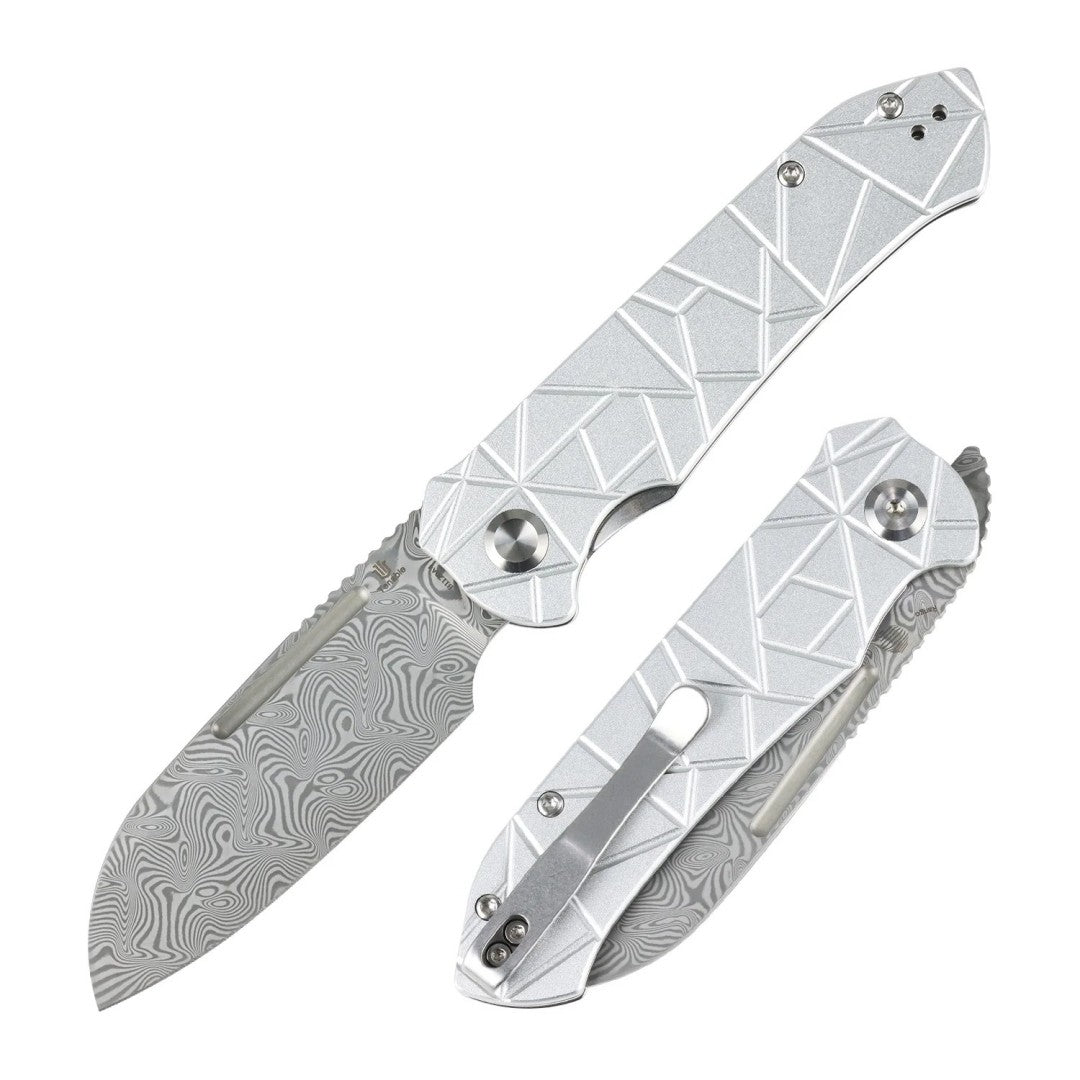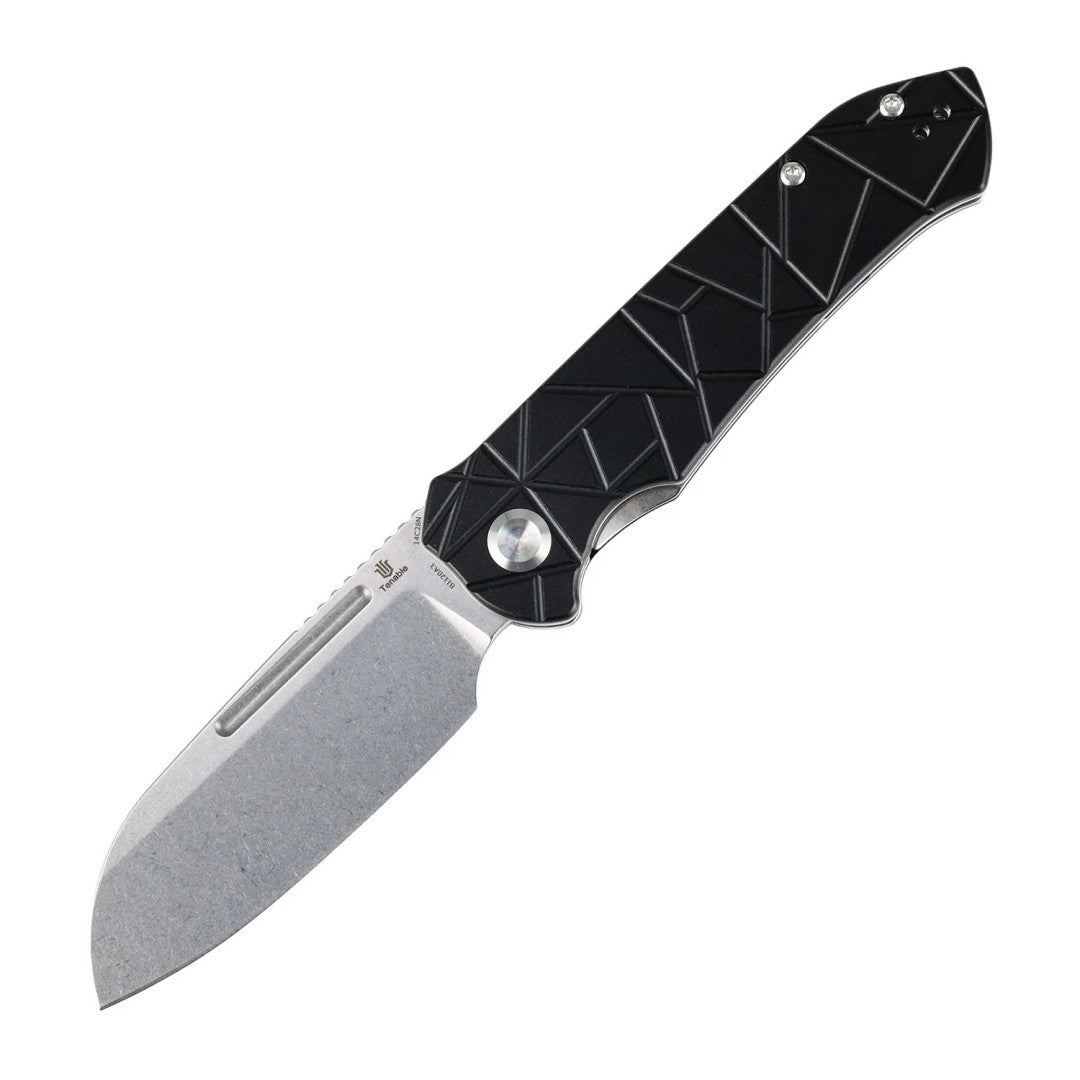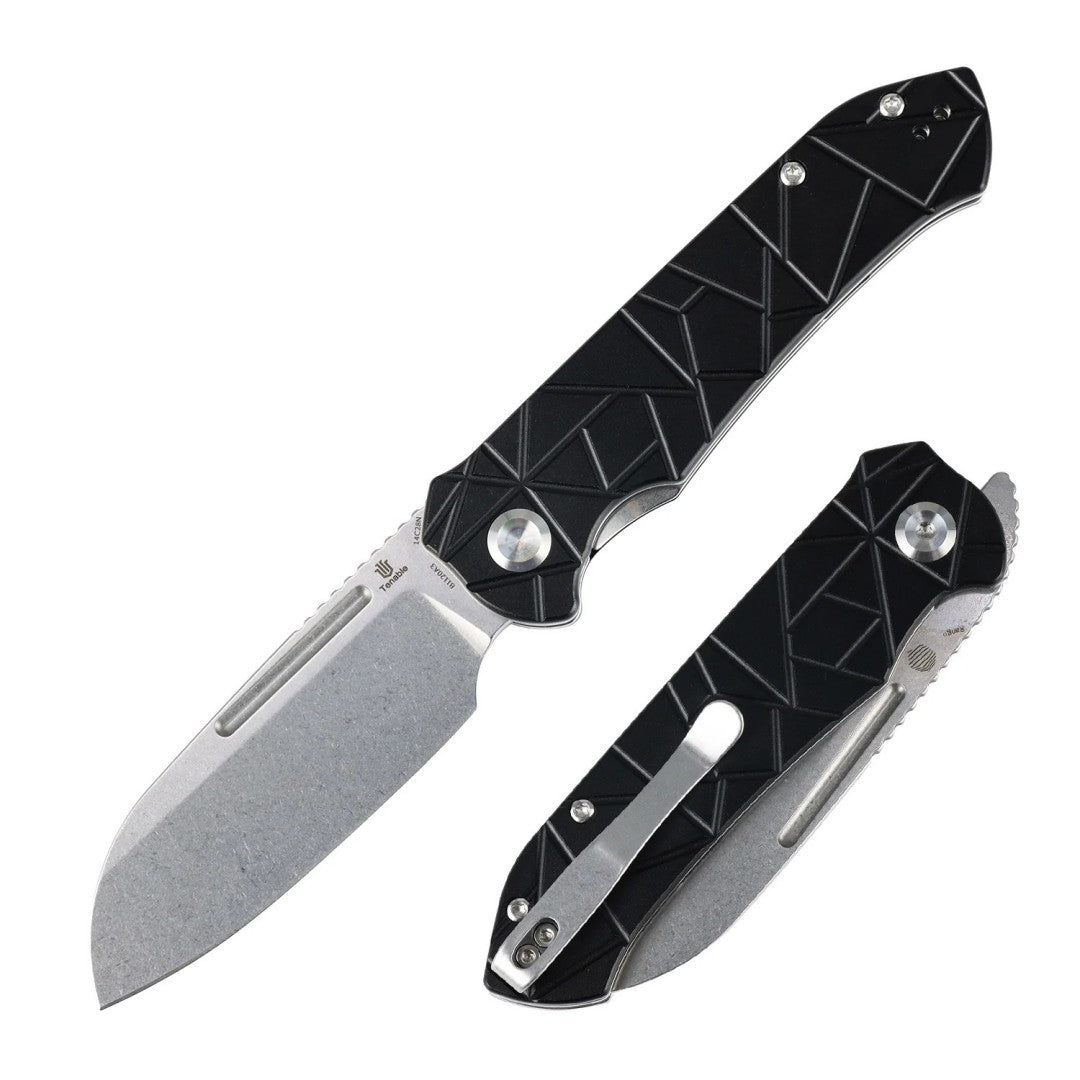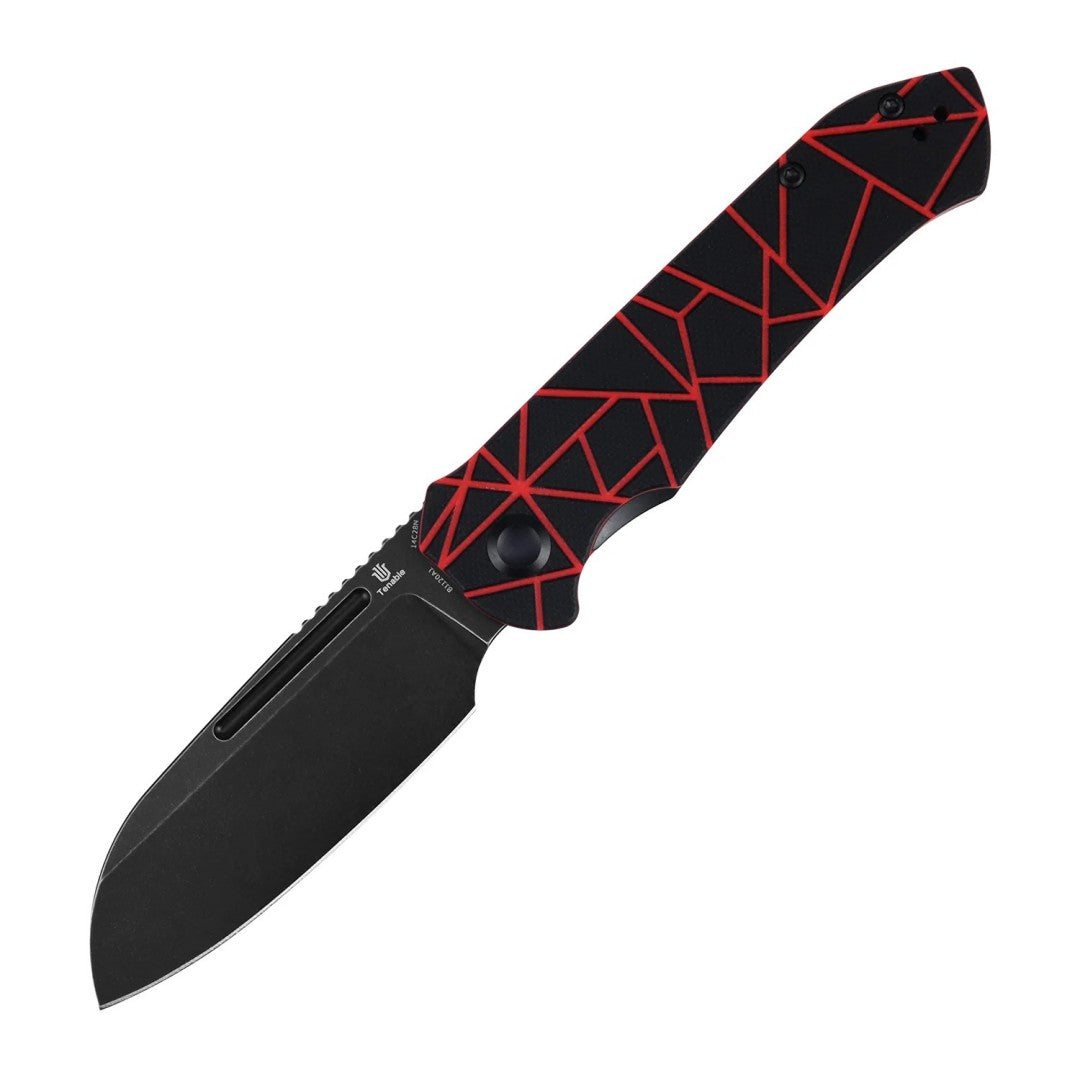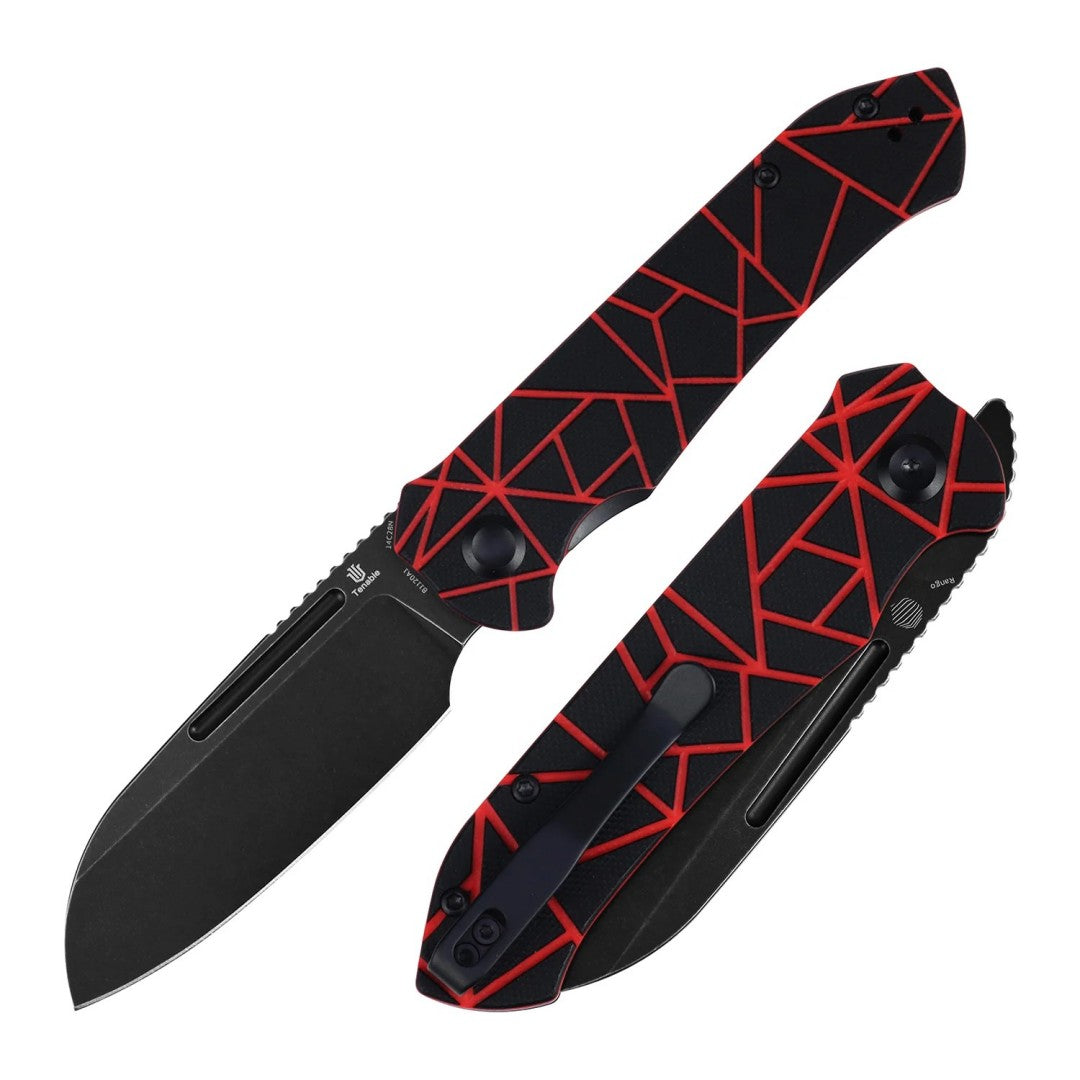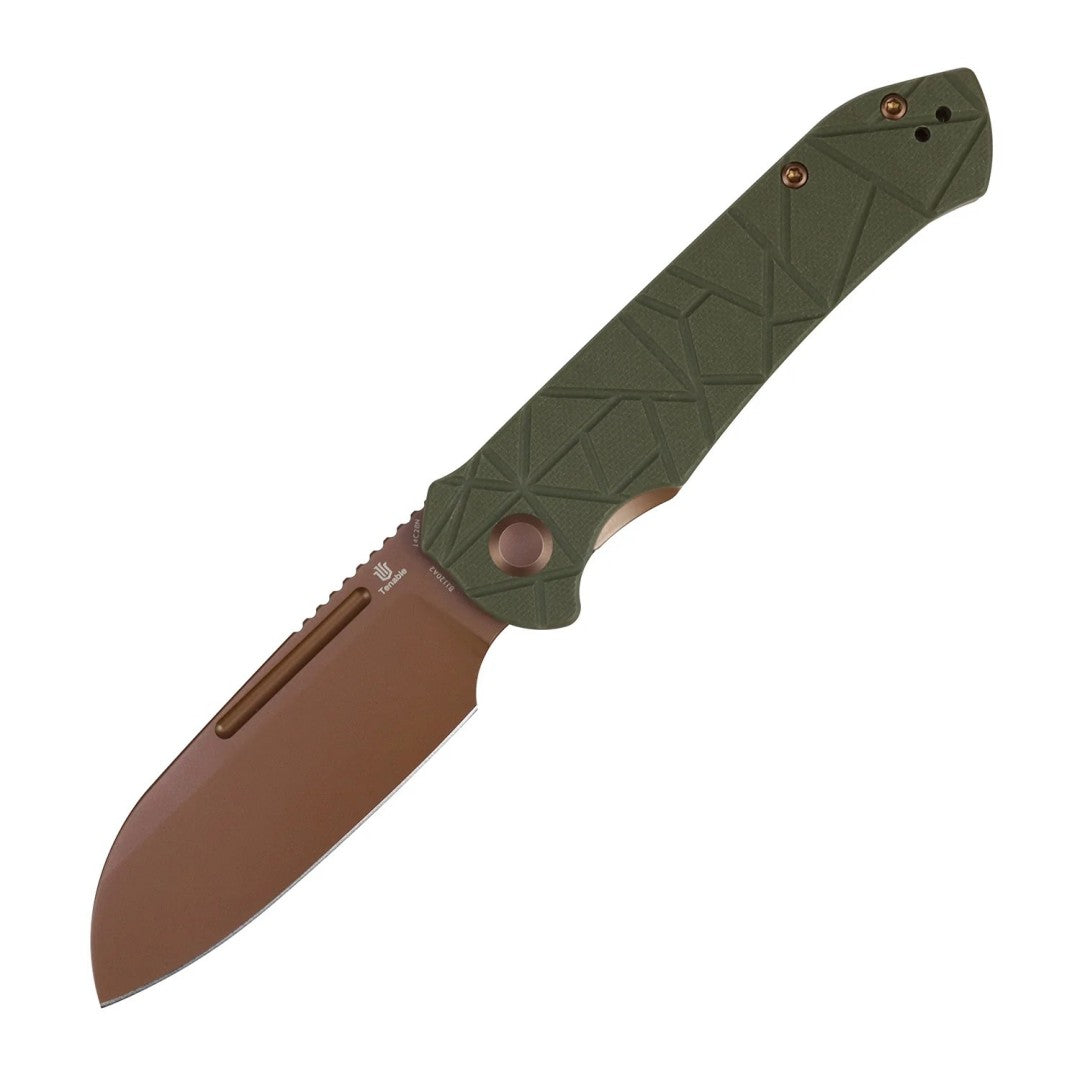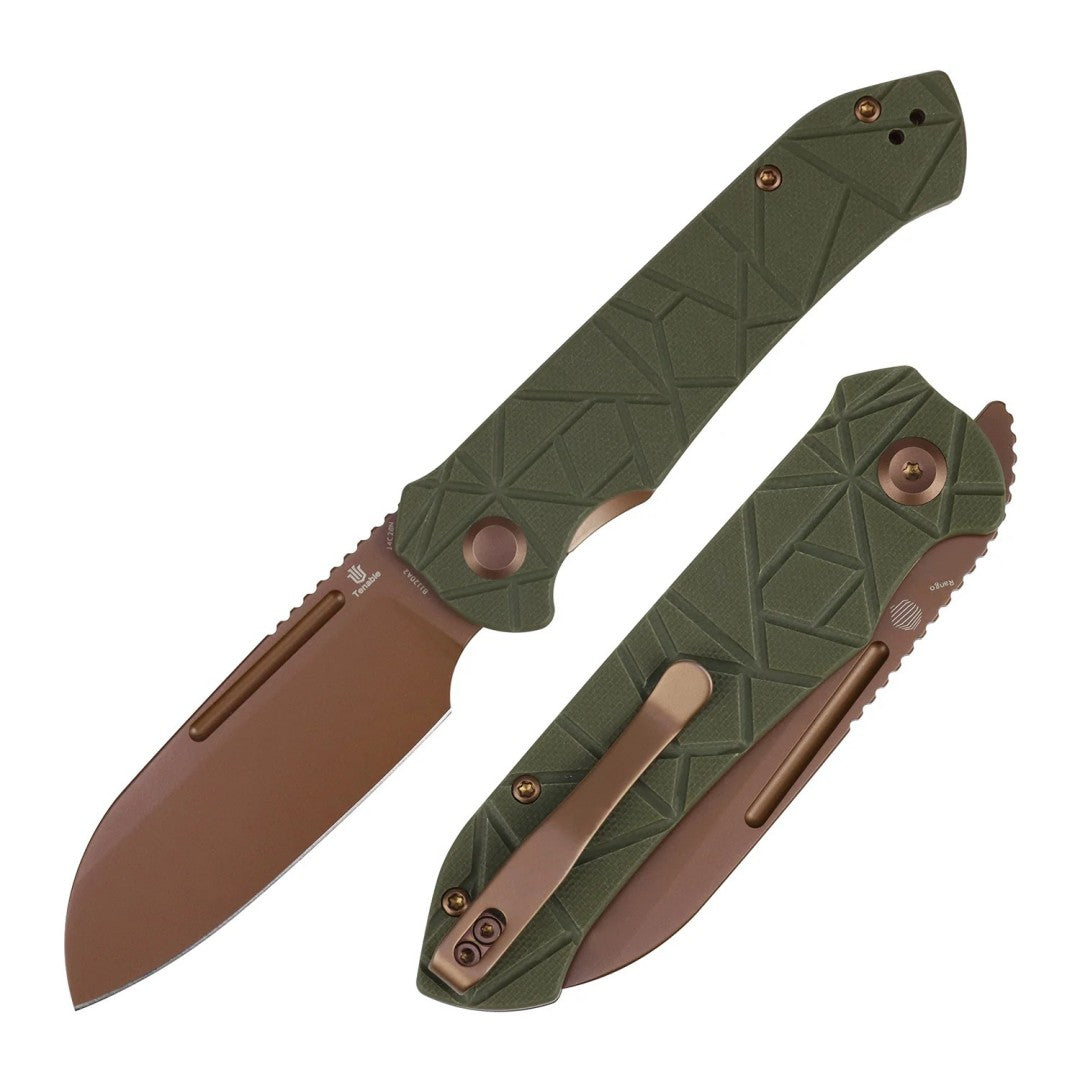
Pattern-welded steel represents one of the most revered traditions in custom cutlery, turning functional metal into an organic visual tapestry. When applied to a modern micro-cleaver, the interplay between artisanal forging and precision machining creates a pocket tool that commands immediate attention. In the Kansept Mini Korvid, engineered from the creative designs of custom knifemaker Justin Koch, the Damascus edition showcases meticulous layer composition, precise acid-etch contrast, and refined finishing tailored for the discerning EDC collector.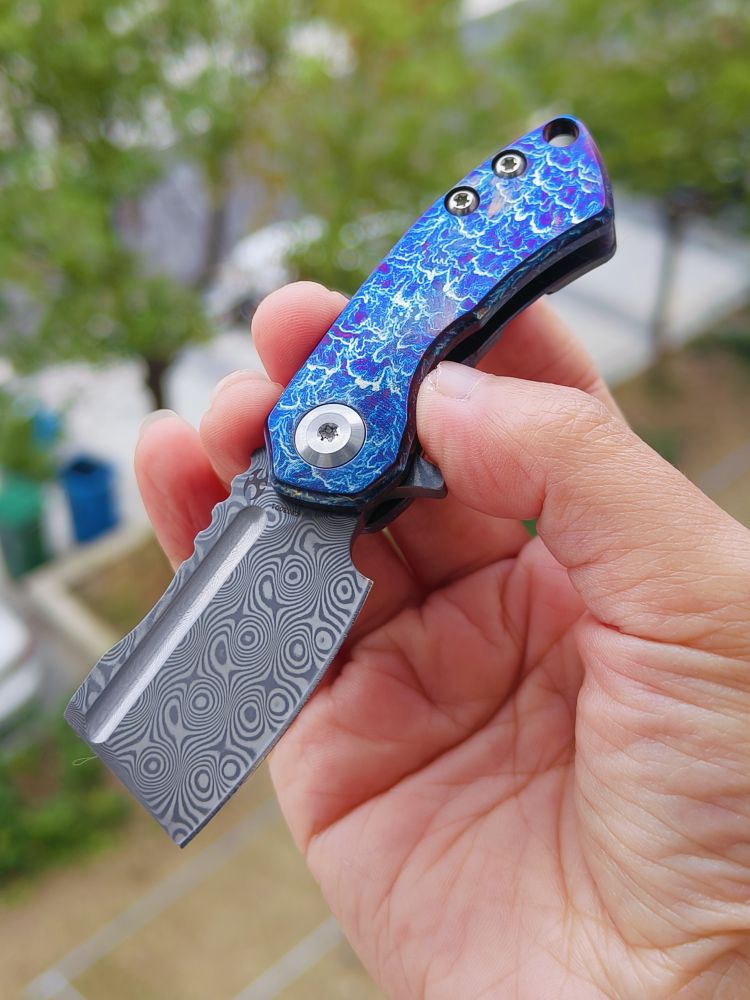
The Metallurgy of Modern Pattern-Welded Forging
Modern Damascus steel is produced by forge-welding alternating sheets of contrasting high-carbon and nickel-bearing alloys into a solid billet. The billet is repeatedly heated, drawn out, folded, and twisted to multiply the internal layer count before being ground into the final blade profile.
The dark and light ribbons across the blade surface result from differential chemical reactions during the post-grind acid etching bath:
-
High-Carbon Core Layers: Absorb the ferric chloride acid rapidly, oxidizing into deep charcoal and matte-black contours that provide the dark contrast lines.
-
Nickel-Enriched Alloy Layers: Strongly resist acid oxidation, retaining their bright silver, mirror-like reflectivity to delineate each individual fold.
-
Etched Surface Topography: Produces subtle micro-ridges where the softer, oxidized layers recess slightly beneath the nickel layers, providing an authentic tactile feel across the blade flats.
Layer Architecture and Blade Specifications
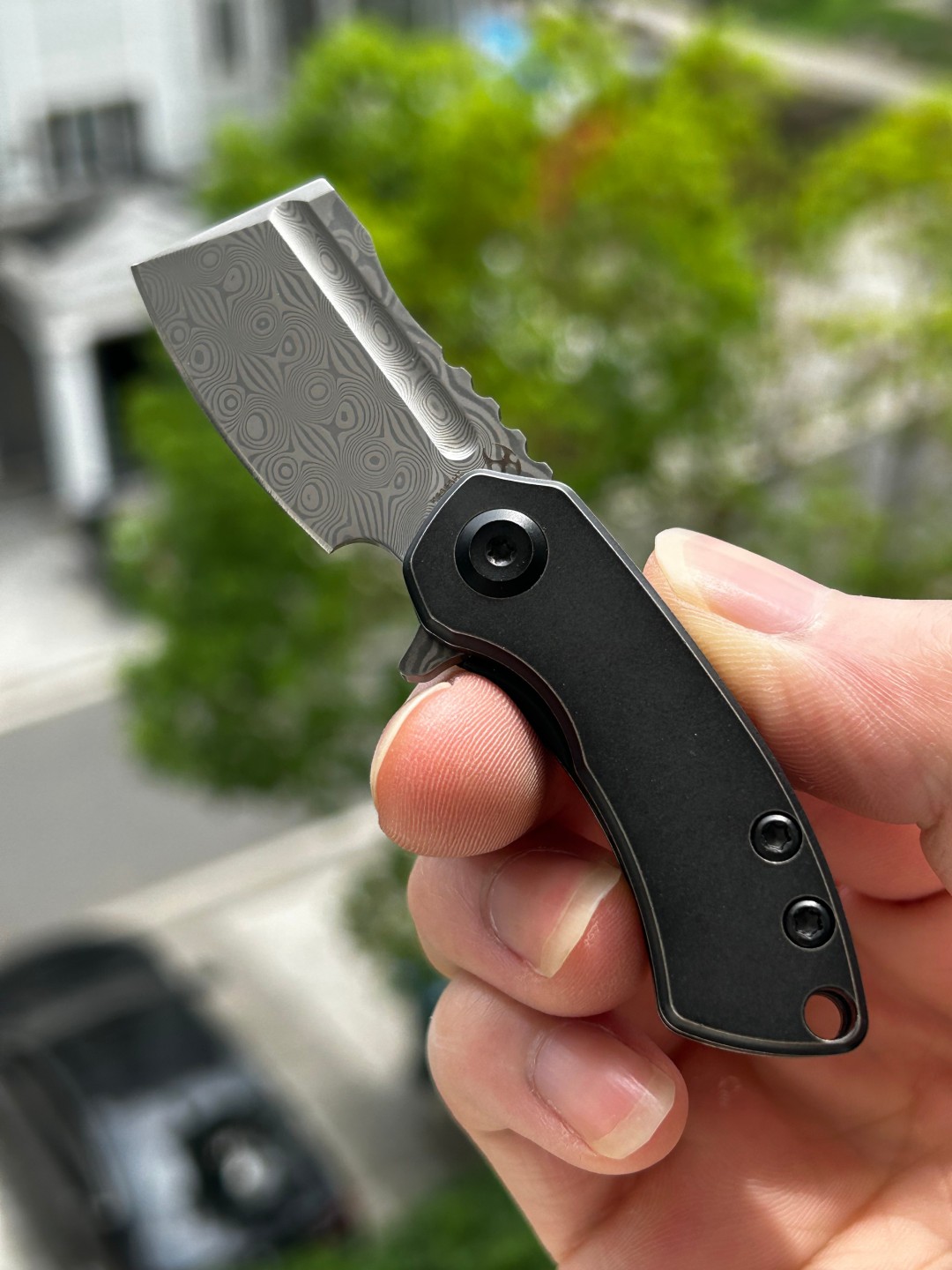
Because the Mini Korvid features a broad cleaver profile rather than a narrow drop-point, the wide surface geometry serves as an expansive canvas that reveals the full complexity of the folded steel pattern.
| Craftsmanship Attribute | Specification Metric | Visual and Functional Significance |
| Layer Density | Multi-Layer Forged Matrix | Densely packed pattern lines tailored to a micro-scale blade |
| Blade Profile | Mini Cleaver / Full Flat Grind | Broad flats maximize visible pattern exposure across the bevel |
| Blade Length | 1.45 in (37.0 mm) | Concentrates intricate pattern swirling within a compact area |
| Spine Thickness | 0.118 in (3.0 mm) | Reveals continuous longitudinal forge lines along the top spine |
| Etch Finish | Deep Contrast Acid Etch | Delivers distinct visual separation between carbon and nickel layers |
| Pivot Bearing System | Ceramic Ball Bearings | Ensures smooth, fluid opening action with minimal friction |
The three-millimeter blade spine offers an unobstructed view of the alternating steel layers running longitudinally from the thumb ramp down to the front corner, allowing enthusiasts to inspect the structural grain from every angle.
 Metallurgical Hierarchy Across the Korvid Family
While Damascus models are celebrated for their hand-crafted visual character, comparing them against the performance steels across the wider Kansept Korvid series highlights how each material serves distinct daily roles.
| Blade Steel Variant | Visual Finish Style | Abrasive Wear Resistance | Corrosion Resistance | Primary Intended Application |
| Pattern-Welded Damascus | Acid-etched organic layers | Balanced Daily Utility | Moderate to High | Gentleman's Carry / Art Collection |
| 154CM Blade | Satin / Stonewashed | High Wear Stamina | Excellent Stainless | Heavy Everyday Workhorse |
| CPM-S35VN | Micro-Bead / Satin | Exceptional Wear Stamina | Superior Stainless | High-Frequency Abrasive Cutting |
While 154CM provides quick field resharpening and CPM-S35VN delivers maximum edge longevity for repetitive cardboard breakdown, Damascus remains the premier choice for enthusiasts seeking functional pocket artistry.
Precision Assembly and Mechanical Lockup
Visual beauty requires equally precise mechanical execution. Manufactured under the strict quality standards of Kansept, each Damascus blade is fitted with ceramic ball bearings to guarantee an instant, smooth snap upon striking the flipper tab.
Structural Lock Integration
-
Refined Liner Lock Models: Standard composite and aluminum variants feature a stainless steel Liner Lock nested inside milled scale pockets, maintaining a slim handle thickness while providing firm mechanical lockup.
-
Integral Frame Lock Editions: Premium all-metal editions utilize an integrated titanium Frame Lock. Hand pressure naturally reinforces the lock bar engagement against the Damascus blade tang during downward cutting tasks.
Preserving Damascus Contrast and Long-Term Care
Maintaining the visual depth of pattern-welded steel requires simple, consistent maintenance habits:
-
Protective Oil Barrier: Applying a light coat of mineral oil or corrosion-inhibiting knife wax shields the carbon steel layers from moisture and humidity.
-
Non-Abrasive Cleaning: Wipe down the blade with a soft microfiber cloth after contact with acidic fruit juices or sticky adhesives to prevent uneven oxidation.
-
Strop-Based Sharpening: Because the straight cleaver edge has no recurve, regular maintenance on a leather strop charged with fine diamond paste restores a razor edge without scratching the etched flats.
 Frequently Asked Questions
Will heavy cutting wear away the Damascus pattern?
The pattern is forged throughout the entire cross-section of the steel, not printed or coated on the surface. While abrasive cutting may smooth out superficial acid oxidation over time, the underlying layered structure remains permanent and can be easily re-etched if desired.
How does Damascus perform compared to standard stainless steels?
Modern Damascus uses high-grade cutlery alloys, offering reliable daily cutting performance for opening packages, slicing cords, and general utility chores, paired with elevated aesthetic value.
What is the best way to sharpen a Damascus cleaver blade?
Using a flat bench stone or leather strop maintains the straight cutting edge cleanly. Maintaining a consistent bevel angle prevents abrasives from scuffing the acid-etched pattern above the cutting line.