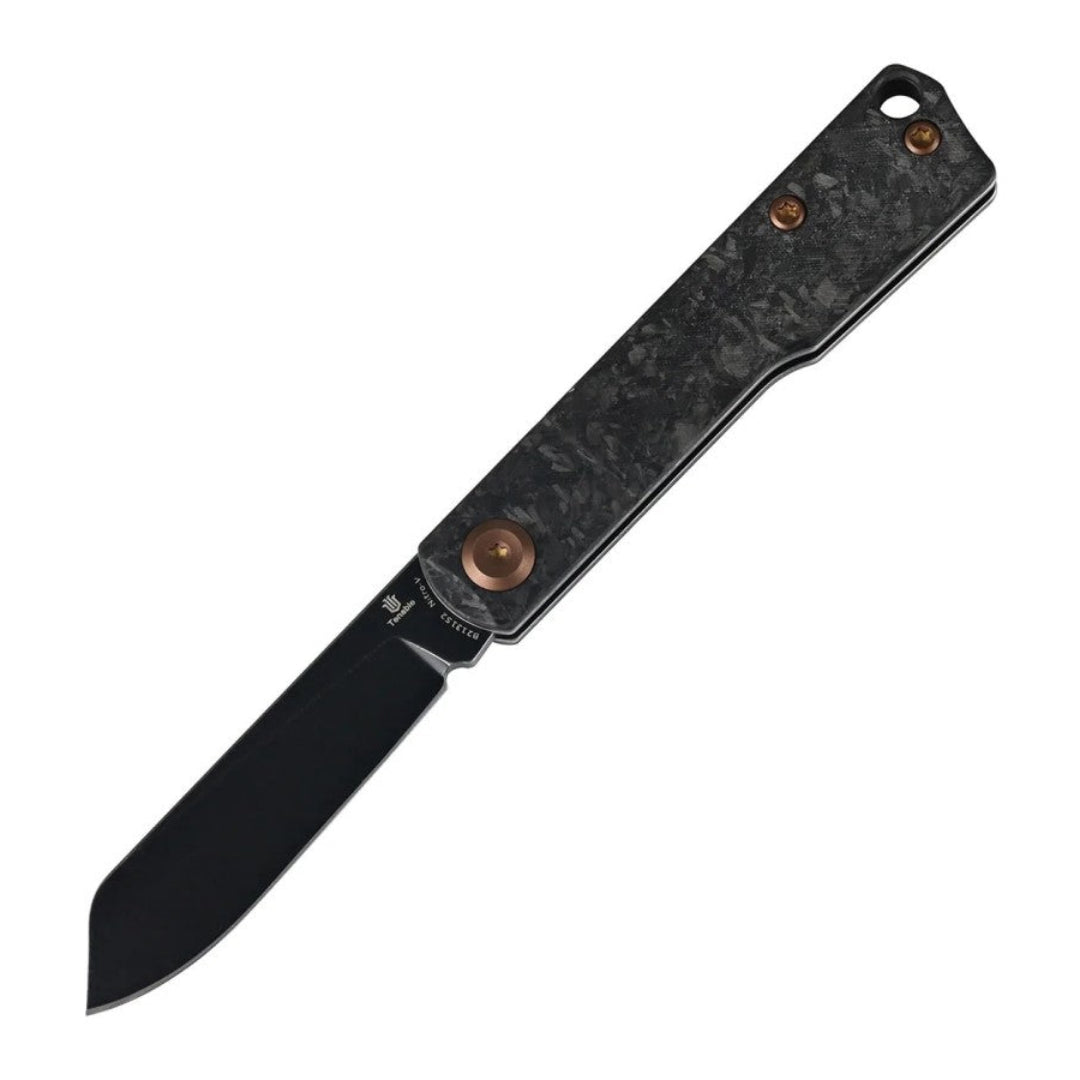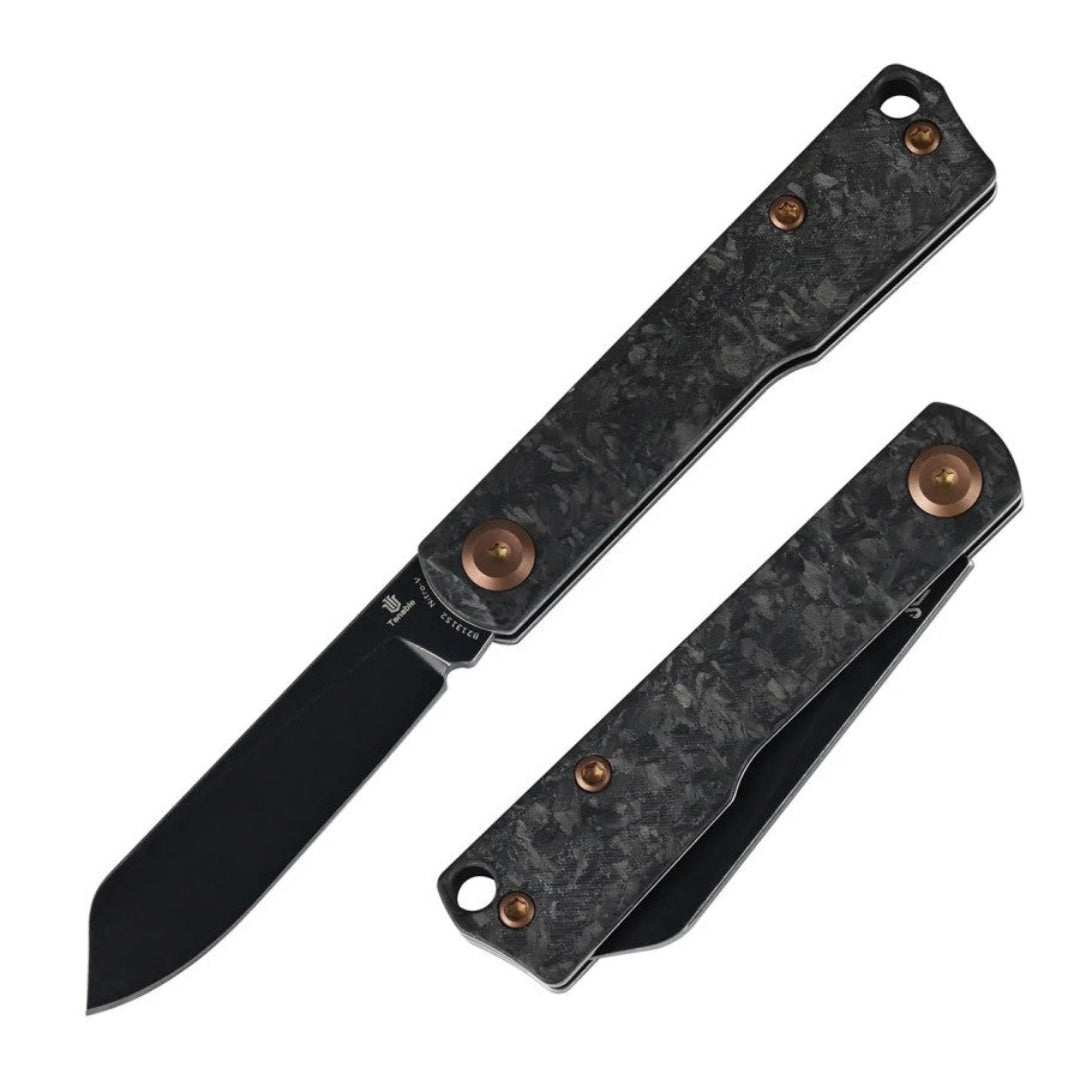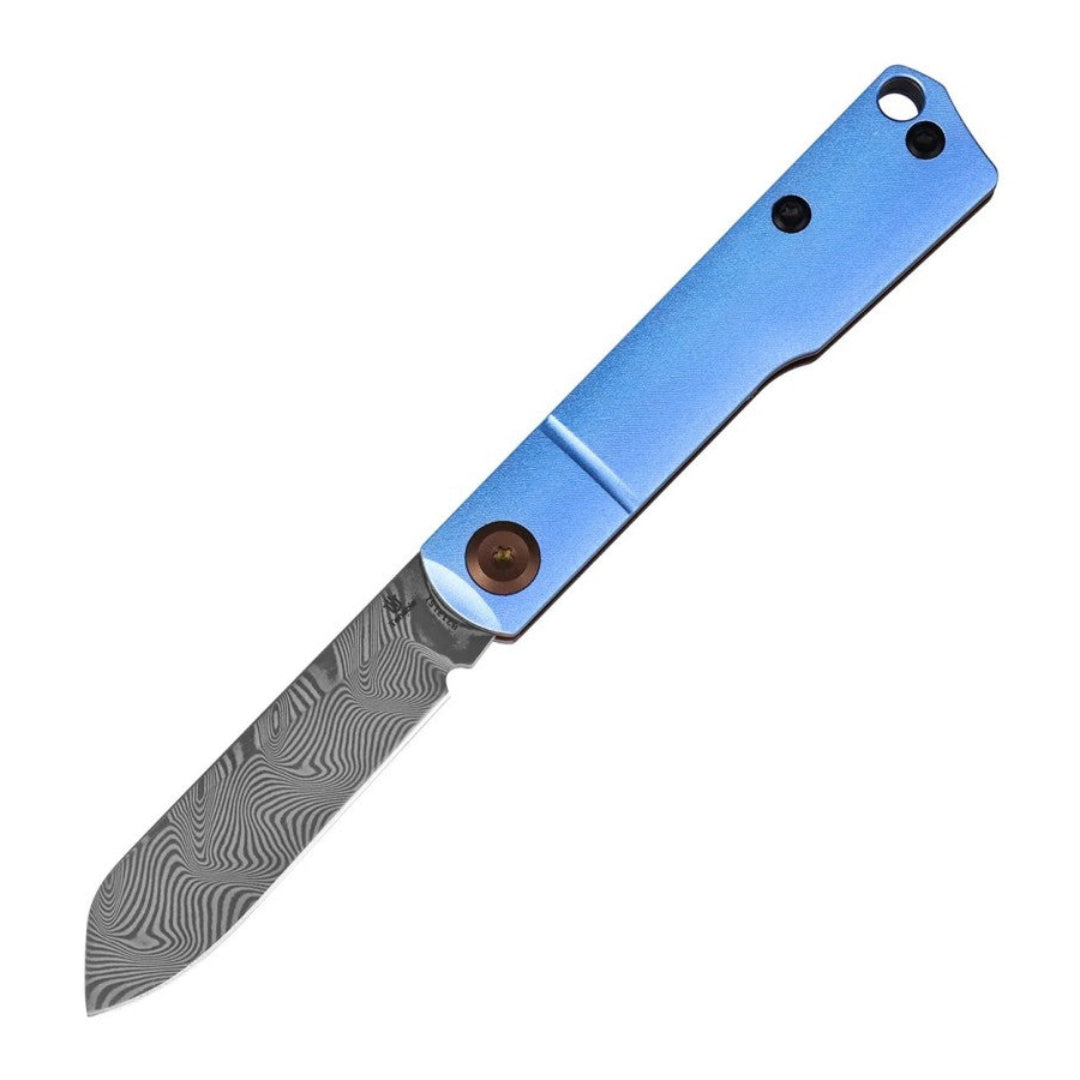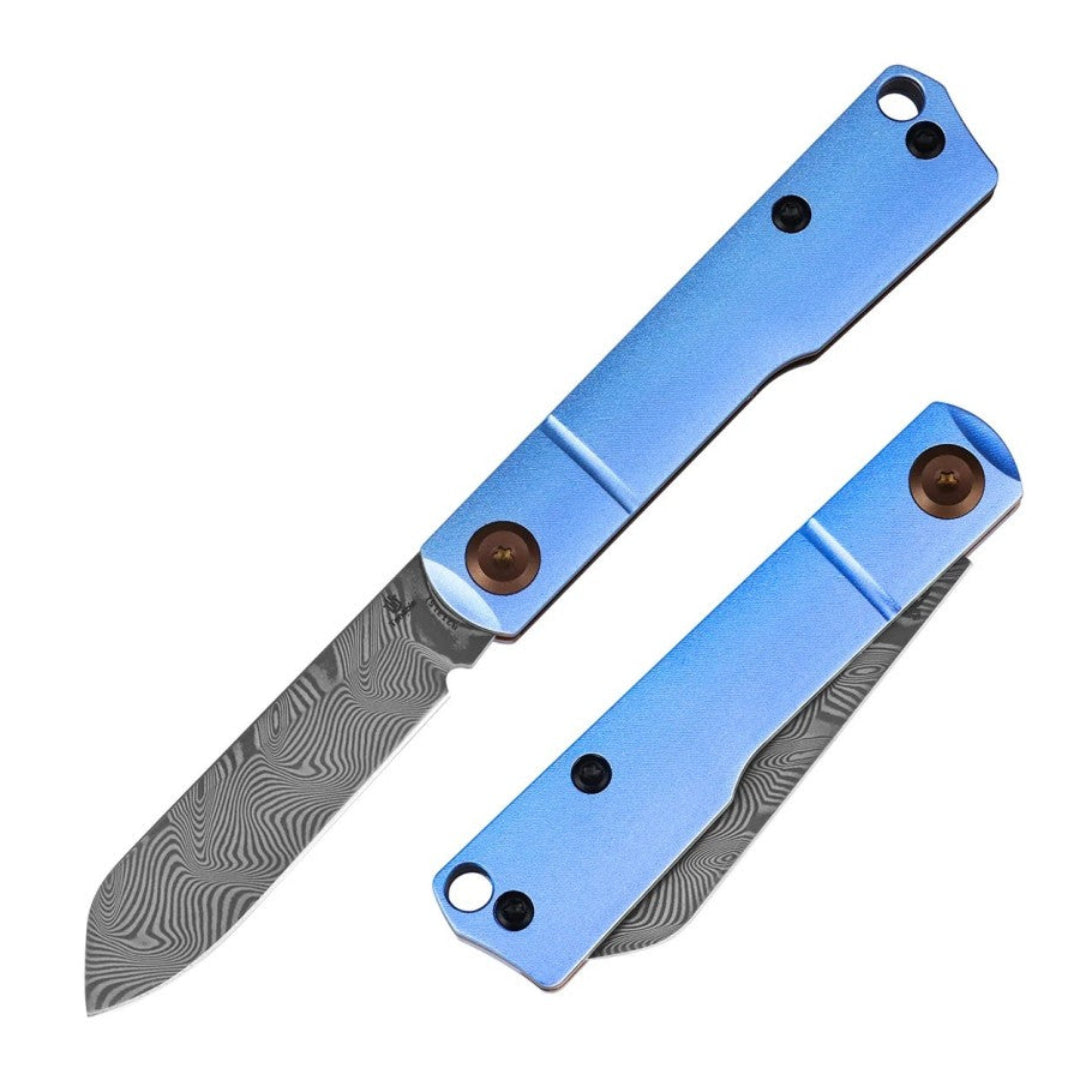

K390 steel is a powder metallurgy cold work tool steel that has rapidly earned a cult following among knife enthusiasts who demand extreme edge retention above all else. Developed by Böhler-Uddeholm, the Austrian-Swedish steelmaking powerhouse, K390 was engineered as a direct competitor to Crucible‘s CPM-10V — and in many ways, it surpasses its rival.
Often described as a high-vanadium, high-wear steel, K390 delivers edge retention that rivals even the most exotic super steels on the market. Its unique alloy composition — enriched with vanadium, tungsten, and cobalt — produces a blade that stays sharp through punishing use, day after day. For users who prioritize cutting performance above corrosion resistance and ease of sharpening, K390 represents the pinnacle of what modern metallurgy can achieve.
The Origin Story
The patent application for K390 was submitted in Austria by Böhler in 2002, and the steel was officially announced in 2004. It was developed as an evolution of CPM-10V, a steel that had enjoyed success since the late 1970s for its exceptional wear resistance and moderate toughness.
The key improvements in K390 came through the addition of molybdenum, tungsten, and cobalt. These elements provide better “secondary hardening” and “hot hardness” — meaning K390 can maintain its hardness even at elevated temperatures. The higher molybdenum content also gives it greater “hardenability,” allowing large dies and thick blades to harden uniformly all the way through.
K390 initially saw limited use in custom knives, with pioneers like Phil Wilson testing early samples as Böhler ramped up its advertising to the knife industry around 2009–2011. However, the steel’s popularity exploded when Spyderco began producing K390 knives — starting with a Mule in 2013 and followed by the Police 4 in 2017. Today, Spyderco offers a full family of K390-bladed knives, including the Delica 4, Endura 4, Endela, Stretch 2, LeafJumper, Ladybug 3, and Enuff 2.
Chemical Composition
K390’s performance begins with its extraordinarily high alloy content. According to Böhler’s official datasheet, the composition is as follows:
| Element | Percentage | Role in the Steel |
|---|---|---|
| Carbon (C) | 2.47% | Extremely high carbon drives hardness and forms massive volumes of carbides |
| Vanadium (V) | 9.00% | Forms extremely hard vanadium carbides (MC type) for exceptional wear resistance |
| Chromium (Cr) | 4.20% | Provides some corrosion protection but not enough for stainless classification |
| Molybdenum (Mo) | 3.80% | Enhances hardenability, strength, and secondary hardening response |
| Cobalt (Co) | 2.00% | Improves hot hardness and maintains properties at elevated temperatures |
| Tungsten (W) | 1.00% | Contributes to wear resistance and high-temperature performance |
| Silicon (Si) | 0.55% | Strengthens the steel and acts as a deoxidizer |
| Manganese (Mn) | 0.40% | Helps remove impurities and increases hardenability |
The most striking feature of K390’s composition is the 9% vanadium content, which creates a carbide volume of approximately 17% — one of the highest among cold work tool steels. With only 4.2% chromium, K390 falls well below the 13% threshold required for stainless classification. This is a non-stainless tool steel, which means it will patina and potentially rust if not properly maintained.
MICROCLEAN Powder Metallurgy
K390 is manufactured using Böhler’s MICROCLEAN particle metallurgy process — a third-generation powder metallurgy technology that produces an exceptionally uniform, fine-grain structure. This manufacturing method eliminates the large, blocky carbides that plague conventionally cast tool steels, replacing them with finely distributed primary carbides throughout the matrix.
The result is a steel that achieves extremely high wear resistance while maintaining good toughness — a combination that would be impossible in a conventionally cast alloy. As Böhler describes it, K390 is a “problem solver for applications requiring extremely high wear resistance and compressive strength”.
Key Properties
Hardness
K390 achieves a hardness range of 58–64 HRC in production knives. However, most K390 blades are heat-treated between 62 and 64 HRC, with some examples exceeding this range. Spyderco runs their K390 family at approximately 63–64 HRC, striking an optimal balance between edge retention and toughness.
This extreme hardness is one of the highest among production knife steels. Only specialty alloys like Maxamet, Rex 121, and ZDP-189 consistently exceed K390’s hardness ceiling.
Edge Retention (Rating: 9.5/10)
This is where K390 truly dominates. K390 consistently tops the charts for edge retention among all knife steels available today.
The secret lies in the steel’s carbide structure. With approximately 17% carbide volume — primarily vanadium carbides — K390 offers abrasion resistance that leaves most stainless super steels in the dust. Vanadium carbides are among the hardest carbides found in knife steels (approximately 2800 HV), meaning they resist abrasive wear exceptionally well.
In independent CATRA testing, K390 has been shown to outperform M390 by a significant margin. One user notes that K390 “has a much higher edge retention than M390”. Compared to mainstream steels like S30V or VG-10, the difference is even more dramatic — K390 holds an edge roughly three to four times longer.
As one reviewer put it: “Once sharp, always stays sharp applies to K390 steel knife blades. Customers can cut with one for hours on end, day in and day out, without noticing significant drops in sharpness”.
Toughness (Rating: 7.5/10)
One might expect a steel with 2.47% carbon and 9% vanadium to be brittle — but K390 defies expectations. The powder metallurgy manufacturing process ensures a uniform matrix with finely distributed primary carbides, which leads to good material toughness.
In practice, K390 offers exceptional toughness for a high-wear steel. Users report that K390 resists chipping and edge cracking even when sharpened to very acute edge angles. One user described K390 as “shockingly tough,” noting that you can sharpen it to a very acute edge angle without constantly chipping the blade.
Böhler’s own literature shows that K390 achieves a substantial improvement in toughness compared to CPM-10V, while offering only slightly lower wear resistance. This makes K390 one of the best-balanced high-wear steels available — delivering extreme edge retention without the brittleness that plagues many competing alloys.
Corrosion Resistance (Rating: 2/10)
This is K390‘s acknowledged trade-off. With only 4.2% chromium, K390 is not a stainless steel. It lacks the chromium content required to form a stable passive oxide layer.
In practice, K390 will develop a patina relatively quickly and can form surface rust if exposed to moisture without proper maintenance. Users report that K390 “corrodes and pits pretty quickly” and that “it will patina quickly and develop a little bright surface rust if you don‘t wipe it off reasonably soon after use on wet/acidic things”.
However, this vulnerability is manageable. With basic care — wiping the blade dry after use, applying a light coat of oil, and avoiding prolonged exposure to moisture — K390 can serve admirably as an EDC steel. For users who accept this trade-off, the edge retention benefits far outweigh the corrosion concerns.
Wear Resistance (Rating: 9.5/10)
K390 offers very high wear resistance — one of the highest among all cold work tool steels. The combination of 9% vanadium, 3.8% molybdenum, and 1% tungsten creates a dense network of hard carbides that resist abrasion exceptionally well.
In practical terms, K390 blades resist scratches, maintain their edge geometry, and stay sharp through abrasive cutting tasks that would dull most other steels rapidly. Cutting cardboard, rope, carpet, or other abrasive materials is where K390 truly shines.
Sharpening (Rating: 4/10)
The same properties that give K390 its incredible edge retention also make it challenging to sharpen. Vanadium carbides are harder than typical aluminum oxide abrasives, which means traditional sharpening stones will struggle to cut K390 effectively.
For successful sharpening, diamond stones or ceramic abrasives are strongly recommended. Users with quality diamond stones report that K390 is manageable, though it requires more time and patience than conventional steels. One user notes that K390 is “noticeably easier” to reprofile than Rex 45, though it requires diamond abrasives for efficient material removal.
For users willing to invest in the right equipment, K390 takes a very fine, aggressive edge that lasts for an extraordinarily long time.
K390 vs. Other Knife Steels
K390 vs. Maxamet
This is the ultimate edge retention showdown. Maxamet offers superior edge retention, while K390 offers better toughness and edge stability. Independent testing shows Maxamet outperforming K390 by approximately 20–25% in standardized cutting tests. However, K390 has “a lot higher edge strength” and resists chipping more effectively than Maxamet. K390 is also marginally easier to sharpen. If you need absolute maximum edge retention and can accept brittleness, choose Maxamet. If you want near-maximum edge retention with better toughness, choose K390.
K390 vs. CPM-10V
This is the direct comparison that inspired K390‘s development. CPM-10V offers slightly better wear resistance, while K390 offers substantially better toughness. Both steels have approximately 17% carbide volume. K390’s additions of molybdenum, tungsten, and cobalt give it better secondary hardening and hot hardness. In practice, most users find the performance difference minimal, with K390‘s improved toughness making it the more versatile choice for knives.
K390 vs. M390
This comparison highlights the stainless vs. non-stainless trade-off. K390 offers dramatically better edge retention than M390, while M390 offers superior corrosion resistance. M390 is a true stainless steel with 18–20% chromium, making it far more rust-resistant. However, in edge retention, K390 consistently outperforms M390 by a wide margin. K390 is also significantly more difficult to sharpen. Choose M390 for corrosion resistance; choose K390 for cutting performance.
K390 vs. Rex 45
Both are high-performance non-stainless tool steels with similar property profiles. K390 holds an edge longer and is easier to reprofile than Rex 45. Users report that K390 has a “more aggressive feel” due to differences in carbide structure between the two. Both require maintenance to prevent corrosion.
K390 vs. S30V / S35VN
K390 is in a completely different league. S30V and S35VN are excellent stainless super steels, but they cannot match K390‘s edge retention. Reports indicate K390 “hold an edge much longer than stuff like S30V”. However, S30V and S35VN offer far superior corrosion resistance and are much easier to sharpen. For dry EDC use where edge retention is paramount, K390 is the superior choice. For humid environments or users who prefer low-maintenance blades, stick with S30V or S35VN.
Comparison Summary Table
| Steel | Hardness (HRC) | Edge Retention | Corrosion Resistance | Toughness | Ease of Sharpening | Steel Type |
|---|---|---|---|---|---|---|
| K390 | 62–64 | Superior (9.5/10) | Low (2/10) | Good (7.5/10) | Difficult | Non-Stainless Tool Steel |
| Maxamet | 65–68 | Elite (10/10) | Low (2/10) | Moderate (5/10) | Very Difficult | Non-Stainless Carbide Steel |
| M390 | 60–62 | Very Good (7/10) | Excellent (9/10) | Good (7/10) | Moderate | Stainless |
| CPM-10V | 62–64 | Superior (9/10) | Low (2/10) | Moderate (6/10) | Difficult | Non-Stainless Tool Steel |
| S35VN | 59–61 | Good (6/10) | Excellent (8.5/10) | Very Good (8/10) | Moderate | Stainless |
Practical Applications and Popular Knives
Everyday Carry (EDC)
K390 is an excellent EDC steel for users who prioritize edge retention and don‘t mind basic maintenance. For cutting cardboard, opening packages, breaking down boxes, and general utility tasks, K390 stays sharp for weeks or months without touching a sharpener.
Outdoor and Bushcraft Knives
The combination of extreme wear resistance and good toughness makes K390 suitable for outdoor applications where sharpening equipment may not be readily available. However, users should be prepared to manage corrosion — wiping the blade dry after use is essential.
Industrial and Tradesperson Knives
For users who cut abrasive materials daily — carpet, drywall, rope, straps, or composite materials — K390’s wear resistance translates directly into productivity. Less time sharpening means more time working.
Spyderco K390 Family
Spyderco is the most prominent user of K390, offering a full lineup of blue-handled K390 knives:
-
Delica 4 K390 — 2.9″ blade, lightweight FRN handle, the EDC classic
-
Endura 4 K390 — 3.8″ blade, Wharncliffe and standard options available
-
Endela K390 — 3.4″ blade, ideal mid-size EDC
-
Stretch 2 K390 — 3.45″ blade, ergonomic handle design
-
LeafJumper K390 — 3.09″ leaf-shaped blade
-
Ladybug 3 K390 — 1.9″ blade, the ultimate keychain knife
-
Enuff 2 K390 — Fixed blade with 3.5″ leaf blade
Advantages and Drawbacks
Advantages
-
Extreme edge retention — Among the best of any knife steel available
-
Excellent toughness for a high-wear steel — Resists chipping better than Maxamet or Rex 121
-
Very high wear resistance — Resists abrasion through demanding cutting tasks
-
Takes an exceptionally fine edge — Carbide structure supports very acute edge angles
-
Good dimensional stability — Maintains shape under intensive use
-
High compressive strength — Withstands heavy cutting forces without deformation
Drawbacks
-
Not stainless — Requires regular maintenance to prevent rust and patina
-
Difficult to sharpen — Diamond stones or ceramic abrasives are required
-
Higher cost — K390 commands a premium price
-
Limited availability — Fewer knife models use K390 compared to mainstream steels
-
Corrosion vulnerability — Can pit or rust quickly in humid or wet environments without proper care
K390 Steel Care Guide
Because K390 is a non-stainless tool steel, proper maintenance is essential. Follow these guidelines to keep your K390 blade in optimal condition:
-
Wipe the blade dry immediately after use — Do not leave moisture on the blade
-
Apply a light coat of oil — Mineral oil, KPL Knife Shield, or any rust-inhibiting product works well
-
Avoid prolonged exposure to moisture — Do not store the knife in wet sheaths or humid environments
-
Accept patina — Natural patina formation is normal and can actually provide mild corrosion protection
-
Use diamond stones for sharpening — Traditional aluminum oxide stones will struggle to cut K390 effectively
Final Verdict: Is K390 Steel Right for You?
K390 steel is best understood as a specialized tool for users who prioritize cutting performance above all else. It is not a general-purpose stainless steel. It is not a low-maintenance option. It is not for beginners who struggle with sharpening.
But for users who understand and accept its trade-offs, K390 delivers uncompromising edge retention that few other steels can match. As one user perfectly summarized: “K390 steel by far is the best combination of edge retention and ease of resharpening on sale at this time”.
Choose K390 if you:
-
Prioritize edge retention above all other properties
-
Are willing to perform regular maintenance (wiping, oiling)
-
Have experience sharpening high-carbide steels with diamond stones
-
Use your knife primarily in dry environments or accept the need for corrosion management
-
Want one of the highest-performing non-stainless tool steels available
Look elsewhere if you:
-
Need true stainless corrosion resistance (choose M390, Elmax, or MagnaCut)
-
Are a complete beginner who struggles with sharpening
-
Prefer low-maintenance, “set and forget” blades
-
Primarily use your knife in saltwater or very humid environments
For enthusiasts, collectors, tradespeople, and anyone who demands the absolute best in edge retention — K390 represents the cutting edge of knife steel technology. It is a steel that performs when it matters, lasts when you need it, and rewards proper care with cutting performance that must be experienced to be believed.