


描述
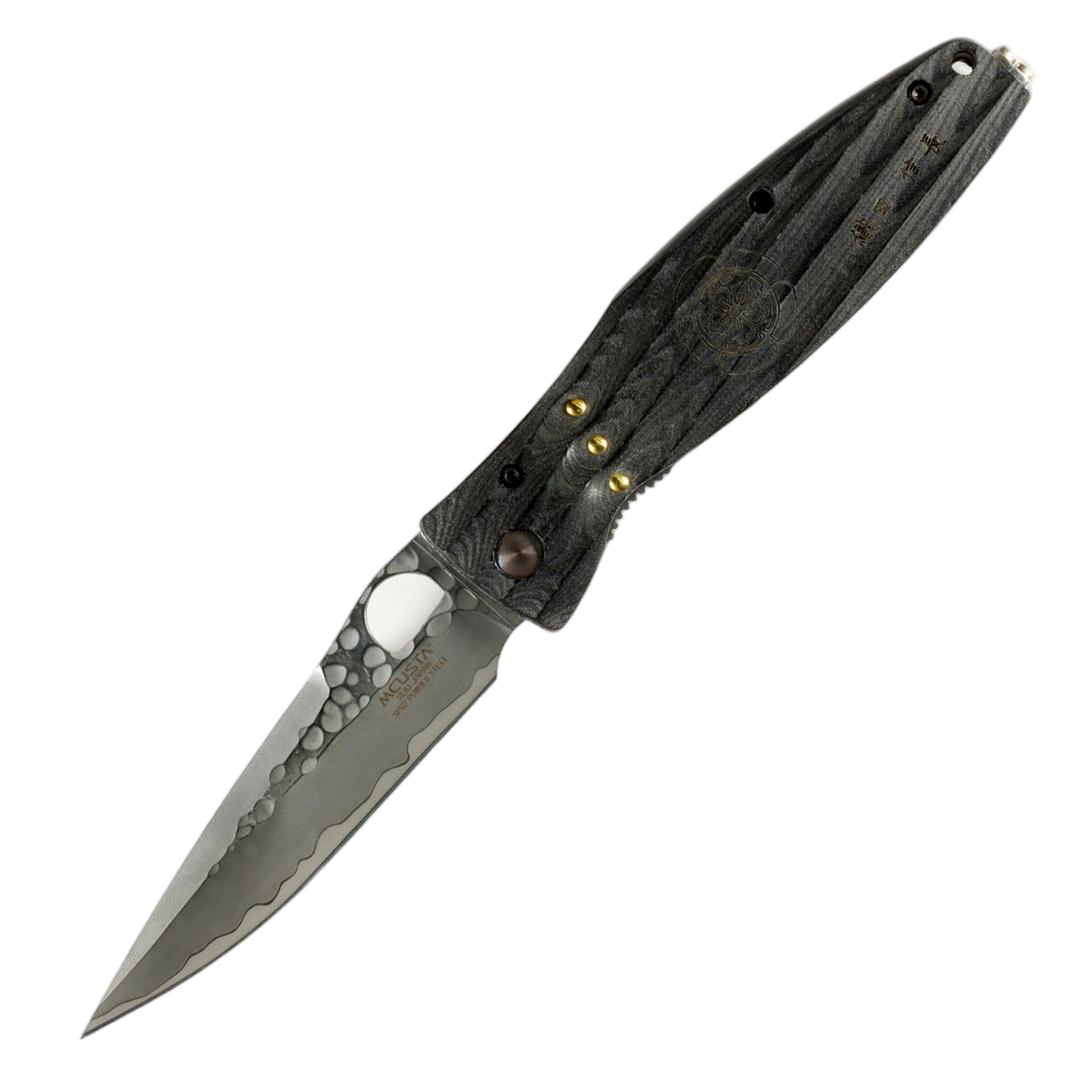
The Mcusta Sengoku Busho series celebrates Japan's most famous Samurai from the Sengoku Jidia ("Age of warring states"). These elegantly crafted knives show the beauty and history of Japanese culture while combining traditional elements into a sturdy and funtional linerlock folding knife.
Nobunaga Oda (1534-1582) was a major Daimyo (feudal lord) who fought for unification during the Sengoku period. The handle is designed with the pattern of Samurai armor and laser engraved with "Nobunaga Oda" and his family crest (Kamon).
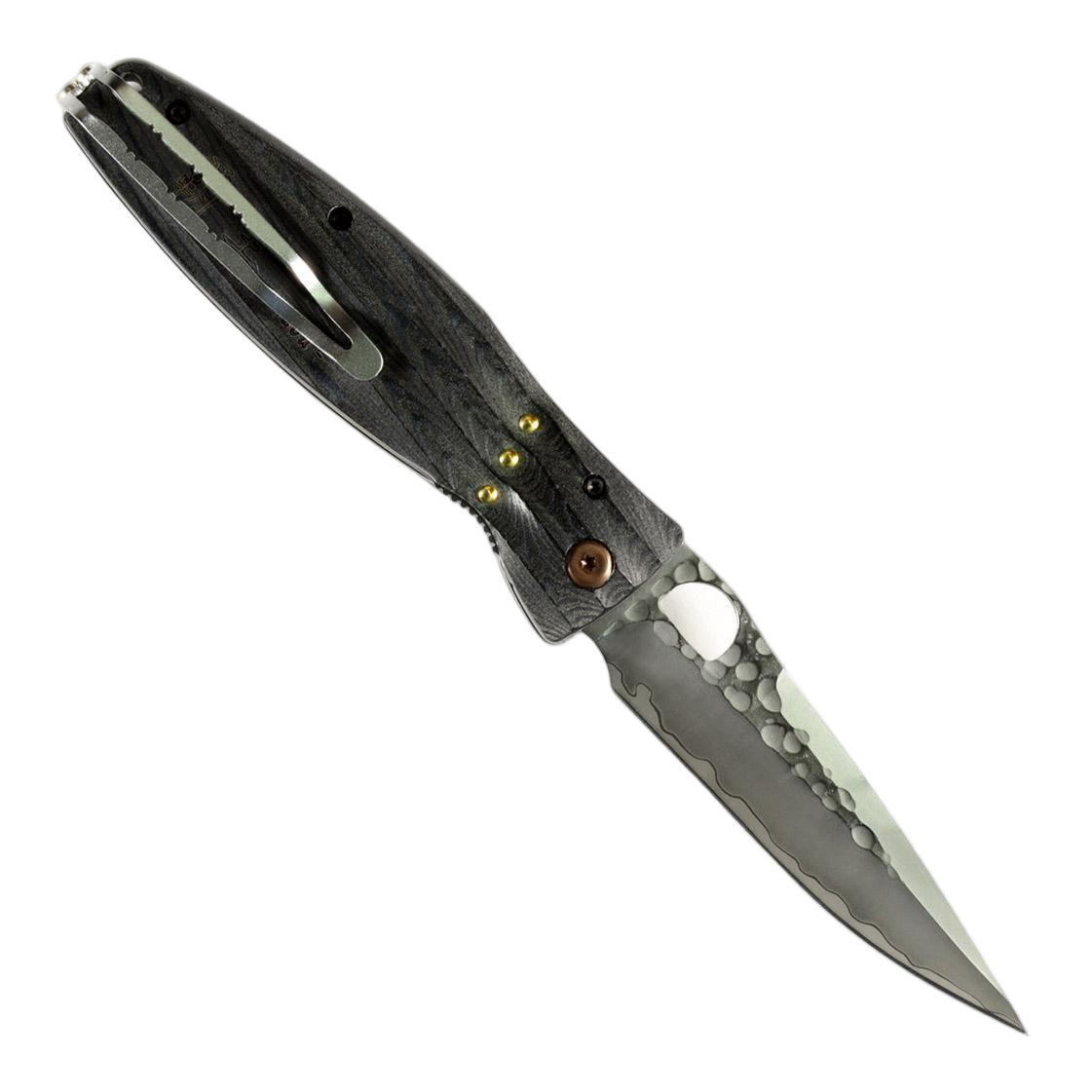
Made in Seki, Japan, Mcusta combines modern technology with traditional Japanese craftsmanship to produce hand finished custom quality production knives. This knife measures 4.75" long closed and features a Tsuchime hammered finish San Mai SPG2 powder steel blade and black micarta handle with decorative brass pins and stainless steel liners. SPG2 is a Japanese powder metallurgy steel that is tougher and has better resistance to corrosion than S30V and its edge retention is comparable to S35VN. The pocket clip is designed for tip-up carry and reversible for right or left-hand carry.
| Model: |
Mcusta MC-181G |
| Made in: |
Seki, Japan |
|
Closed Length: |
4.75" long |
| Blade Material: |
Three layers SPG2 Powder Steel |
| Rockwell Hardness (HRC): |
62 |
| Blade Length: |
3.62" long |
|
Handle: |
Black Micarta with Stainless liners |
| Lock Type: |
Liner |
| Opening Mechanism: |
Manual |
Mcusta Knives (Seki, Japan) Sengoku Oda Nobunaga MC-0181G: San Mai SPG2 Performance, Specs and Honest Review
The Mcusta MC-0181G from the Sengoku Busho series honours Oda Nobunaga: a 3.62-inch (92 mm) Tsuchime-hammered San Mai blade with an SPG2 powder-steel core at 62 HRC, black Micarta scales over stainless liners with brass pins, and a liner lock - hand finished in Seki, Japan. At 4.75 inches closed it carries like a classic in the Mcusta knives range and the wider world of folding knives.
Why SPG2 San Mai Fits the Nobunaga
SPG2 is a Japanese powder-metallurgy stainless whose edge retention compares with CPM-S35VN and whose corrosion resistance beats S30V. In San Mai form the hard 62 HRC core is forge-welded between softer jacket steel, so the edge resists chipping even through hard use - the traditional Japanese answer to the brittleness of ultra-hard monosteels. The Tsuchime hammering reduces stiction, releases food and tape cleanly, and hides the fine scratches of decades. Against M390 powder steel it sharpens more forgivingly at the same hardness class; see how it stacks with CPM-S35VN and other folders in our guides.
Why the Nobunaga Belongs in Your Collection
- 3.62-inch San Mai SPG2 blade at 62 HRC - powder-steel edge life with laminate toughness.
- Tsuchime hammered finish - reduced stiction and a traditional Japanese texture that hides wear.
- Samurai armor-pattern handle - laser engraved with Nobunaga Oda's name and family crest (Kamon).
- Black Micarta with brass pins - warm, grippy scales that patina beautifully over years.
- Stainless steel liners - structural rigidity without bulk.
- Reversible tip-up clip - right- or left-hand carry out of the box.
- Hand finished in Seki, Japan - custom-quality production from Japan's blade-making capital.
- Collector provenance - a numbered spot in Mcusta's samurai-honour series.
Best Uses for the Sengoku Oda Nobunaga MC-0181G
- Collection display: the crest engraving, name plate and Tsuchime blade make it a centrepiece on any shelf.
- Fine daily cutting: letters, apples, envelopes - the 62 HRC edge stays shaving sharp through months of light work.
- Tea ceremony and cultural events: a Japanese folder whose story starts conversations.
- Heritage gifting: weddings, retirements, Father's Day - a Seki-made samurai folder is a gift with provenance.
- Everyday carry with dignity: 4.75 inches closed and a reversible clip keep it pocket-ready for those who actually use their collectibles.
Frequently Asked Questions
Who was Oda Nobunaga?
A major Sengoku-period Daimyo (1534-1582) who fought to unify Japan and embraced firearms and trade. His family crest (Kamon) and name are laser engraved on the handle.
What is SPG2 steel?
A Japanese powder-metallurgy stainless. Its edge retention is comparable to CPM-S35VN and its corrosion resistance better than S30V; here it is hardened to 62 HRC as a San Mai core.
What does Tsuchime mean?
It is the hammered texture on the blade. The dimples reduce stiction so material releases cleanly and the marks hide fine scratches from use.
How do I care for the San Mai edge?
Sharpen the full bevel on a 1000-grit stone at 15-18 degrees per side; the SPG2 core is hard, so use light pressure. Wipe dry and oil occasionally - the jacket and liners are stainless, the habit is cheap insurance.
Is the clip reversible for left-hand carry?
Yes - the pocket clip is designed for tip-up carry and reversible for right- or left-hand use.
San Mai SPG2 vs. Premium Folder Steels
| Steel | Typical HRC | Edge Retention | Corrosion Resistance | Toughness | Sharpening Ease |
|---|---|---|---|---|---|
| SPG2 core, San Mai (this knife) | 62 | Very Good | Very Good | Good | Moderate |
| Bohler M390 | 60-62 | Excellent | Excellent | Fair | Hard |
| CPM-S35VN | 58-60 | Very Good | Very Good | Good | Moderate |
| VG-10 | 59-61 | Good | Very Good | Good | Moderate |
| 154CM | 58-61 | Good | Good | Very Good | Moderate |
| 14C28N | 58-61 | Good | Excellent | Good | Very Easy |
SPG2 is a Japanese powder-metallurgy stainless whose edge retention compares with CPM-S35VN and whose corrosion resistance beats S30V, with the added toughness of a San Mai laminate: a hard SPG2 core forge-welded between softer stainless jacket steel that protects the edge from chips. Honed to 62 HRC it holds a fine edge through long slicing sessions. HRC figures are typical ranges, not a guarantee for any single blade.
Glossary of Key Terms
McustaA Seki, Japan manufacturer that pairs modern CNC precision with traditional hand finishing to produce custom-quality production knives.
Sengoku Busho Series
Mcusta's samurai-honour line: each model celebrates a Sengoku-period warlord, with armor-pattern engraving, the figure's family crest and a name plate on the blade spacer.
Oda Nobunaga
The Daimyo (1534-1582) who fought to unify Japan and patronised the tea ceremony and firearms; his crest (Kamon) and name are laser engraved on this handle.
SPG2
A Japanese powder-metallurgy stainless steel. Edge retention comparable to CPM-S35VN and corrosion resistance better than S30V; hardened here to 62 HRC in a San Mai laminate.
San Mai
Japanese for 'three layers': a hard high-performance core steel forge-welded between two layers of tougher jacket steel, combining a keen long-lasting edge with chip resistance.
Tsuchime
The hammered texture on Japanese blades. The dimples reduce stiction so slices release cleanly and the hammer marks hide fine scratches from years of use.
Micarta
Fabric or paper laminate set in phenolic resin. It grips when wet, does not shrink, and develops a patina from hand oils - the reason it has been a knife-handle standard for a century.
Liner Lock
A spring-steel liner inside the handle presses against the blade tang to keep it open. Simple, ambidextrous in most designs, and easy to clean, which is why it remains the default on traditional folders.
HRC (Rockwell C)
The hardness scale used for knife steel. Higher HRC means better edge retention and more brittleness; 58-61 is a working range, 62-64 buys edge holding at the cost of shock tolerance.
Who Should Buy the Sengoku Oda Nobunaga MC-0181G
- You collect Japanese folders or the Sengoku Busho series specifically.
- You want powder-steel performance with laminate toughness in a traditional form.
- You value Seki, Japan craftsmanship and hand-finished production quality.
- You want a story-rich gift for a history or blade enthusiast.
- You actually use your collectibles and want a stainless, low-fuss 62 HRC edge.
Who Should Skip It
- You want a hard-use work knife; the Nobunaga is a collectible-grade folder with thin classic proportions.
- You prefer modern tactical hardware - this is traditional Japanese design language.
- You need a locking system beyond a liner lock for heavy cutting.
- You want the lightest possible carry; brass pins and stainless liners add honest weight.
Care & Maintenance
- Wipe the blade dry after each use. The SPG2 core is highly corrosion resistant, but the San Mai jacket can show water spots if stored wet.
- One drop of light knife oil at the pivot monthly, then open and close the blade a dozen times so the oil spreads across the washers.
- Keep the liner lock face clean and dry. Grit on the lock face delays engagement and the blade develops vertical play.
- Sharpen on a 1000-grit water stone at 15-18 degrees per side. At 62 HRC the SPG2 core is hard; use light pressure and let the stone cut.
- Maintain the blade's Tsuchime hammered facets with a soft brush - the hammered texture releases food and tape adhesive naturally.
- Do not strop aggressively through the San Mai junction. The jacket steel is softer; sharpen the full bevel to keep the edge geometry even.
- Clean the black Micarta scales with warm water and a soft brush. Micarta darkens with hand oils and never needs polish - the patina is the point.
- Wipe the brass pins and stainless liners dry after wet use so no green film settles into the handle channel.
- Store the knife dry and open-shut occasionally. This is a collectible Japanese folder - treat the pivot with respect and it will run for years.
付款与安全
您的付款信息将得到安全处理。我们不存储信用卡详细信息,也无法访问您的信用卡信息。
Delivery and Shipping
In-stock orders will be shipped in 48 hours except weekend and holidays.
Pre-orders pls subject to the indicated Pre-order shipping dates.
From China warehouse: Estimated delivery in 15–21 business days