




描述
The Mcusta Sengoku Busho series celebrates Japan's most famous Samurai from the Sengoku Jidia ("Age of warring states"). These elegantly crafted knives show the beauty and history of Japanese culture while combining traditional elements into a sturdy and funtional linerlock folding knife.
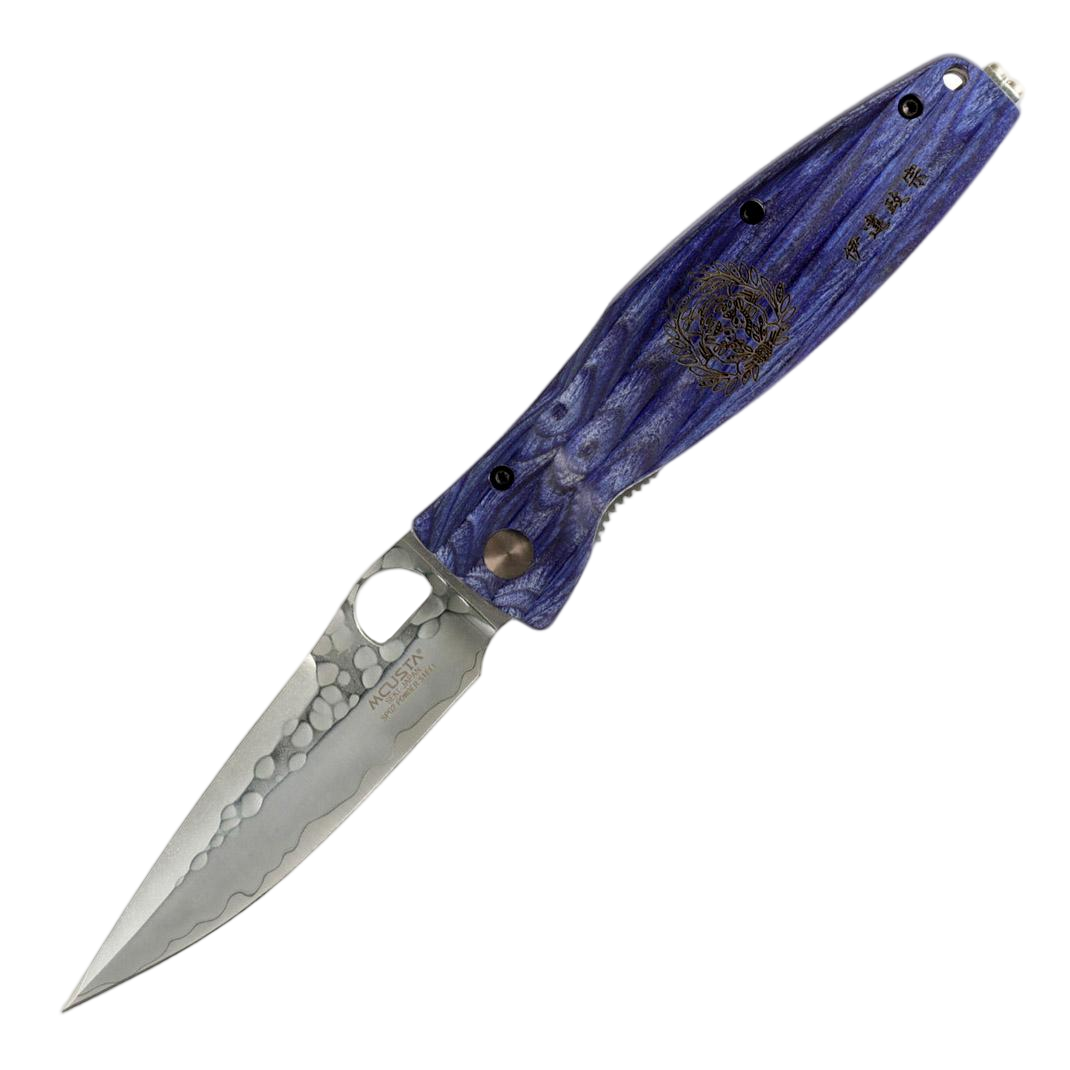
This knife commemorates Masamune Date (1567-1636) 伊達政宗(独眼竜), a legendary warrior and leader among the Sengoku Daimyo. He founded the modern-day city of Sendai and is known for being an outstanding tactitian. The handle is designed with the pattern of Samurai armor and laser engraved with "Masamune Date" in Kanji and his family crest (Kamon).
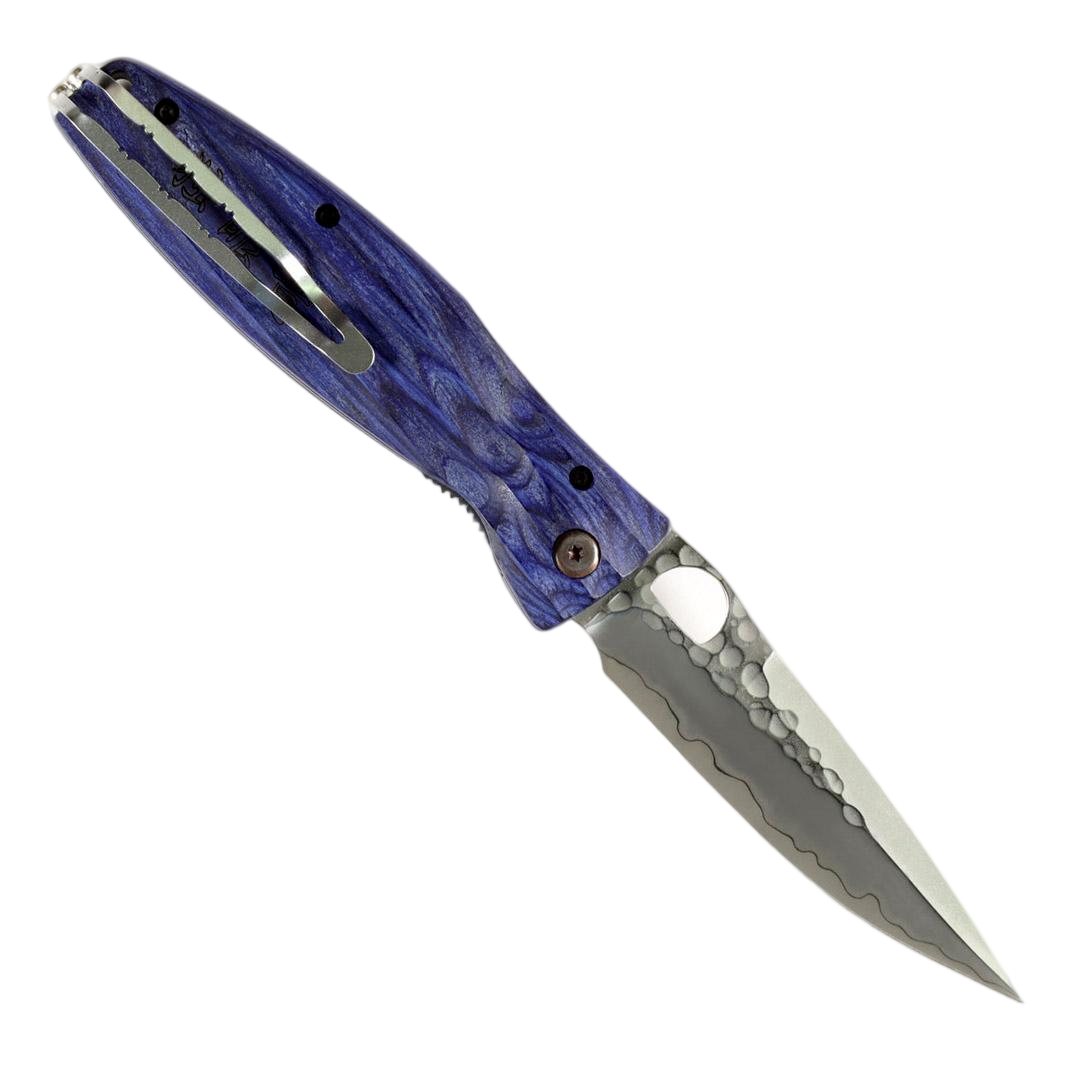
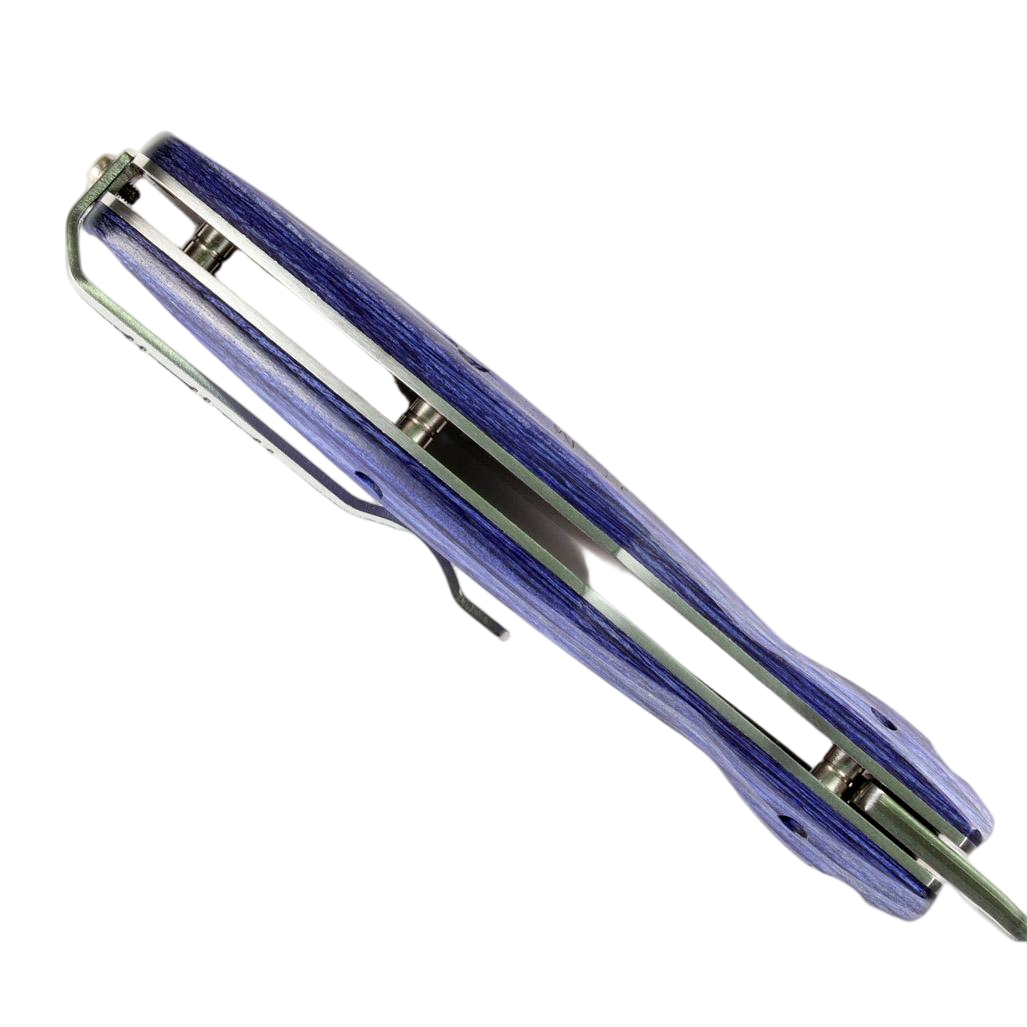
Made in Seki, Japan, Mcusta combines modern technology with traditional Japanese craftsmanship to produce hand finished custom quality production knives. This knife measures 4.75" long closed and features a Tsuchime hammered finish San Mai SPG2 powder steel blade and blue Pakkawood handle and stainless steel liners. SPG2 is a Japanese powder metallurgy steel that is tougher and has better resistance to corrosion than S30V and its edge retention is comparable to S35VN. The pocket clip is designed for tip-up carry and reversible for right or left-hand carry.
| Model: |
Mcusta MC-181G |
| Made in: |
Seki, Japan |
|
Closed Length: |
4.75" long |
| Blade Material: |
Three layers SPG2 Powder Steel |
| Rockwell Hardness (HRC): |
62 |
| Blade Length: |
3.62" long |
|
Handle: |
Blue Micarta with Stainless liners |
| Lock Type: |
Liner |
| Opening Mechanism: |
Manual |
Mcusta MC-0186G Sengoku Busho Date Masamune: San Mai SPG2 from Seki
The Mcusta MC-0186G is the Date Masamune entry in the Sengoku Busho series, and it is built the way Seki has built knives for seven hundred years: a three-layer San Mai SPG2 powder-steel core at 62 HRC forged between two softer stainless skins, hand finished, and set into a carved handle that is half tool and half artefact. The 3.62 inch blade wears Mcusta's Tsuchime hammered finish - hand-applied dimples that scatter light, hide scratches and break surface tension when you cut something wet. The core is Takefu SPG2, a Japanese powder metallurgy steel that Mcusta rates tougher and more corrosion resistant than CPM-S30V with edge retention comparable to CPM-S35VN. Masamune, the one-eyed dragon, founded Sendai and was the most politically adept of the Sengoku daimyo. The handle carries his name and his Kamon in laser engraving over the armour pattern. The handle is a deep indigo-blue pakkawood, carved in the armour pattern with a copper crest medallion set into it. The lock is a liner lock riding on stainless liners, with a thumb hole for one-handed opening and a reversible tip-up clip that can be moved for left-hand carry. Closed length is 4.75 inches and overall length is 8.39 inches at 116 grams - a full-size gentleman's folder rather than a fidget knife. If you want to see the rest of the shogunate, the Sengoku Busho series carries all five warlords, and the Mcusta Knives collection covers the rest of the Seki line-up.
Three-Layer San Mai SPG2: Why the Cladding Matters
A mono-steel blade at 62 HRC is a compromise. The hardness that gives SPG2 its edge retention also makes it the part of the knife most likely to chip if it takes a lateral shock - hitting a bone, twisting out of a cut, dropping it on tile. San Mai solves that by not making the whole blade out of the hard steel. Mcusta forges a thin SPG2 core between two layers of softer stainless, then grinds the bevel so only the core reaches the apex. The hard steel does the cutting; the soft cladding absorbs shock, resists corrosion on the flats and gives the blade a visible lamination line along the grind. SPG2 itself is a Takefu Special Steel powder alloy, and Takefu's mill data plus Mcusta's own claim put it above S30V on toughness and corrosion with S35VN-class edge holding. What you get in the hand is an edge that shaves after a week of envelopes and cardboard, sharpens on an ordinary water stone rather than demanding diamond, and does not spot when you leave it damp. The table below puts it against CPM-S35VN, Bohler M390 and 14C28N on hardness, edge retention, corrosion resistance, toughness and sharpening effort. HRC figures are typical mill ranges.
Why the Date Masamune Belongs in Your Pocket
- 3.62 inch three-layer San Mai SPG2 powder steel blade at 62 HRC - S35VN-class edge holding with better corrosion resistance and a tougher blade overall.
- Tsuchime hammered finish applied by hand: it hides scratches, kills glare and reduces drag when cutting wet or sticky material.
- Blue Pakkawood scale carved in a three-dimensional Samurai armour pattern, so the grip is real in a wet hand rather than decorative.
- Laser-engraved 'Date Masamune' and family Kamon - the historical detail is the reason this knife exists.
- Made in Seki, Japan and hand finished: the blade is ground, the scale is fitted and the action is set by hand, not on an assembly line.
- Stainless liners and a liner lock that keeps the profile thin enough for a suit pocket.
- Reversible tip-up pocket clip, so the knife works in either hand without sending it back to Japan.
- 8.39 inches open, 116 grams - full-size cutting geometry in a package that still vanishes in a jacket.
Best Uses for the MC-0186G
- Dress and office carry. This is a gentleman's folder by construction: thin, quiet in the pocket, and the carved scale reads as craft rather than tacticool.
- Collecting the Sengoku Busho series. Five warlords, five handle materials - the set is the point for a lot of buyers.
- A milestone gift. The engraving, the Kamon, the Seki origin and the box all carry the weight a retirement or promotion gift needs.
- Fishing and damp fieldwork. SPG2's corrosion resistance plus the stainless liners means it tolerates a wet day better than a carbon-steel traditional.
- Food and picnic duty. A 3.62 inch thin-ground drop point with a hammered finish is a genuinely good cheese-and-sausage blade.
Frequently Asked Questions
What does 'three layers SPG2' actually mean?
It is a San Mai laminate: a hard SPG2 powder-steel core sandwiched between two softer stainless layers and forge-welded into one billet. Only the core reaches the cutting edge, so you get 62 HRC at the apex with the shock tolerance of a softer blade behind it. You can see the lamination line as a faint seam along the grind.
Is SPG2 better than CPM-S35VN?
On Mcusta's own numbers it is tougher and more corrosion resistant with comparable edge retention, and independent testing broadly supports that. S35VN is easier to source and cheaper; SPG2 is a Japanese powder steel you mostly find in Seki-made knives. Neither is a mistake.
Will the hammered finish wear off?
No. Tsuchime is not a coating - the dimples are struck into the steel, so the texture is the surface. It will polish slightly at the high spots over years of wiping, which most owners consider an improvement.
Can I move the clip for left-hand carry?
Yes. The clip is reversible for tip-up carry on either side. You need a small Torx driver, and you should reinstall the screws with mild pressure - the liners are stainless but the threads are small.
Is pakkawood a real wood?
It is real hardwood impregnated with phenolic resin under heat and pressure. That is why it does not swell, crack or fade the way an untreated wood scale would, and why it can be carved into the armour pattern and still hold the detail for years.
Does it have a pocket clip and a lanyard hole?
It has a reversible tip-up pocket clip. There is no dedicated lanyard hole on this frame, so if you run a fob you will loop it around the clip screw or the backspacer.
Takefu SPG2 vs. Common Premium Folding Knife Steels
| Steel | Typical HRC | Edge Retention | Corrosion Resistance | Toughness | Sharpening Ease |
|---|---|---|---|---|---|
| Takefu SPG2 (this knife) | 62 | Very Good | Excellent | Good | Moderate |
| CPM-S35VN | 59-61 | Very Good | Very Good | Good | Moderate |
| CPM-S30V | 58-60 | Good | Very Good | Good | Moderate |
| Bohler M390 | 60-62 | Excellent | Excellent | Fair | Hard |
| VG-10 | 59-61 | Good | Very Good | Good | Moderate |
| 14C28N | 58-61 | Good | Excellent | Good | Very Easy |
SPG2 is a Takefu Special Steel powder-metallurgy stainless used almost exclusively by Japanese makers, and Mcusta laminates it as a three-layer San Mai billet: a hard SPG2 core between two softer stainless skins. The core reaches 62 HRC and holds an edge in the same league as CPM-S35VN, while the cladding absorbs the lateral shock a mono-steel blade of that hardness would chip on. It is more corrosion resistant than S30V and sharpens on ordinary water stones because the carbide volume stays moderate. HRC figures are typical mill ranges, not a guarantee for any single blade.
Glossary of Key Terms
McustaMarusho Industry's knife division in Seki, Japan. Mcusta combines CNC precision with hand finishing to produce custom-quality production knives.
San Mai
A three-layer laminate: a hard high-carbon or powder-steel core forged between two softer stainless skins. The core does the cutting, the cladding absorbs shock and protects the core from corrosion.
Takefu SPG2
A Japanese powder-metallurgy stainless from Takefu Special Steel. Hardened to 62 HRC and usually laminated as a three-layer San Mai billet, it holds an edge like CPM-S35VN with better stain resistance.
Tsuchime
The Japanese hammered finish seen on the Mcusta Sengoku blade. Hand-applied dimples break up reflections, scatter scratches and reduce surface contact when cutting wet or sticky material.
Liner Lock
A spring-steel liner inside the handle presses against the blade tang to keep it open. Simple, ambidextrous in most designs, and easy to clean, which is why it remains the default on traditional folders.
Reversible Pocket Clip
A clip that can be unbolted and moved to the other side of the handle for left-hand carry. On the Mcusta Sengoku it is set for tip-up carry in either hand.
Seki, Japan
The city in Gifu Prefecture that has been Japan's cutlery capital for over 700 years. Mcusta builds and hand-finishes every Sengoku Busho knife there.
Thumb Hole
A drilled hole in the blade that lets you roll the blade open with the pad of your thumb. Ambidextrous, snag-free, and it does not interfere with the cutting path the way a stud can.
Pakkawood
Layered hardwood impregnated with phenolic resin under heat and pressure. It is dimensionally stable, water-resistant and carved into the armour pattern used across the Sengoku Busho series.
Micarta
Fabric or paper laminate set in phenolic resin. It grips when wet, does not shrink, and develops a patina from hand oils - the reason it has been a knife-handle standard for a century.
HRC (Rockwell C)
The hardness scale used for knife steel. Higher HRC means better edge retention and more brittleness; 58-61 is a working range, 62-64 buys edge holding at the cost of shock tolerance.
Pakkawood
Layered hardwood impregnated with phenolic resin under heat and pressure. It is dimensionally stable, water-resistant and carved into the armour pattern used across the Sengoku Busho series.
Who Should Buy the MC-0186G
- You want a Seki-made San Mai SPG2 blade and you are specifically drawn to Date Masamune.
- You want a full-size gentleman's folder - 3.62 inch blade, thin profile, quiet in the pocket.
- You are building the five-warlord Sengoku Busho set and need this handle material.
- You are buying a gift that needs a story, not just a spec sheet.
- You want traditional Japanese construction with a modern one-hand-opening action and a pocket clip.
Who Should Skip It
- You want a hard-use work knife. A carved decorative scale and a 3 mm laminated blade are not built for prying, batoning or construction sites.
- You fidget with your knives constantly. The liner lock and thumb hole are fine, but this is a deliberate opener, not a flicker.
- You want the latest super steel. SPG2 is excellent, but it is not MagnaCut on a toughness chart.
- You dislike decorative handles. The armour carving and the crest are the product; if you want plain G10 this is the wrong knife.
- You need a deep-carry clip. The factory clip sits proud of the scale by design.
Care & Maintenance
- Wipe the blade dry after use. The SPG2 core is stainless, but the hammered Tsuchime surface traps moisture in its dimples and will spot if left wet.
- One drop of light knife oil at the pivot every month or two; the washers, not a bearing, are what keep this action smooth, so they need the film.
- Do not flood the pivot. Oil that migrates into the pakkawood or micarta scales stains the material and cannot be drawn back out.
- Sharpen at 16 degrees per side with a hollow or flat grind in mind - the factory edge is thin and a coarse reprofile removes more steel than this blade can spare.
- Keep the laminated edge bevel flat on the stone. Tilt the blade and you grind through the soft cladding into the hard core, which leaves a visible line along the bevel.
- Strop after every few sharpening sessions; the 62 HRC core responds well to leather and needs very little stone work to come back.
- Wipe the carved armour-pattern scales with a barely damp cloth and dry immediately. Never soak pakkawood or micarta - both are resin-impregnated and will swell or haze.
- Treat the laser engraving and the Kamon medallion gently: a soft brush only, no metal polish, or the recessed detail fills and the crest goes flat.
- Check the clip screws and the stainless liner screws occasionally. On a liner lock, a loose body screw changes how far the lock bar travels and the blade develops play.
付款与安全
您的付款信息将得到安全处理。我们不存储信用卡详细信息,也无法访问您的信用卡信息。
Delivery and Shipping
In-stock orders will be shipped in 48 hours except weekend and holidays.
Pre-orders pls subject to the indicated Pre-order shipping dates.
From China warehouse: Estimated delivery in 15–21 business days