
In the knife world, most steels force you to choose: you can have exceptional edge retention, or you can have reasonable toughness—but rarely both. Then there’s CPM-10V, a high-vanadium tool steel that refuses to accept that compromise. Developed by Crucible Industries and manufactured using their advanced powder metallurgy process, CPM-10V stands as one of the most wear-resistant blade materials ever put into a folding knife.
If you cut all day—cardboard, rope, fibrous materials, or anything that dulls lesser steels—10V is the answer. It‘s the kind of steel that keeps cutting long after S30V has given up and gone home.
This guide breaks down what makes CPM-10V so special, how it compares to other popular knife steels, and highlights three outstanding folding knives from three different brands that showcase this remarkable material.
What Is CPM-10V Steel?
CPM-10V is a high-carbon, high-vanadium tool steel produced using Crucible’s Particle Metallurgy (CPM) process. First introduced in 1978, it was originally developed for industrial tooling applications that demanded extreme wear resistance—cold stamping dies, shear blades, powder compaction tools, and woodworking cutters.
What makes it extraordinary for knives is the vanadium content. At approximately 9.75%, 10V contains more vanadium than nearly any other steel used in production cutlery.
Composition and Why It Matters
| Element | Content | Primary Function |
|---|---|---|
| Carbon (C) | 2.45% | Provides hardness; forms carbides |
| Vanadium (V) | 9.75% | Forms ultra-hard VC carbides—the key to extreme wear resistance |
| Chromium (Cr) | 5.25% | Adds hardenability; limited corrosion resistance |
| Molybdenum (Mo) | 1.30% | Enhances toughness and high-temperature performance |
Data source: Baidu Baike / Crucible Industries
Here‘s the key insight: the vanadium in 10V forms vanadium carbides (VC)—exceptionally hard particles that resist abrasion far better than the chromium carbides found in most stainless steels. In practical terms, this means 9 times the wear resistance of D2 steel and edge retention that rivals or exceeds legendary super-steels like S90V and S110V.
Crucially, the CPM process distributes these vanadium carbides uniformly throughout the steel matrix. Without powder metallurgy, high-vanadium steels would suffer from carbide clumping, leading to brittleness. With CPM, 10V achieves both extreme wear resistance and surprisingly good toughness for its class.
Performance Profile
CPM-10V is typically heat-treated to 58–62 HRC, with many custom and production knives pushing to the 60–64 HRC range.
| Property | Rating |
|---|---|
| Edge Retention | ★★★★★ (Extreme) |
| Toughness | ★★★☆☆ (Good for its class) |
| Corrosion Resistance | ★★☆☆☆ (Low—not stainless) |
| Ease of Sharpening | ★☆☆☆☆ (Very Difficult) |
The numbers tell a clear story: 10V is a specialist. It‘s not stainless (with only 5.25% chromium, it’s far below the stainless threshold). It‘s not easy to sharpen. But if your priority is edge retention above all else—cutting all day without stopping to touch up your blade—CPM-10V has few equals.
CPM-10V vs. Other Popular Knife Steels
How does 10V stack up against the competition?
| Steel | Edge Retention | Toughness | Corrosion Resistance | Ease of Sharpening |
|---|---|---|---|---|
| CPM-10V | ★★★★★ | ★★★☆☆ | ★★☆☆☆ | ★☆☆☆☆ |
| CPM S30V | ★★★☆☆ | ★★★☆☆ | ★★★★☆ | ★★★☆☆ |
| CPM S90V | ★★★★☆ | ★★☆☆☆ | ★★★☆☆ | ★☆☆☆☆ |
| CPM M4 | ★★★★☆ | ★★★★☆ | ★★☆☆☆ | ★★☆☆☆ |
| CPM S110V | ★★★★★ | ★☆☆☆☆ | ★★★★☆ | ★☆☆☆☆ |
| K390 | ★★★★★ | ★★★☆☆ | ★★☆☆☆ | ★☆☆☆☆ |
| CPM-4V | ★★★☆☆ | ★★★★★ | ★★☆☆☆ | ★★★☆☆ |
10V vs. S30V: S30V offers better corrosion resistance and is easier to sharpen, but 10V dominates in edge retention. Independent testing shows 10V significantly outlasting S30V in controlled cutting trials.
10V vs. S90V / S110V: These are the stainless counterparts to 10V‘s tool-steel DNA. 10V contains nearly identical alloy content to S90V except for chromium—5% versus 14%. S110V pushes vanadium even higher but sacrifices toughness. Among these high-vanadium steels, 10V offers the best balance of extreme wear resistance and usable toughness.
10V vs. M4: M4 is legendary for its toughness-to-wear-resistance ratio. It’s tougher than 10V but doesn‘t match 10V’s edge retention. If you prioritize impact resistance, choose M4; if you prioritize cutting all day without stopping, choose 10V.
10V vs. K390: K390 is effectively a cobalt- and tungsten-enhanced evolution of the 10V formula. It offers comparable edge retention with claims of improved toughness. Both are elite performers for hard-use cutting.
Bottom Line: CPM-10V is for the user who sharpens infrequently and cuts constantly. It won‘t rust like stainless, it won’t sharpen like AUS-8, and it won‘t take abuse like 3V. What it will do is cut longer than almost anything else you can put in your pocket.
Three Outstanding CPM-10V Folding Knives
Here are three exceptional CPM-10V folders from three different brands, each representing a distinct design philosophy and use case.
1. Spyderco Farid K-2

The Spyderco Farid K-2 is a collaboration with British custom knifemaker Farid Mehr and holds the distinction of being the first production folder from any major manufacturer to feature CPM-10V steel. Just shy of 10 inches overall, it features a massive 4.53-inch Bowie-style blade with a full-flat grind that tapers the entire width to a keen plain edge. The handle consists of two stout scales machined from solid titanium, with the reverse scale forming the foundation of a sturdy Reeve Integral Lock (R.I.L.). Farid’s signature serpentine cut on the lock bar adds a distinctive touch. A stainless steel pocket clip supports right-side, tip-down carry. Weighing approximately 6.1 ounces, the K-2 is a substantial knife built for hard use and extended cutting sessions. Spyderco’s official description emphasizes that the 9.75% vanadium content translates directly to superior edge retention—exactly what this folder was engineered to deliver.
Why We Like It: The K-2 is a piece of knife history—the first major production folder in CPM-10V. It‘s large, commanding, and unapologetically focused on cutting performance above all else.
2. Kizer Mini Sheepdog (10V Exclusive)
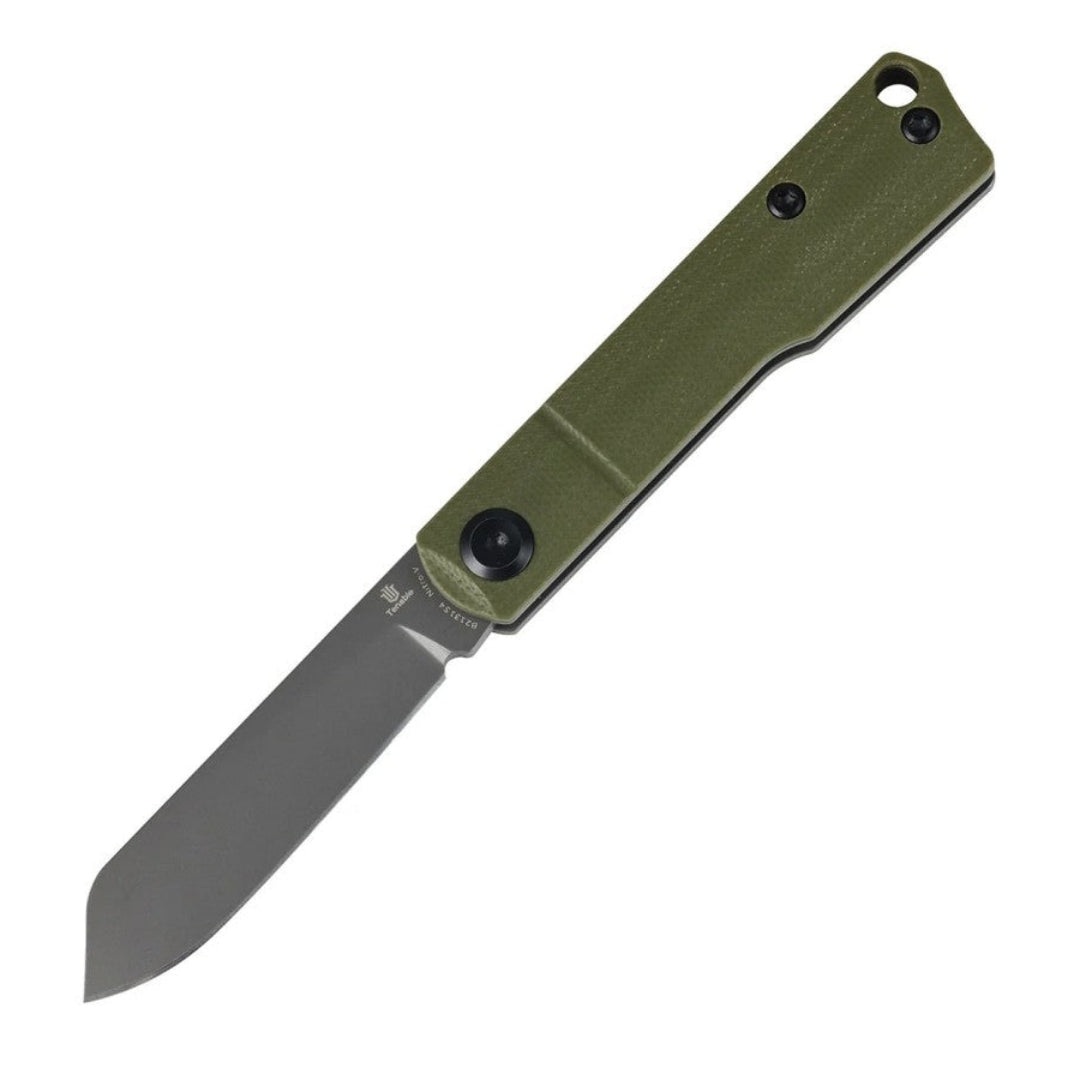
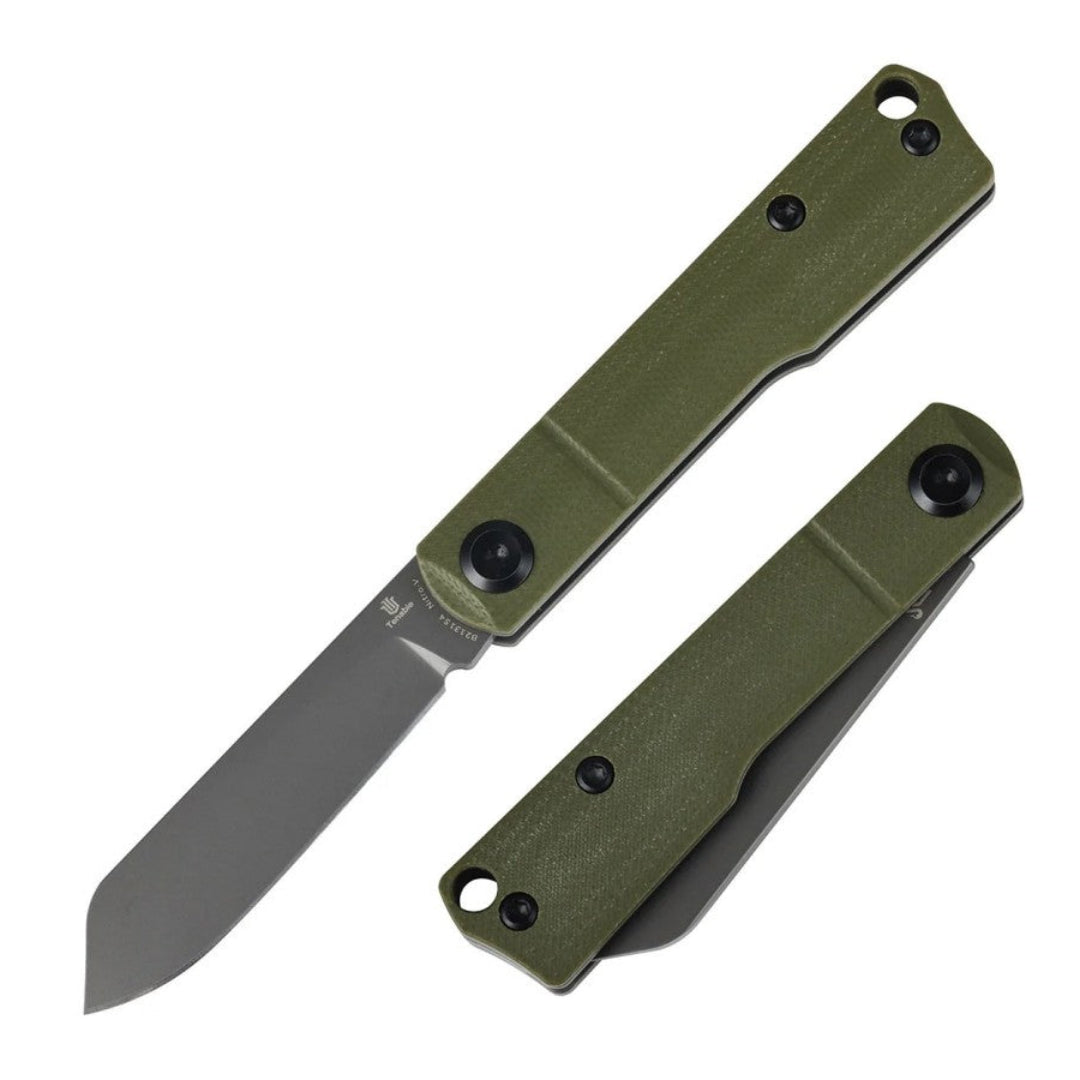
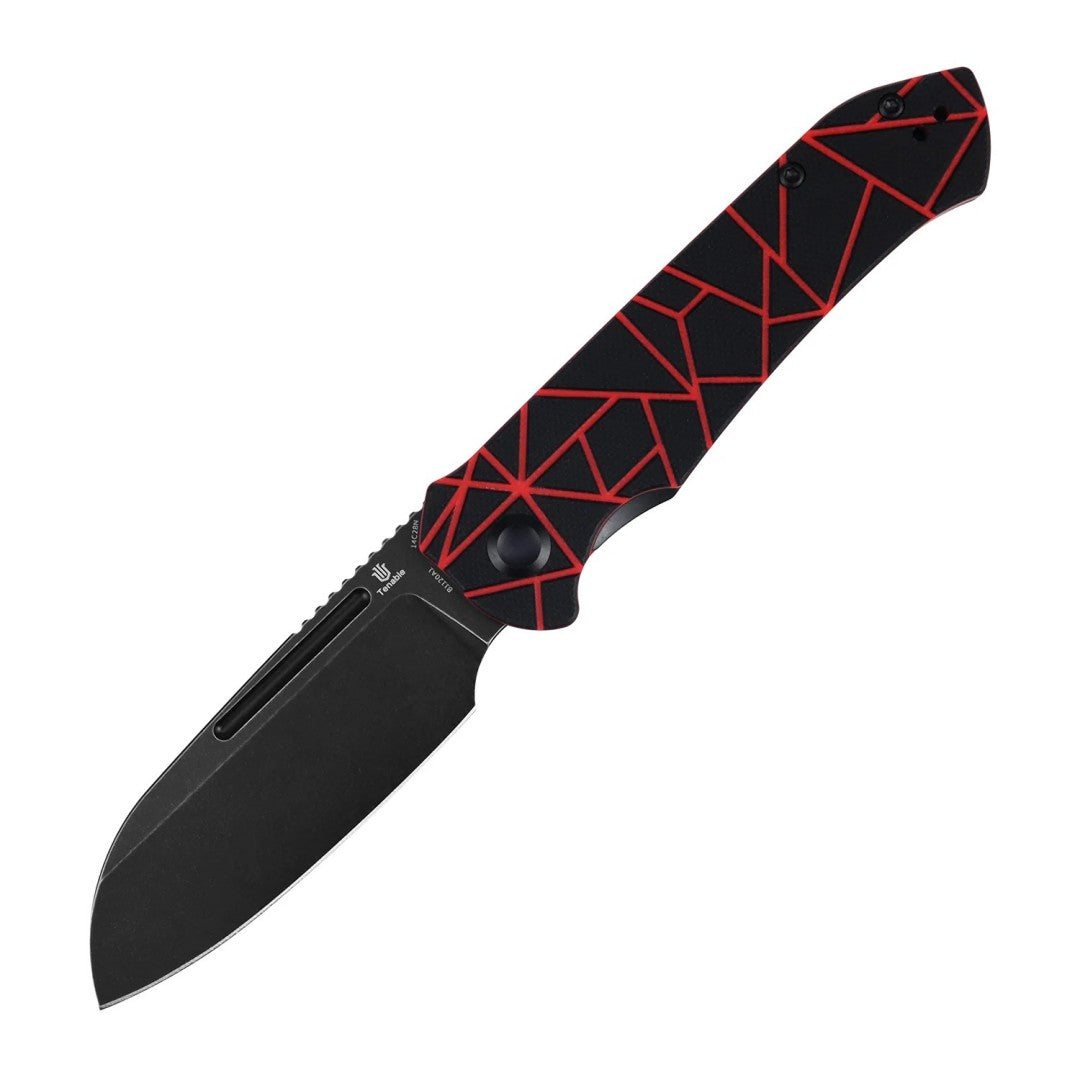
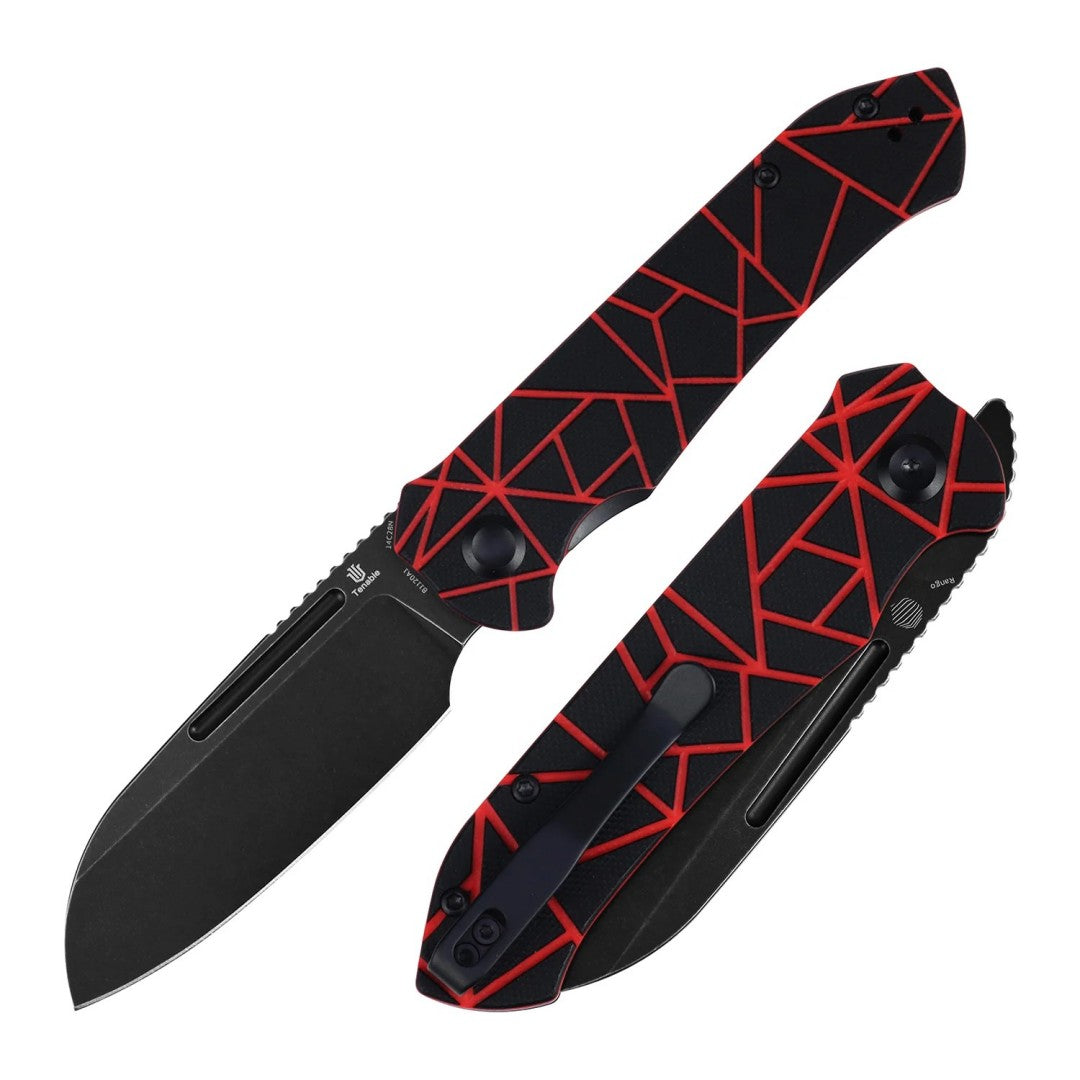
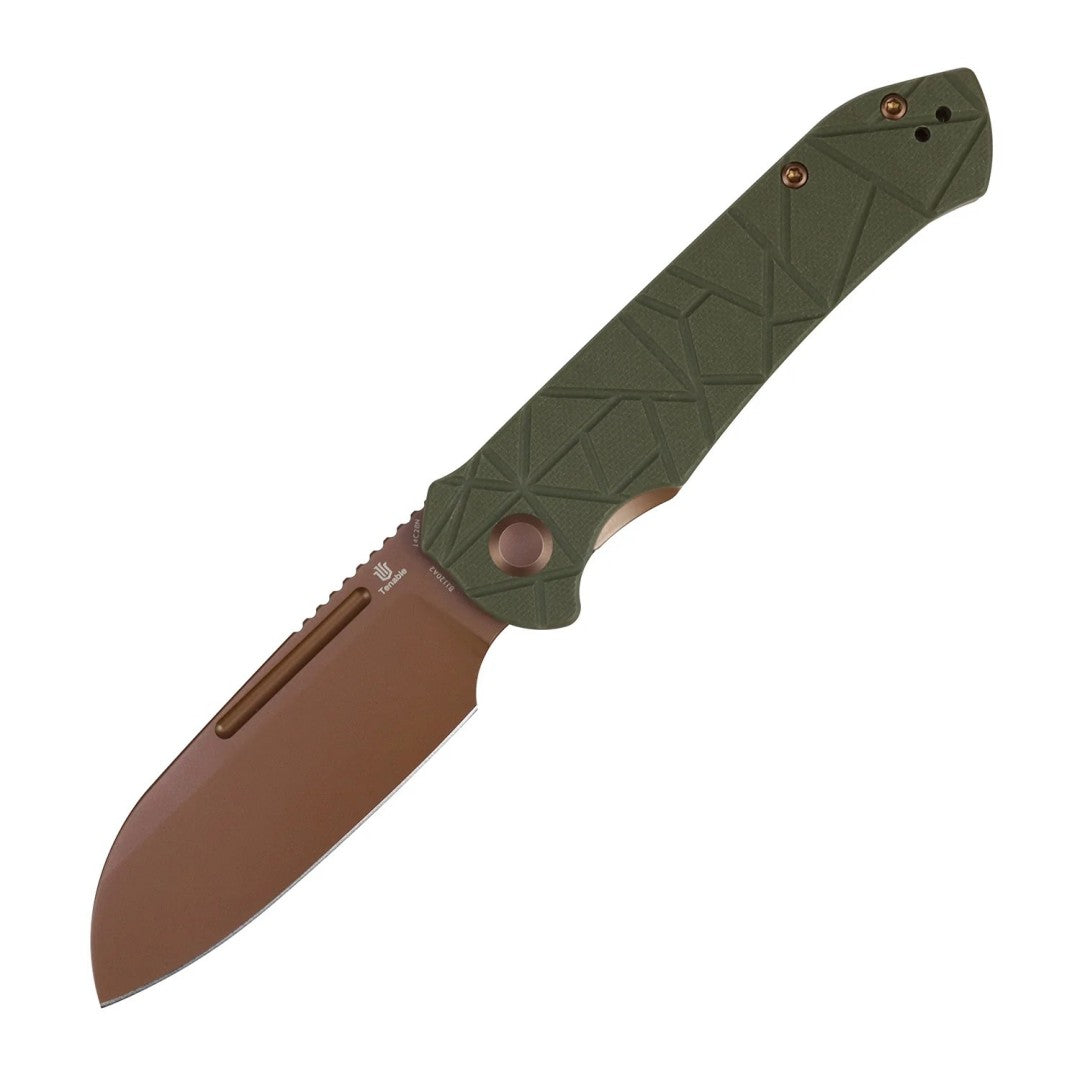
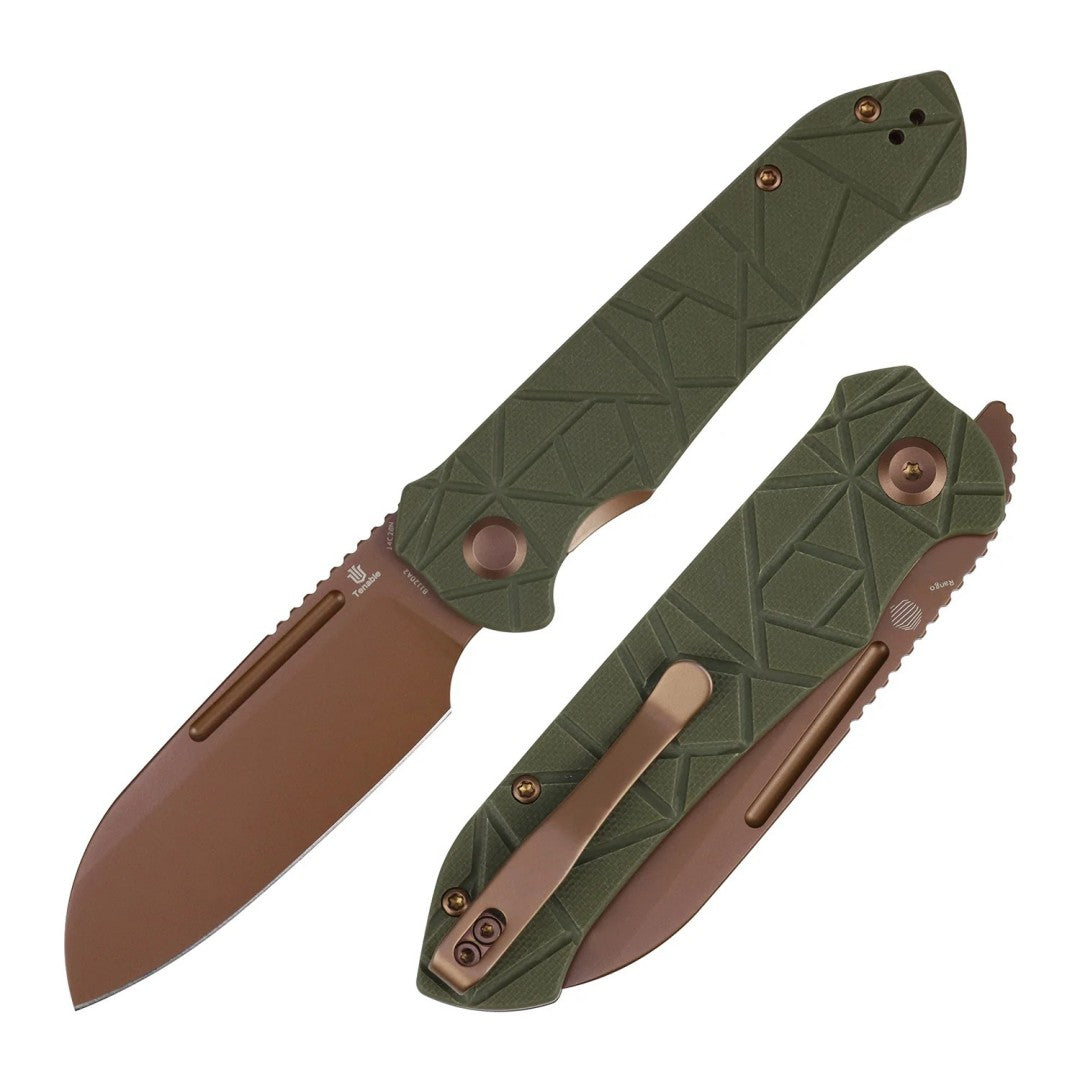
The Kizer Mini Sheepdog with CPM-10V steel represents one of the most accessible ways to experience this high-performance steel in a compact, EDC-friendly package. This exclusive version pairs a 2.63-inch sheepsfoot blade—ground from CPM-10V with a black finish—with premium, USA-sourced green canvas Micarta scales. The Mini Sheepdog is the “fun sized” version of Kizer’s ever-popular Sheepdog design, offering the undeniable appeal of a cleaver-style blade in the most lightweight, accessible form factor yet. It‘s easy to carry, a joy to use, and built to last. The liner lock mechanism provides secure operation, while the 3.17-ounce weight makes it effortless in the pocket. Users consistently praise its smooth action, comfortable ergonomics, and the exceptional edge retention that 10V delivers in daily use.
Why We Like It: The Mini Sheepdog brings 10V performance to a genuinely pocketable, fun-to-use EDC design. It’s the perfect introduction to high-vanadium steel without committing to a massive blade.
3. Kizer Hallow

The Kizer Hallow takes CPM-10V performance and packages it into a sleek, modern pocket fixed blade—offering the rugged security only a fixed blade can provide in a more civilized and concealable form. The 2.94-inch reverse tanto blade is crafted from CPM-10V with a black coating for enhanced durability and low-light stealth. The handle features a dual-layer construction combining lightweight aluminum with striking camo carbon fiber “JAZZ” overlays, creating both visual interest and secure grip. At just 2.4 ounces, the Hallow defies the bulky stereotype of traditional fixed blades while still delivering the indestructible unity between blade and handle that defines fixed-blade cutting performance. It‘s a true pocket fixed blade—discreet, capable, and built for daily endurance with anti-slip textures that ensure control in any environment.
Why We Like It: The Hallow proves that 10V’s extreme wear resistance doesn‘t require a heavy, hard-use folder. It’s a refined, artistic take on high-performance steel—perfect for those who value both peak cutting ability and thoughtful design.
Why CPM-10V Deserves a Spot in Your Collection
CPM-10V is not for everyone. It‘s not stainless. It’s not easy to sharpen. It doesn‘t pretend to be a jack-of-all-trades. What it is, however, is uncompromising. It’s the steel you reach for when you need to cut all day—cardboard, rope, fibrous materials, anything that dulls lesser blades—and you need that edge to last longer than anything else in your drawer.
Whether you‘re drawn to the historic significance of the Spyderco Farid K-2, the accessible EDC charm of the Kizer Mini Sheepdog, or the refined fixed-blade elegance of the Kizer Hallow, each of these knives showcases a different facet of what CPM-10V can do. They prove that extreme edge retention doesn’t have to come at the expense of thoughtful design or everyday usability.
Frequently Asked Questions
Q: Is CPM-10V steel stainless?
A: No. With only 5.25% chromium, 10V is a tool steel, not stainless. It requires regular maintenance—wipe clean after use and apply oil occasionally—to prevent rust and patina formation.
Q: How difficult is CPM-10V to sharpen?
A: Very difficult. The same vanadium carbides that give 10V extreme wear resistance also make it extremely challenging to sharpen. Diamond stones are essential; traditional aluminum oxide stones will struggle. Many users send 10V blades to professional sharpeners or become proficient with guided diamond systems.
Q: How does 10V compare to S90V?
A: The two are very similar in alloy content, with the primary difference being chromium. 10V (~5% Cr) is a tool steel; S90V (~14% Cr) is stainless. Both offer exceptional edge retention, but S90V provides better corrosion resistance while 10V offers slightly better toughness and can be hardened to slightly higher levels.
Q: Is CPM-10V good for EDC?
A: It depends on your priorities. If your EDC involves frequent cutting of abrasive materials (cardboard, rope, heavy packaging) and you value edge retention above all else, 10V is excellent. If you work in wet environments or prefer easy touch-ups on the go, a stainless steel with better sharpenability may suit you better.
Q: What is the ideal use case for CPM-10V?
A: High-volume cutting where edge retention is paramount. Think warehouse work, breaking down large quantities of cardboard, processing fibrous materials, or any scenario where stopping to sharpen is inconvenient or impossible.
Final Thoughts
CPM-10V occupies a unique position in the knife steel hierarchy. It doesn‘t try to be everything to everyone. Instead, it does one thing extraordinarily well: cut, and keep cutting, longer than almost anything else. The Spyderco Farid K-2, Kizer Mini Sheepdog, and Kizer Hallow each demonstrate that this legendary wear resistance can be packaged into compelling, user-friendly designs from respected brands.
For the user who values edge retention above all else—who sharpens infrequently and cuts constantly—CPM-10V remains one of the most compelling choices in the knife world.