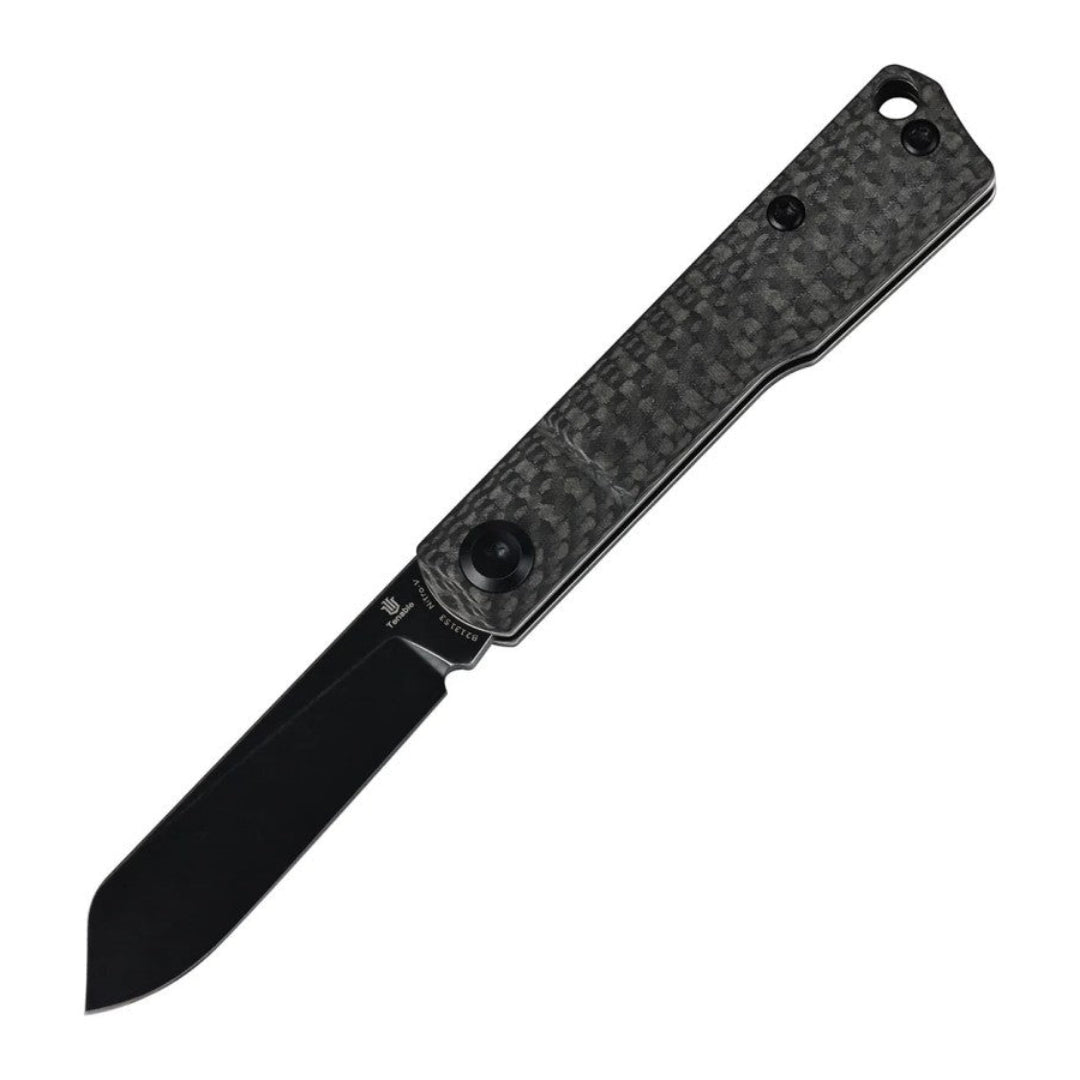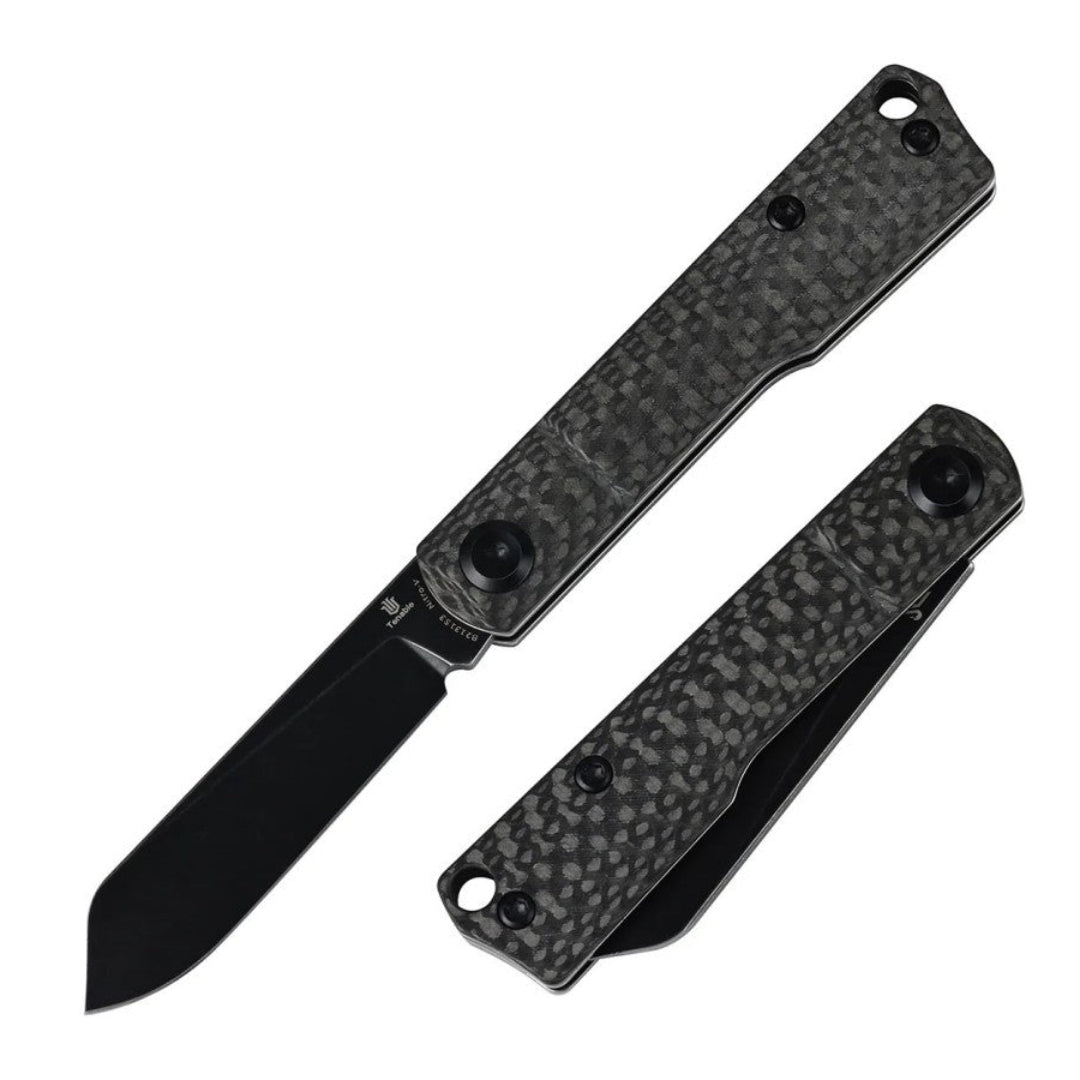

Overview & First Impressions
Plain wood is beautiful, unstable and short lived on a working knife. It moves with humidity, swells around a pin and cracks at the thinnest section. The answer used by almost every modern maker is stabilization: the wood is dried under vacuum and then impregnated with resin, so the cell structure becomes a composite. Burl casting goes a step further by filling voids and cracks with colored resin, which is why a cast burl handle looks like nothing in nature.
Materials & Construction
Two steels sit alongside these handles most often. A stainless like 14C28N gives fine grain and excellent corrosion resistance, which suits an heirloom handle that will be handled with bare hands for decades. Pair that with stabilized wood and you get a knife that resists both rust and moisture movement at the same time, which is the entire argument for the pairing.

Design & Details
The QSP Dolphin QS161-B shows the result in a production folder: a 14C28N blade over a stabilized wood handle in a liner lock pattern. QSP knives keep the hardware simple so the handle is the focal point, and a stabilized block holds its figure through sanding, polishing and years of pocket carry. A folding knives pattern with smooth action lets the material do the talking.
Real-World Use
In daily carry a stabilized handle feels warmer than metal and grippier than smooth titanium. It does not show fingerprints the way a polished steel handle does, and it tolerates sweat, rain and temperature swings far better than raw wood. The trade is weight and a slightly softer surface, which is why most stabilized handles are protected by a clip rather than a pocket full of keys.

Ownership Notes
Stabilized material still benefits from care. Wipe a resin-impregnated handle with a damp cloth rather than a solvent, and avoid prolonged soaking, because resin fills the cells but does not make the material waterproof. Buff with a soft cloth to restore sheen, and keep the blade dry and oiled as usual. EdcMall carries folders with stabilized and cast handles along with the care items that keep them looking new. Owners should also expect a small amount of variation, because no two blocks of burl cast the same way. Treated as a material with character rather than a uniform plastic, a stabilized handle rewards the buyer who enjoys the fact that the grain on their knife exists in exactly one place on earth.
Who Is This For?
This is for collectors, gift buyers and anyone who wants a knife that looks made rather than manufactured. A construction worker should choose textured G10 or titanium. If your knife is carried in a suit pocket or displayed on a shelf, stabilized wood and cast burl are the materials that age well.
Final Verdict
Stabilization turns a fragile natural material into a durable composite, and casting fills the voids that would otherwise become cracks. Together with a stainless blade, that is a handle built to be inherited.