
Overview & First Impressions
The navaja is the original European folding knife, a working clasp knife from Andalusia that trades on a long, slender blade and a curved handle. Kansept knives has translated that shape into a modern titanium folder without turning it into a costume piece. The Navaja K1149A2 keeps the sweeping belly that made the pattern useful for slicing and adds a lock strong enough for real work, so it carries as a daily tool rather than a display object for a glass case.
Materials & Construction
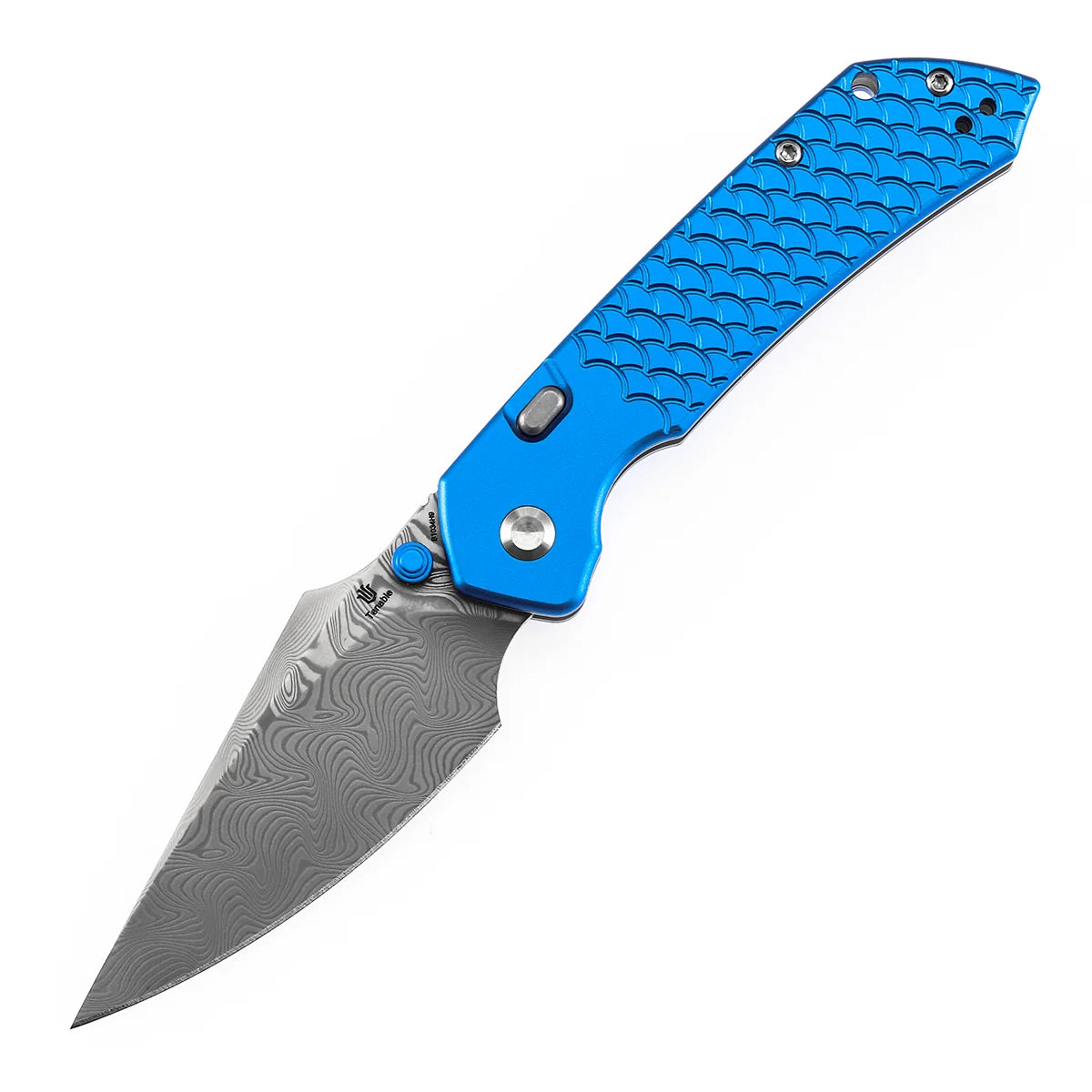
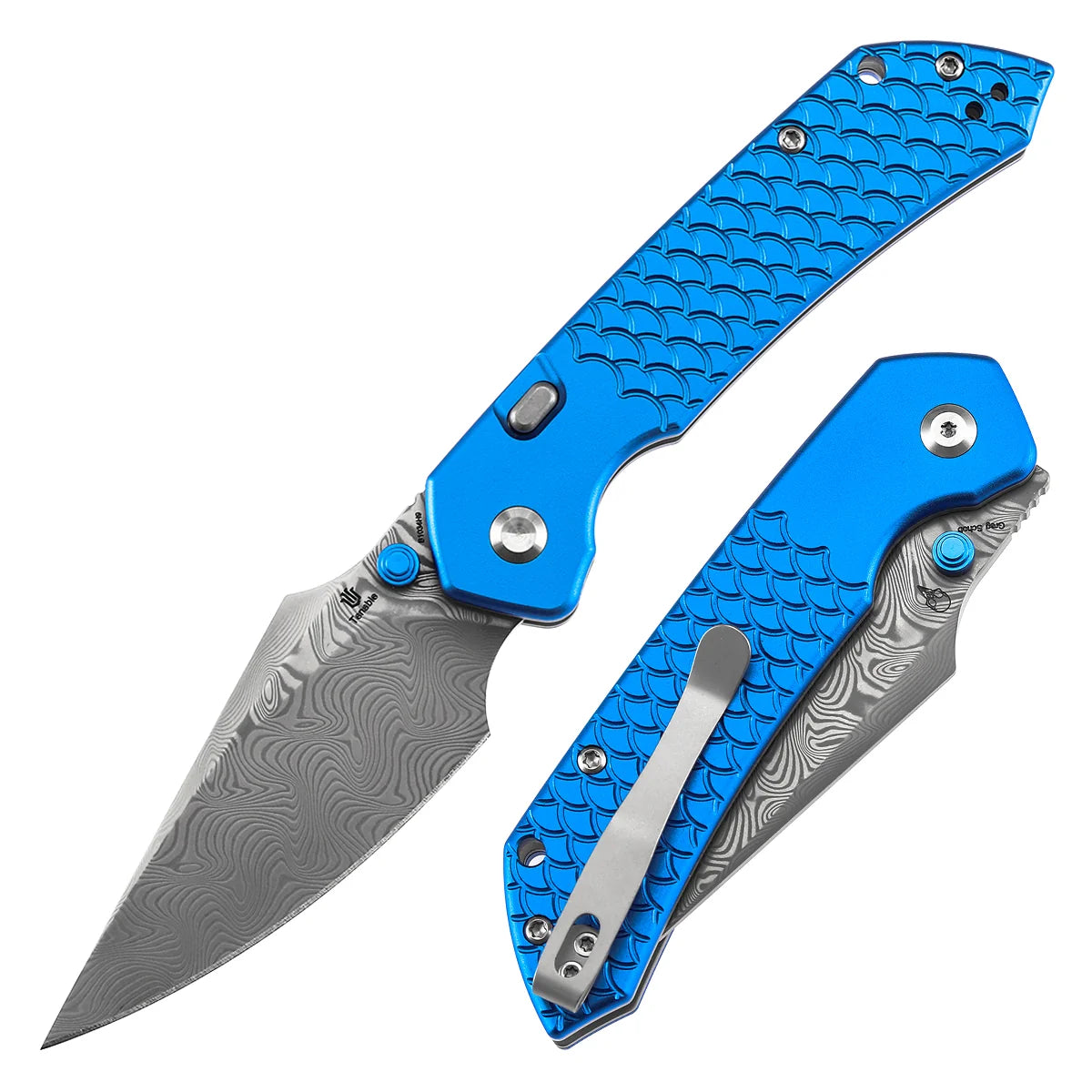
A Damascus steel blade provides the visual signature, with layered patterns that shift as the light moves across the flats. The pattern is not paint or etch on a plain surface: it comes from forge-welded layers, so every knife differs slightly. Titanium scales keep the handle light and warm in the hand, and the frame lock is cut into the titanium itself, which removes an extra part and keeps the lock face precisely aligned on a long blade.

Design & Details
Proportion is what sets this model apart. The blade is long enough for food and cardboard yet thin behind the edge, and the handle curves to fill a closed hand so the index finger finds a natural choil. A deep-carry clip keeps the knife low in a pocket and does not fight the hand during use. The thumb studs are set at a height that lets the blade swing out with a light push rather than a flick, which older folders and modern folding knives both reward.
Real-World Use
In daily rotation the Navaja handles mail, packaging, fruit, zip ties and the loose thread on a jacket, and the long edge makes short work of a cutting board when you are eating away from a kitchen. The titanium hides pocket wear well, though the blade will slowly darken where acidic food touches it. That change is part of owning Damascus steel: the pattern deepens, the surface takes on character, and the knife starts to look like yours instead of new.

Ownership Notes
Keep the blade dry after cutting anything acidic, wipe it down with a lightly oiled cloth at the end of a week of use, and never leave the knife sitting in a damp pouch. Flush the pivot with warm water and a drop of soap when grit gets in, dry it thoroughly, then add one small drop of oil. Avoid harsh polishes that flatten the layered pattern. A Damascus blade does not need to be babied, but it does need the drying habit that any carbon-containing steel demands. Collectors who carry EDC knives in the same pocket as a titanium folder learn that a dry wipe at the end of the day costs nothing, and the habit is what keeps a long patterned blade from spotting between outings.
Who Is This For?
This is aimed at the collector who actually carries, and at the first-time buyer who wants one knife that looks unlike anything on a big-box shelf. It suits anyone who grew up around traditional European clasp knives and wants that line in modern materials. Skip it if you need a hard-use pry tool for construction debris, because a long slicing blade and a fine pattern are not built for that work.
Final Verdict
The Navaja K1149A2 succeeds because it respects the original instead of copying it. The Damascus steel gives the knife a face, the titanium and the frame lock give it the strength to be used, and the geometry keeps it pleasant in hand for hours. It is a folder for people who want character in a pocket knife without giving up modern construction. Buy it as a carry piece you will still be proud of in five years.