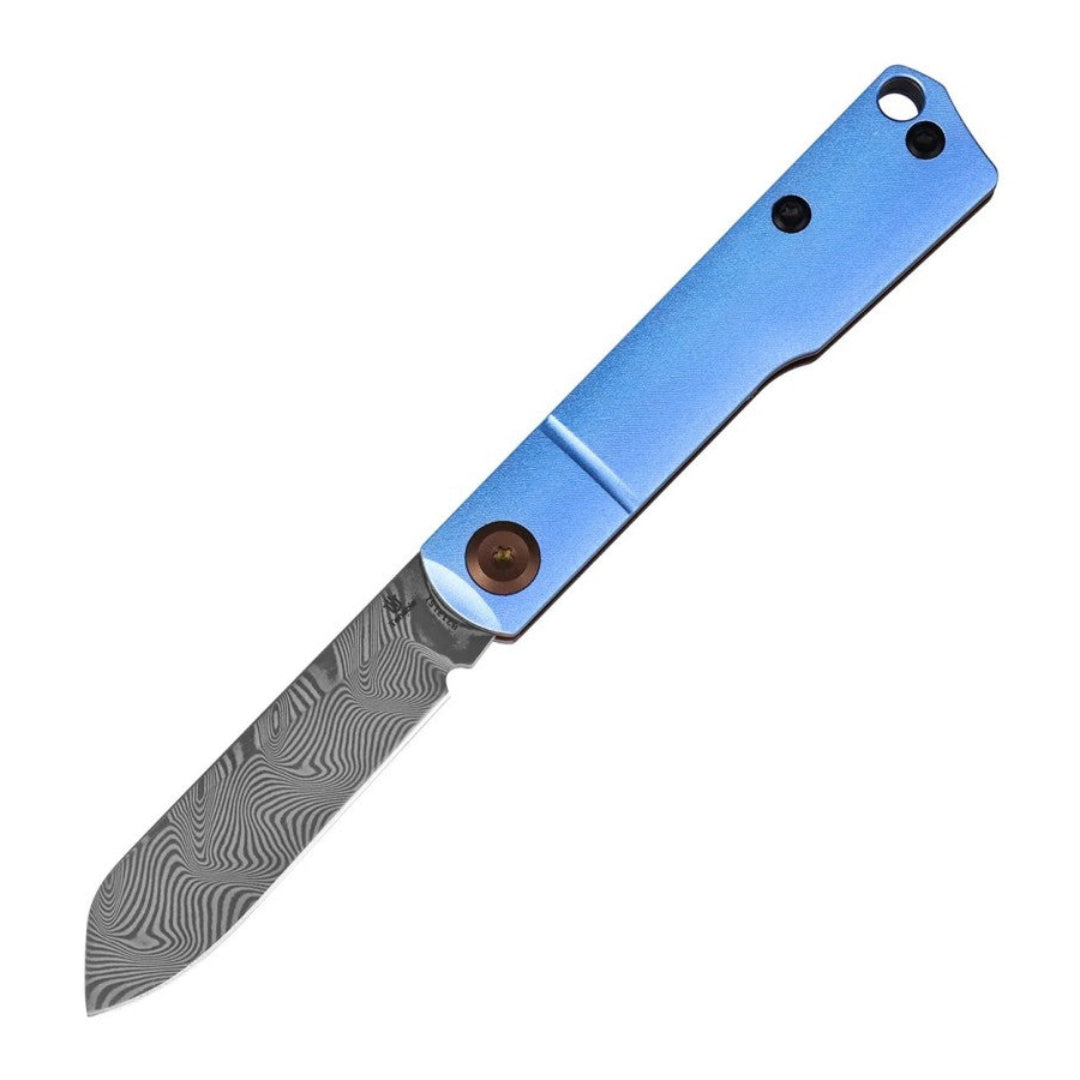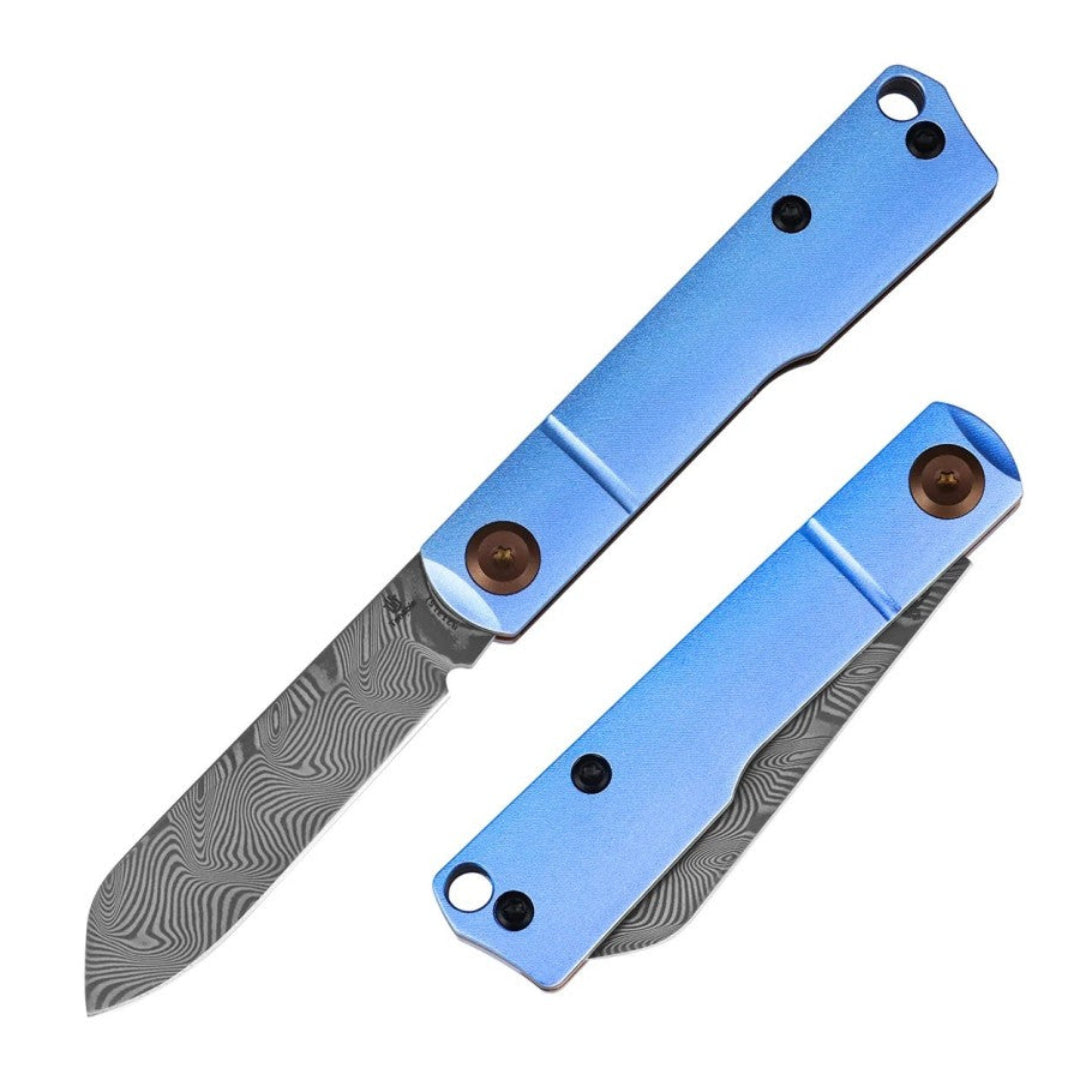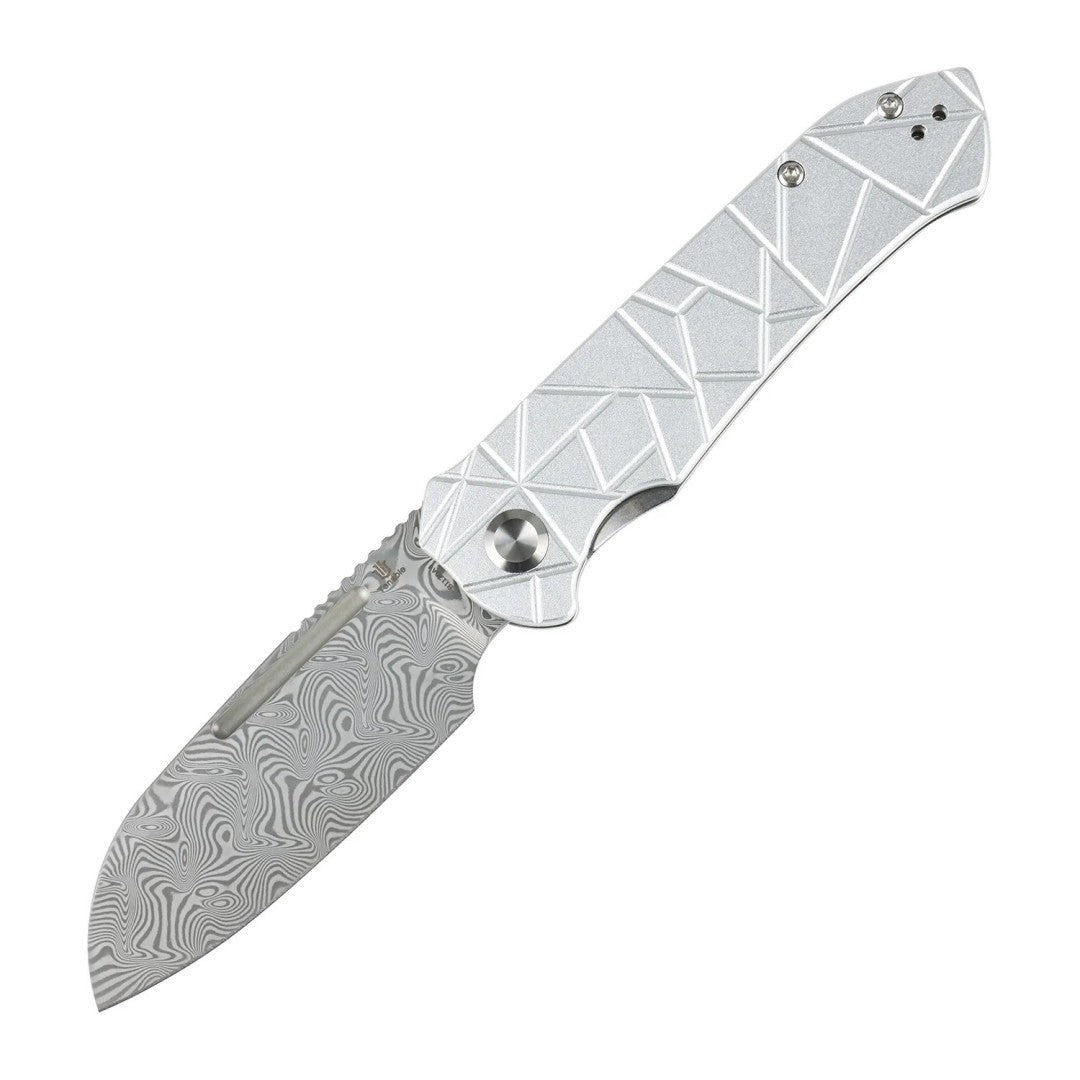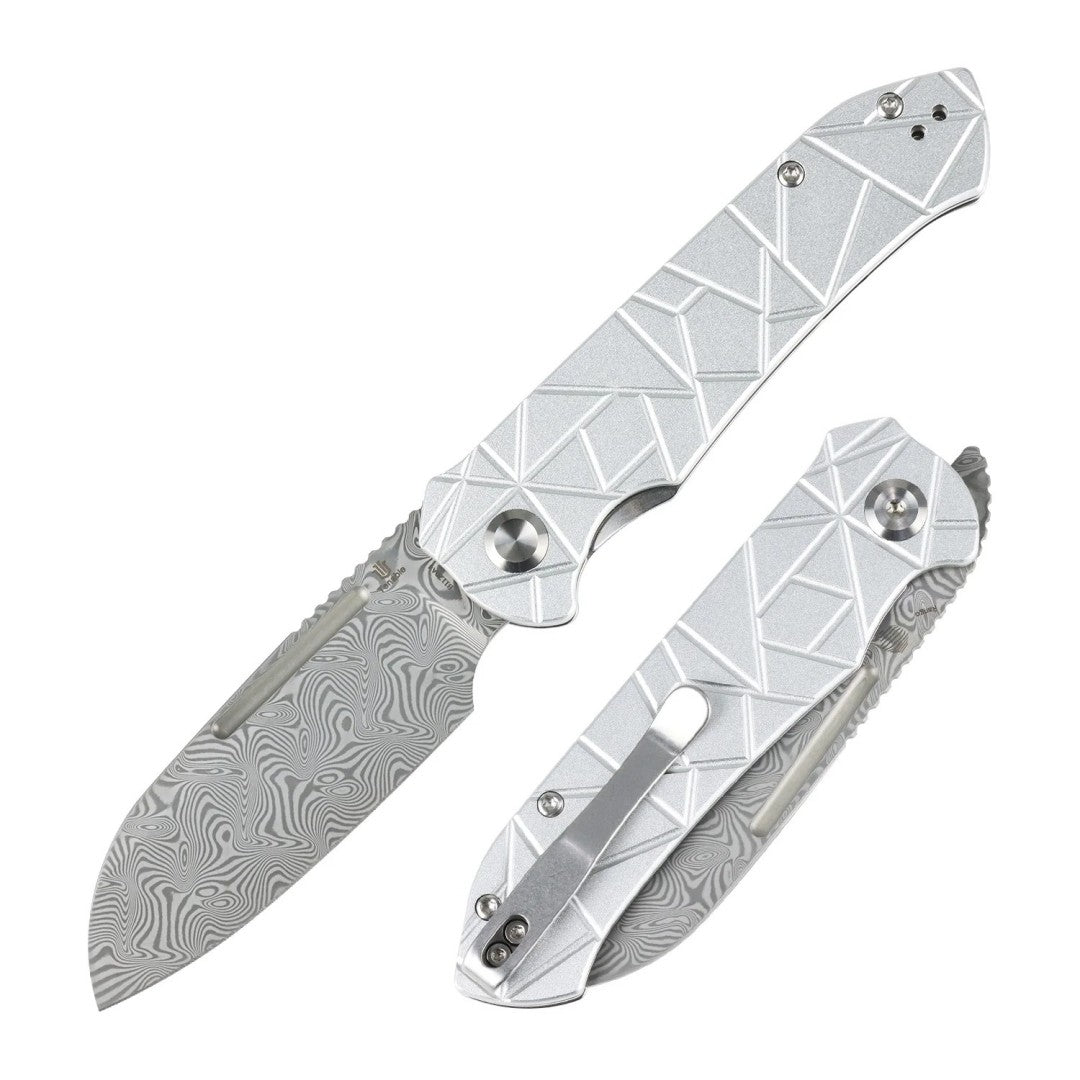

Overview & First Impressions
Mokume gane is a Japanese metalworking technique in which dozens of thin sheets of contrasting metals are stacked, bonded under heat and pressure, then carved to reveal a wood-grain pattern. It was developed for sword fittings four centuries ago and it survives today in exactly the places collectors care about most: knife ferrules, bolster overlays and handmade lanyard bead work. If you have ever wondered why two beads from the same maker look nothing alike, the answer is usually mokume.
Materials & Construction
A typical billet alternates copper, brass, nickel silver, shakudo and occasionally gold, sometimes twenty or more layers. The stack is diffusion bonded rather than soldered, which is why a well-made billet will not delaminate even after years of handling. Each billet is then carved, filed or rolled so the internal layers surface in swirls, rings or raindrop patterns. Because the pattern lives inside the metal, every cut reveals something new, and no two finished pieces can ever be identical.

Design & Details
The carving step is where the art lives. A maker can push the Bilson technique to raise raindrop dots, cut deep channels to create wood grain, or file across the layers for a fine ring pattern. Oxidation then does the rest of the work: copper and brass darken while nickel silver stays bright, so the contrast grows more pronounced with age. That is the opposite of most finishes, which fade over time.
Real-World Use
Mokume on a user piece needs gentle handling. Keep it away from ammonia-based cleaners and chlorine, which attack the copper content quickly, and wipe it with a dry cloth after a day in a pocket. A light coat of Renaissance wax will hold the contrast for months. If a piece does tarnish unevenly, a soft cloth and a little patience will blend it rather than strip it. Custom lanyard bead makers will usually tell you which alloys went into a specific billet.

Ownership Notes
The appeal is partly material and partly story. A mokume piece carries a technique that predates the modern knife industry by centuries, and owners tend to treat it less as an accessory and more as a small artifact. Display it where the layered pattern catches light from more than one angle. Collectors who want to compare the layering technique across studios should look at both Phase Objects pieces and the Apeshkov Beads range, because each maker carves the billet differently and the resulting pattern language is easy to see side by side.

Who Is This For?
Mokume suits collectors who already own a considered rotation and want one piece that rewards close looking. It is a poor choice for anyone who wants a completely maintenance-free keychain fob, and a superb one for anyone who enjoys watching a surface evolve. Pieces from Cpprhd beads and Phase Objects pair especially well with darker titanium handles.
Final Verdict
Mokume is not a finish and not a coating; it is a structure, and that is precisely why it ages better than anything applied to a surface. If you want your EDC gear to look more interesting in five years than it does today, this is the material that delivers. Browse the Cpprhd beads collection at EdcMall to see the technique applied at bead scale.
Shop the Cpprhd Metal Work 10th Custom Skull Lighter at EdcMall