
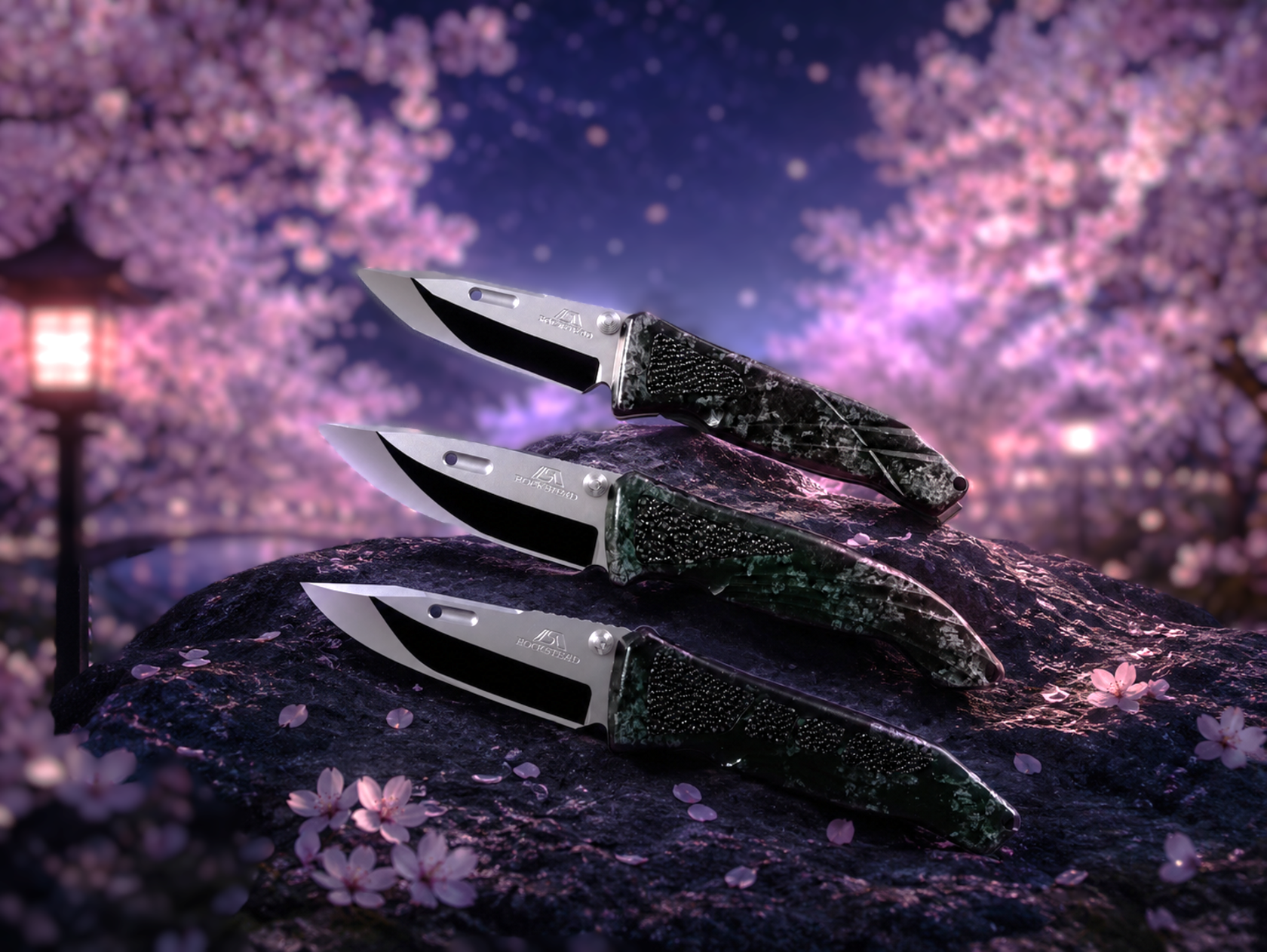
To fully comprehend the soul of a luxury EDC (everyday carry) knife, one must look beyond modern machinery and delve into the heritage of the artisans who shape it. Rockstead, the world-renowned workshop operating out of Osaka, Japan, has achieved legendary status by doing exactly that—blending aerospace-grade manufacturing tolerances with the spirit of ancient bladesmiths. While their flawless mirror-polished edges grab immediate headlines, their limited-edition Rockstead YOZAKURA series introduces an equally profound artistic marvel directly into the palm of your hand. This article uncovers the deep-rooted secrets of Traditional Samurai Craftsmanship inside the Rockstead Yozakura Stingray Handle, exploring how an organic material from the Edo period is seamlessly integrated into a futuristic tactical folder.
The Genesis of Samé: The Warrior's Grip
Long before folding pocket knives existed, the battlefield samurai required a weapon that would never fail under the most extreme elements. The hilt (tsuka) of the traditional Japanese katana was the critical interface between the warrior and his blade. To ensure an unyielding grip, samurai armorers utilized an exotic organic texture: stingray skin, known historically in Japan as Samé (pronounced sah-meh).
Rockstead does not use this material as a superficial aesthetic gimmick. By embedding premium Samé flush into the handles of the YOZAKURA line, they are resurrecting a thousand-year-old military design philosophy. For the modern enthusiast, this creates a profound tactical tool that bridges ancient martial pedigree with high-tech pocket carry.
The Biological Physics of the Nodular Surface
High-end pocket knives frequently rely on synthetic materials like carbon fiber, micarta, or aggressively textured titanium to prevent the user's hand from slipping. However, these man-made textures can act like sandpaper, slowly wearing out your clothing pockets or causing painful blisters during heavy use.
Stingray skin resolves this friction dilemma through its brilliant natural anatomy. The surface of genuine Samé is comprised of thousands of tiny, calcified, dome-like structures made of dentin and enamel—the exact same biological components that form human teeth.
The tactile magic of stingray skin is dynamic: when your hand is dry, the rounded nodules feel perfectly smooth and comfortable against your skin. However, the moment your palm becomes wet, sweaty, or exposed to cold environmental moisture, these natural nodules generate immense friction, locking your grip securely into place.
Furthermore, because these calcified domes are incredibly hard, the inlay is entirely waterproof, puncture-resistant, and immune to fraying or rotting over decades of rigorous daily carry.
A Feat of Sub-Micron Japanese Joinery
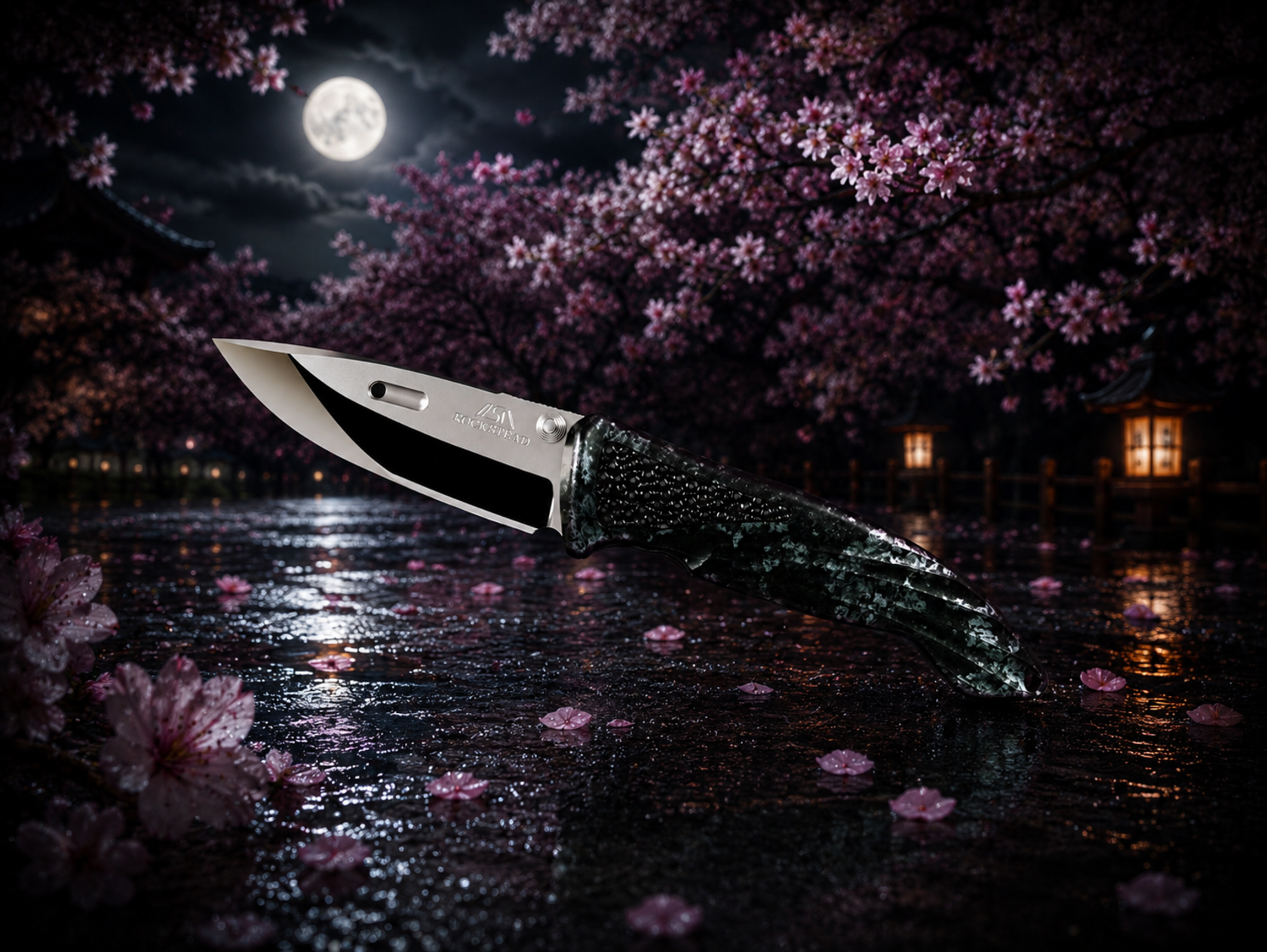
Integrating an irregular, organic material like stingray hide into a precision-milled aluminum framework presents a massive manufacturing challenge. Because no two stingrays possess the exact same skin thickness or nodule configuration, mass assembly lines are entirely out of the question.
To achieve a seamless finish, Rockstead’s master craftsmen in Osaka execute a meticulous, multi-step process:
-
Artisan Sorting: Each piece of raw Samé is meticulously hand-selected, matched for nodule density, and cut to shape using specialized tools.
-
Sub-Micron Milling: A dedicated pocket is precision-machined onto both sides of the handle scale. The tolerances are held to sub-micron levels to match the exact profile of the organic insert.
-
Flush-Fit Bonding: The hide is chemically treated, compressed using proprietary fixtures, and permanently bonded deep into the frame.
The resulting interface is completely flush. When you slide your thumb across the transition line between the sleek aluminum alloy outer frame and the organic stingray skin, you will feel absolutely no gaps, uneven borders, or raw edges. This flawless execution easily rivals the fit and finish found on high-end custom handmade art knives.
The Shifting Backdrop: The Yozakura Optical Gradient
To beautifully frame this ancient samurai texture, Rockstead wraps the handle alloy in an advanced optical surface chemistry. Named after Yozakura—the poetic Japanese cultural tradition of viewing cherry blossoms glowing beneath a midnight sky—the handle behaves like a visual chameleon.
Under indoor lighting, the handle exhibits a mature, stealthy, dark forest green. But the exact micro-second natural sunlight breaks across the chamfered contours of the handle, the finish dynamically shifts to reveal brilliant, iridescent blossom-pink undertones. This optical transformation creates an incredible contrast with the deep ivory tones of the stingray hide.
The Masterpiece Matrix: Balanced with 67 HRC Steel
A handle infused with traditional samurai craftsmanship requires a blade that shares the same legendary pedigree. The YOZAKURA series pairs this grip with their signature ZDP189 clad steel blade, heat-treated to an astonishing 67 HRC. Shuffled into their iconic Honzukuri convex grind, the blade features a smooth, continuous curve that flows seamlessly from the spine directly to the cutting apex without a secondary bevel.
Painstakingly buffed by a master smith down to a mirror-polished surface finish, the blade completely eliminates microscopic friction points, allowing it to glide through heavy cardboard, leather, or rope with zero drag while remaining secured by an extra-thick internal liner lock system.
The Ultimate Collector's Verdict
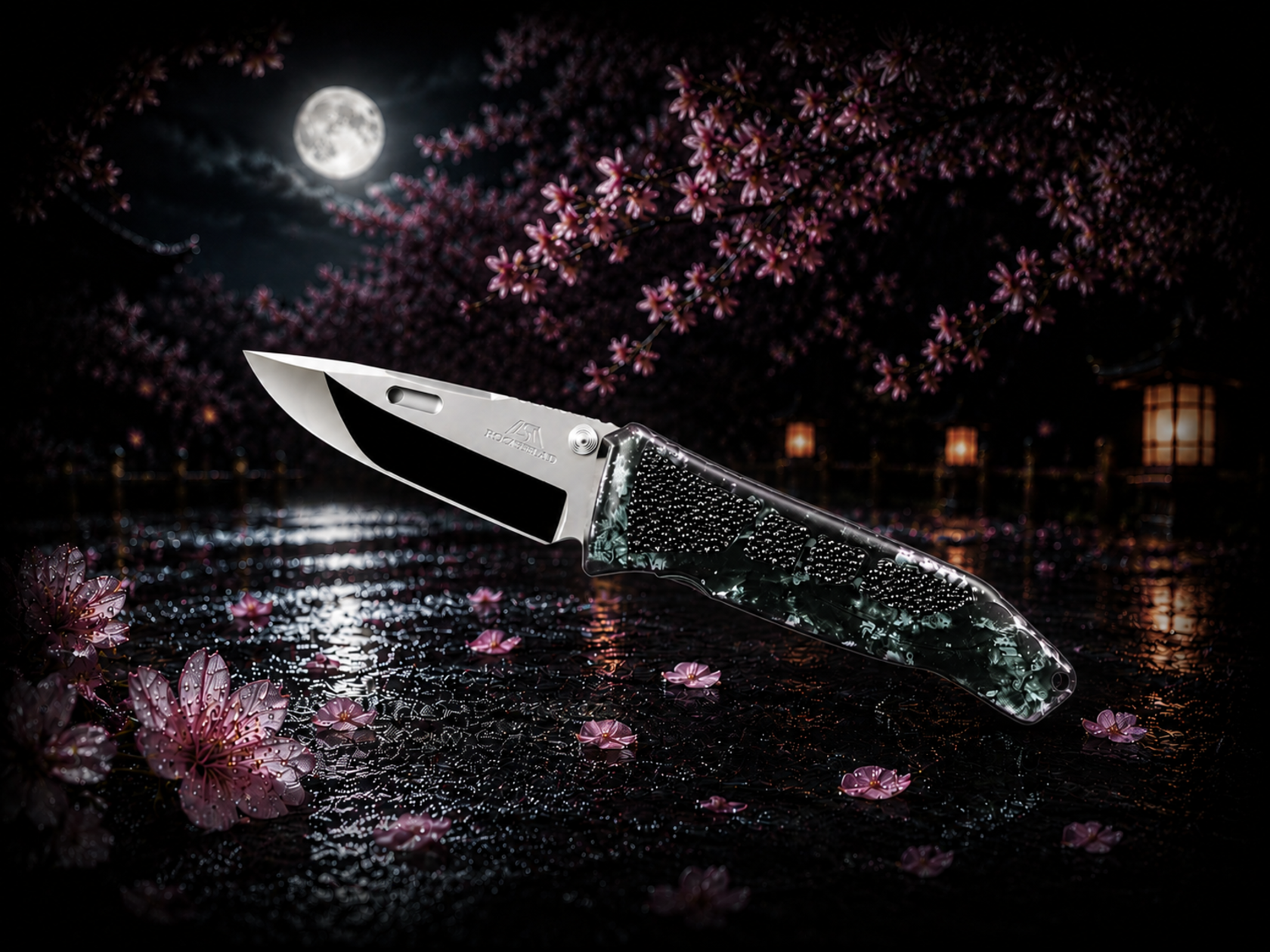
The Rockstead YOZAKURA collection is a stunning testament to what happens when ancestral martial history merges with modern industrial perfection. High-end collectors do not buy these folders merely to cut open packages; they invest in them to own a functional piece of Japanese legacy. By encapsulating traditional samurai Samé craftsmanship inside an ultra-hard, color-shifting tactical frame, Rockstead has created a timeless investment piece that delivers unparalleled pride of ownership for a lifetime.