
Wilderness search-and-rescue teams operate at the mercy of unpredictable meteorological conditions. When search grids expand across alpine ridgelines during sub-zero blizzards, swollen river valleys amid flash floods, or dense rain forests lashed by monsoon downpours, consumer-grade lighting platforms fail abruptly. Cold temperatures freeze lithium chemistry, pressurized floodwaters breach delicate seals, and mud clogs cooling fins and mechanical switches. To establish true operational boundaries, a heavy-duty IP68-rated high-lumen search flashlight must undergo extreme weather survival testing—evaluating how solid-state electronics, thermal architectures, and hermetic seals perform when environmental conditions push equipment to total physical failure.

Sub-Zero Freezing and Solid Ice Encapsulation
Severe alpine cold creates two major points of failure: sudden battery voltage drops due to reduced electrochemical activity and switch freezing caused by trapped moisture.
Thermal Drop and Low-Temperature Driver Regulation
During deep-freeze testing at -25°C for extended durations, the searchlight's aerospace-grade aluminum chassis acts as a rapid thermal conductor. Advanced constant-current driver circuits actively compensate for the reduced discharge capability of cold-soaked lithium-ion cells. Rather than flickering or cutting out, high-efficiency drivers draw steady amperage, maintaining a consistent beam core to illuminate snow-covered valleys and frozen ridgelines.
Mechanical Switch Thawing and Ice Breaking
Encased entirely in a solid block of frozen ice, mechanical switches and dual-stage electronic buttons were tested for operational responsiveness. Heavy-duty rubber boots and isolated magnetic selector rings resisted freezing adhesion. Once the surrounding ice shell was cracked, primary switches actuated cleanly without hesitation, delivering immediate access to maximum search output and high-visibility distress beacons.
Hydraulic Pressure and Torrential Water Ingress
Search operations during tropical storms and whitewater canyon rescues demand water resistance that far exceeds light splash protection.
Continuous Deep Submersion
Subjected to two meters of continuous water immersion in turbulent current tanks, the IP68 hermetic sealing system was tested against dynamic hydraulic pressure. Dual precision-machined fluorosilicone O-rings on all threaded joints, coupled with a chemically treated internal seal behind the ultra-clear tempered glass lens, prevented moisture from entering the optical chamber or the driver housing.
Rapid Thermal Shock Submersion
Driving thousands of lumens generates significant internal heat. Plunging a thermally saturated searchlight running at maximum turbo output directly into icy river water creates immediate internal air pressure contraction, creating a vacuum that pulls external moisture toward internal cavities. The searchlight’s robust mechanical tolerance and sealed port architecture resisted this thermal vacuum completely, showing zero internal lens fogging or driver shorts.
Wilderness Searchlight Weather Survival Matrix
| Environmental Stressor | Test Parameters & Conditions | Observed Hardware Response | Operational Readiness Status |
| Arctic Freeze | 12 Hours at -25°C inside solid ice block | Constant-current circuit prevented voltage drop | Full Turbo & Strobe Active |
| Deep Water Pressure | 2.0m Continuous submersion for 4 hours | Dual O-rings held zero water ingress | 100% Hermetic Seal Intact |
| Thermal Shock Drop | Max Turbo (55°C) to Icy Water (2°C) | No internal vacuum leakage or lens fogging | Regulated Output Sustained |
| Abrasive Mud Soak | Coated in thick clay and fine quartz silt | Heat fins shed mud; switches actuated smoothly | Clean Water Rinse Restored |
| Gale-Force Impact | 2.0m Drops onto frozen granite scree | Minor surface scuffing on strike bezel | Shock Springs Isolated Battery |
Silt, Wet Clay, and Mudpack Contamination
Landslides, swamp extractions, and torrential mud runs present severe abrasive threats that jam mechanical controls and insulate thermal cooling fins.
Passive Cooling Under Clay Packing
When the flashlight head is caked in thick, wet clay, airflow across the machined cooling fins is blocked. The searchlight's onboard intelligent thermal management system immediately detects rising core temperatures, modulating output in smooth, micro-step increments to protect internal LED emitters from thermal degradation while preserving maximum safe photonic output.
Contaminant Shedding and Direct Stream Clearance
Because the chassis contains no exposed, unsealed ports or vulnerable crevices, heavy debris washes away easily. Submerging the dirty light in a running mountain stream clears all silt from the grip knurling, cooling channels, and tailcap mechanisms without allowing abrasive grit to compromise internal threads or contact surfaces.
Structural Kinetic Shock on Frozen Terrain
Winter rescues frequently involve slips on icy granite boulders, scree slopes, and drops from high transport vehicles.
Dual-Direction Shock Dampening
Precision CNC-machined from high-strength 6061-T6 or 7075-T6 aluminum alloy and treated with Type III military-grade hard anodizing, the unibody housing resists structural crushing and bending. Internally, dual heavy-duty gold-plated springs support the battery from both ends, dampening violent axial impacts and eliminating momentary beam cutoffs when the searchlight strikes frozen stone surfaces.
Optical Crown and Lens Defense
The front strike bezel—reinforced with hardened stainless steel or embedded nano-ceramic beads—absorbs direct frontal impacts. This protective crown prevents kinetic energy from transferring directly to the mineral glass lens, keeping the optical reflector perfectly focused and aligned during rough field use.

Comprehensive Multi-Brand Search Ecosystems
Building a reliable wilderness emergency setup requires integrating diverse lighting technologies tailored to specific rescue roles:
-
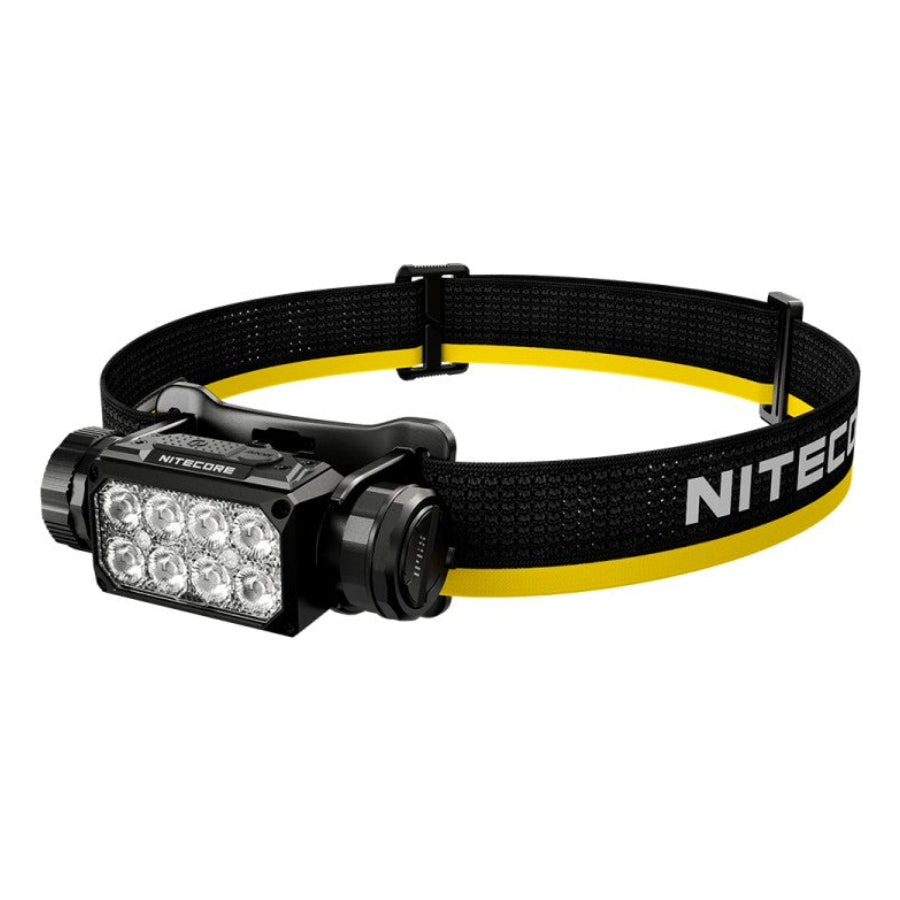
Nitecore delivers high-candela long-range search platforms with integrated OLED telemetry displays, providing real-time readouts of remaining runtime and core temperature during critical grid searches.
-
Nextorch leads heavy-duty rescue and vehicle extrications with patented nano-ceramic glass-breaking bezels and intuitive dual-stage tactical switches.
-
Klarus is celebrated for rapid-response dual-tail switch architectures that deliver instantaneous one-touch maximum turbo and defensive strobe modes under acute stress.
-
Jetbeam provides exceptional precision CNC machining and smooth magnetic rotary control rings for operators who require continuous analog output tuning in changing weather.
Equipping emergency teams with an IP68-rated high-lumen search platform alongside standard rescue equipment and personal EDC tools ensures absolute optical dominance, continuous weather resistance, and life-saving reliability through nature's most hostile environments.