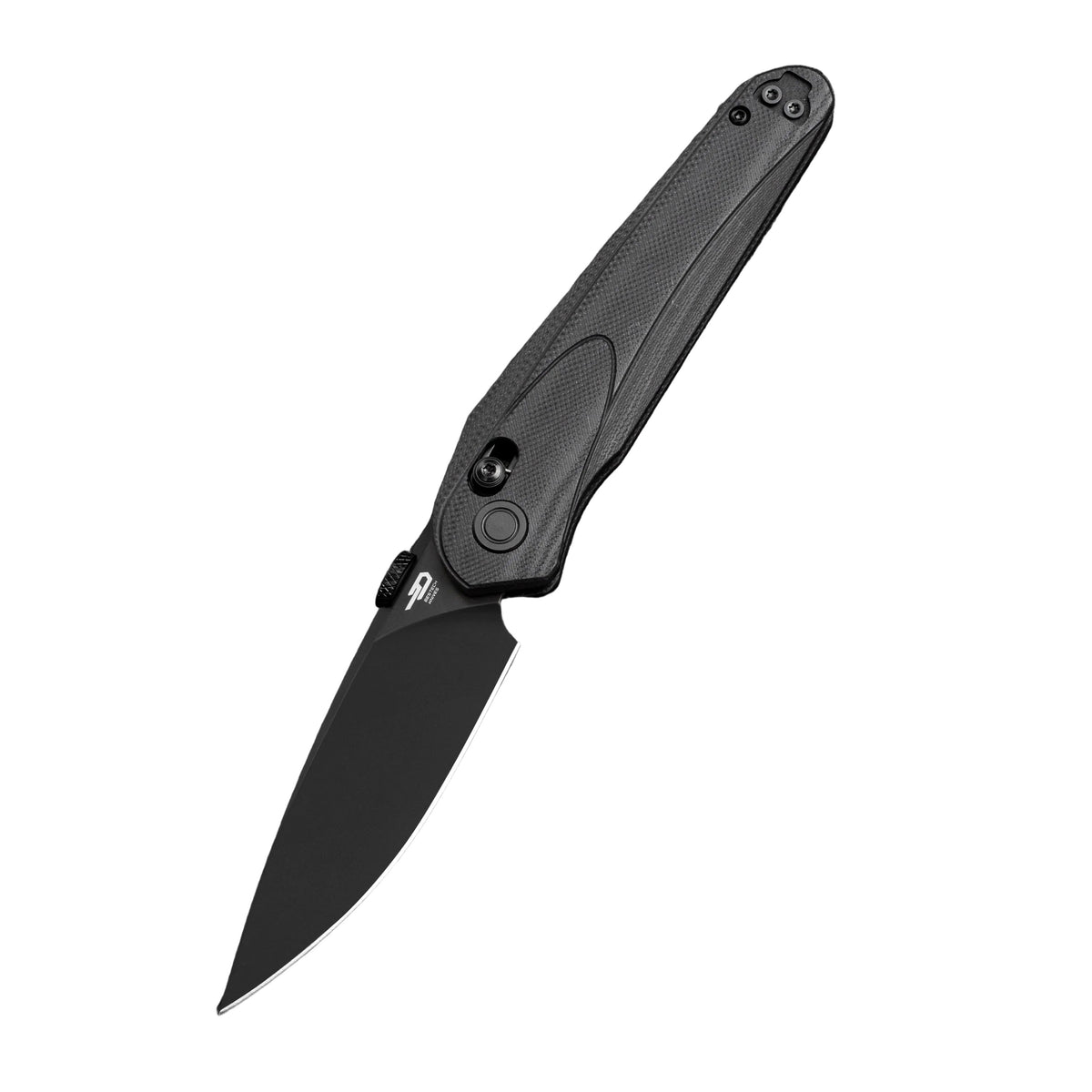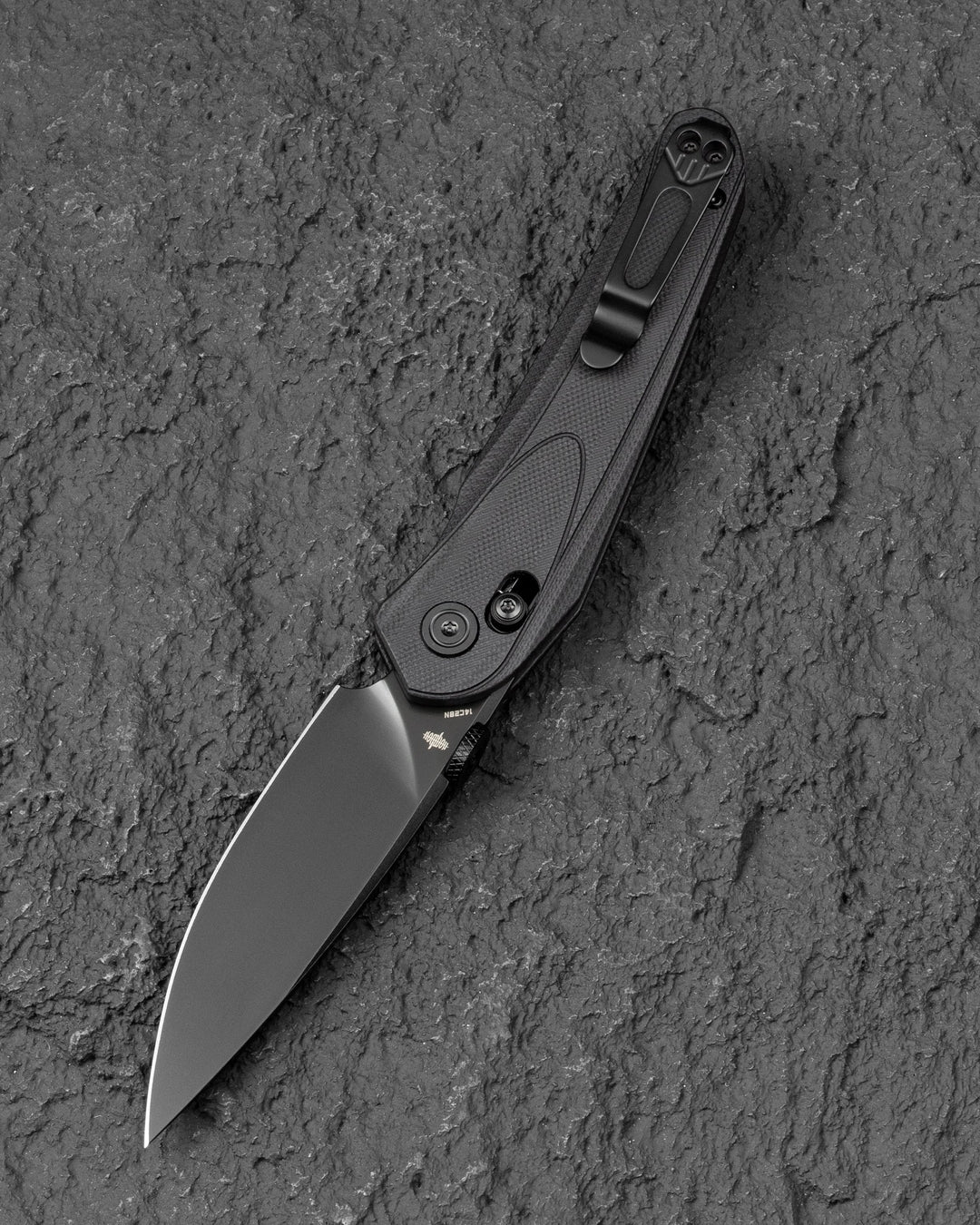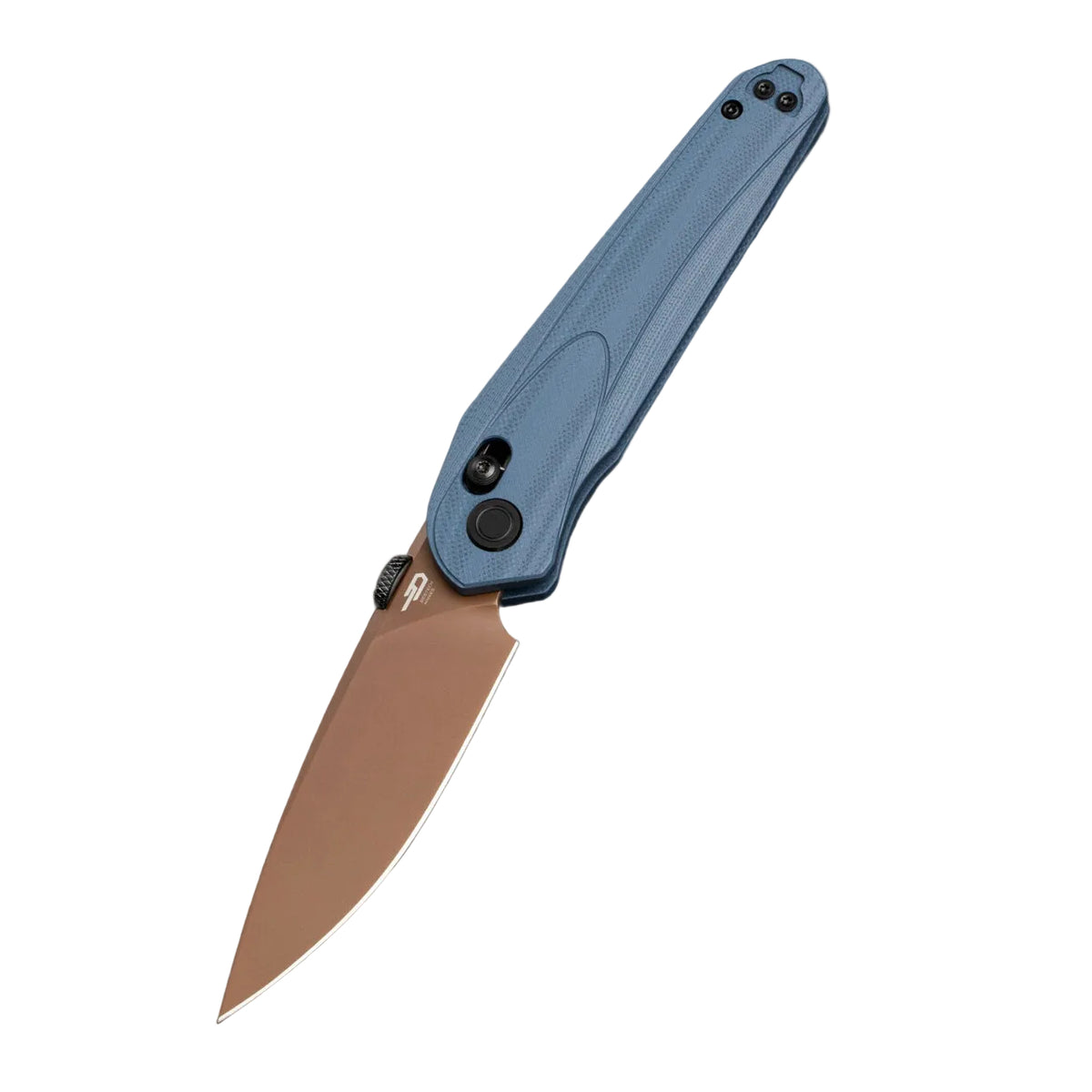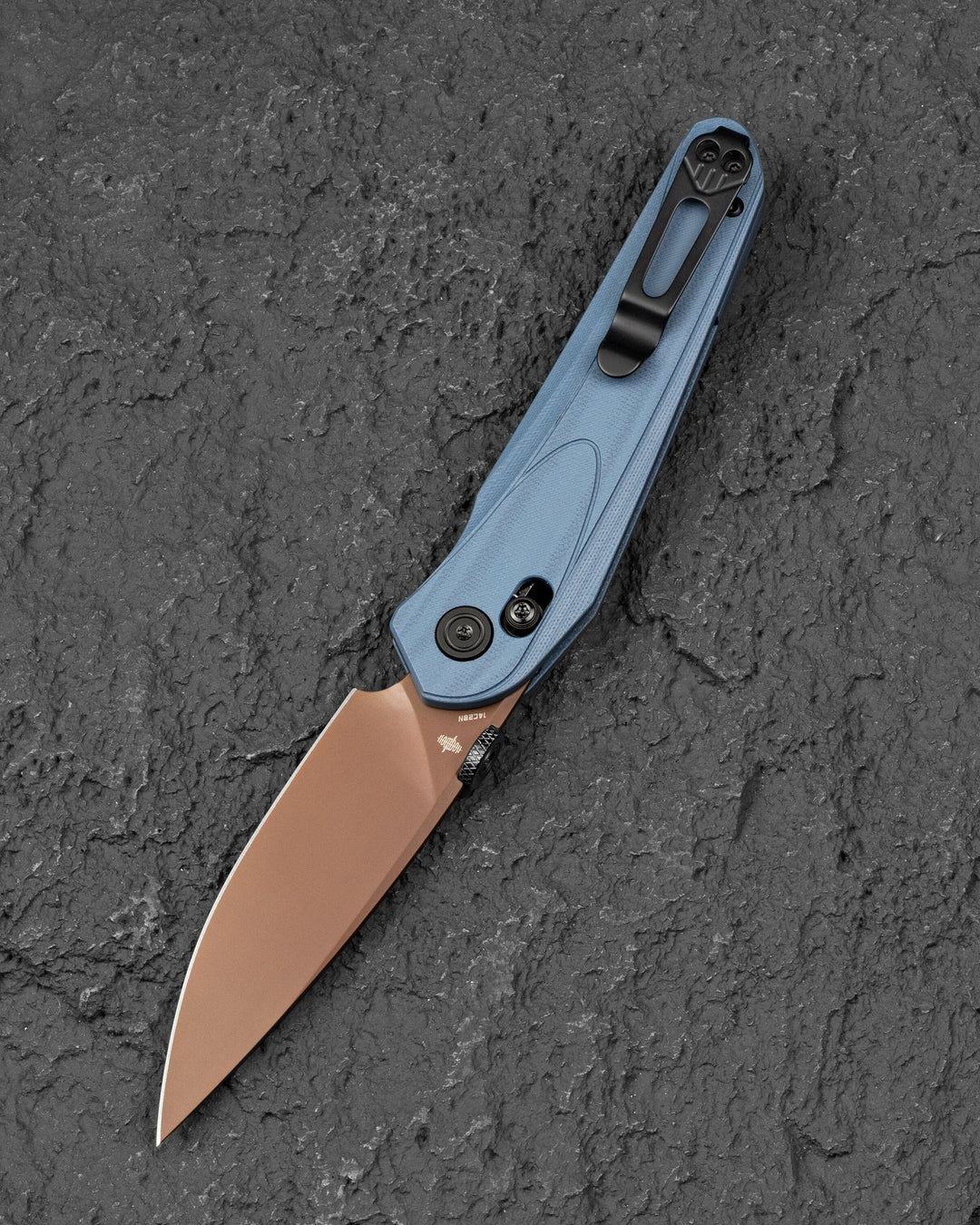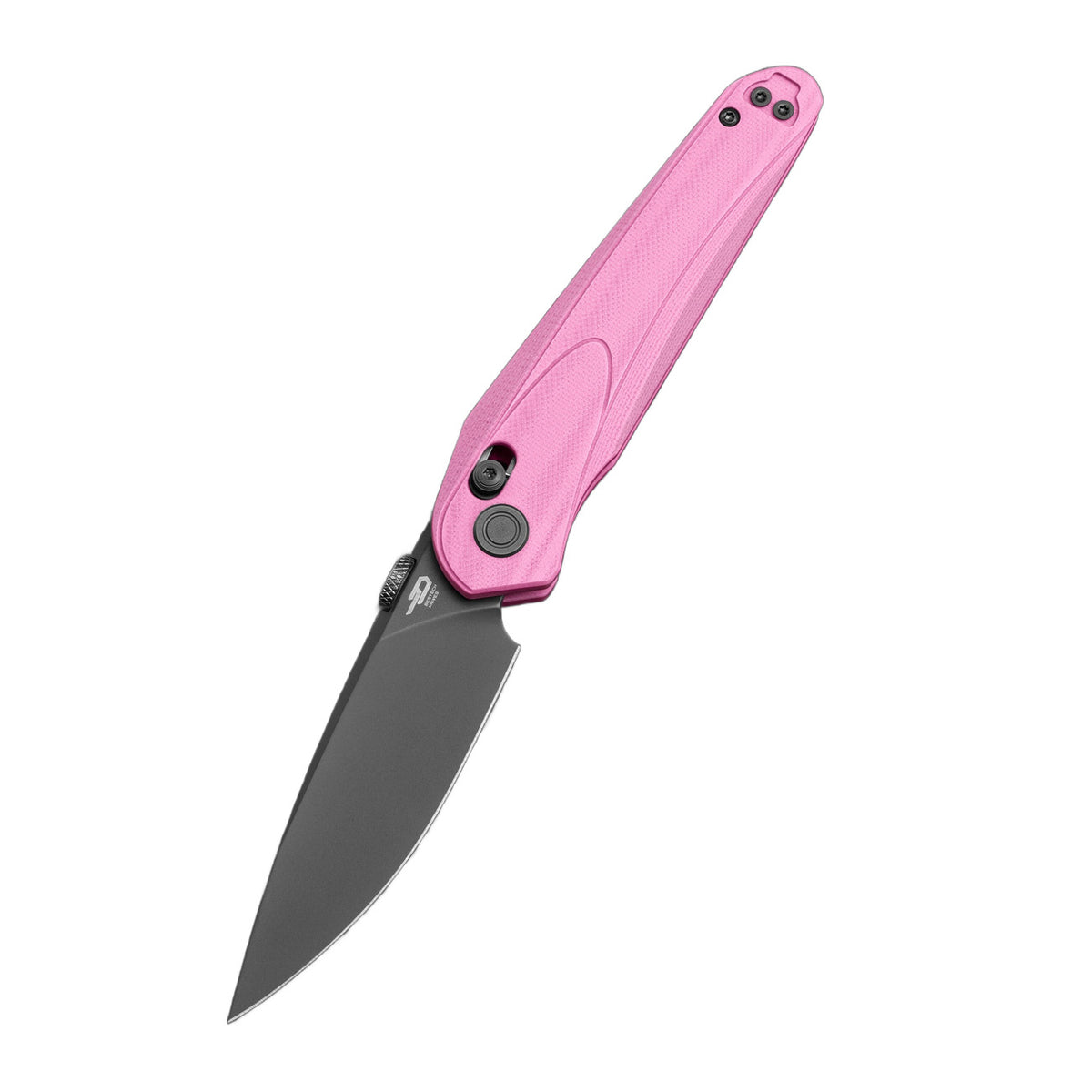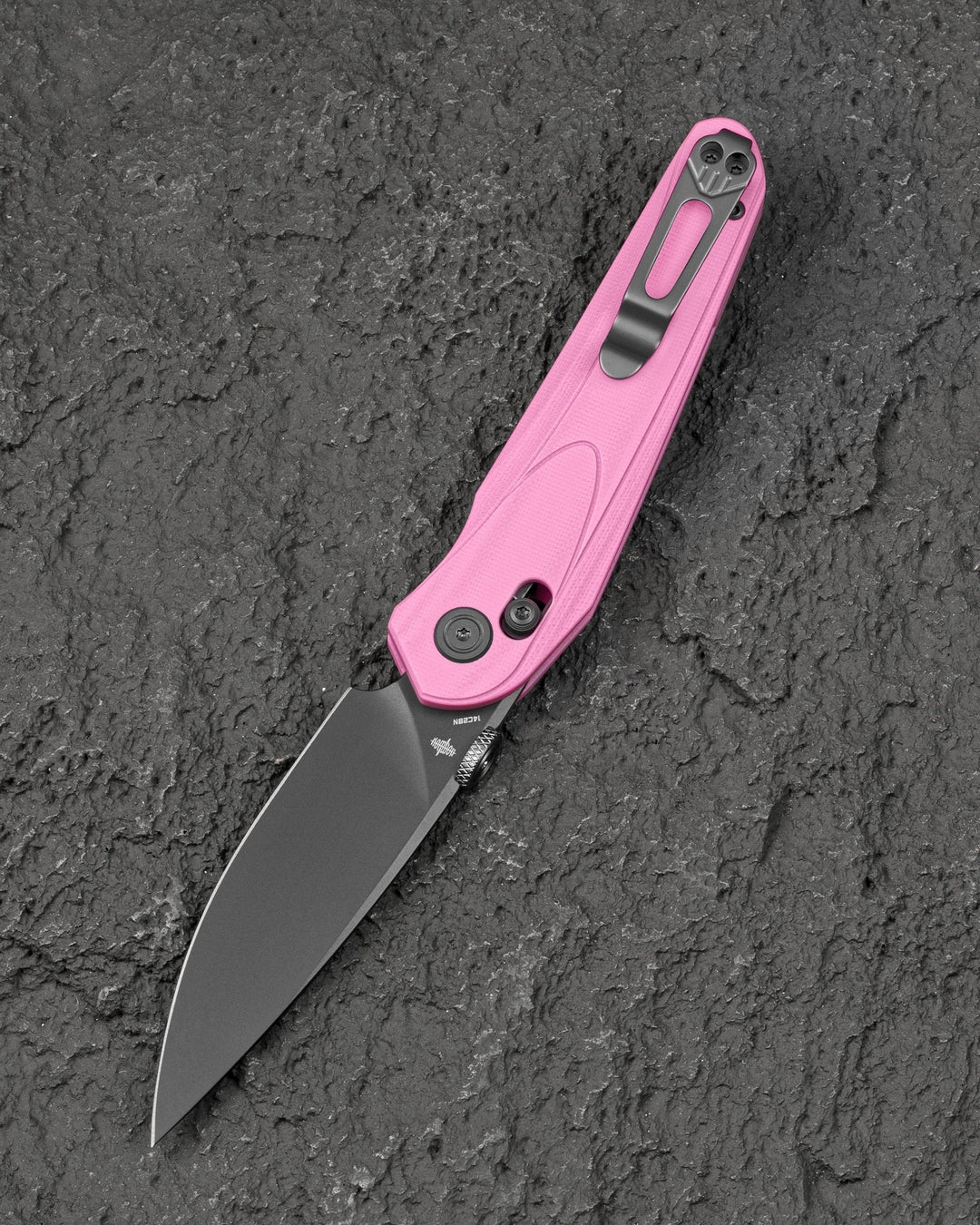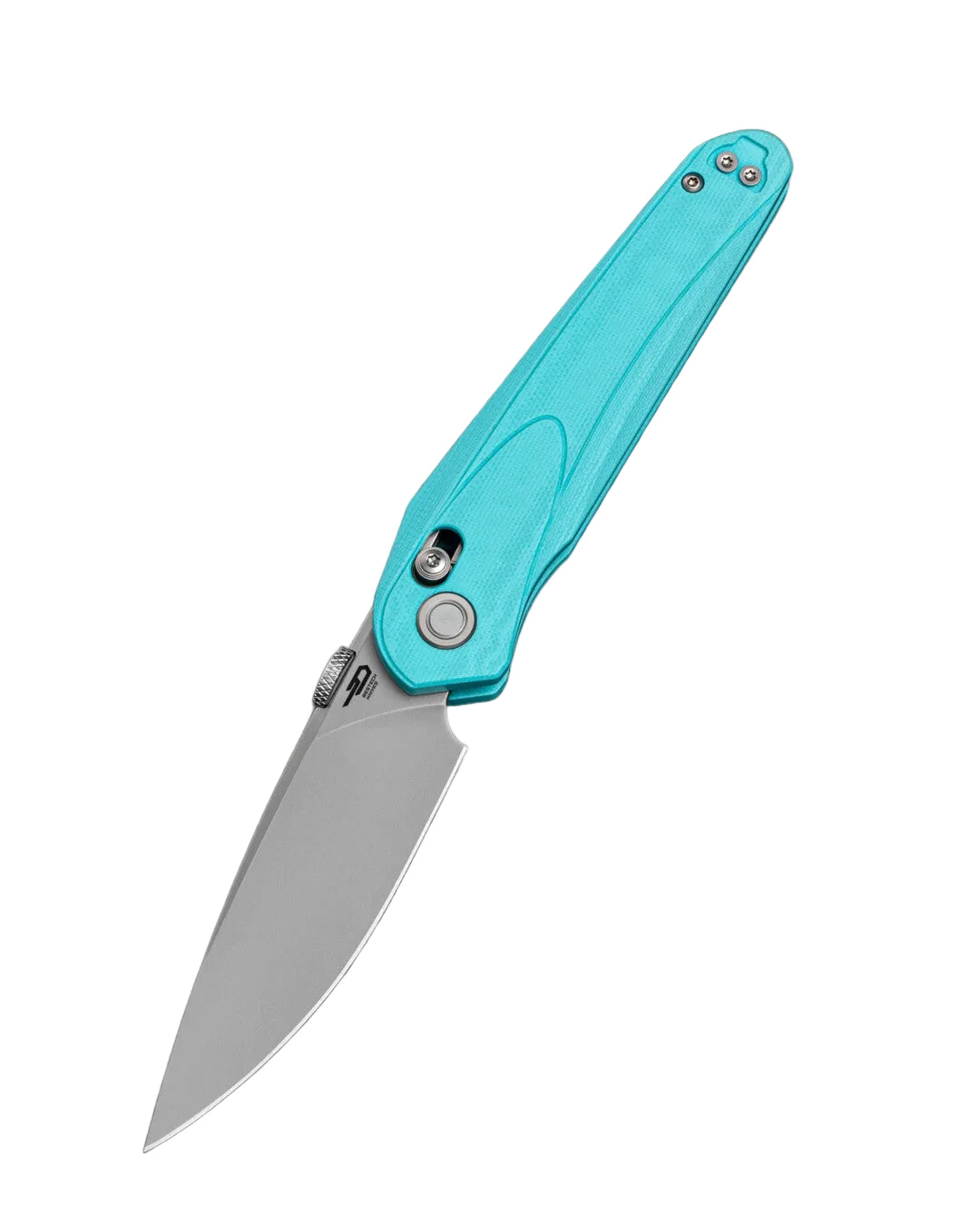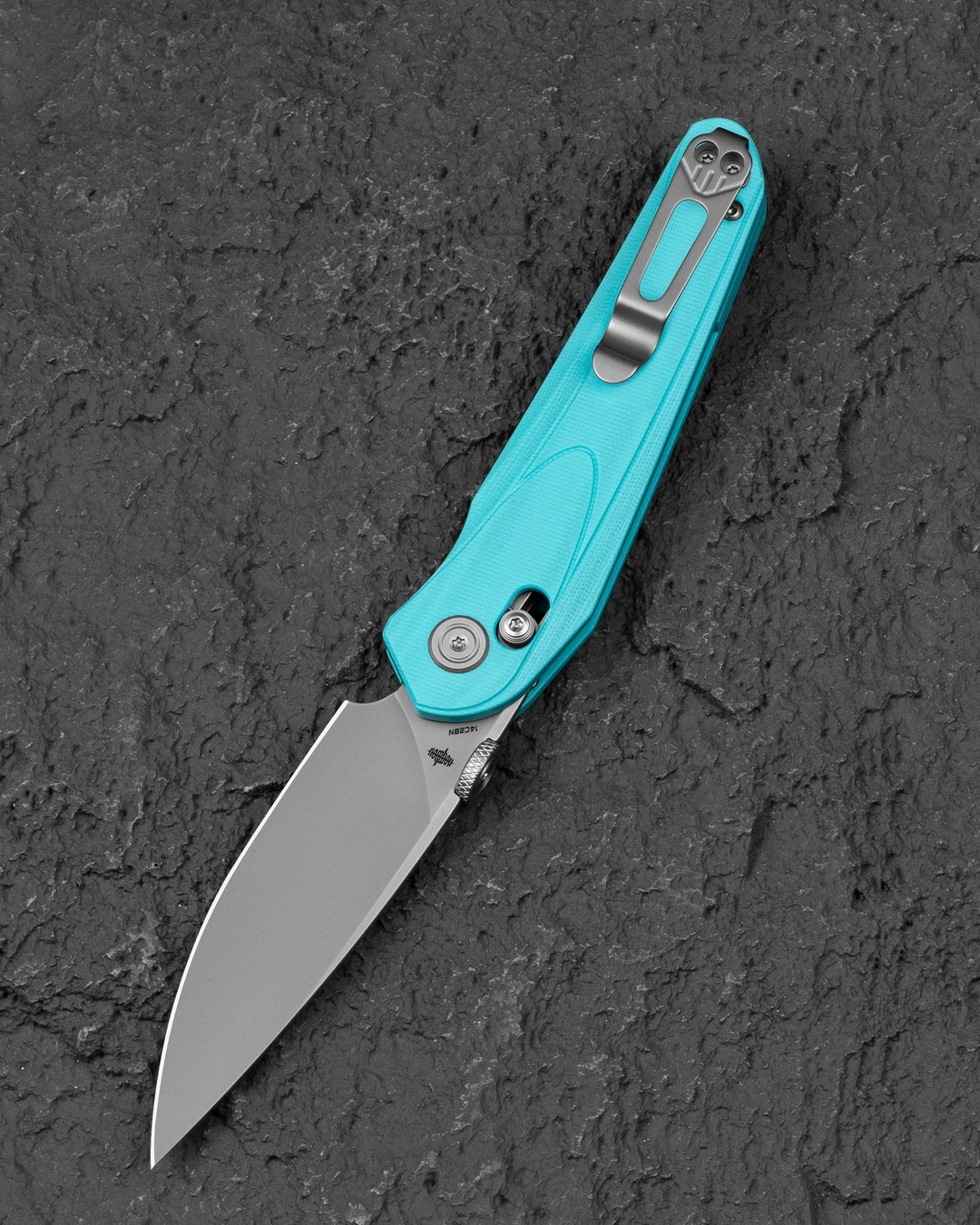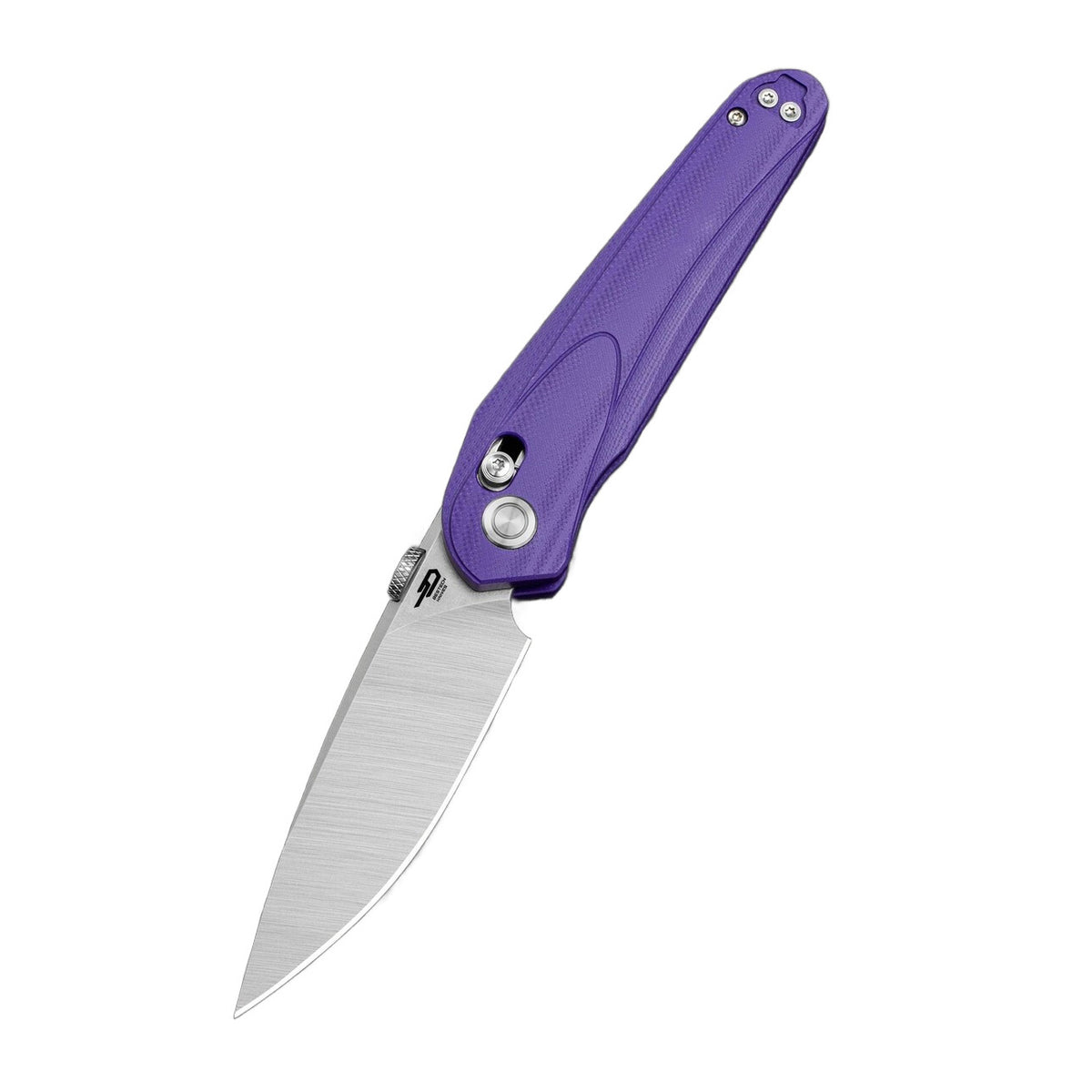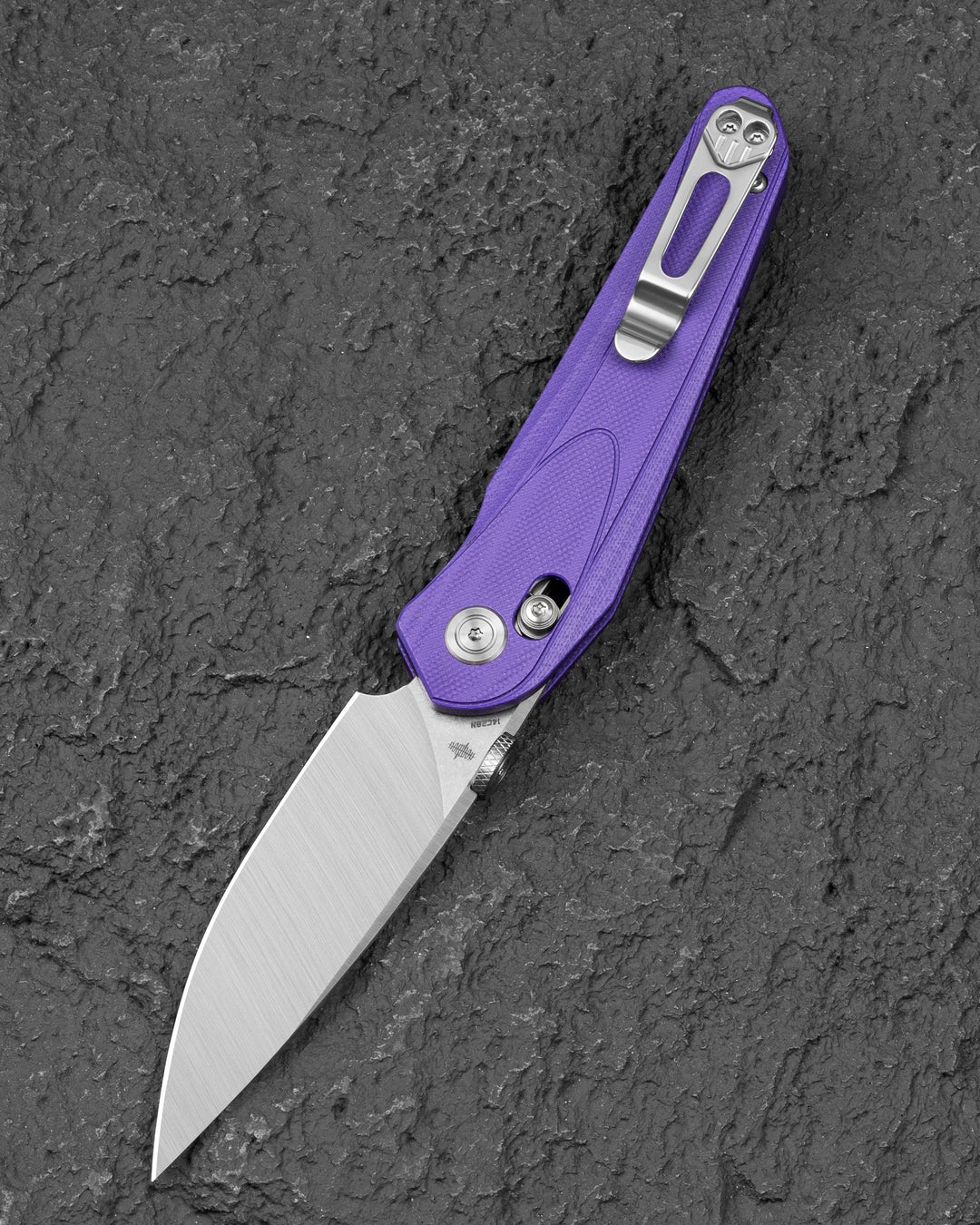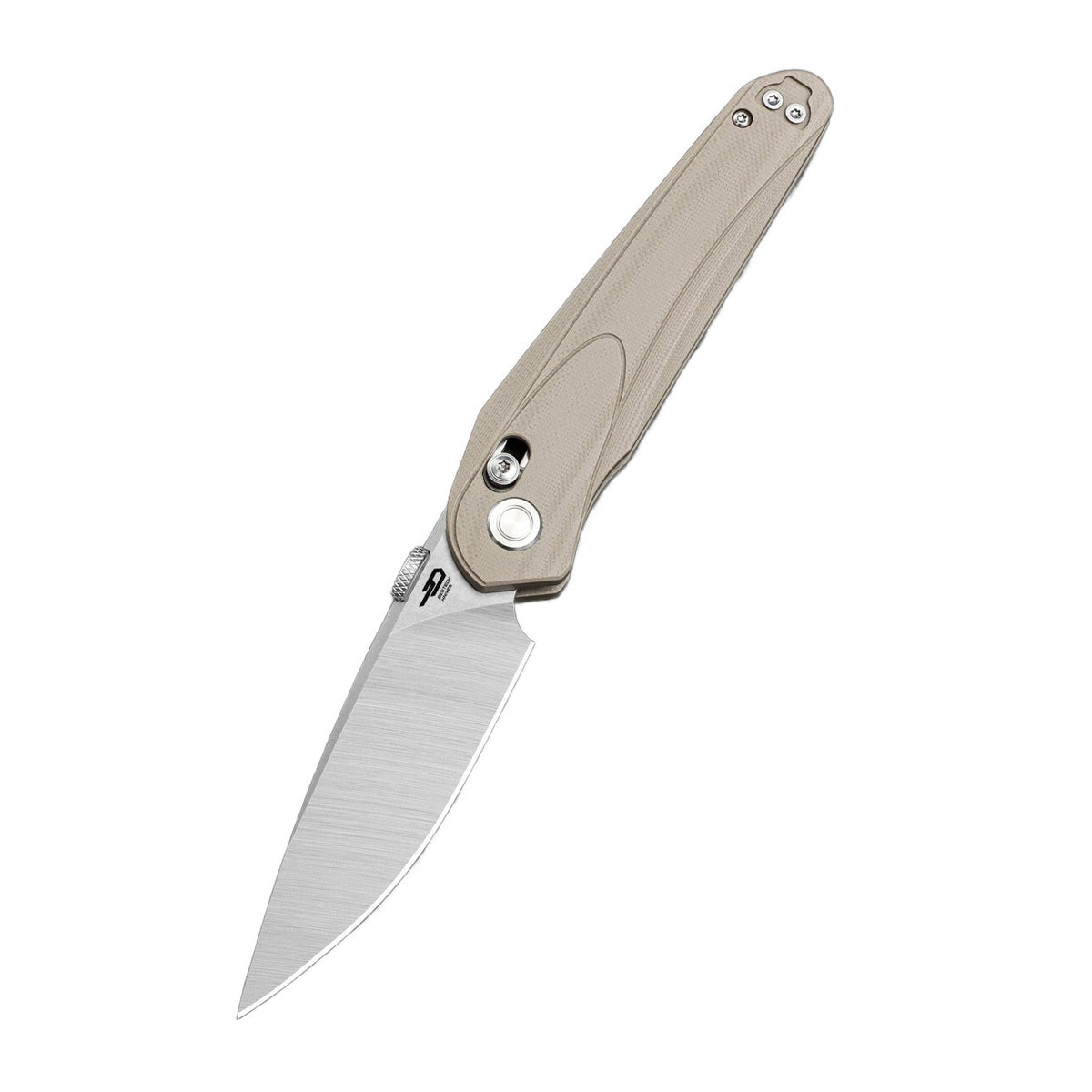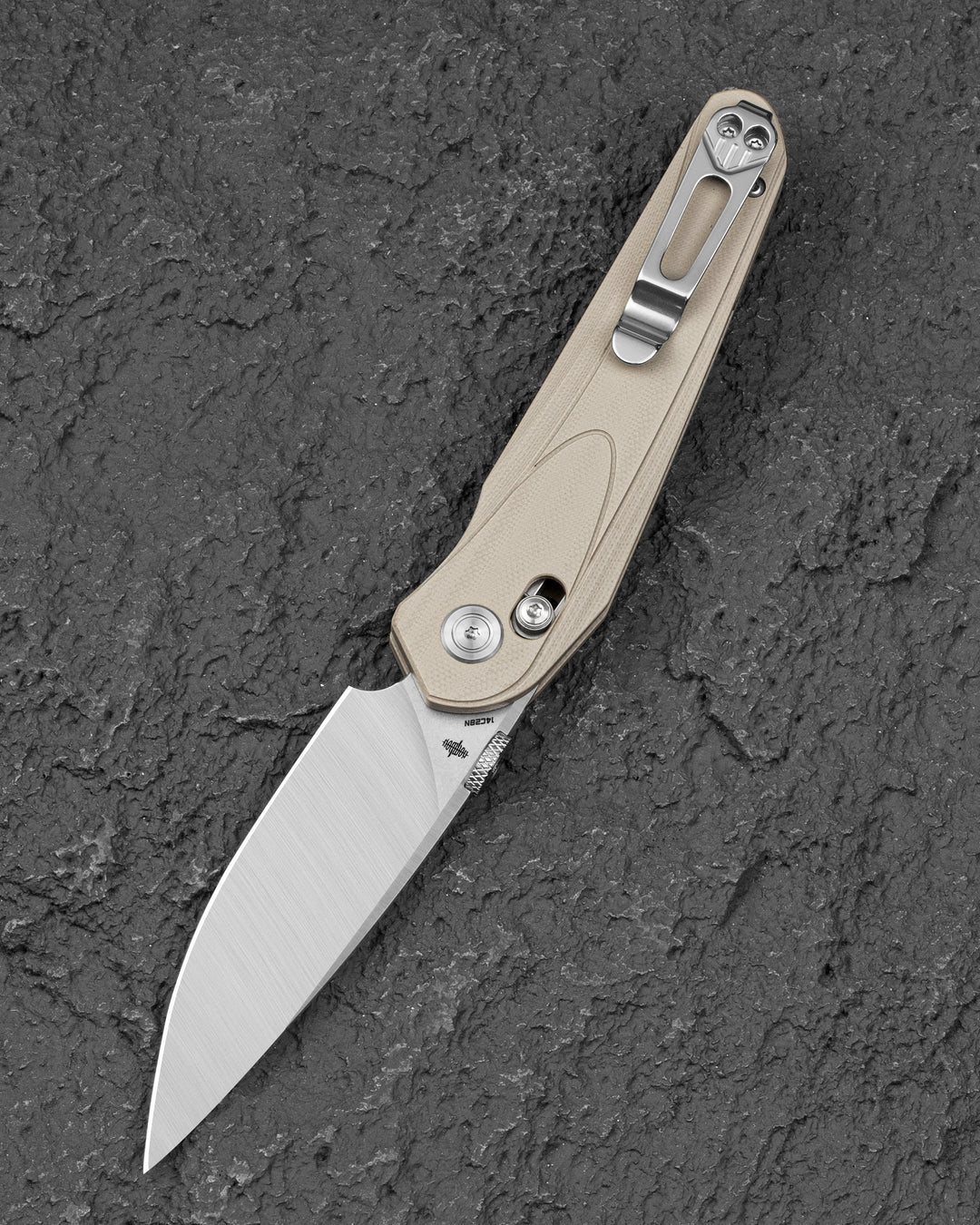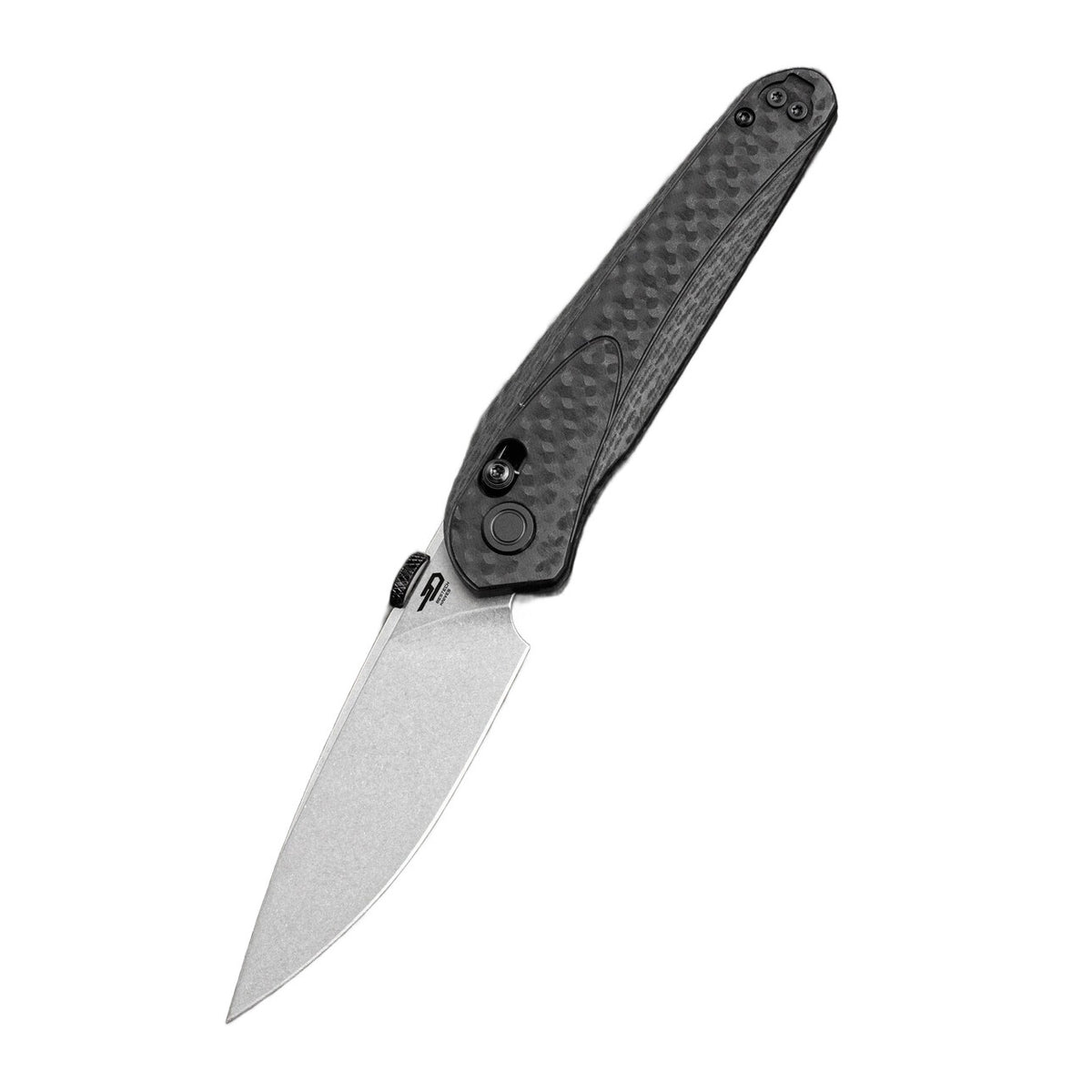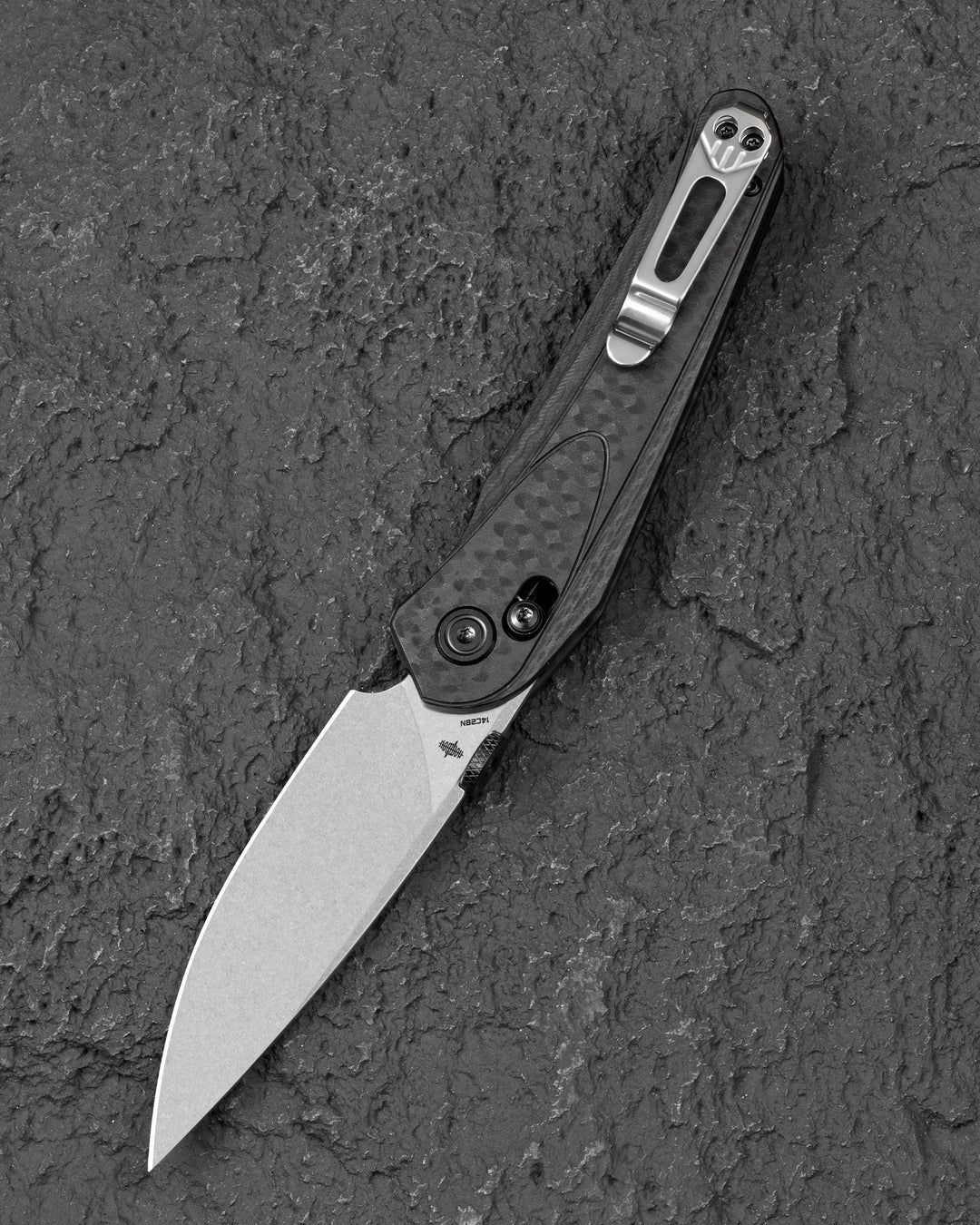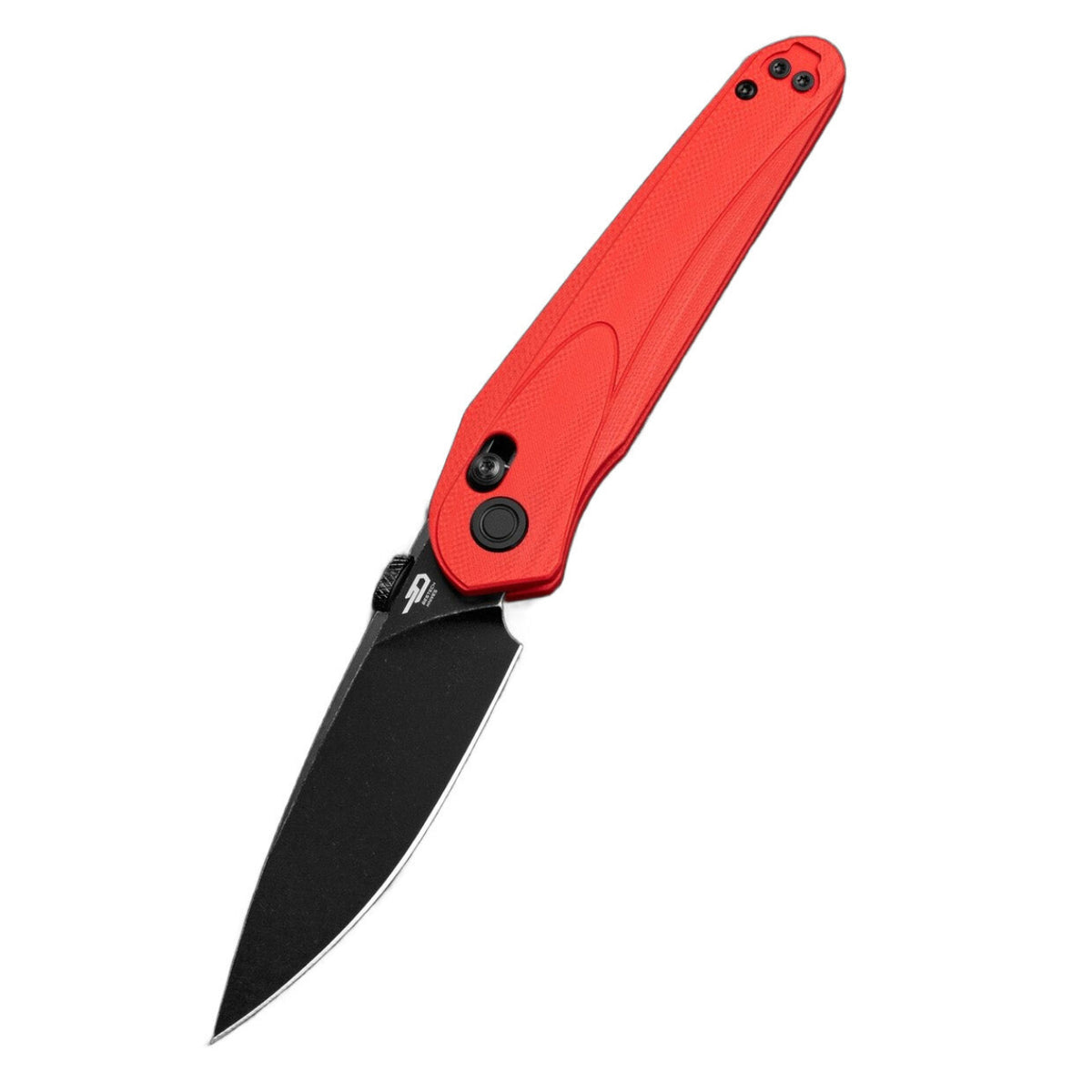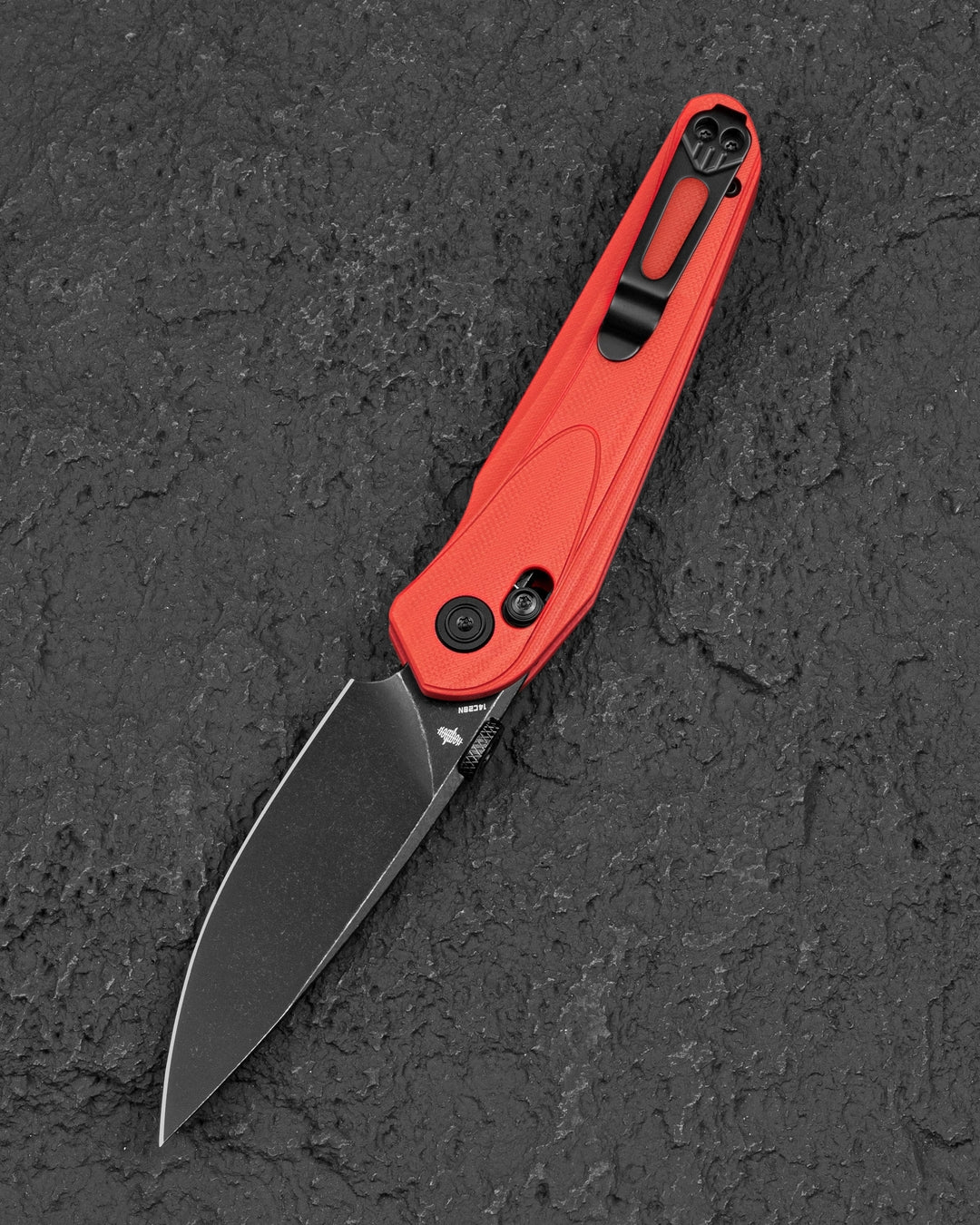

Overview / Key Features
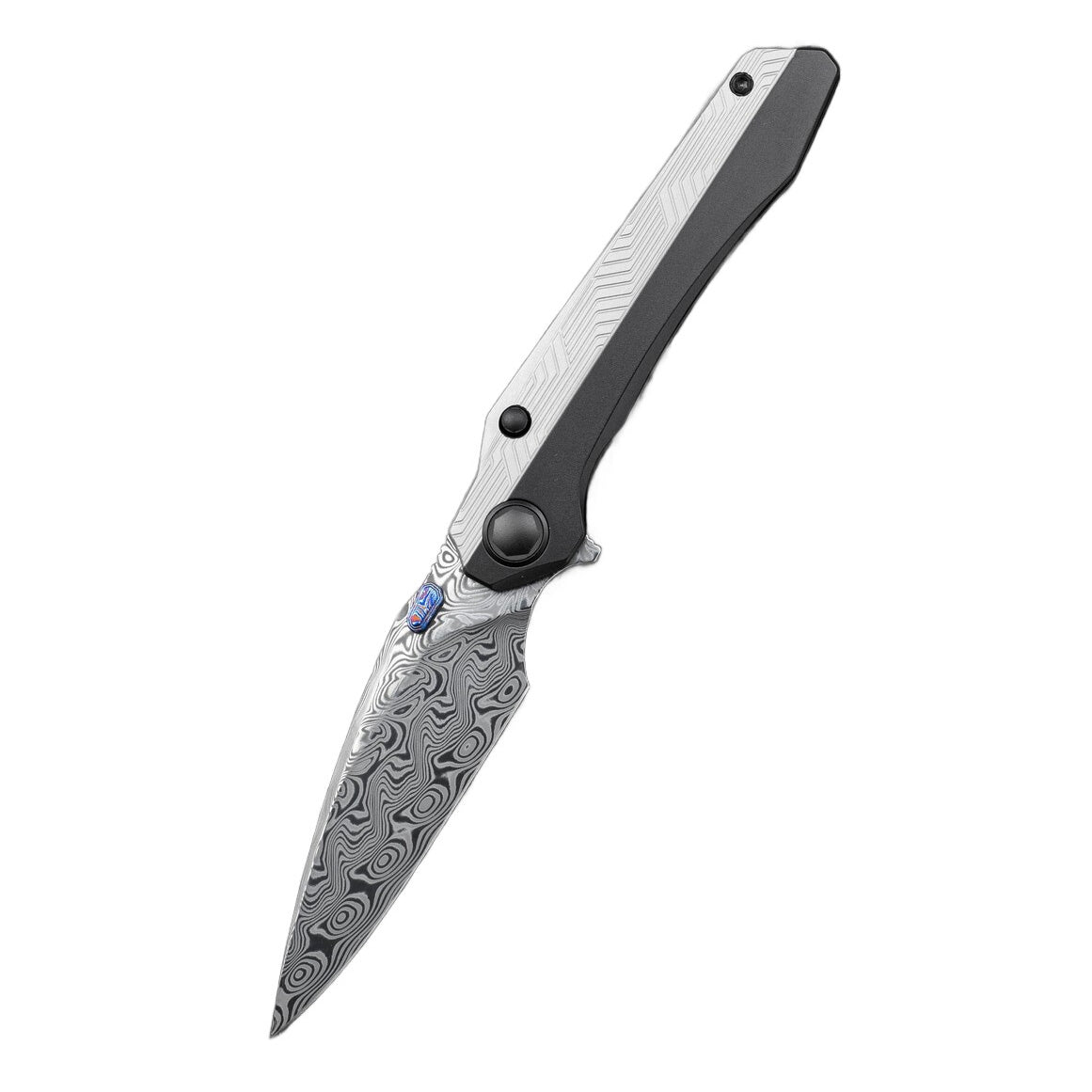
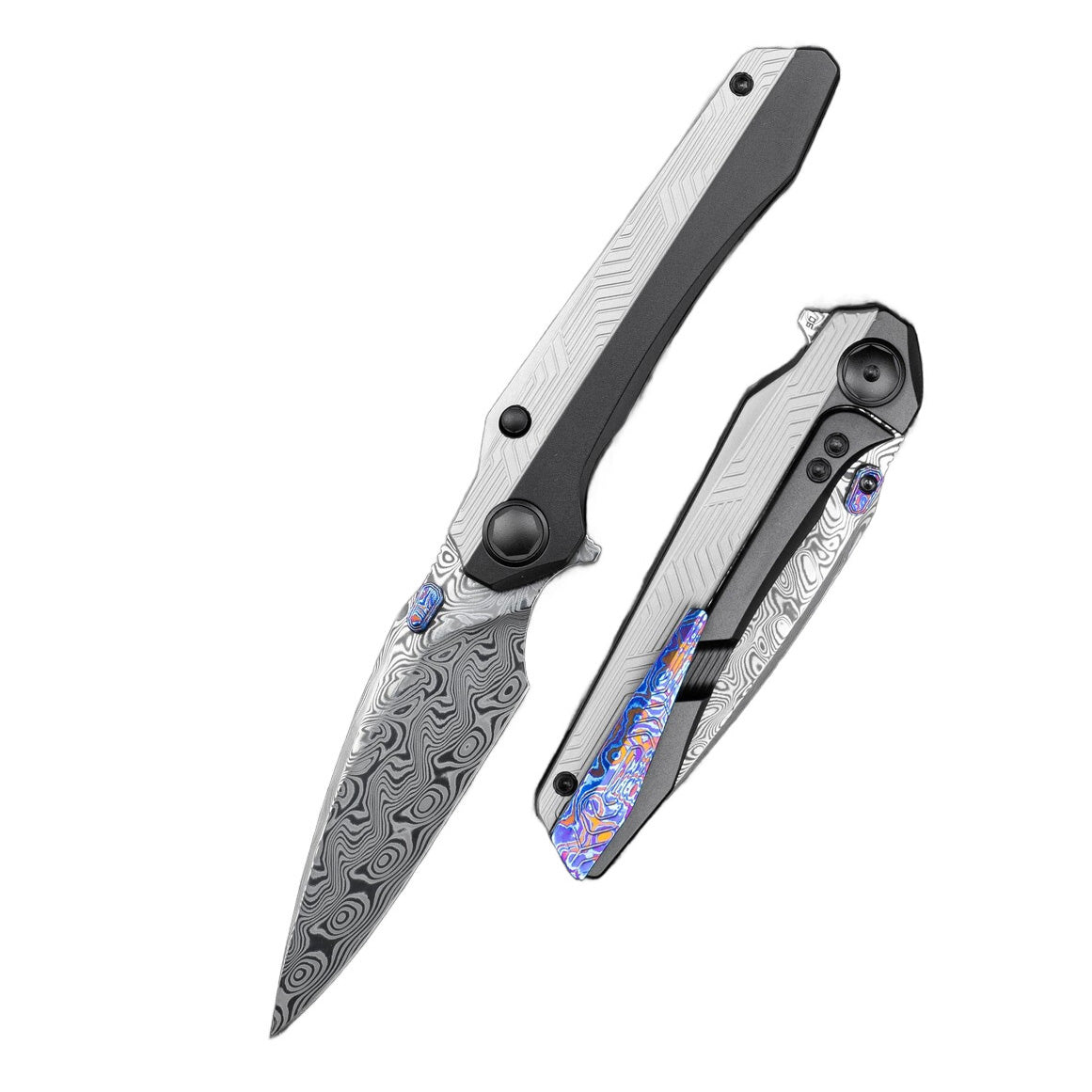
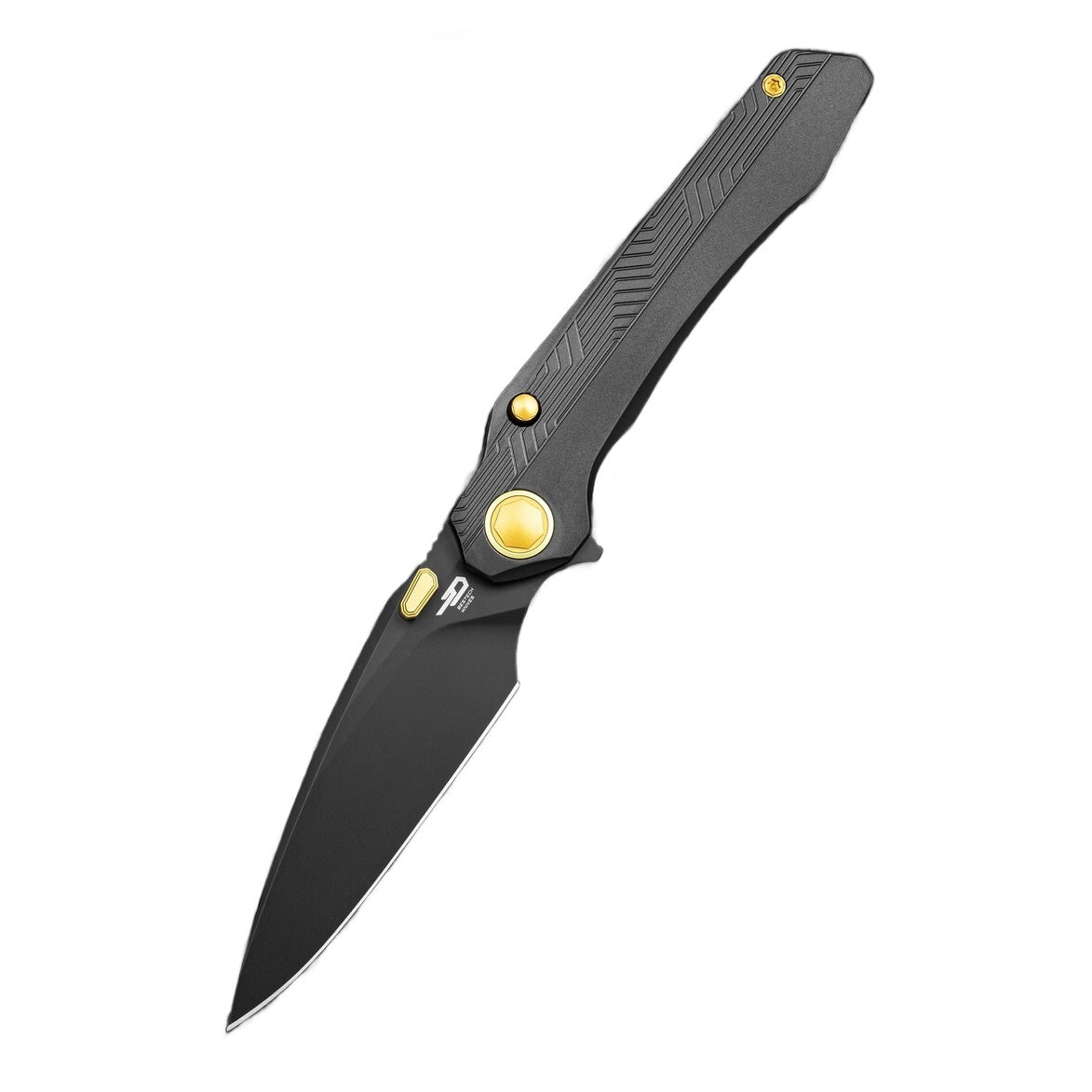
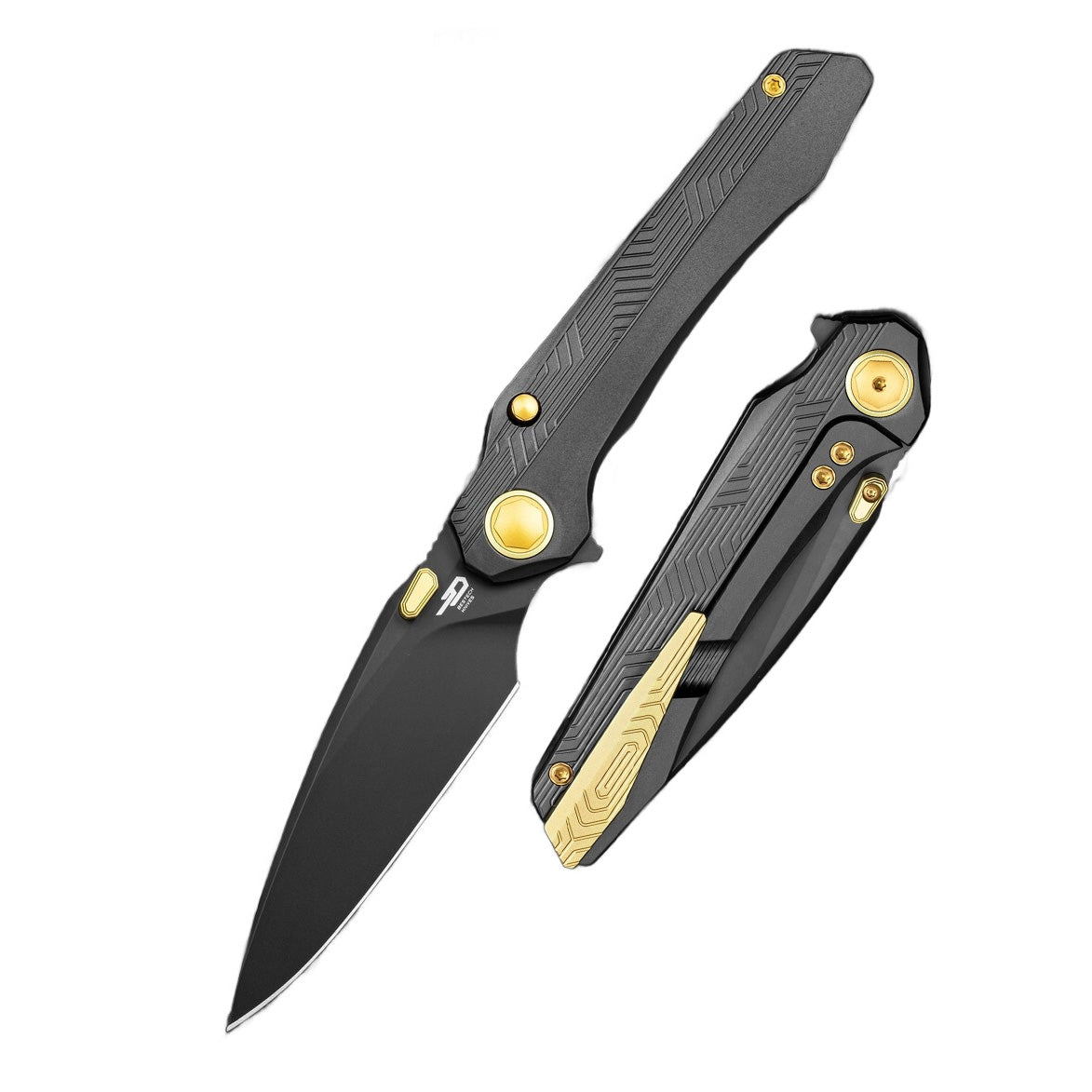
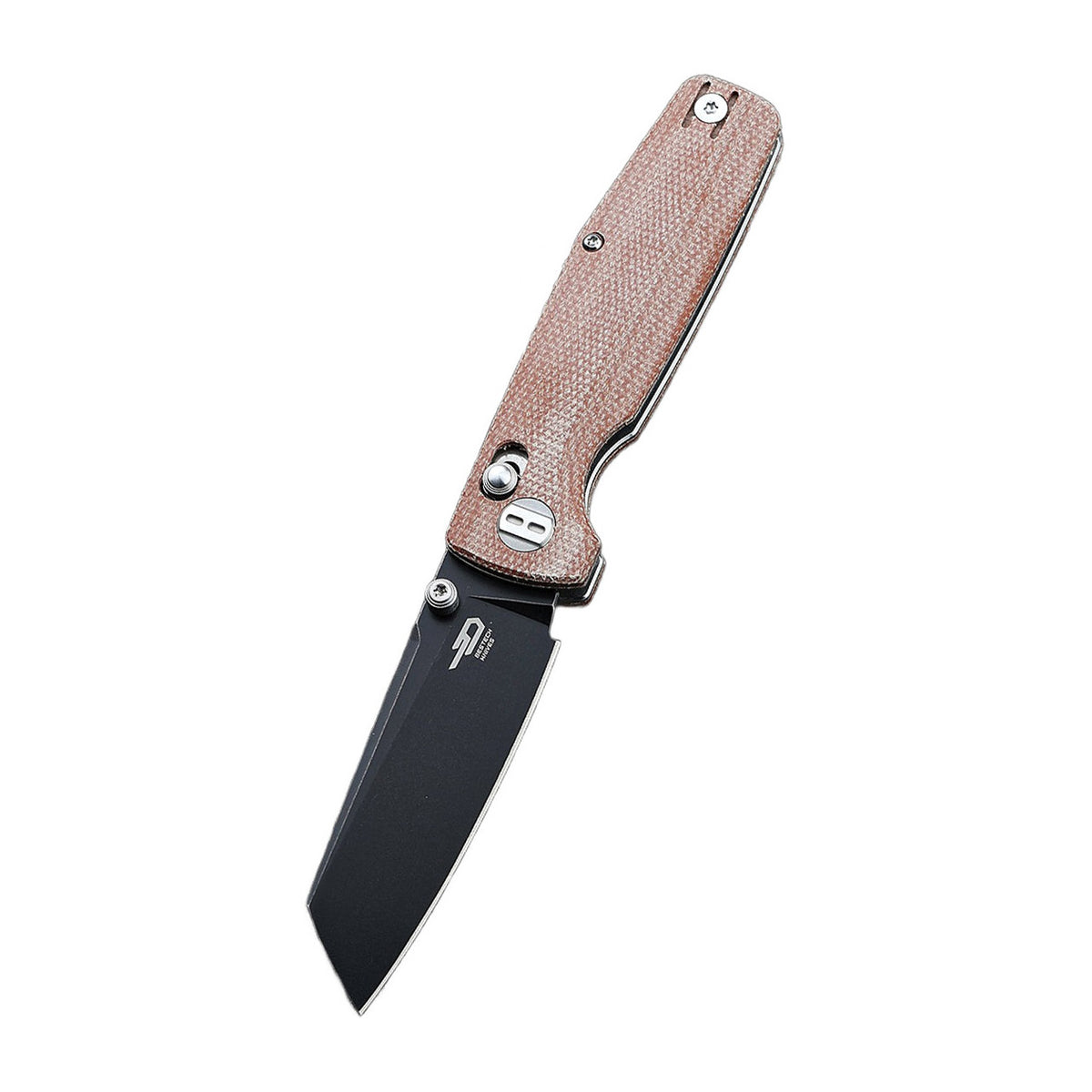
Most budget folders chase the same three blade shapes, so the Trivisa Hippo-GM earns attention just for showing up different. Its 3.4-inch blade carries a pronounced swedge along the spine, giving the profile a angular, almost dagger-like stance while keeping a full flat grind for real cutting. The blade wears a black PVD finish over 14C28N, the scales are textured Micarta, and a crossbar lock plus ceramic bearings handle the mechanics. Overall length is 7.93 inches and it weighs 5.16 ounces, the heftiest of Trivisa's current 14C28N batch at 68.65 dollars.

Build Quality & Materials
The swedge is not just decoration; it drops the tip thin enough for precise work while the main edge keeps its belly for sweeping cuts. Black PVD over the 14C28N substrate gives you a low-glare finish that shrugs off moisture and hides the scuffs a satin blade would advertise. The Micarta scales are aggressively textured out of the box, and like all Micarta they will darken and smooth where your hand rides over time. Lockup on my sample was early and tight, with the crossbar clicking home crisply.
Performance & Real-World Use
The Hippo cuts like a bigger knife than its specs imply. The swedge adds fine-point control for scoring and piercing, and the 5.16-ounce mass drives the edge through cardboard and cordage with less effort than lighter folders demand. Deployment via the bearings is quick with a wrist flick or thumb, and the crossbar release closes the blade with your fingers clear of the path. Two weeks in, the edge needed exactly one touch-up. The extra weight shows only in the pocket, where it carries more noticeably than the Gecko line.

Who Is This For?
Buy the Hippo if you want your folder to look like nothing else in the drawer without paying exotic-steel prices. It is a distinctive entry among Trivisa knives, a solid pick for fans of crossbar lock knives, and a fine example of 14C28N steel in a heavier-duty package from the folding knives range.
Final Verdict
The Hippo-GM is character first, value second, and it delivers on both. Grab the Trivisa Hippo-GM if the swedged profile caught your eye, or browse the EDC gear catalog to see how it stacks against the rest of the shelf.
The Swedge in Practice
Worth a closer look is what the swedge actually contributes during use. Because it thins the spine toward the tip, piercing tasks like scoring plastic clamshells or starting a cut in dense cardboard require noticeably less force than on a flat-spined blade of the same length. The tip also gains accuracy for detail cuts, since the reduced mass near the point changes how the knife balances in a pinch grip. The trade is honest: you give up the thumb ramp that some flat-spined folders offer for controlled push cuts, and the swedge is not sharpened, so no functional edge is gained there. Day to day, I found myself reaching for the Hippo whenever a task mixed precision and power, which is a narrower niche than a drop point fills but a real one. If your cutting leans toward slicing rather than scraping, that niche might be yours too.