If you’re serious about outdoor performance, you’ve probably heard the buzz about A2 tool steel. It’s the steel that keeps coming up in conversations among bushcrafters, hunters, and survivalists — and for good reason. A2 strikes that elusive balance between toughness, edge retention, and ease of sharpening, making it a top choice for fixed-blade knives that need to handle real-world abuse. Let’s break down what makes A2 special and highlight three exceptional knives you should know about.
What Is A2 Steel?
A2 is an air-hardening tool steel with a high carbon content that contributes significantly to its edge retention. Its hardness makes it an ideal candidate for outdoor survival knives, while the chromium carbides provide a measure of corrosion resistance — more than many other tool steels. One of the biggest reasons A2 remains popular among knife makers is its durability; it is widely considered one of the toughest tool steels available.
Compared to its cousin D2, A2 trades some wear resistance for significantly higher toughness. A2 sharpens more easily, is less demanding on your sharpening equipment, and can take a particularly fine edge. It also performs exceptionally well across extreme temperatures without breakage, a critical consideration for those operating in desert or arctic environments.
That said, A2 is not stainless steel. It will discolor and rust if left wet, but a light film of mineral oil is usually all it takes to keep a blade in great shape. For many users, the trade-off — slightly more maintenance in exchange for outstanding toughness and field-sharpenability — is well worth it.
Three Outstanding A2 Steel Knives
1. Bark River Bravo 1 – The All-Around Outdoor Powerhouse
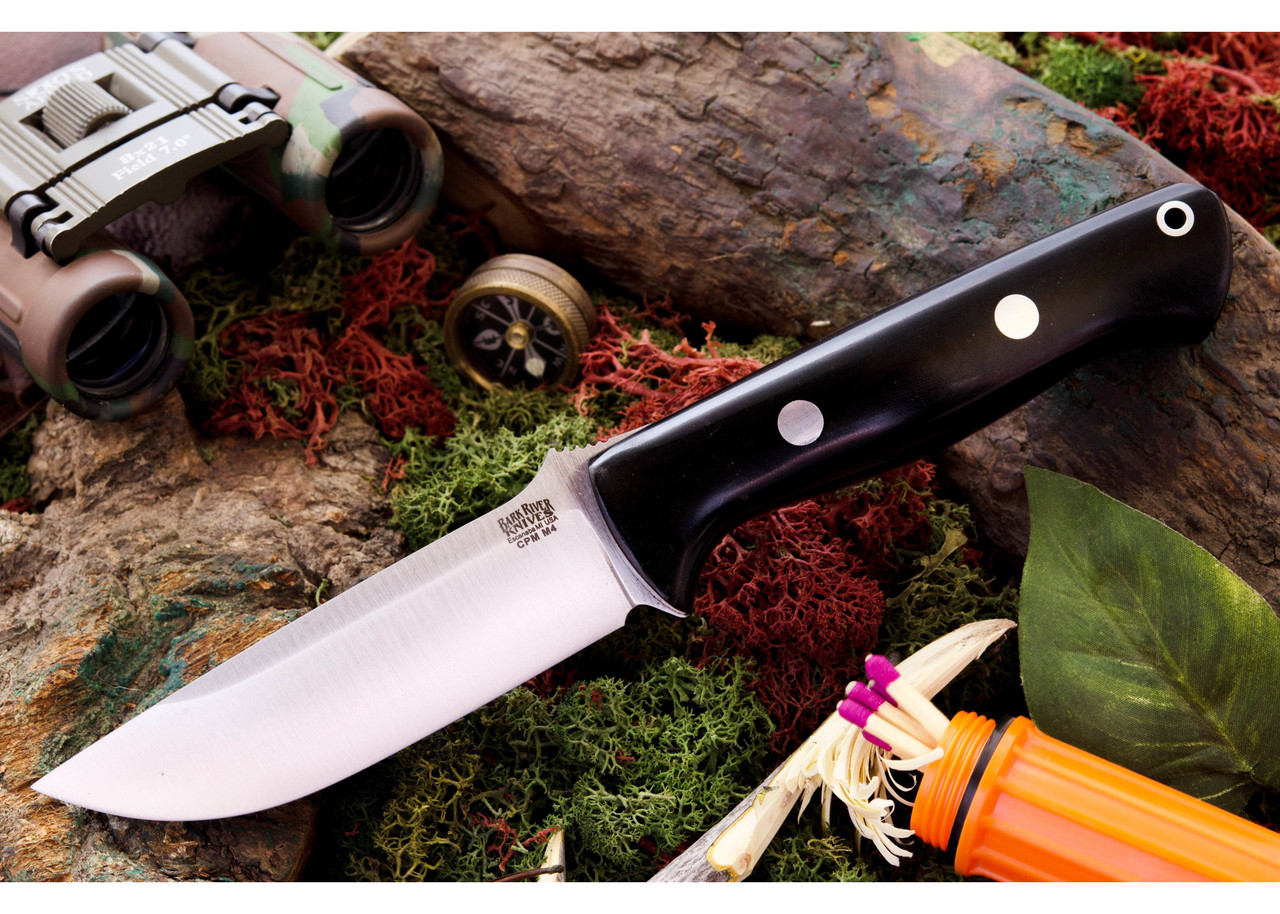
The Bark River Bravo 1 is widely regarded as a modern classic in the fixed-blade world. Built around a 4.25‑inch satin‑finish A2 tool steel drop point blade, this full‑tang knife delivers exceptional strength and balance. The blade thickness provides serious durability for heavy‑duty camp chores, while the convex grind offers a smooth, aggressive cutting geometry that excels at everything from feather‑sticking to food prep.
The handle is made from durable canvas Micarta, available in a range of colors, and often features a ramped thumb rest for enhanced control during精细 work. The Bravo 1 comes with a premium leather belt sheath, making it a go‑to choice for hunters, backpackers, and anyone who demands a knife that simply refuses to quit.
Who it’s for: Outdoor adventurers who need a single knife that can handle nearly any camp or field task with confidence.
2. ESEE Sencillo (by White River Knife & Tool) – Compact EDC Performer
The ESEE Sencillo is a slightly larger alternative to the popular Izula‑II, designed to be an ultralight yet capable everyday companion. With a 3‑inch A2 drop point blade and a full‑tang skeletonized construction, the Sencillo weighs just 3.88 ounces. The 3D contoured brown burlap Micarta handle provides a secure, ergonomic grip that fills the hand comfortably — a remarkable achievement for a knife this compact.
Manufactured by White River Knife & Tool in the USA, the Sencillo is finished with a stonewashed surface that helps hide scratches and wear from daily use. The included ambidextrous Kydex sheath offers secure retention and multiple carry options, whether around the neck or on a belt. Jeff Randall, co‑founder of ESEE, chose A2 specifically for its proven reliability in tool applications.
Who it’s for: Everyday carry enthusiasts, ultralight backpackers, and anyone who wants a tough little blade that disappears until it’s needed.
3. LT Wright Genesis – The Bushcraft Specialist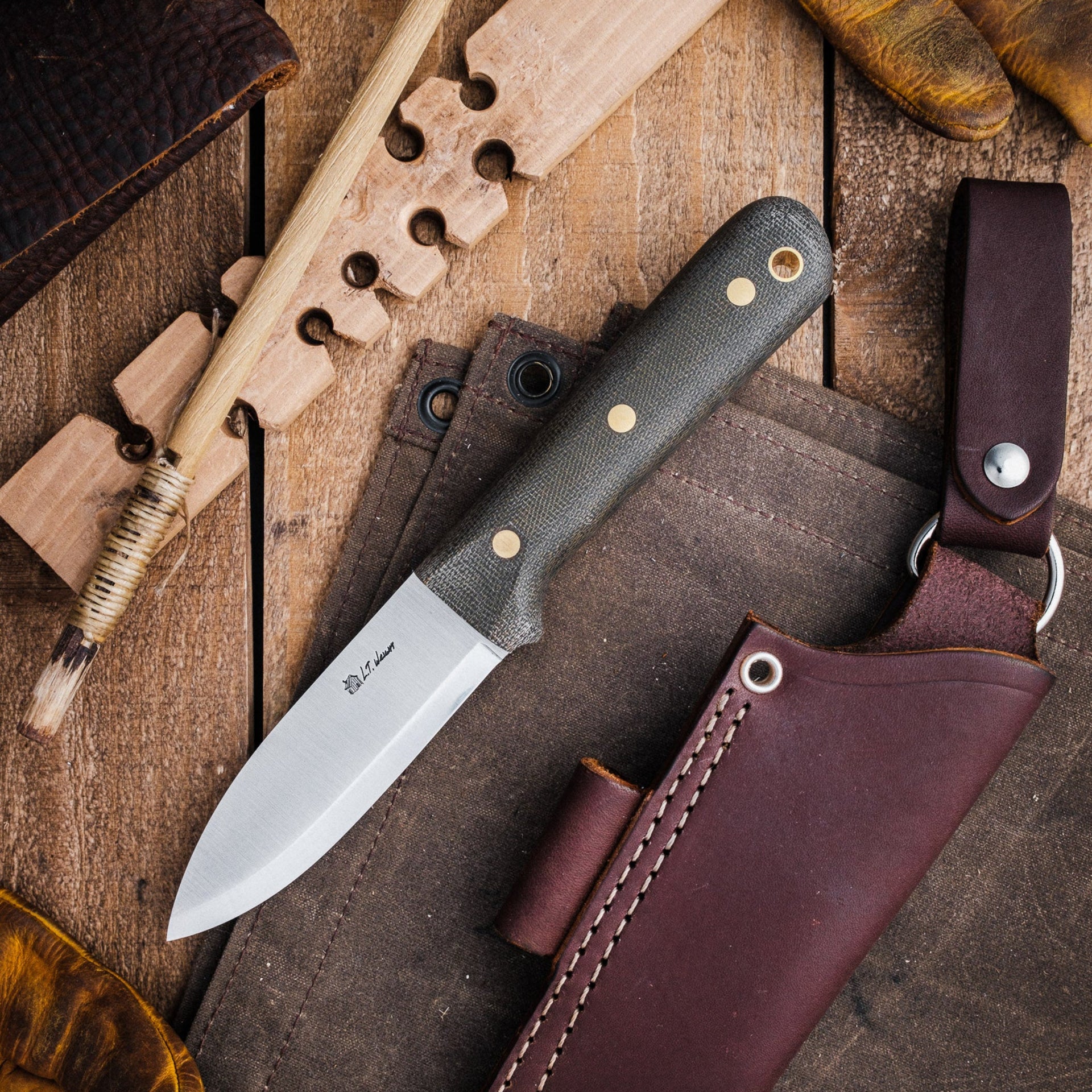
The LT Wright Genesis has earned a legendary reputation among serious outdoorsmen — and for good reason. It was the chosen knife for several contestants on the History Channel’s Alone, one of the most demanding survival shows ever filmed. The Genesis features a full‑tang A2 blade heat‑treated to 57‑59 HRC, a Rockwell range that LT Wright has refined to bring out the very best in this versatile steel.
The defining feature of the Genesis is its Scandi grind, a wedge‑shaped edge profile that produces an incredibly strong cutting edge with a thick blade cross‑section. This geometry is purpose‑built for woodworking — carving notches, batoning firewood, making feather sticks — and significantly reduces the risk of edge chipping or rolling compared to thinner grinds. Like all LT Wright knives, the Genesis also features a 90‑degree spine for striking a fire steel. Handles are available in a variety of materials including Micarta, G10, and exotic woods, each fitted with meticulous craftsmanship.
Who it’s for: Bushcraft practitioners, survivalists, and woodworkers who demand precision, durability, and a knife that feels like an extension of the hand.
Caring for Your A2 Blade
To keep an A2 knife performing at its best, a few simple habits go a long way. After each use, clean and dry the blade thoroughly. Apply a light coat of mineral oil, food‑safe oil, or a dedicated knife protectant to prevent corrosion. Avoid leaving the knife in leather sheaths for long‑term storage, as leather can retain moisture. With basic care, an A2 blade will develop a natural patina over time — a beautiful sign of honest use that actually adds a layer of corrosion resistance.
Final Thoughts
A2 steel represents a philosophy: toughness and field‑maintainability over absolute wear resistance. It’s the steel you want when you’re miles from a sharpening stone and need an edge that can be brought back with just a few passes on a strop. Whether you choose the versatile Bravo 1, the compact Sencillo, or the bushcraft‑focused Genesis, you’re getting a knife built to last — and built to work.
Check out our full collection of A2 steel knives and find the one that’s right for your next adventure.