In the world of high-performance blade steels, there are tough steels, there are wear-resistant steels, and then there is CPM-M4. Developed originally as a high-speed tool steel for industrial cutting applications, CPM-M4 has earned a cult following among knife enthusiasts who demand the absolute best in edge retention and cutting performance. If you're looking for a fixed blade that stays sharp through demanding use—whether for your EDC rotation or your go-to outdoor tools—understanding CPM-M4 will help you make a confident choice.
In this guide, we'll explore what makes CPM-M4 special, compare it to other popular steels, and showcase three exceptional fixed blade knives that put this remarkable material to work, all priced comfortably under $300.
What Is CPM-M4 Steel?
CPM-M4 is a powder metallurgy, high-speed tool steel manufactured by Crucible Industries using their patented Crucible Particle Metallurgy (CPM) process. This advanced manufacturing method atomizes molten steel into fine powder, which is then consolidated under heat and pressure. The result is a steel with a remarkably uniform carbide distribution and fine grain structure, which translates directly into enhanced toughness and grindability compared to traditional ingot metallurgy tool steels.
Key Composition and Properties
The chemical composition of CPM-M4 tells the story of its performance. It contains approximately 1.4% carbon, 4% vanadium, 5.25% molybdenum, 5.5% tungsten, and 4% chromium. This alloy formulation—particularly the high vanadium, molybdenum, and tungsten content—is what gives CPM-M4 its exceptional wear resistance and ability to hold a fine edge.
Key performance characteristics include:
-
Exceptional Edge Retention: CPM-M4 is widely regarded as one of the best production knife steels for maintaining a sharp edge over extended use. The high vanadium and tungsten content generates a matrix populated with multiple carbide types that provide outstanding wear resistance.
-
High Impact Toughness: For a steel with such impressive wear resistance, CPM-M4 maintains respectable toughness. It offers a unique combination of both high hardness and excellent toughness, defying the typical trade-off.
-
High Attainable Hardness: CPM-M4 can be heat-treated anywhere from 60 to 65 HRC, with most knife makers targeting the 59-64 HRC range for optimal knife performance. This high hardness ceiling allows blades to take and hold extremely acute edges.
-
Low Corrosion Resistance: With only around 4% chromium—far below the typical stainless threshold—CPM-M4 is not a stainless steel. Users must take care to clean and oil M4 blades to prevent rust and discoloration.
The Sharpening Trade-Off
It's important to acknowledge that CPM-M4's exceptional wear resistance comes with a practical consideration: sharpening difficulty. This is a steel that rewards patience and quality equipment. The payoff is that you won't need to sharpen it nearly as often, making it a favorite among users who value edge longevity above all else.
How CPM-M4 Compares to Other Popular Knife Steels
To truly understand where CPM-M4 fits in the knife steel landscape, here's how it stacks up against common alternatives:
CPM-M4 vs. CPM-3V
This is perhaps the most important comparison for fixed blade users. CPM-3V has better toughness but slightly less wear resistance and edge retention compared to M4. CPM-3V is also easier to machine and grind, and offers better corrosion resistance than any carbon steel. Choose 3V for maximum durability and impact resistance; choose M4 for maximum cutting longevity.
CPM-M4 vs. CPM-154
These two steels serve fundamentally different purposes. When it comes to edge retention, CPM-M4 steel outperforms 154CM steel with its superior wear resistance—CPM-M4 blades will maintain their sharpness for a longer period. 154CM offers better corrosion resistance and toughness, making it less prone to chipping or breaking under heavy use. Choose CPM-154 if corrosion resistance and ease of maintenance are priorities; choose CPM-M4 if edge retention is your top concern.
CPM-M4 vs. CPM-MagnaCut
MagnaCut represents the latest generation of powder metallurgy stainless steels, designed to deliver an optimal balance of toughness, edge retention, and true stainless corrosion resistance. CPM MagnaCut has the highest corrosion resistance among Crucible's cutlery alloys. While MagnaCut offers dramatically better corrosion resistance, M4 remains a compelling choice for users who prioritize absolute cutting longevity and are willing to maintain a non-stainless blade.
Three Exceptional CPM-M4 Fixed Blade Knives Under $300
Here are three standout fixed blades that showcase what CPM-M4 can do. Each represents a different approach to design and purpose, demonstrating this steel's remarkable versatility for EDC and outdoor tools alike.
1. Hogue Extrak — The Ultralight EDC Fixed Blade

Hogue has built its reputation on precision manufacturing and thoughtful design, and the Extrak is a perfect example of their philosophy in action. This compact fixed blade weighs in at just 1.9 ounces—making it one of the lightest CPM-M4 fixed blades on the market—yet it doesn't compromise on performance. The 3.3-inch clip point blade is made from CPM-M4 tool steel, cryogenically heat-treated to 62-64 HRC for optimal edge retention, and protected by a durable Cerakote finish. The removable solid black G10 scales feature a peel-ply texture for a secure grip in any condition. With an overall length of 7.375 inches, the Extrak is perfectly sized for everyday carry, easily disappearing on a belt or in a pack. The included injection-molded sheath comes with an UltiClip for flexible carry options, and Hogue also provides a nylon blade guard as an alternative. For anyone seeking a premium EDC fixed blade that won't weigh you down but will stay sharp through countless tasks, the Extrak is an outstanding choice.
2. Bark River Bravo EDC — The Classic Bushcraft Companion
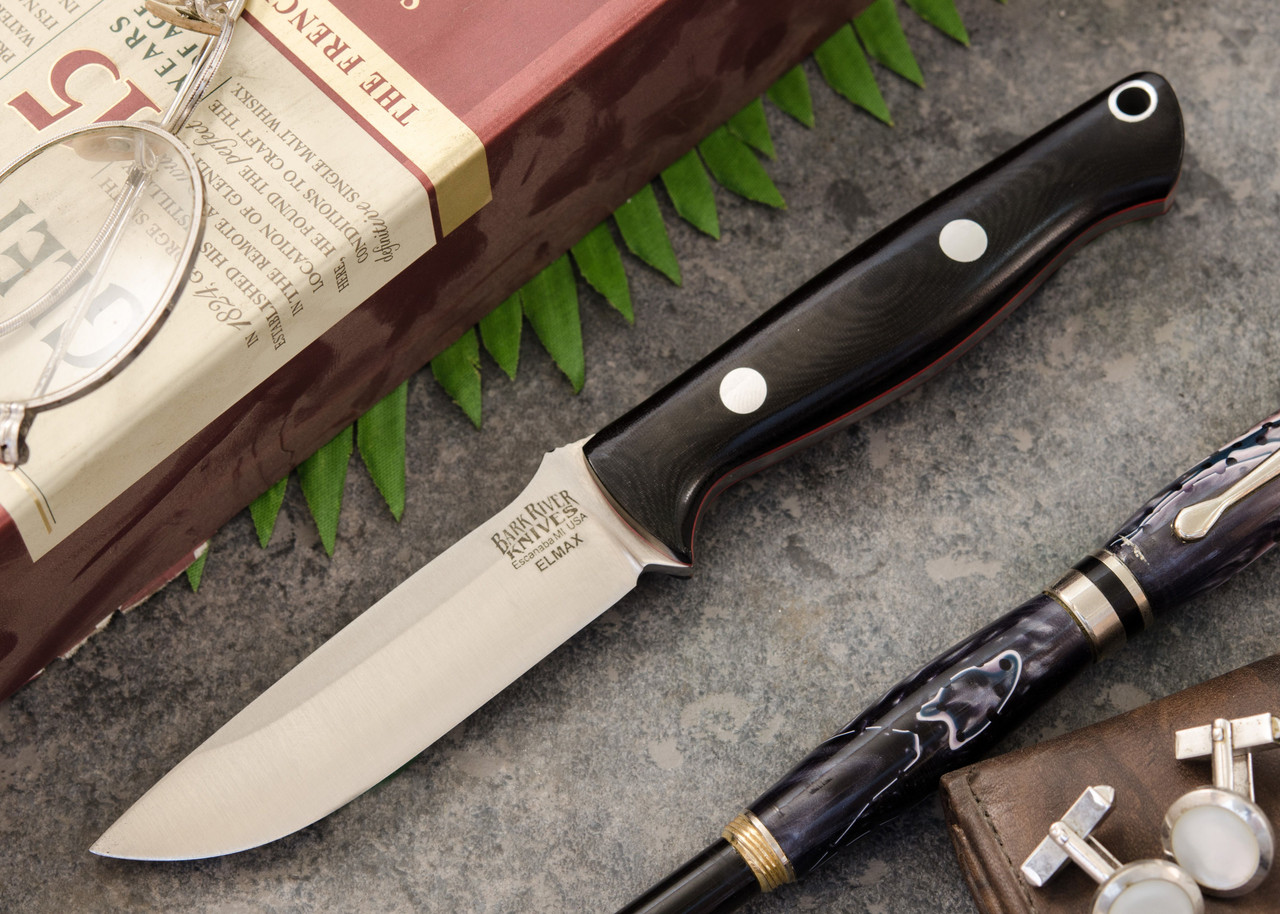
Bark River Knives has been a cornerstone of American knife manufacturing for decades, renowned for their convex grinds and impeccable fit and finish. The Bravo EDC is a scaled-down version of the popular Bravo 1 fixed blade, designed specifically for everyday carry and light outdoor use. Featuring a 3.375-inch drop point blade made from CPM-M4 tool steel with a hardness of 58-60 HRC, the Bravo EDC's convex ground edge is extremely tough and durable while maintaining fantastic edge retention. Contoured natural canvas Micarta handle scales are comfortable and secure in hand, providing a warm, natural feel that only improves with use. At just 3.5 ounces overall, this knife is perfectly balanced and barely noticeable in hand or on your belt with the included handmade vegetable-tanned leather belt sheath. The Bravo EDC excels at tackling any camping or hiking chores while remaining compact enough for daily carry. Bark River's signature convex grind delivers exceptional slicing performance and edge stability, making this knife equally adept at food prep, wood carving, or general utility tasks. For those seeking a classic, American-made fixed blade that combines timeless craftsmanship with the cutting performance of CPM-M4, the Bravo EDC is a compelling choice.
3. Toor Knives Serpent S — The Tactical Utility Blade
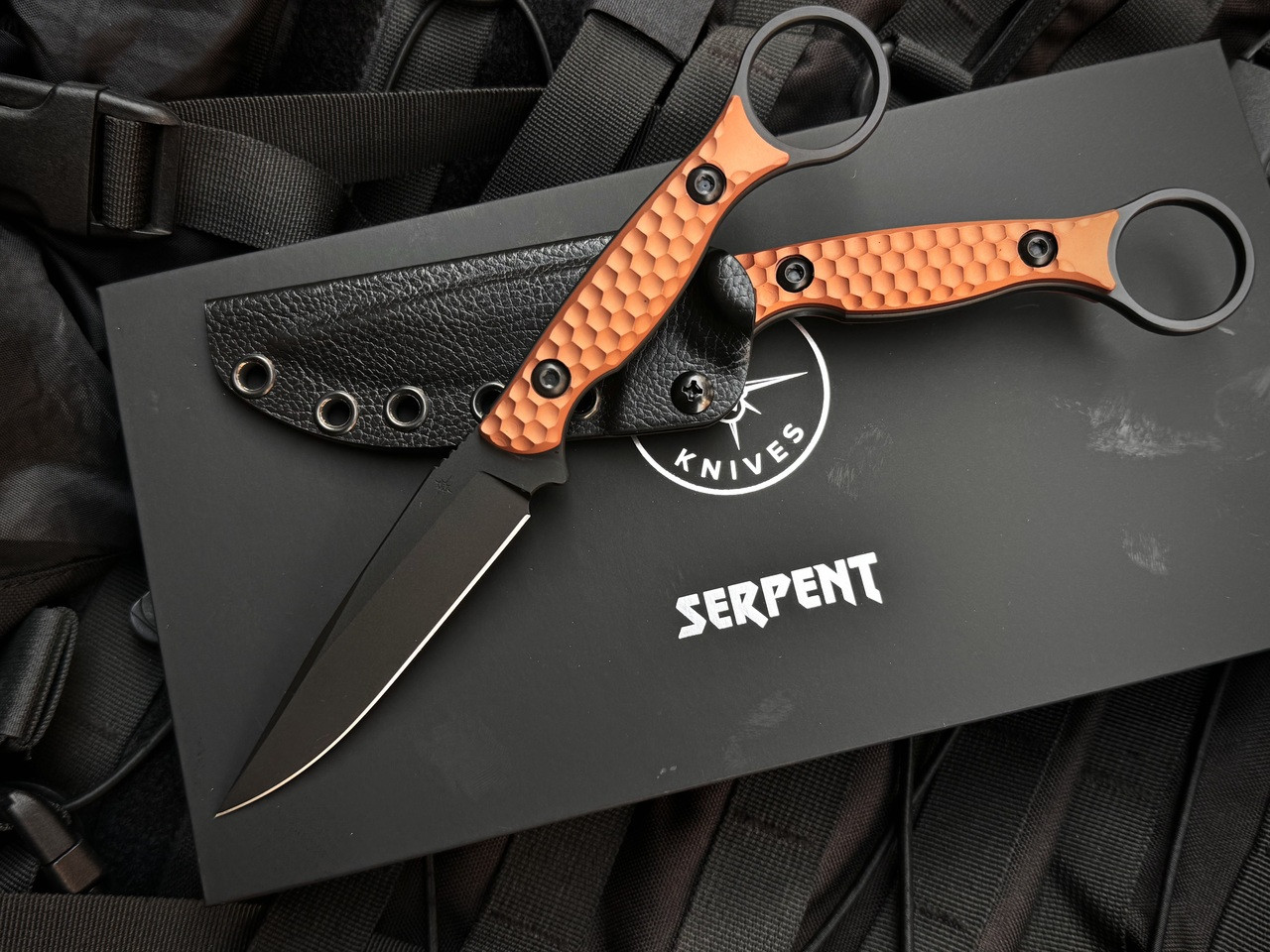
Based in San Diego, California, Toor Knives has rapidly established itself as a premier American manufacturer of hard-use fixed blades. The Serpent S, part of Toor's SOF Series, is a midsized tactical fixed blade designed for demanding applications. The 3.75-inch blade is crafted from CPM-M4 steel with a hardness of 59-61 HRC, featuring a standard drop point blade shape that excels at a wide range of cutting tasks. At 8.25 inches overall and 6.7 ounces, the Serpent S strikes an ideal balance between capability and carry convenience. The G10 handle features redesigned scale patterns for better retention and grip in demanding environments. Every Serpent S is proudly made in San Diego, California, and comes with a DuoTone Kydex sheath featuring easy retention adjustability and multiple friction offsets to eliminate blade rattle. Whether you need a reliable field companion for tactical applications or a capable utility tool for everyday tasks, the Serpent S delivers premium American craftsmanship at a competitive price point.
Comparison at a Glance
| Feature | Hogue Extrak | Bark River Bravo EDC | Toor Serpent S |
|---|---|---|---|
| Blade Length | 3.3 inches | 3.375 inches | 3.75 inches |
| Overall Length | 7.375 inches | 7.125 inches | 8.25 inches |
| Weight | 1.9 oz | 3.5 oz | 6.7 oz |
| Blade Steel | CPM-M4 (62-64 HRC) | CPM-M4 (58-60 HRC) | CPM-M4 (59-61 HRC) |
| Handle Material | Black G10 | Canvas Micarta | G10 |
| Sheath Type | Kydex with UltiClip | Leather | Kydex |
| Made In | USA | USA | USA |
| Best For | Ultralight EDC, hiking | Bushcraft, everyday carry | Tactical utility, versatile use |
Why CPM-M4 Belongs in Your EDC and Tool Collection
The resurgence of fixed blade knives in the EDC community is no accident. A quality fixed blade offers instant deployment, zero moving parts to fail, and the confidence of full-tang construction when tasks get demanding. Pair that with CPM-M4 steel—a material that combines outstanding edge retention with respectable toughness—and you have a tool that's ready for anything from daily utility tasks to backcountry adventures.
CPM-M4 is a premium powder-metallurgy high-speed tool steel that delivers an uncommon mix of very high wear resistance and excellent toughness for a high-carbon, non-stainless tool steel. The knives featured here demonstrate that CPM-M4 offers a compelling package: edge retention that rivals the best production steels available, enough toughness for demanding cutting tasks, and the ability to take and hold an extremely sharp edge. Whether you choose the ultralight convenience of the Hogue Extrak, the classic craftsmanship of the Bark River Bravo EDC, or the tactical capability of the Toor Serpent S, you're getting a tool built around a steel that serious knife users continue to seek out.
Frequently Asked Questions
Is CPM-M4 steel good for EDC?
Yes, absolutely. CPM-M4 offers exceptional edge retention, making it ideal for everyday carry fixed blades. The main consideration is that it's not stainless, so you'll need to keep the blade clean and dry, or choose a coated version, for worry-free EDC use.
How does CPM-M4 compare to CPM-3V?
CPM-M4 prioritizes edge retention and wear resistance, while CPM-3V prioritizes toughness and impact resistance. Think of M4 as the choice for maximum cutting longevity, and 3V as the choice for maximum durability in abusive conditions.
Do CPM-M4 knives require special maintenance?
Yes, they require more attention than stainless steels. With only 4% chromium, CPM-M4 will develop a patina and can rust if left wet or stored in humid conditions. After use, clean the blade and apply a light coat of oil.
Is CPM-M4 hard to sharpen?
Yes, it requires patience and quality equipment. CPM-M4's high wear resistance makes it more challenging to sharpen than many common steels. Diamond or ceramic stones are recommended. The payoff is that you won't need to sharpen it nearly as often.
Can CPM-M4 be used in wet environments?
It's possible but requires diligence. If you frequently use your knife around water or in humid conditions, consider a coated version or be prepared for regular maintenance. For truly wet environments, a stainless steel might be a better choice.
Are these knives good for beginners?
The Hogue Extrak and Bark River Bravo EDC are approachable options for newcomers due to their compact size and versatile designs. The Toor Serpent S is a slightly larger tactical tool suited for users who understand proper knife maintenance. All three are excellent knives that will serve their owners well with proper care.