In the world of knife steels, finding the perfect balance between performance, affordability, and ease of maintenance can be a challenge. Enter CTS-BD1, an American-made stainless steel from Carpenter Technology that has carved out a unique niche in the knife industry. Designed to deliver exceptional sharpenability, impressive corrosion resistance, and reliable everyday performance, CTS-BD1 is a go-to choice for knife enthusiasts who value a blade that's both user-friendly and highly capable. Whether you're building out a versatile EDC rotation or selecting dependable tools for the backcountry, understanding what makes CTS-BD1 special is the first step to making a confident choice.
In this guide, we'll explore the composition and characteristics of CTS-BD1 steel, compare it to other popular options, and showcase five of the best fixed blade knives from different brands that put this remarkable material to work.
What Is CTS-BD1 Steel?
CTS-BD1 is a vacuum-melted, high-carbon stainless steel produced by Carpenter Technology Corporation in the United States. It was developed as an American equivalent to the highly respected Japanese steel Gingami I (also known as GIN-1 or G2). Spyderco's founder, Sal Glesser, played a key role in its development, working with Carpenter to not only reproduce the chemistry of Gingami I but also "tweak" it for even greater performance.
The result is a steel with a carefully balanced chemical composition, typically featuring around 0.90% carbon and a generous 15.5-16.0% chromium. This specific blend of elements gives CTS-BD1 a unique set of properties that make it ideal for a wide range of knife applications.
Key performance characteristics include:
-
Excellent Sharpenability: CTS-BD1 is renowned for its ability to take a razor-sharp edge with minimal effort. Its fine grain structure responds beautifully to stones, making it one of the easiest premium steels to sharpen and maintain. This is a major advantage for anyone who prefers to maintain their own edges.
-
Strong Corrosion Resistance: The high chromium content ensures that CTS-BD1 offers very good corrosion resistance, making it a reliable choice for use in humid environments, around water, or for everyday carry where sweat exposure is a concern.
-
Balanced Hardness: CTS-BD1 is typically heat-treated to a working hardness of 58-60 HRC. This range provides a good balance between edge retention and toughness, making the blade durable enough for a variety of tasks.
-
Good Toughness: While not as tough as specialized tool steels, CTS-BD1 possesses decent toughness and resilience against chipping, especially when used for its intended cutting tasks.
How CTS-BD1 Compares to Other Popular Knife Steels
Understanding where CTS-BD1 fits in the broader landscape of cutlery steels helps clarify its unique value proposition.
-
CTS-BD1 vs. 8Cr13MoV & AUS-8: CTS-BD1 is often considered a step up from these popular budget steels. It is frequently compared to AUS-8 and 8Cr13MoV but is widely regarded as offering better edge retention and corrosion resistance. If you're looking for an upgrade from these entry-level steels, CTS-BD1 is an excellent option.
-
CTS-BD1 vs. VG-10: This is a classic comparison. VG-10, a premium Japanese stainless steel, generally offers slightly better edge retention than CTS-BD1. However, many users find that CTS-BD1 is easier to sharpen and still holds a very respectable edge, making it a more user-friendly choice for everyday use.
-
CTS-BD1 vs. CPM-S30V: These two steels occupy different tiers of the market. CPM-S30V is a powder metallurgy "super steel" renowned for its exceptional edge retention. CTS-BD1, while not matching S30V in sheer cutting longevity, is significantly easier to sharpen and offers a more forgiving, less brittle edge. Many users prefer CTS-BD1 for daily carry simply because it's so easy to maintain.
-
CTS-BD1 vs. CTS-BD1N: The "N" stands for nitrogen. CTS-BD1N is an evolution of the original BD1 formula, with the addition of nitrogen creating a finer grain structure that allows for higher achievable hardness (up to 63 HRC) and even better corrosion resistance. While BD1N is technically a higher-performing steel, the original CTS-BD1 remains a fantastic, well-balanced option that is often found at a more accessible price point.
Five Exceptional CTS-BD1 Fixed Blade Knives Worth Your Attention
Here are five standout fixed blade knives from different brands that showcase the remarkable versatility of CTS-BD1. Each one is a fantastic example of how this user-friendly steel can be applied to a wide range of designs and use cases.
1. Spyderco Ronin 2: The Tactical Wharncliffe Specialist

The Spyderco Ronin 2 is a purpose-built fixed blade designed for tactical applications and personal defense. Its defining feature is a 4.08-inch Wharncliffe-style blade crafted from CTS-BD1 steel, meticulously hollow-ground to create a perfectly straight cutting edge that delivers full power all the way to the tip. The blade's skeletonized full tang is capped with thin, textured black G-10 scales, ensuring a secure grip while maintaining a discreet, lightweight profile at under 4 ounces. It comes with a custom-molded Boltaron sheath and a versatile G-Clip for multiple carry options, including inside the waistband. This knife is ideal for those who value cutting efficiency and reliable performance in a defensive role.
2. Boatright Bladeworks Esker-S: The Compact EDC Workhorse

The Boatright Bladeworks Esker-S is a handmade, compact fixed blade that punches far above its weight class. Designed as a do-it-all EDC blade, it features a versatile 2.4-inch clip-point blade made from CTS-BD1 steel. While compact, its excellent handle-to-blade ratio provides a surprising amount of cutting power. The lightweight green canvas Micarta scales offer superb grip and are virtually indestructible. Weighing just 1.7 ounces and with an overall length of 5.3 inches, the Esker-S is a true workhorse that's easy to carry anywhere and everywhere. It comes with a custom Kydex sheath and is proudly handmade in the USA.
3. Spyderco Pygmy Warrior: The Ergonomic Combat Blade
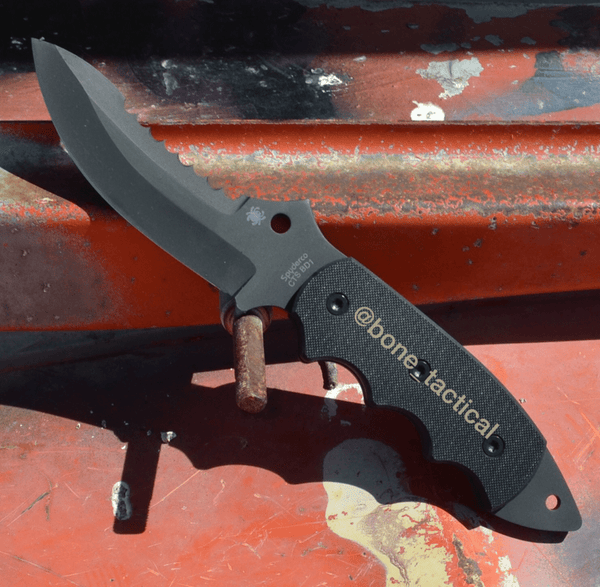
Designed by combat veteran and martial artist Bob Taylor, the Spyderco Pygmy Warrior is a unique fixed blade built for close-quarters situations. The blade is precision machined from CTS-BD1 steel and features a non-reflective Diamond-Like Carbon (DLC) coating for enhanced durability and reduced visibility. The blade's distinctive curved profile is carefully calculated to match the natural arc of a person's arm, optimizing energy transfer for a clean slice every time. The handle is constructed from two G-10 scales that can be adjusted with included spacers, allowing the user to customize the grip thickness to their hand. A true modern combat tool, the Pygmy Warrior comes with a Boltaron sheath and a multi-position G-Clip for versatile carry.
4. Spyderco Reverse: The Innovative Reversible Design

The Spyderco Reverse is a testament to innovative knife design, born from a collaboration between two renowned personal-defense instructors, Craig Douglas and Michael Janich. Its defining feature is a unique reversible handle that allows the blade's edge to be oriented in two different ways to suit different tactical preferences, all while maintaining excellent ergonomics. The 3.47-inch modified hawkbill blade is precision machined from CTS-BD1 stainless steel and features a full-flat grind for an aggressive, low-drag cutting geometry. The knife includes a custom-molded Boltaron sheath that is specially designed to fit securely with both handle configurations. For those who appreciate thoughtful, user-configurable tools, the Reverse is a standout choice.
5. Spyderco Mule Team CTS-BD1: The DIY Performance Platform
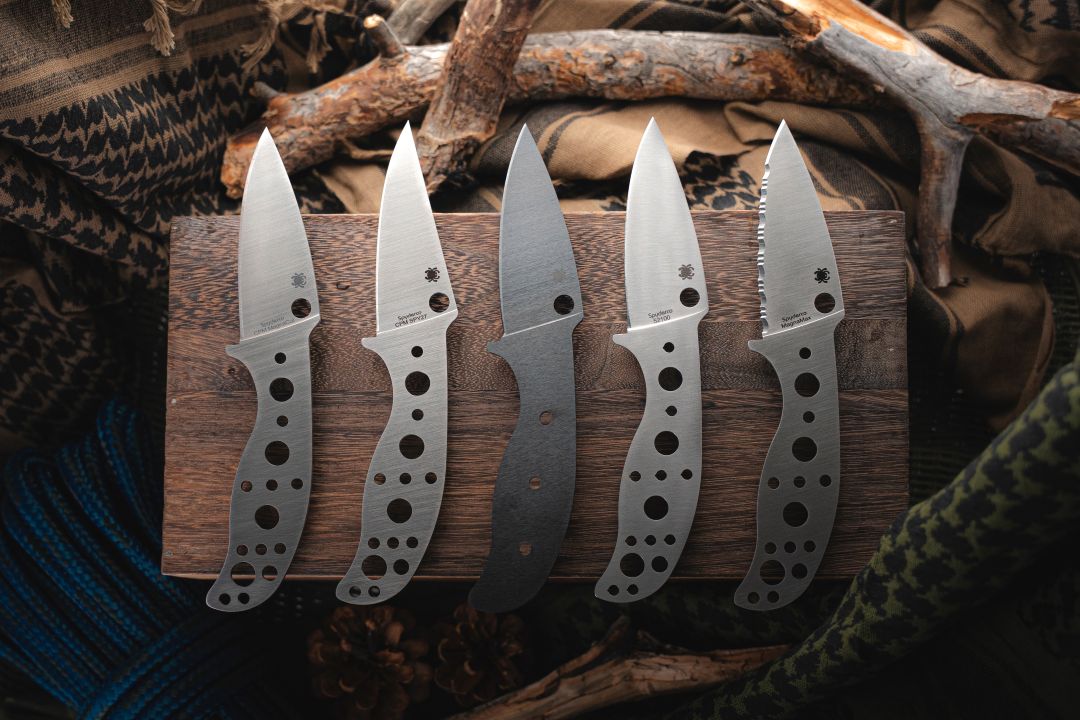
Spyderco's Mule Team series offers knife enthusiasts a unique opportunity: a high-performance blade blank, ready for you to finish and customize. The CTS-BD1 Mule Team blade features a 3.5-inch plain-edged blade, sold without handle scales or a sheath, putting the focus squarely on the steel itself. This "DIY" approach makes it the perfect platform for those who want to experience the excellent sharpenability and edge-taking ability of CTS-BD1 while creating a completely personalized tool. With an overall length of 7.75 inches, it's an excellent size for a camp or general-use knife. For makers and tinkerers, the Mule Team is an affordable and rewarding way to build a custom fixed blade around a top-tier American steel.
Why CTS-BD1 Belongs in Your EDC and Tool Collection
The fixed blade knife is a cornerstone of any serious EDC or outdoor gear collection, valued for its strength, reliability, and instant deployment. Pairing this format with a blade of CTS-BD1 steel gives you a tool that is exceptionally easy to sharpen, highly resistant to corrosion, and holds a very respectable edge.
In a market often focused solely on maximum edge retention, CTS-BD1 offers a refreshing and practical alternative. It's a user-friendly steel that takes the frustration out of maintenance and encourages you to actually use your knife without worry. As users and experts alike have noted, it's a "great all-around steel" that "likes to be sharpened" and is perfect for a "mundane user".
The knives featured in this guide—from Spyderco's tactical Ronin 2 and innovative Reverse, to the compact Esker-S and the customizable Mule Team—demonstrate the remarkable versatility of this premium American steel. Each one is a testament to the fact that you don't need an exotic super-steel to have a high-performing, reliable, and enjoyable tool in your pocket or on your belt.
Frequently Asked Questions
Is CTS-BD1 steel good for EDC?
Absolutely. Its outstanding sharpenability, respectable edge retention, and strong corrosion resistance make it an ideal steel for an everyday carry tool. It's forgiving and easy to maintain, even for beginners.
How does CTS-BD1 compare to 8Cr13MoV?
CTS-BD1 is widely considered to be a step above 8Cr13MoV. It offers better corrosion resistance and is easier to sharpen, with slightly improved edge retention, making it a great upgrade for budget-conscious users.
Do CTS-BD1 knives require special maintenance?
No. The high chromium content gives it excellent corrosion resistance. Basic care—wiping the blade clean and dry after use—is typically all that's required to keep it in top condition.
Are CTS-BD1 knives hard to sharpen?
On the contrary, they are some of the easiest knives to sharpen. Their fine grain structure responds very well to ceramic and diamond stones, making them a favorite among users who prefer to maintain their own edges.
Can CTS-BD1 be used for hard-use tasks?
It can handle a wide range of everyday cutting tasks with ease. While it's not designed for extreme impacts like heavy batoning or prying, its decent toughness makes it perfectly suitable for general utility, food prep, and light outdoor chores.
How does CTS-BD1N differ from CTS-BD1?
CTS-BD1N is a nitrogen-enhanced version of CTS-BD1. This addition allows for a higher achievable hardness (up to 63 HRC) and even better corrosion resistance. While BD1N is technically a higher-performing steel, CTS-BD1 remains an excellent, well-balanced option.