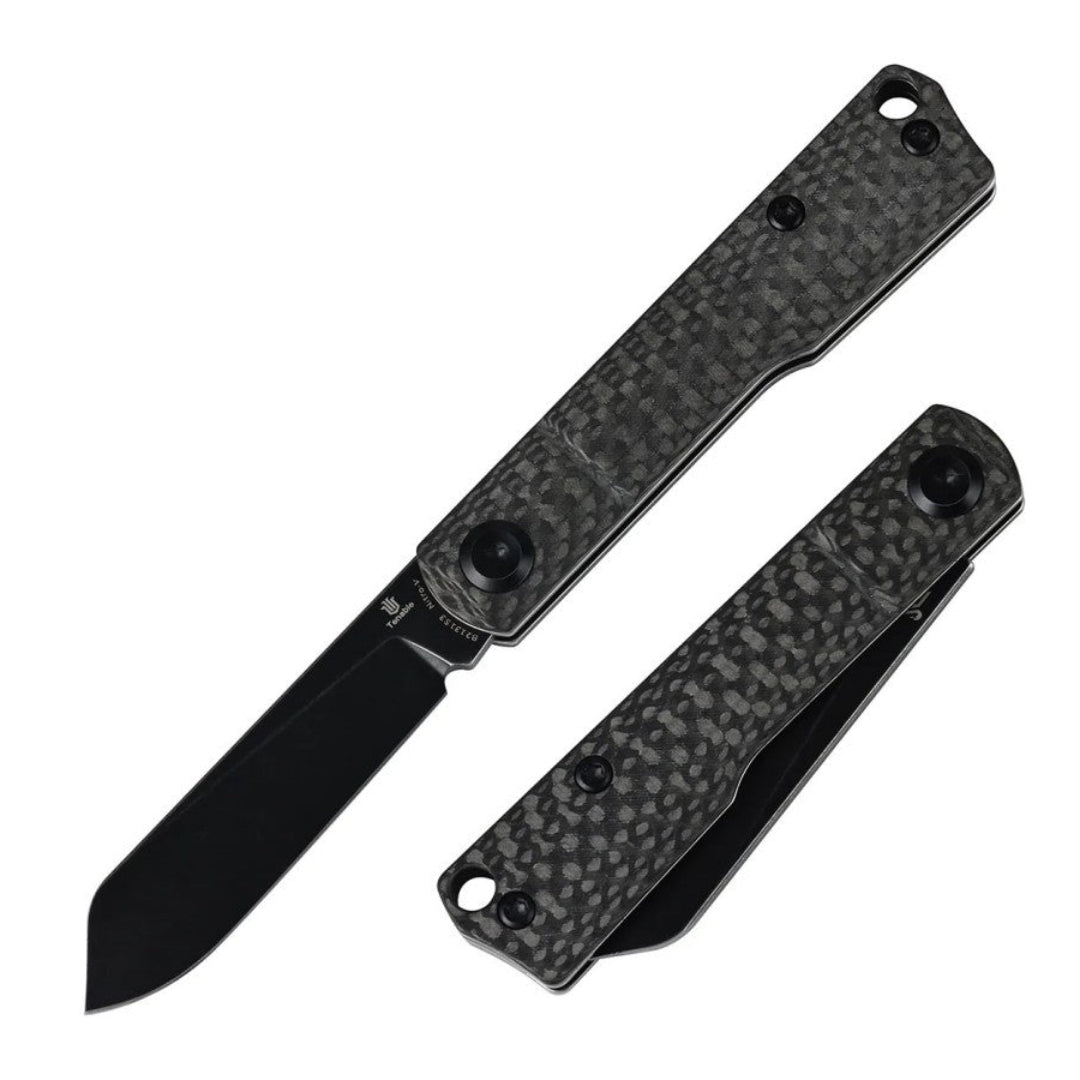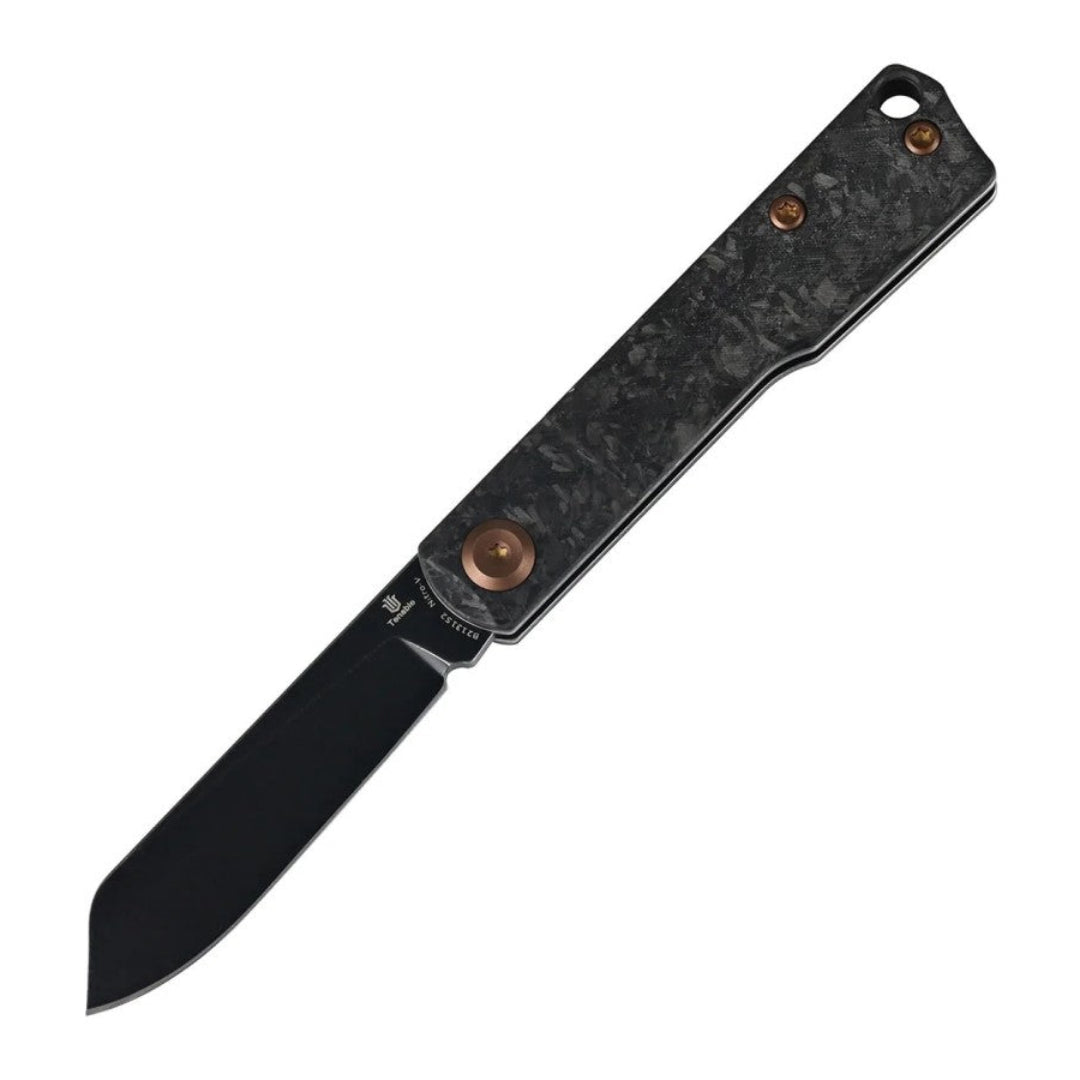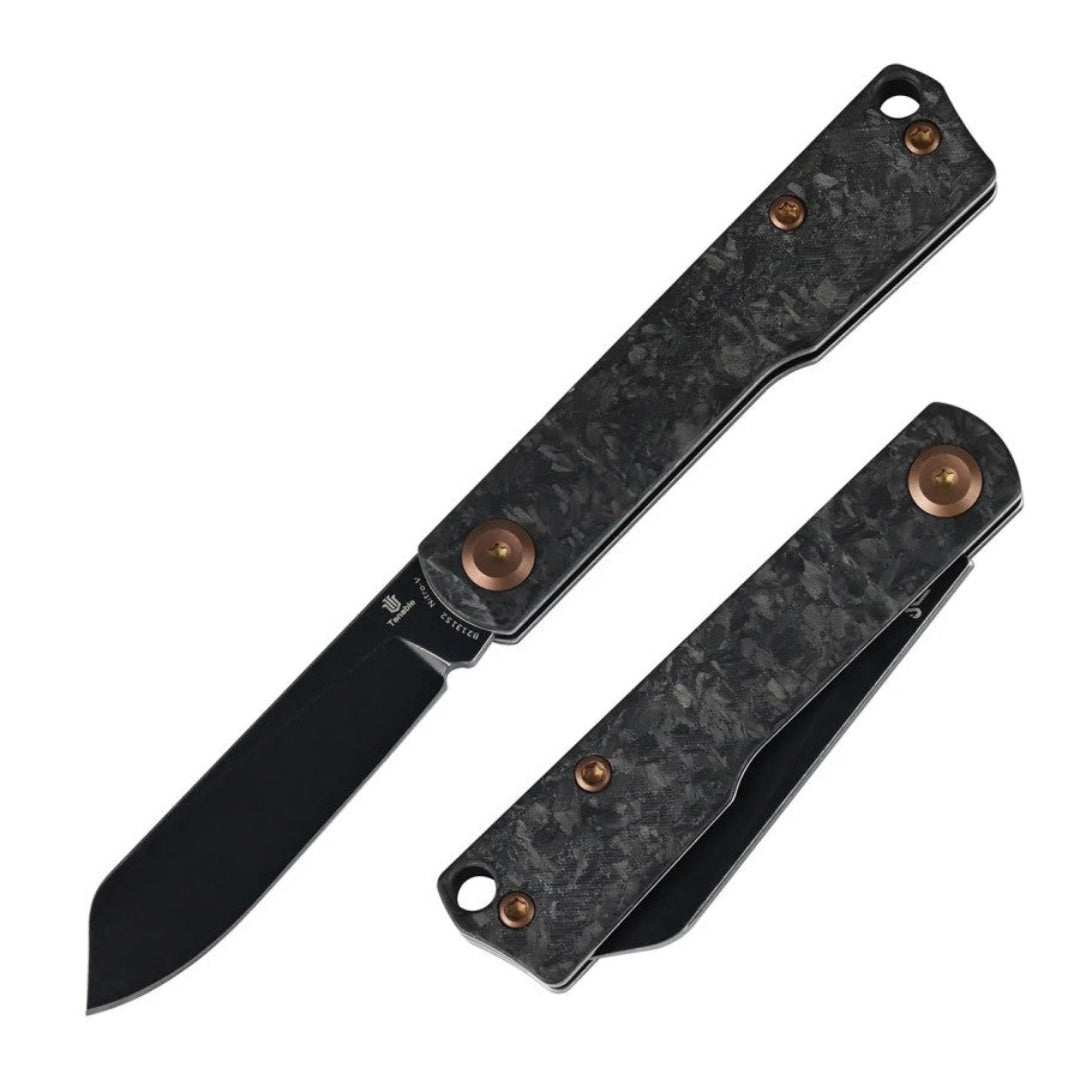


Overview & First Impressions
A folding knife that has drifted off-center is telling you something. When the blade sits visibly closer to one handle scale, or rubs the liner as it closes, the cause is almost never a bent blade. It is nearly always an uneven pivot, a body screw that has developed a torque imbalance, or a scale that has shifted because a screw was tightened unevenly at the factory. Understanding the cause matters, because the fix for each is different, and a heavy hand on the pivot screw can make the problem worse instead of better.
Materials & Construction
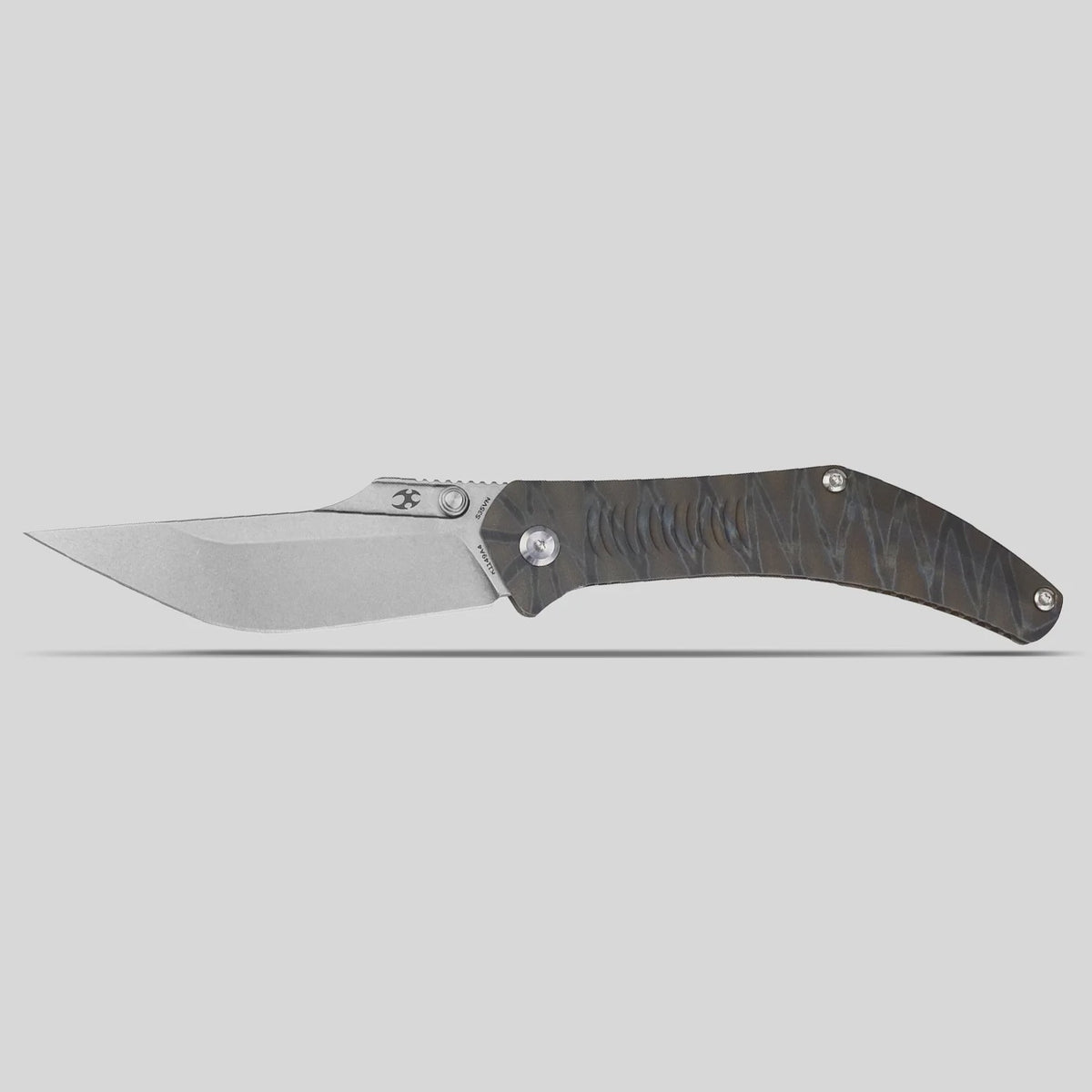
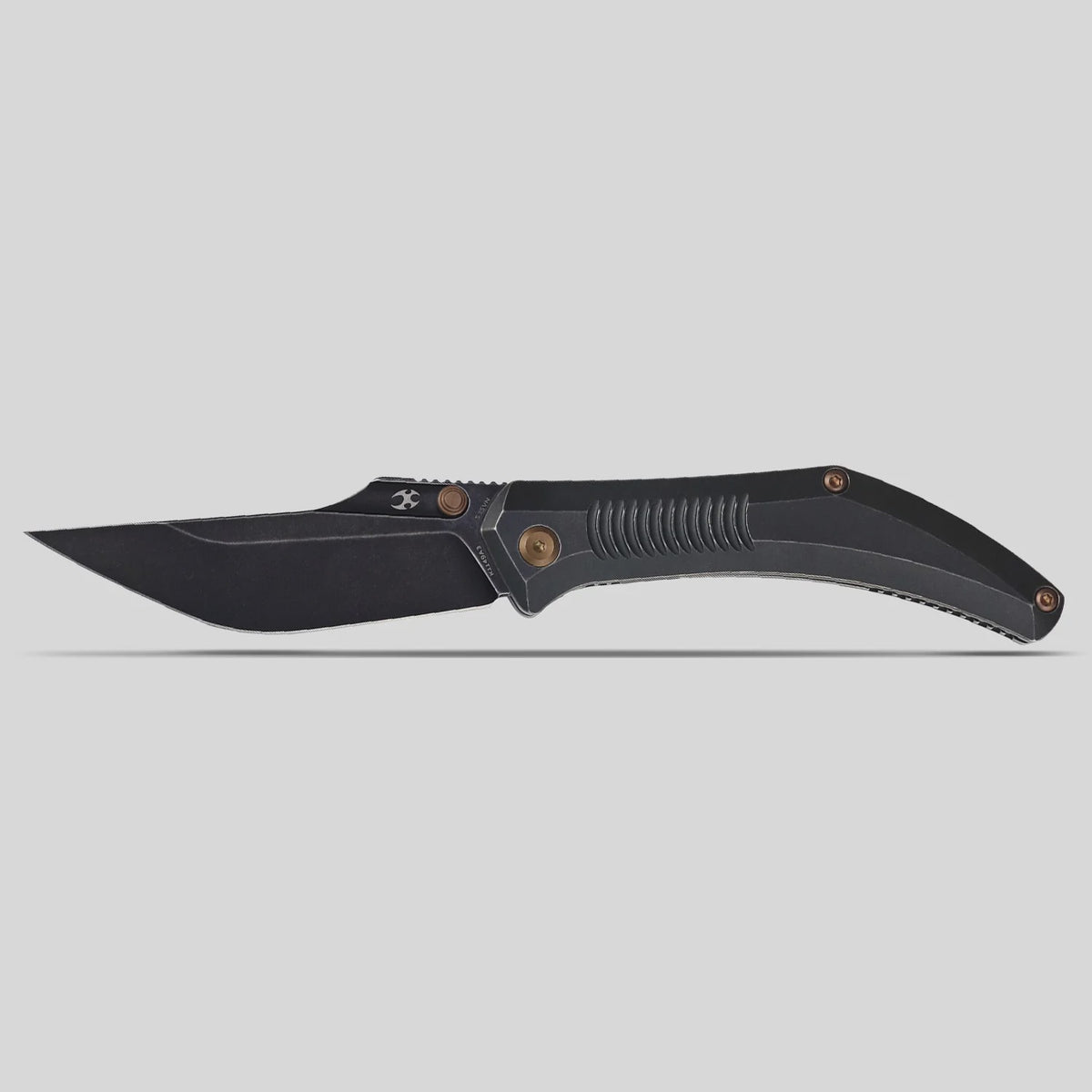
The pivot is the most mechanically important joint on any folding knife, and on a high-end model like the Kansept Quasar K1099V11 it is a precision assembly. That knife combines a CPM-20CV blade with a titanium and carbon fiber handle and a crossbar lock. CPM-20CV is a particle-metallurgy stainless with excellent wear resistance, and its hardness means the pivot has to be set correctly, since a blade that locks up tightly against an off-axis pivot will mark the tang. Titanium handles add a subtler complication: titanium screws into a titanium handle can seize if they are overtightened dry.

Design & Details
Diagnose before adjusting. Open the blade halfway and look down the spine: if the blade sits to one side evenly along its length, the pivot is off-center and needs to be loosened slightly and re-seated. If the gap only appears near the tip, a body screw at the rear of the handle is over-torqued and is pulling the frame. If the blade rubs only when it is nearly closed, the detent or stop pin is the culprit rather than the pivot. Adjust one thing at a time and check the result.
Real-World Use
A simple maintenance sequence keeps a folder centered for years. Loosen every screw a quarter turn, seat the pivot so the blade is centered, then tighten the body screws in a cross pattern - front left, rear right, front right, rear left - rather than going around the frame in a circle. Use a hollow-ground or quality driver that matches the screw head exactly, because a slip costs you a chewed fastener. A bright EdcMall light held behind the blade shows a centering error long before the eye notices it.

Ownership Notes
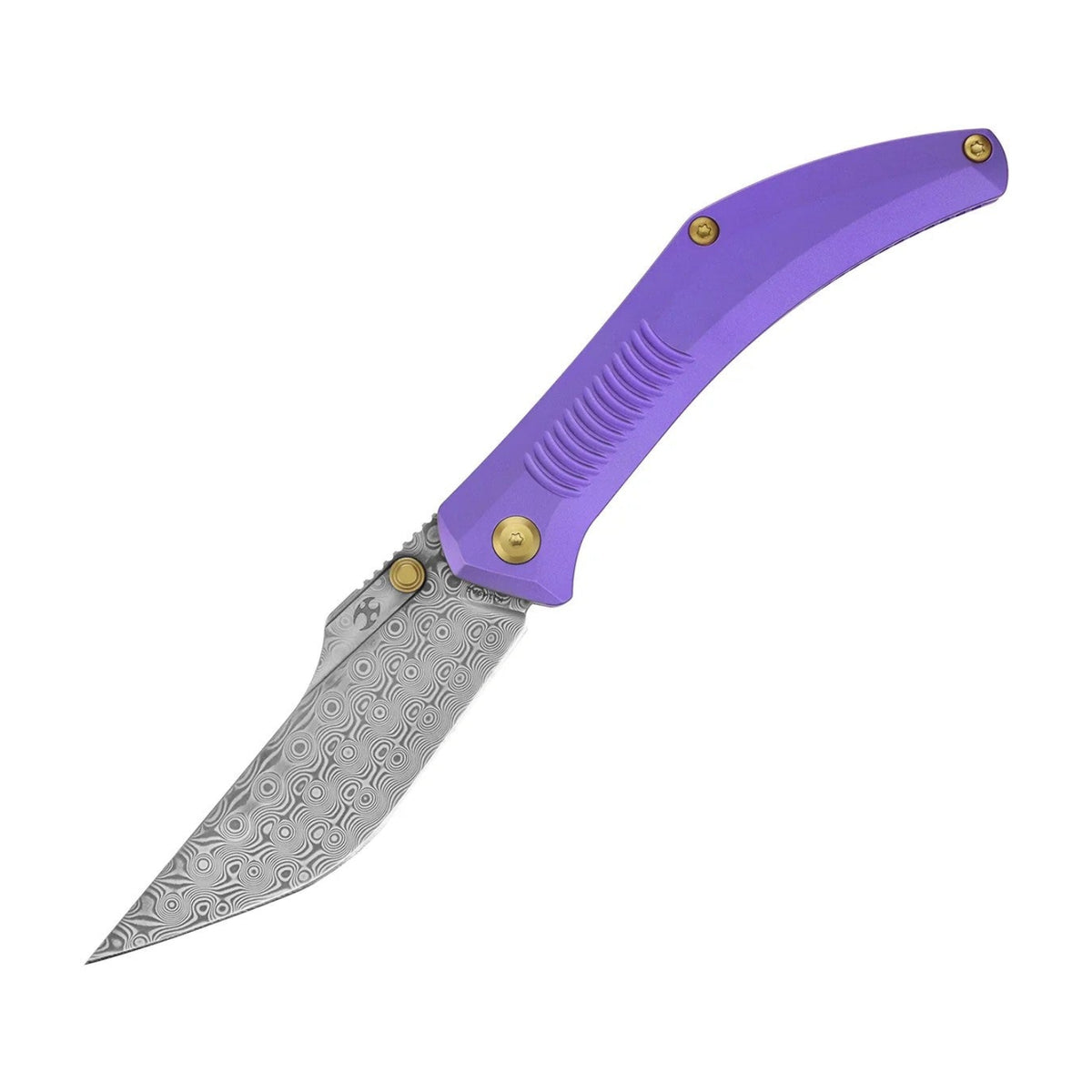
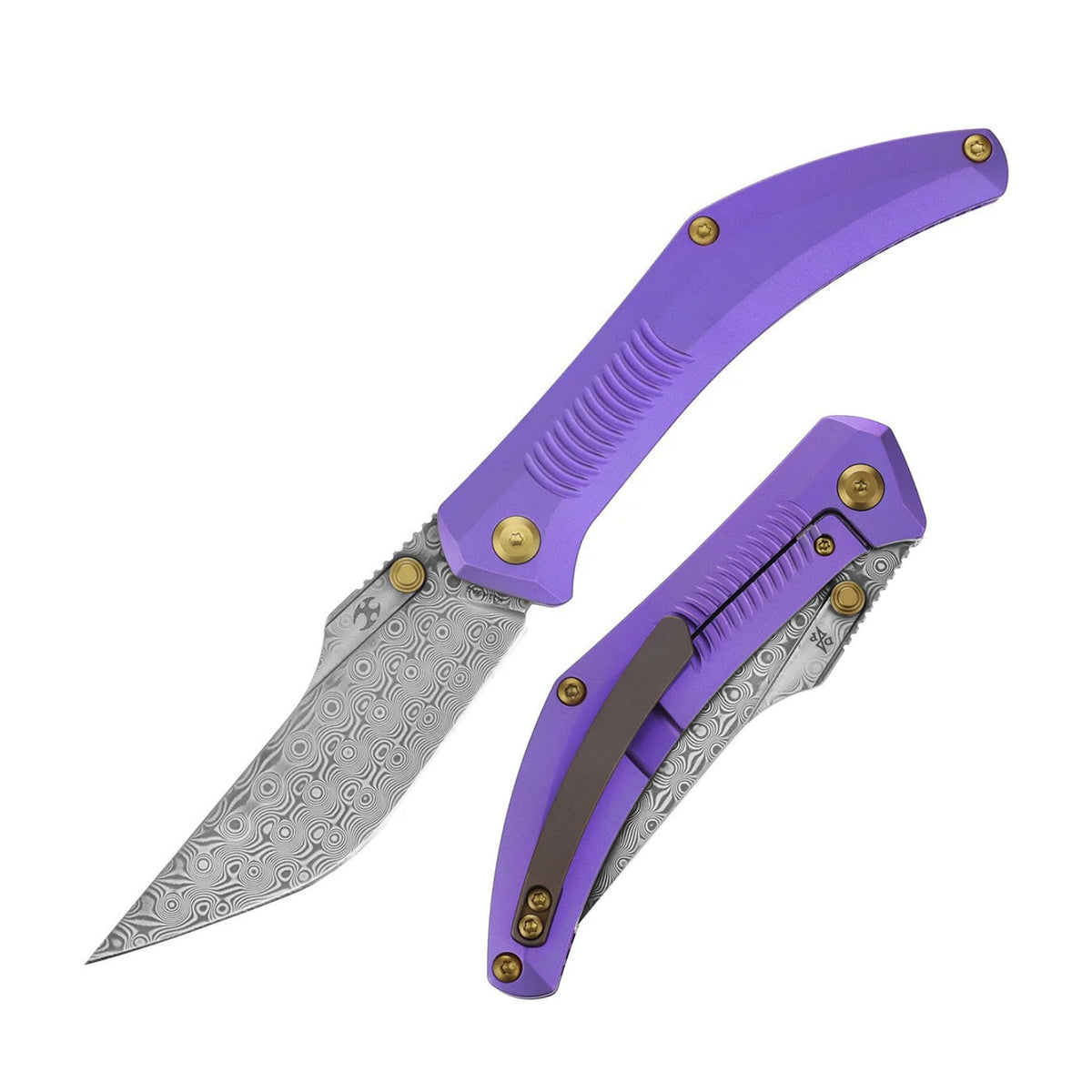
Two habits prevent most centering problems. Never use the blade as a pry bar, because side loading is what actually bends a pivot. And never over-tighten a pivot to remove blade play, since doing so creates off-center geometry. Instead, seat the pivot correctly and accept a small amount of play as normal in a bearing-equipped folder. Add a drop of low-strength threadlocker to body screws that keep loosening. EdcMall carries the well-built folders that reward careful maintenance. The same discipline applies to every knife in the drawer. Kansept knives with crossbar and button locks are particularly easy to re-center because their pivots are accessible and their screws are a standard size, but the technique is identical on any folder. Among EDC knives the principle is always the same: loosen, seat, then tighten in a cross pattern.
Who Is This For?
This is for folding knife owners who adjust their own gear, collectors who keep every knife perfectly centered and anyone whose folder started rubbing after a disassembly. A person who never takes a knife apart can ignore all of this until a problem appears.
Final Verdict
Off-center blades are almost always a screw problem, not a blade problem. Loosen, re-seat the pivot, tighten body screws in a cross pattern and use the right driver. Patience fixes more knives than force ever will.