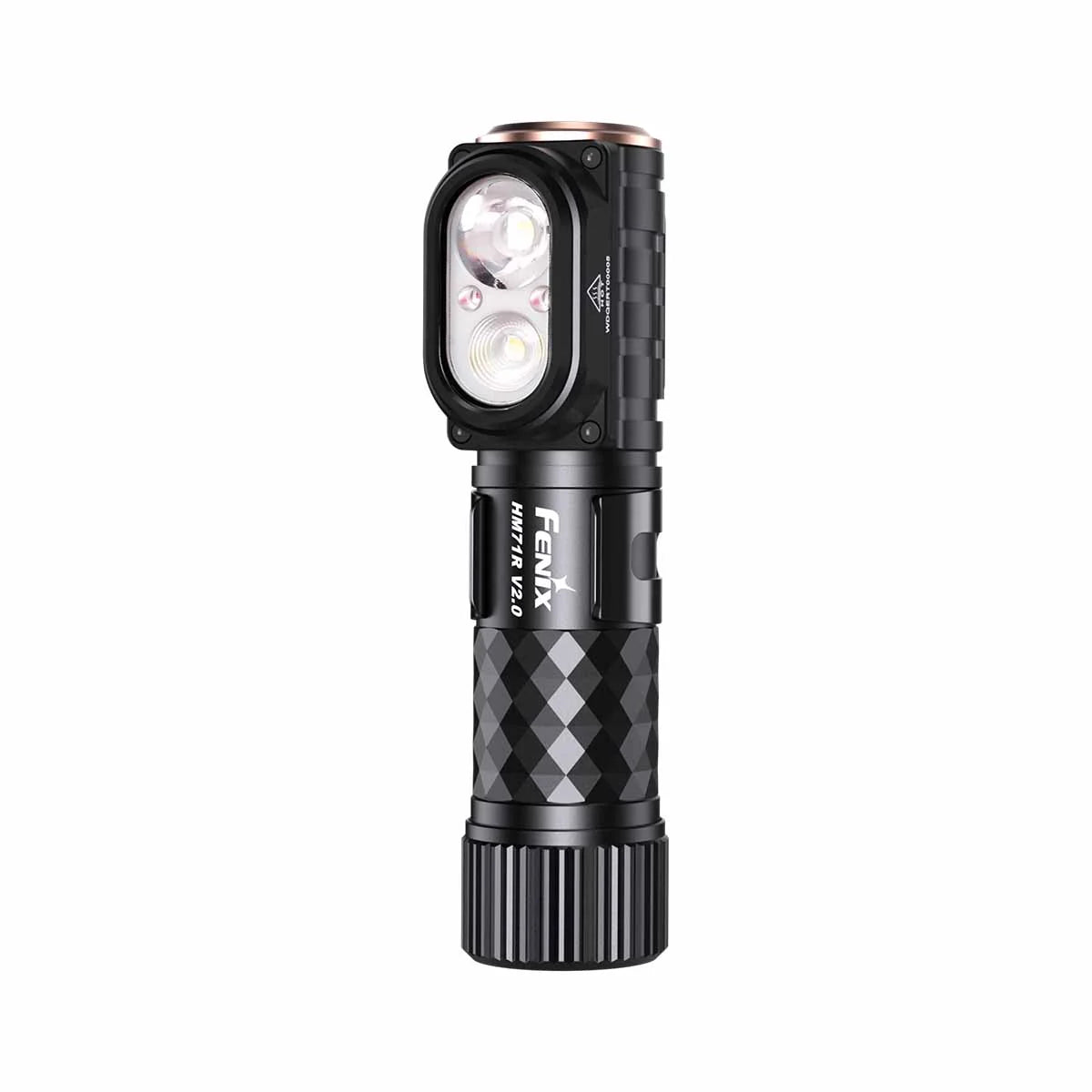
Surviving an emergency entrapment—whether trapped inside a sinking vehicle after an accident, caught behind locked tempered glass during a structural fire, or navigating a compromised transport vehicle—demands instant, reliable breaching capability. When doors warp and electric windows short out, you have only seconds to create an escape path. Conventional handheld tools often slip or shatter under pressure, while standard aluminum crowns deform against automotive glass. Carrying a dedicated tactical flashlight from Nextorch equipped with patented nano-ceramic glass-breaking beads turns a high-lumen illumination tool into a life-saving rescue instrument capable of shattering tempered barriers in a single strike.
 The Physics of Nano-Ceramic Breaching Technology
Breaking automotive tempered glass requires immense pressure concentrated onto a microscopic point of contact. Standard aluminum bezels—even aggressive scalloped tactical crowns—are made from materials significantly softer than tempered automotive glass. When slammed against a car window, raw aluminum flattens, dispersing kinetic energy across a wider surface area and failing to initiate a fracture.
Nano-ceramic beads solve this mechanical bottleneck through superior material hardness:
-
Extreme Material Hardness: Nano-ceramic strike elements rate above 9 on the Mohs hardness scale (second only to industrial diamond), easily exceeding the surface hardness of automotive tempered safety glass.
-
Point-Load Kinetic Focus: The spherical micro-geometry concentrates all kinetic force into a sub-millimeter contact zone, generating extreme stress concentrations that instantly overcome the surface tension of tempered glass.
-
Non-Abrasive Geometry: Unlike sharp carbide spikes that can tear through pocket linings or snag on clothing during an emergency draw, smooth ceramic beads remain completely pocket-friendly during daily EDC carry while delivering devastating impact energy.
Emergency Vehicle Extraction: The Corner Strike Protocol
Automotive side windows are constructed from tempered safety glass designed to withstand blunt frontal impacts. Striking the dead center of a window flexes the glass, absorbing kinetic energy and reducing breach efficiency. To escape rapidly, you must execute the proven corner-strike technique.
Tactical Window Breach Execution
-
Protect Your Hands: Wrap your support hand with a jacket sleeve, glove, or cloth to prevent glass splatter from causing lacerations.
-
Target the Vulnerable Zones: Aim your strike directly at the bottom corners of the side window, roughly 1 to 2 inches from the rubber weatherstripping where the glass has the least flex.
-
Drive Through the Impact: Grip the torch barrel securely in a reverse ice-pick grip, lock your wrist, and strike straight through the glass with full body momentum.
-
Clear the Perimeter: Use the bezel to sweep away remaining glass shards clinging to the window frame before pulling yourself or passengers through the opening.
Emergency Glass Breaching Tool Comparison Matrix
| Extraction Tool Type | Hardness Rating | Pocket Carry Comfort | Kinetic Energy Focus | Deployment Speed | Secondary Utility |
| Nextorch Nano-Ceramic Bezel | Mohs 9.0+ | Excellent (Smooth beads, no snagging) | Extreme (Point-load micro-spheres) | Immediate (Handheld primary light) | High-lumen tactical defense & illumination |
| Standard Aluminum Bezel | Mohs 3.0 – 4.0 | Good (Scalloped edges) | Poor (Metal deforms on impact) | Immediate | Standard illumination |
| Spring-Loaded Center Punch | Mohs 8.5 – 9.0 | Moderate (Single-purpose tool) | High (Mechanical spring force) | Delayed (Must retrieve from glovebox) | Dedicated glass breaking only |
| Carbide-Tipped Tactical Pen | Mohs 9.0+ | Good (Pocket clip) | High (Sharp point) | Moderate (Small grip circumference) | Writing & minor defensive strikes |
Structural Resilience Under Severe Mechanical Shock
An emergency breach subjects an illumination tool to violent deceleration and blunt impact shock. Cheap consumer flashlights often suffer broken internal lenses, severed circuit traces, or collapsed battery springs when slammed into hard obstacles.
Nextorch engineers their duty-grade lights with unibody aerospace-grade aluminum alloy shells, shock-absorbing internal silicone dampening rings, and dual-direction heavy-duty gold-plated battery springs. These structural reinforcements isolate the internal LED driver and lithium power cell from physical shock, ensuring the light remains fully operational to illuminate dark, waterlogged, or smoke-filled escape routes immediately after shattering the glass.
 Complementing Your Emergency Preparedness Ecosystem
While specialized nano-ceramic breaching systems lead the vehicle escape and law enforcement category, comprehensive safety requires a well-rounded equipment strategy.
For high-speed tactical responses, the dual-tail switch interface from Klarus provides instant one-touch defensive strobe capabilities. For lightweight pocket carry and real-time battery voltage monitoring, the ultra-slim OLED models from Nitecore offer unmatched digital awareness and spatial convenience. Meanwhile, gear connoisseurs who value silky mechanical precision and exotic metallic craftsmanship rely on the rotary magnetic systems developed by Jetbeam. Integrating these high-performance tools into your vehicle kit, home emergency stash, and personal gear ensures you maintain the upper hand in unpredictable crises.
Turning Illumination Into a Lifesaving Asset
Preparedness is measured by how effectively your tools perform during worst-case scenarios. A tactical light equipped with nano-ceramic glass-breaking elements transcends standard illumination, providing a reliable, non-lethal escape mechanism that can shatter dangerous barriers in a fraction of a second. Investing in dedicated breaching technology ensures that no matter where you find yourself trapped, the path to safety is only one strike away.