The Kansept Parr is a knife that refuses to fit neatly into anyone's category system. Designed by Canadian knifemaker Jonathan Styles, this compact fixed blade from the Kansept brand occupies a fascinating space in the premium EDC landscape—it delivers the rock-solid reliability that folders can only aspire to, yet in a package so lightweight and carry-friendly that it genuinely competes for the same pocket real estate as your favorite flipper. In this comparison, we'll examine how the Parr stacks up against other high-end EDC cutting tools, explore what makes its locking mechanism and deployment feel uniquely satisfying, and identify where it outshines—or cedes ground to—the folding competition.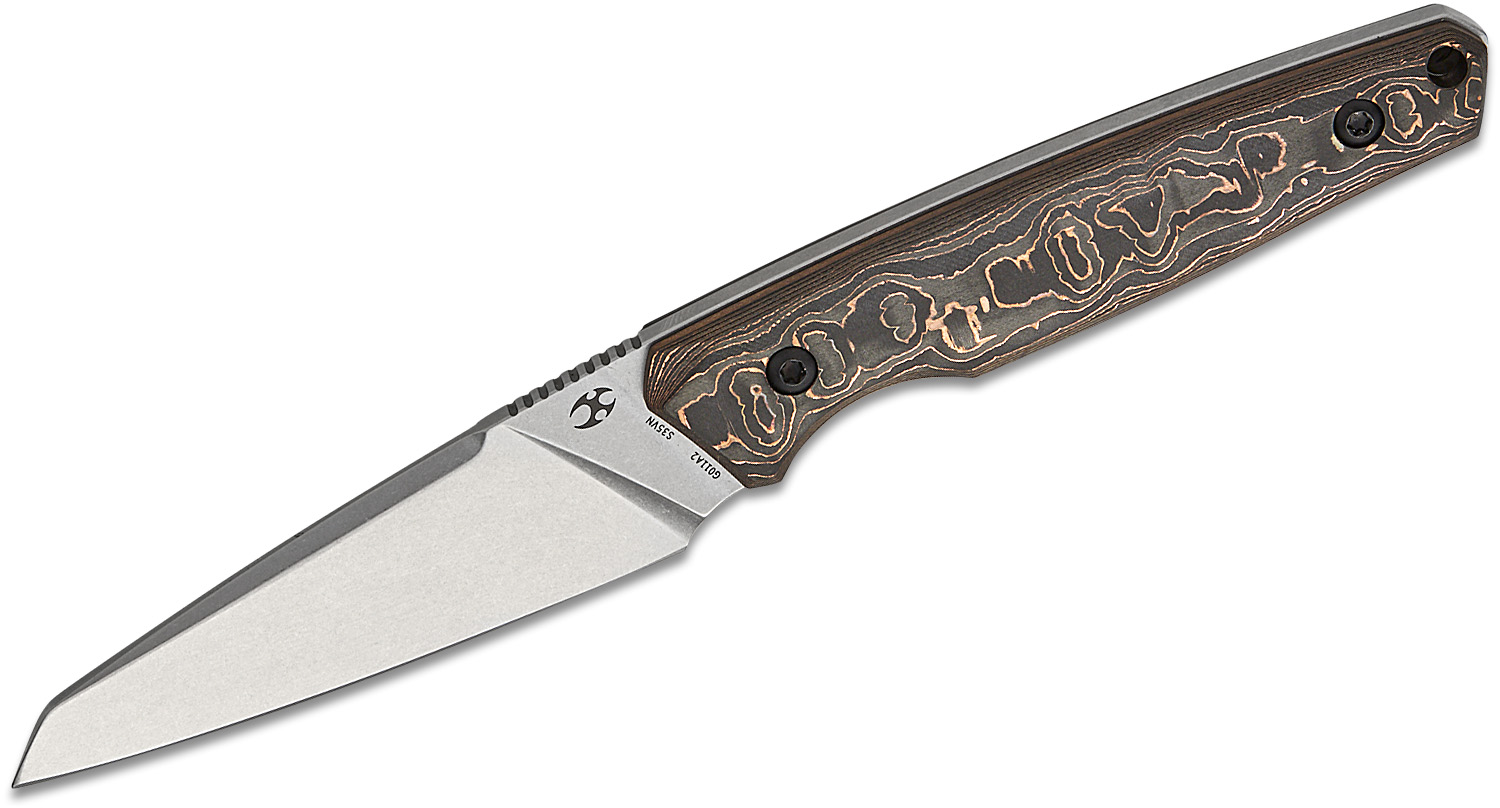
The Parr at a Glance: What We're Working With
Before pitting the Parr against the folder establishment, let's establish the baseline. The Parr is a fixed blade knife featuring a 3.12-inch reverse tanto blade crafted from CPM-S35VN stainless steel—a powder metallurgy super steel prized for its exceptional balance of edge retention, toughness, and corrosion resistance. The handle, depending on the variant, comes in shred carbon fiber, copper carbon fiber, or 80's CamoCarbon, and the entire package weighs a scant 2.0 to 2.34 ounces. With an overall length of 6.38 inches, it disappears on a belt or in a pocket, carried in its custom-molded Kydex sheath.
This is a knife that asks a provocative question: if a fixed blade can be this light, this compact, and this easy to carry, why reach for a folder at all?
Locking Mechanism: Zero Moving Parts, Zero Compromise
This is where the comparison gets genuinely interesting. Every folding knife—regardless of price point—relies on a locking mechanism to keep the blade from closing on your fingers during use. Frame locks, liner locks, button locks, crossbar locks—each represents an engineering solution to the inherent problem of a folding blade: it wants to fold.
The Parr's "locking mechanism" is the fixed blade itself. There is no lock bar to wear down, no omega spring to fatigue, no detent ball to develop a flat spot. The blade tang extends into a full-tang handle, meaning the structural integrity runs the entire length of the knife without a single moving part that could fail. This isn't just a theoretical advantage—it's the reason fixed blades are trusted in survival, tactical, and hard-use environments where a lock failure could mean injury.
Compare this to a premium frame lock folder. A well-executed titanium frame lock, such as those found on many Kansept models, provides excellent security under normal use. The lock bar wedges against the blade tang with a satisfying click, and the geometry typically prevents accidental disengagement. But frame locks can suffer from lock stick, lock rock, or premature wear if tolerances aren't perfect—and even the best frame lock is subject to the possibility of being disengaged by an errant grip position during hard twisting cuts.
The Parr simply cannot experience any of these failure modes. You can stab, pry (within reason), twist, and torque without ever worrying about the blade folding back. For users who genuinely push their EDC tools—whether on job sites, in the backcountry, or during emergency response—this is a decisive advantage.
That said, folders win on convenience. A one-handed flipper deployment and one-handed closing are genuinely useful features that the Parr's fixed-blade nature cannot replicate. The Kydex sheath provides a fast, smooth draw, but you'll never deploy the Parr with the casual one-handed flick that makes a bearing-pivot folder so addictive to fidget with.
Opening Feel: Fixed Blade Deployment vs. Folder Action
Let's talk about what knife enthusiasts mean by "action." In the folder world, action refers to the tactile experience of deploying the blade: the resistance of the detent, the smoothness of the bearings or washers, the satisfying thwack of the lock engaging. A knife with great action is a joy to operate—it becomes something you want to pick up and play with, not just use.
The Parr has no detent, no bearings, no flipper tab. Its "deployment" consists of drawing it from its Kydex sheath—a motion that, when practiced, becomes second nature and delivers its own deeply satisfying click of retention. The sheathed carry means the blade is always ready in exactly the same condition you stored it: no pocket lint in the pivot, no lubricant drying out, no mysterious gritty feeling that appeared overnight.
Is this better or worse than a folder's action? It depends entirely on what you value. If you love the mechanical precision of a well-tuned bearing pivot and the ritual of flipping your knife open and closed, the Parr will feel austere by comparison. If you value absolute reliability and the confidence of knowing your blade will never develop blade play or lock rock, the fixed-blade deployment of the Parr is unbeatable.
Head-to-Head: Parr vs. Premium Folders
Let's put the Parr in the ring with some hypothetical competitors—folders in the same premium S35VN, titanium-and-carbon-fiber price bracket.
Weight and Carry. At 2.0 to 2.34 ounces, the Parr is lighter than the vast majority of titanium frame lock folders, which typically weigh between 3.5 and 5 ounces. Even the sleek Kansept Reverie, a titanium-and-carbon-fiber front flipper, comes in at 2.64 ounces—slightly heavier than the Parr despite being a folding knife designed for lightness. The Parr wins on carry weight, though the Kydex sheath adds bulk that a folding knife tucked directly into a pocket avoids.
Blade Security. No contest. Fixed blade wins every time. Even the most robust frame lock cannot match the structural integrity of a full-tang fixed blade.
One-Handed Operation. Folders win decisively. A flipper tab or thumb stud deployment is faster and more convenient than drawing from a sheath, especially when your other hand is occupied.
Maintenance. The Parr is dramatically simpler to maintain. No pivot to lubricate, no bearings to clean, no lock face to inspect for wear. Wipe the blade, rinse the sheath occasionally, and you're done. The maintenance guide for titanium and S35VN care applies here, but you'll spend a fraction of the time compared to maintaining a folder's action.
Pocket Friendliness. This is where personal preference rules. A folder rides in your pocket like a pen or a wallet—self-contained, discreet, nothing external. The Parr requires a sheath on your belt or in your pocket, which some users find comfortable and others find intrusive. The Kydex sheath is well-designed and slim, but it's still a sheath.
The Verdict: Where the Parr Belongs in Your Collection
The Kansept Parr isn't a folder-killer, and it doesn't try to be. What it offers is a distinct set of advantages for users who prioritize absolute reliability, low maintenance, and featherweight carry above the mechanical satisfaction of a precision folder. If your EDC philosophy leans toward "I need this to work every single time, no questions asked," the Parr's fixed-blade construction delivers that promise more convincingly than any folding knife can.
Jonathan Styles designed the Parr as functional art, drawing on his experience as a Newfoundland-based outdoorsman who understands what a knife needs to do in the field. The result is a tool that doesn't need to impress with complexity because it earns respect through capability. It's the kind of knife you carry when you're tired of adjusting pivot screws and just want something that cuts.
Three Kansept Knives Worth Adding to Your Collection
If the Parr has sparked your interest in what Kansept brings to the table, here are three recent releases that showcase different facets of the brand's capabilities—and none of them overlap with our previous recommendations.
1. Kansept Higonokami
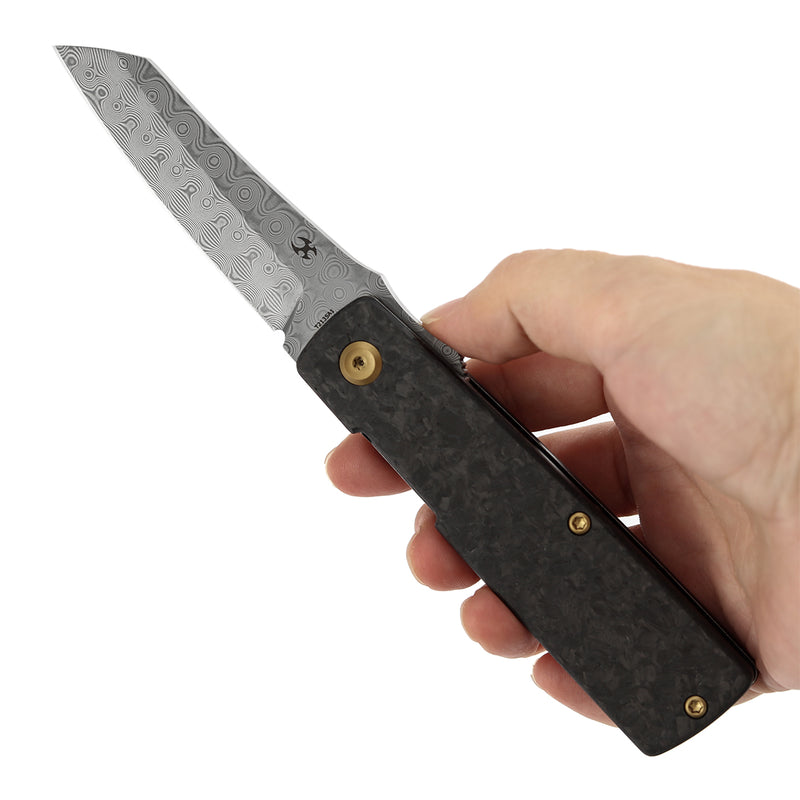
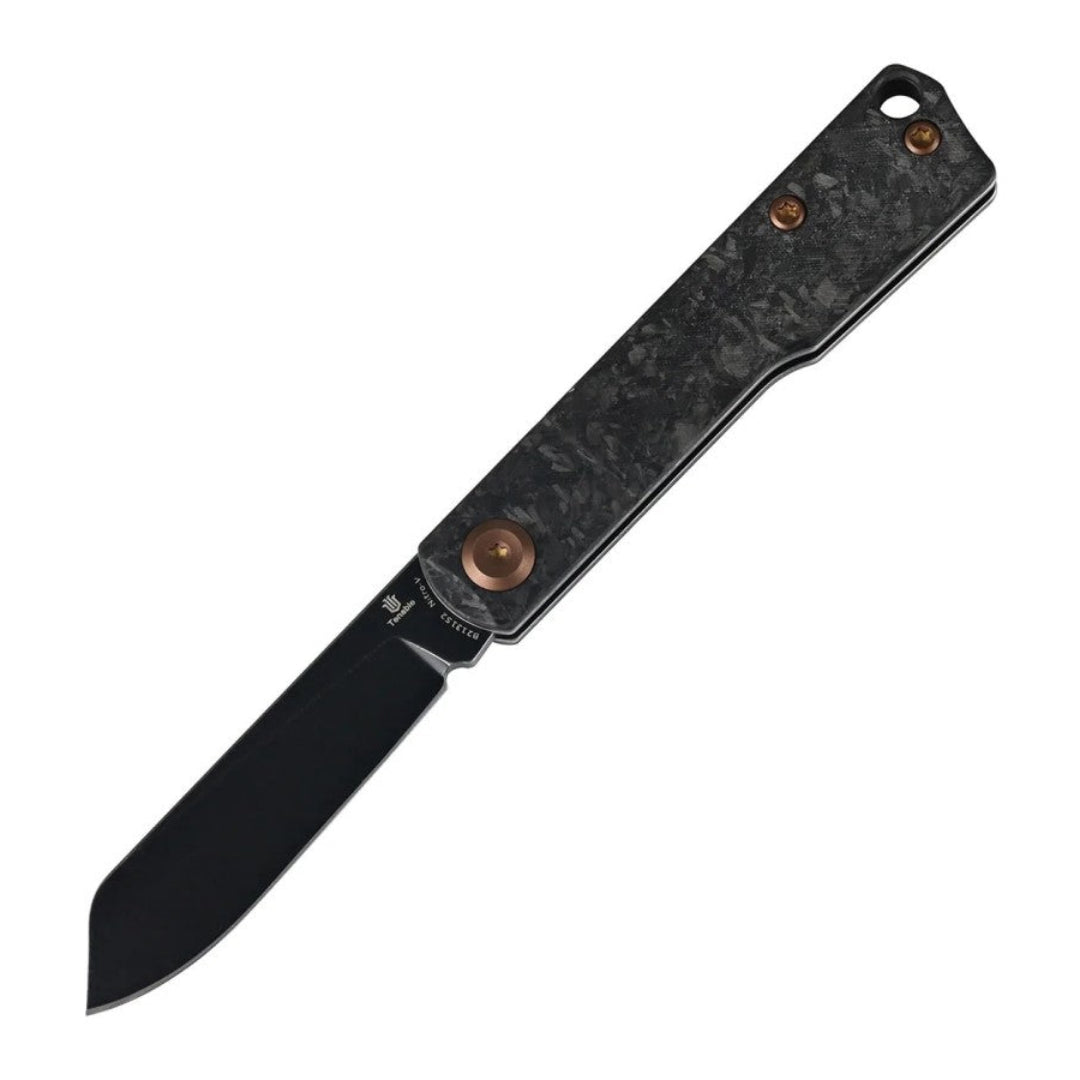
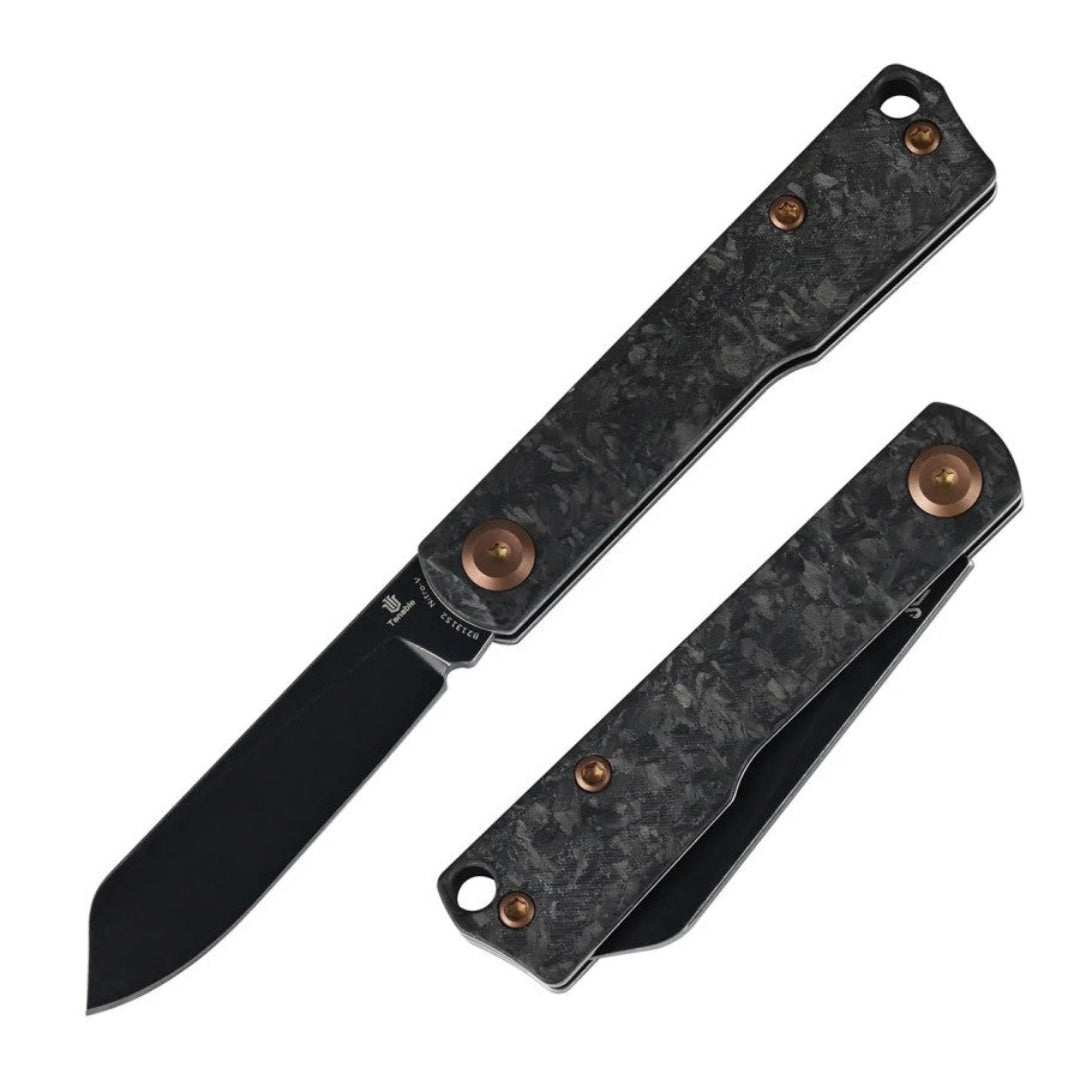
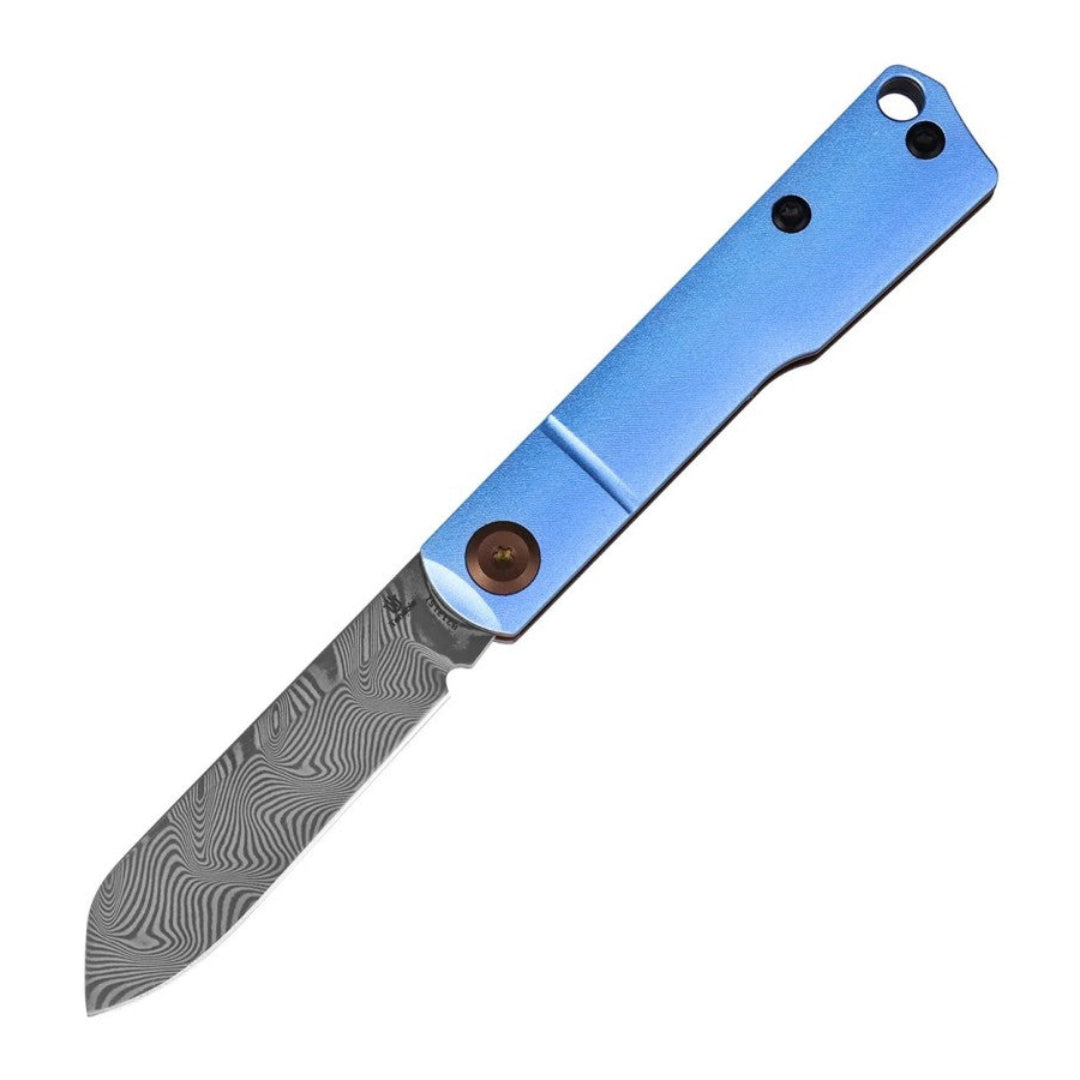
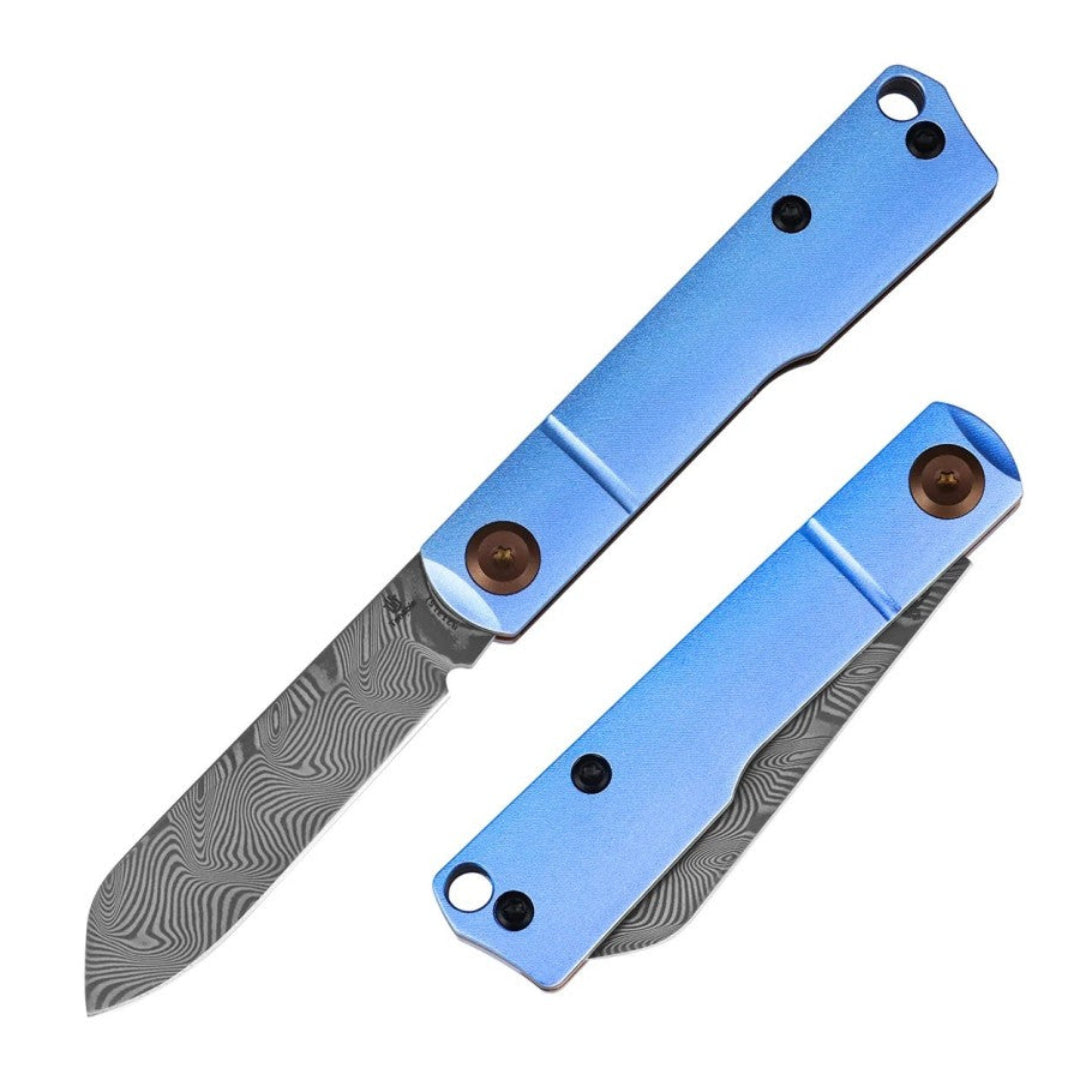
The Kansept Higonokami elevates a century-old Japanese friction folder design into the modern era. Featuring a reverse tanto blade—available in Damascus or 154CM—paired with carbon fiber handles, this knife retains the classic rectangular higonokami silhouette while adding crucial upgrades: a liner lock for security, a front flipper for smooth deployment, and a pocket clip for practical EDC carry. Priced around $130, it bridges heritage design and contemporary performance at a remarkably accessible price point. For anyone who appreciates knife history but demands modern functionality, the Higonokami is a compelling addition to any collection.
2. Kansept Halide

Designed by 19-year-old knifemaking prodigy James Arnold, the Kansept Halide is a gentleman's folder with a genuinely unique party trick. The Dark Matter Glow Fatcarbon handle scales appear as luxurious marbled carbon fiber by day—but when the lights go out, they emit an enchanting glow that makes the knife easy to locate and impossible to ignore. Beyond the visual drama, the Halide packs a 3.2-inch S35VN reverse tanto blade, a liner lock mechanism, and refined aesthetics that keep it equally at home in a boardroom or on a weekend trail. At $170, it's a conversation starter that doesn't sacrifice an ounce of cutting performance for its style.
3. Kansept Wedge
The Kansept Wedge, designed by retired law enforcement officer Nick Swan, takes traditional pocket knife DNA and outfits it with thoroughly modern materials. It features a 2.9-inch CPM-S35VN clip point blade with a stonewashed finish, deployed the old-fashioned way via a long pull nail groove, and secured by a rock-solid lockback mechanism. The Jungle Wear carbon fiber handle scales blend green, black, and earthy tones into a camouflage-like pattern unique to every piece. At just 2.26 ounces and 3.25 inches closed, the Wedge disappears in a pocket while delivering the cutting capability of a much larger knife. For traditionalists who want modern steel performance without modern deployment complexity, the Wedge hits a sweet spot that few other knives occupy.
Ready to experience the Parr's fixed-blade confidence for yourself? Shop the Kansept Parr Collection and discover the Jonathan Styles design that's challenging everything you thought you knew about EDC.