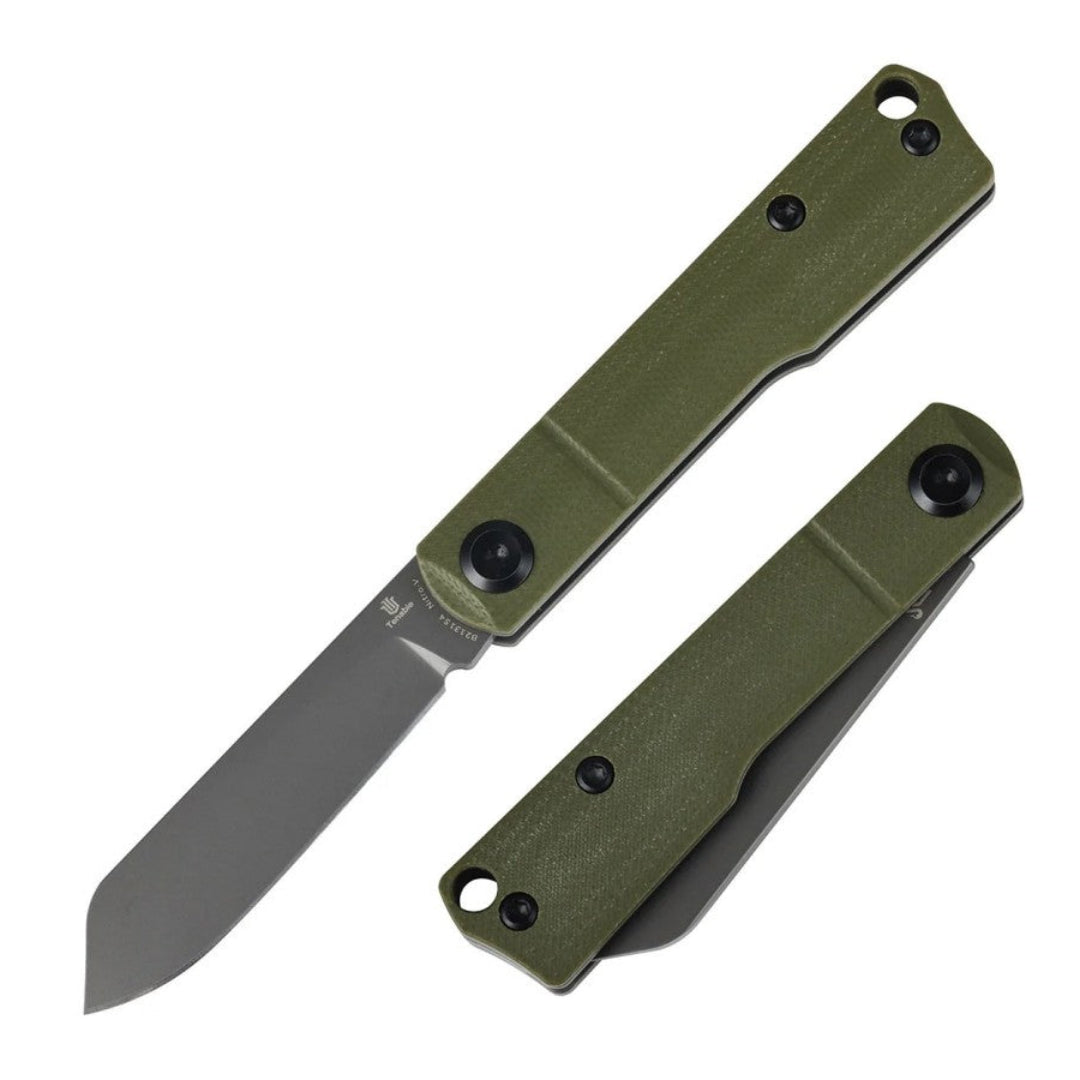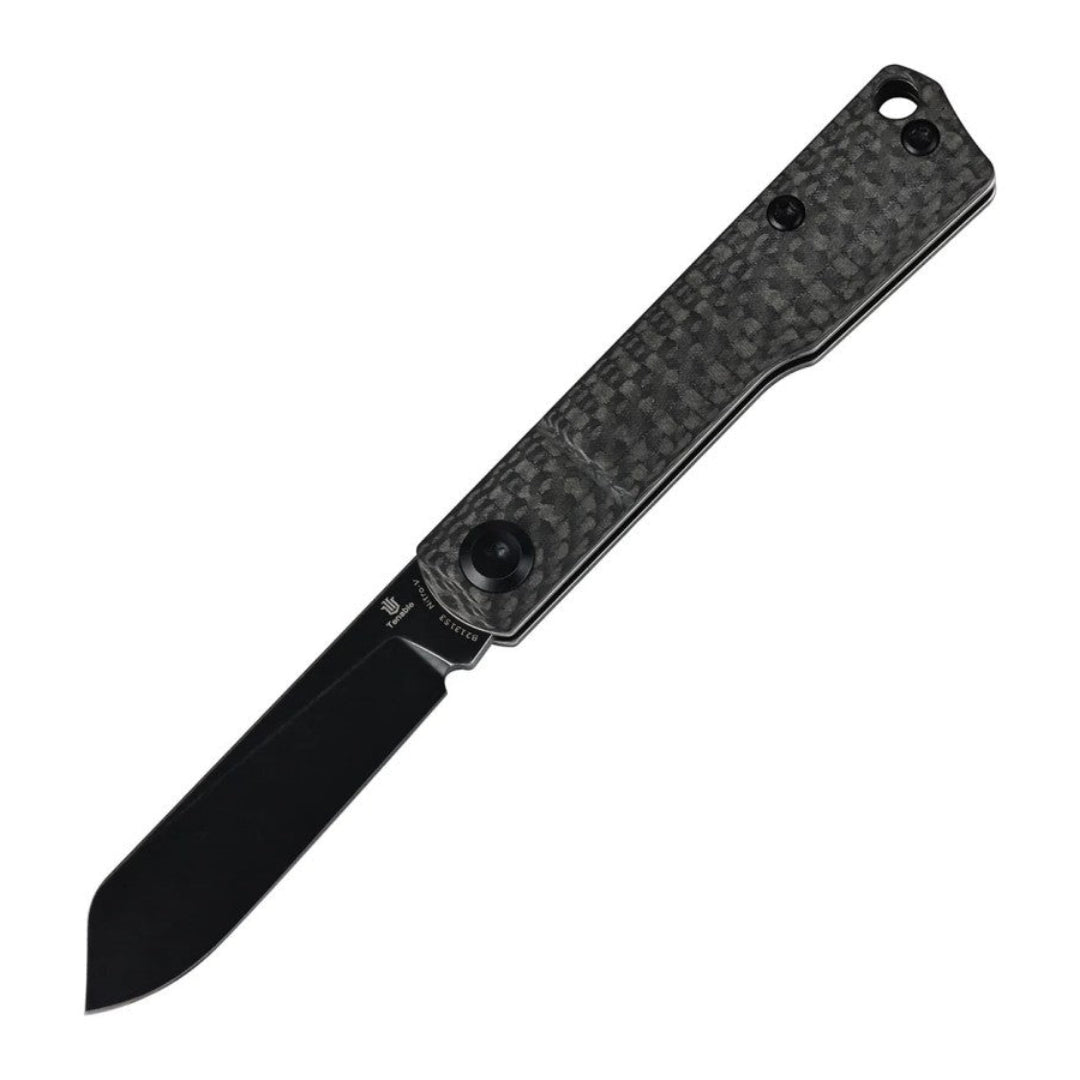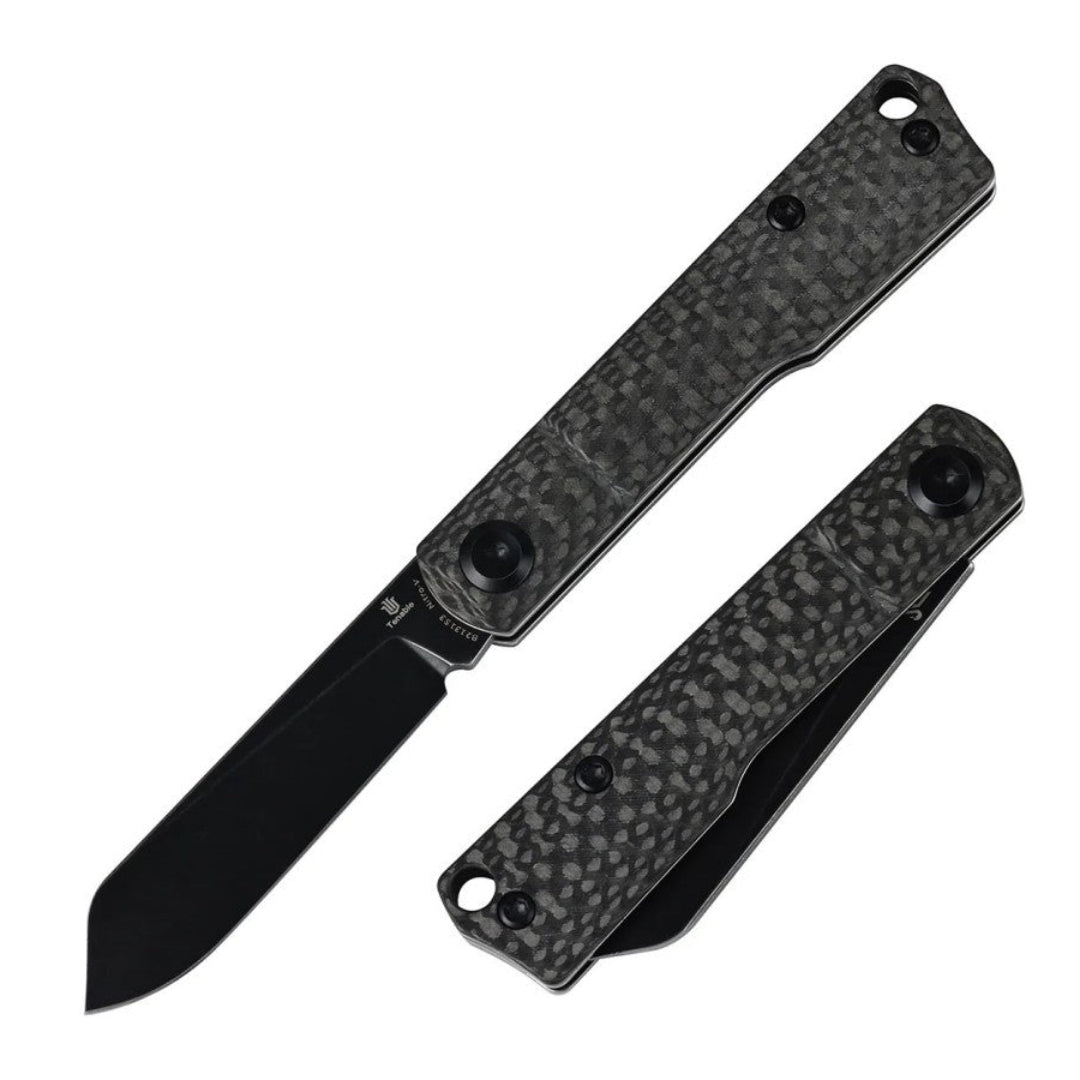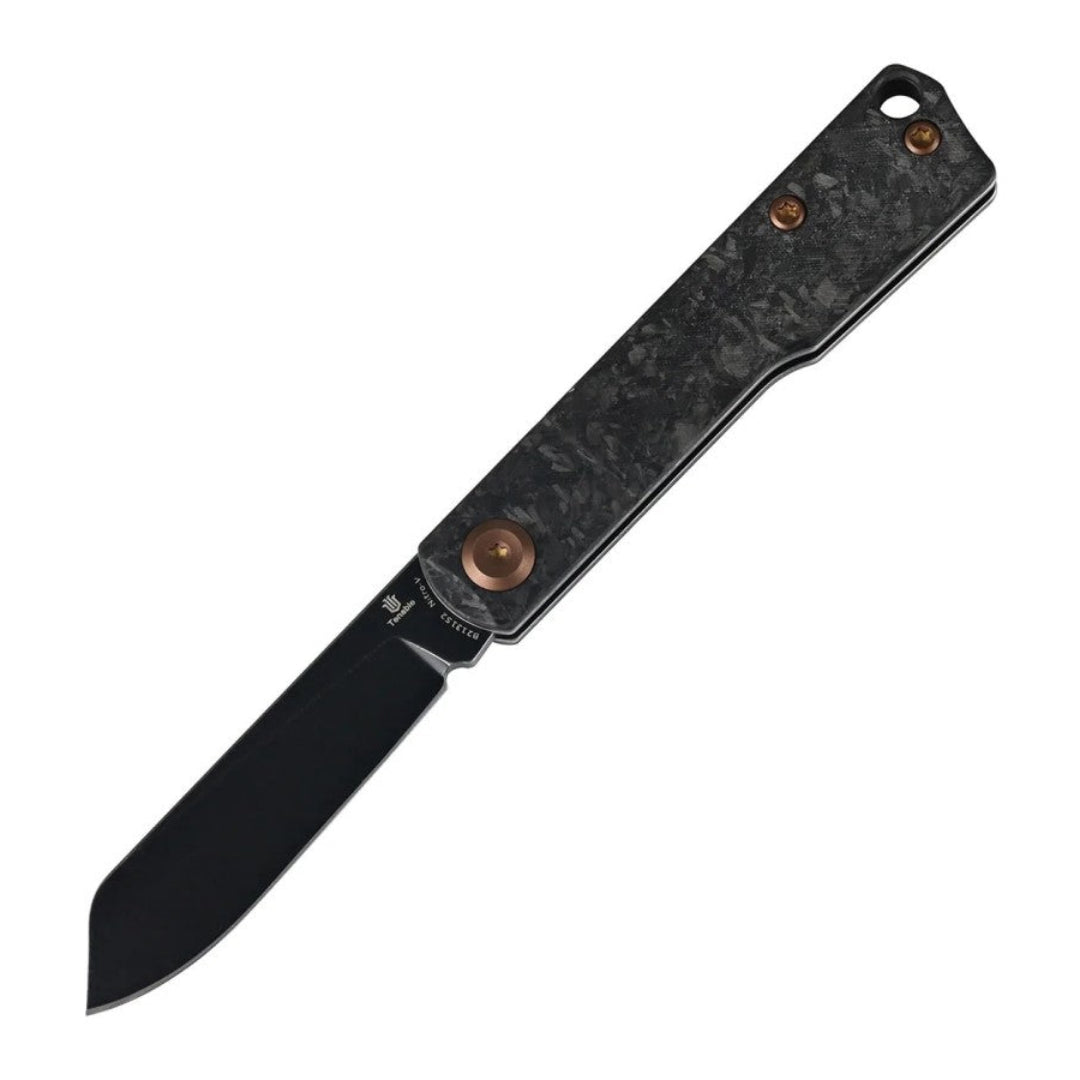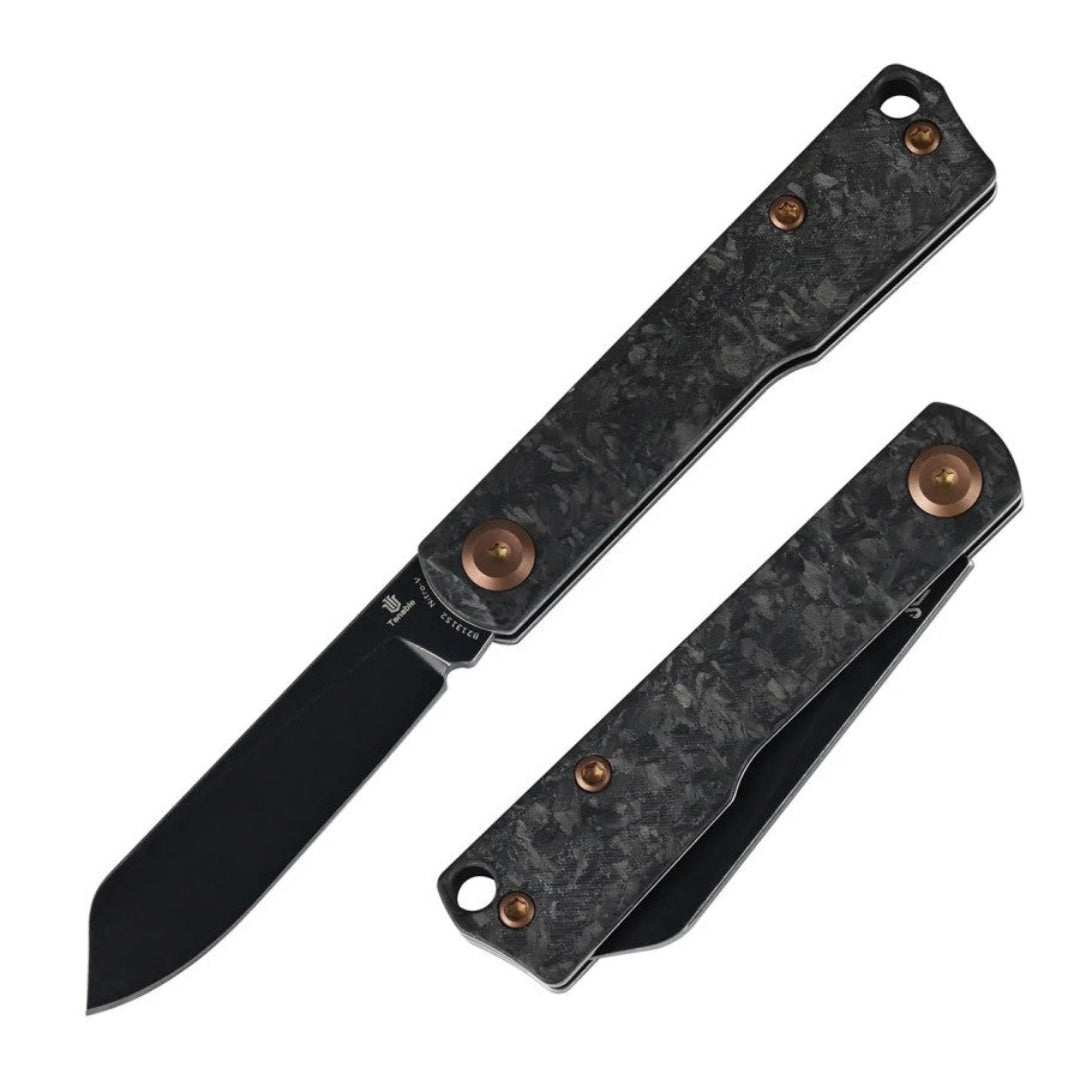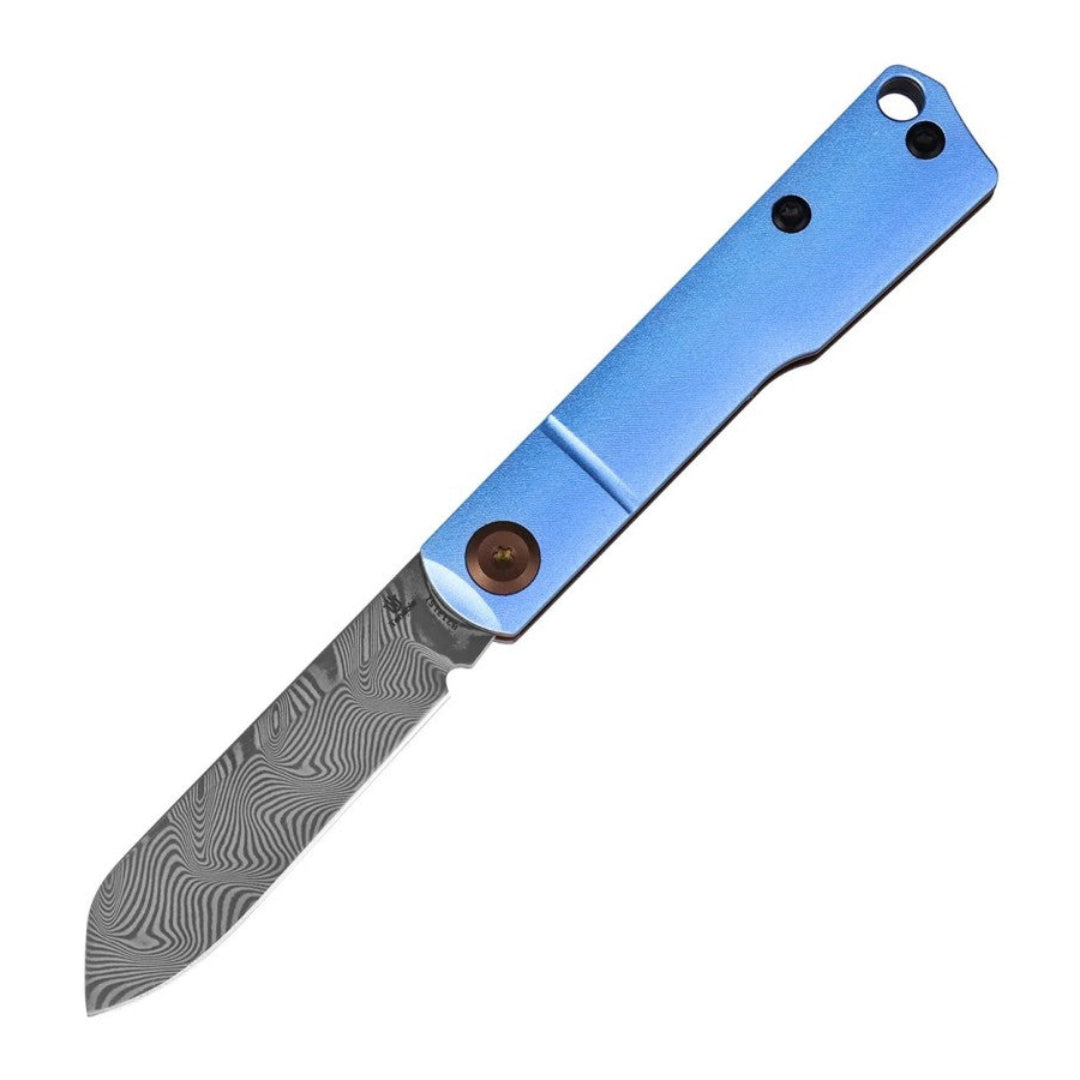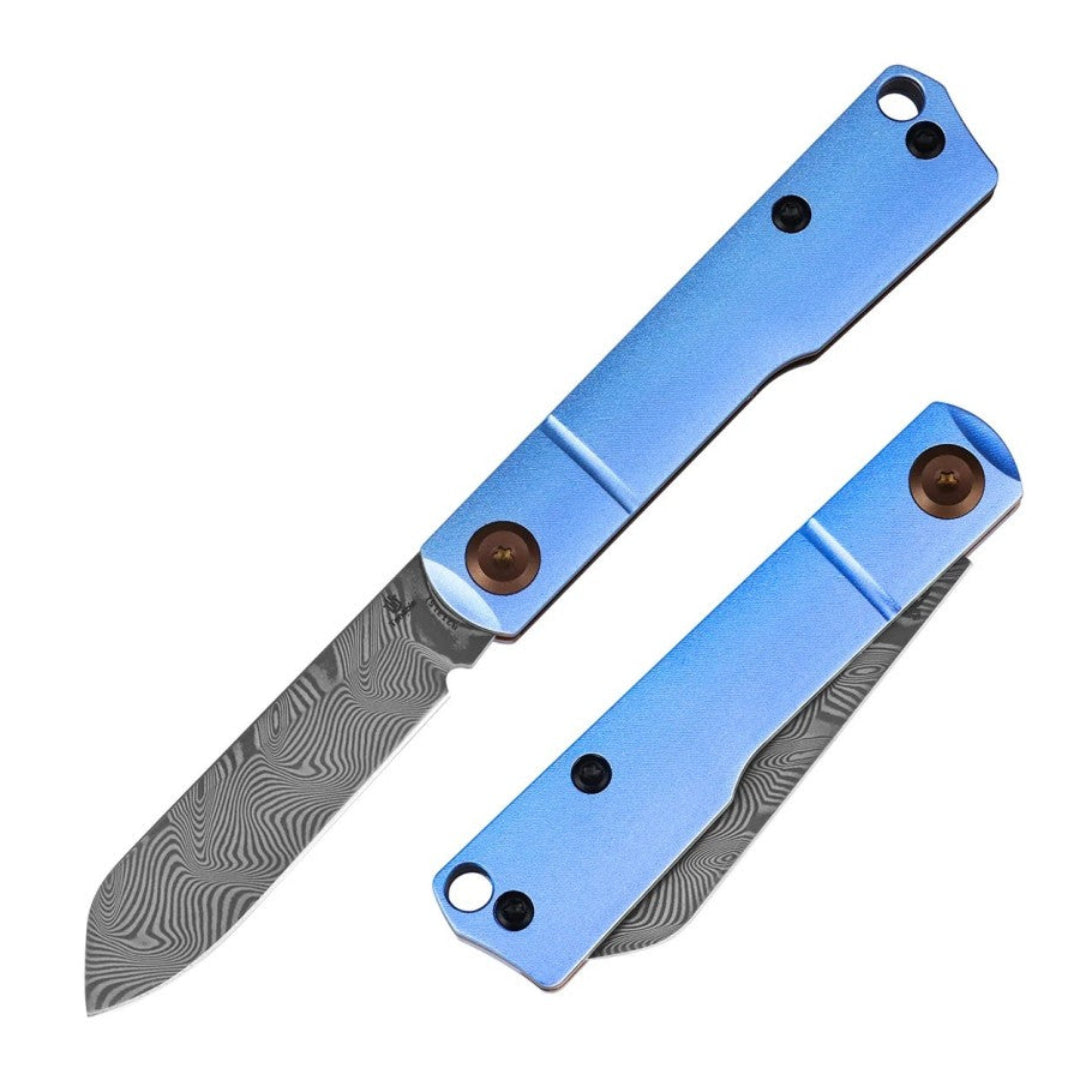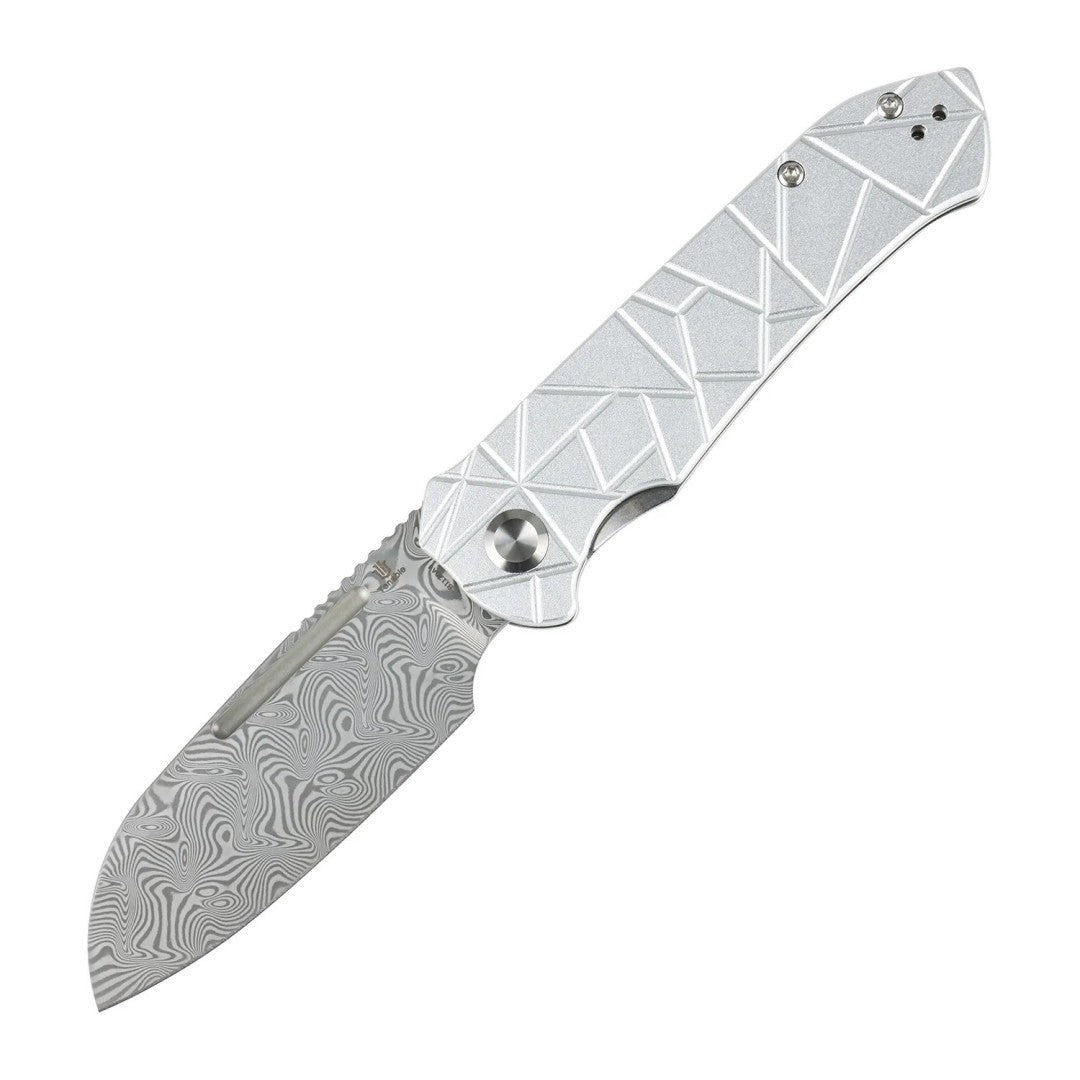

When exploring the world of ultra-premium everyday carry (EDC) knives, few elements generate as much fascination as the blade geometry of Rockstead knives. Among their elite lineup, the Rockstead REN series showcases the absolute pinnacle of Japanese blade engineering. Specifically, the combination of a Tanto profile and the legendary "Honzukuri" convex grind creates a cutting tool that is as devastatingly efficient as it is visually mesmerizing.
In this performance guide, we will break down the science, engineering, and real-world capabilities of the Rockstead REN Tanto Honzukuri Convex Blade, explaining why this specific design outperforms traditional knife grinds and how it achieves unparalleled cutting power.

Understanding the Honzukuri Convex Blade Geometry
To appreciate the performance of the Rockstead REN, one must first understand what makes the Honzukuri grind so extraordinary. Most commercial folding knives utilize a flat or hollow grind, which terminates in a distinct, visible secondary bevel that forms the cutting edge.
In contrast, the Honzukuri grind is a continuously curved, convex surface that runs smoothly from the spine of the blade all the way down to the absolute cutting apex. There is no secondary micro-bevel. This sophisticated geometry directly replicates the traditional cross-section of the Japanese samurai sword (Katana).
By eliminating the sharp shoulder of a traditional edge bevel, the Honzukuri grind provides two distinct performance advantages:
-
Structural Strength: A convex cross-section places more steel directly behind the cutting edge. This provides immense support to the apex, preventing the edge from rolling or chipping under heavy loads.
-
Reduced Friction: When pushing through material like wood, cardboard, or rope, the continuously curved surface naturally pushes the material away from the body of the blade. This drastically reduces surface drag and binding, making deep slices feel virtually effortless.
The Tanto Profile: Piercing Power Meets Versatility
The Rockstead REN pairs the Honzukuri convex grind with an aggressively styled Tanto blade profile. While traditional Americanized Tantos feature a sharp, angular transition between the primary edge and the tip, Rockstead executes this transition with sweeping, organic precision.
This hybrid Tanto design offers a dual-zone performance advantage:
-
The Primary Edge: The long, subtly curved belly of the blade is optimized for long slicing strokes and precision cutting. Thanks to the convex grind, it glides through fibrous materials without snagging.
-
The Secondary Edge and Tip: The reinforced Tanto tip provides incredible structural integrity for piercing tasks. Whether opening heavy crates or penetrating tough synthetic materials, the tip resists snapping—a common vulnerability in finer, drop-point luxury knives.
Steel Synergy: Ultra-Hard ZDP-189 at 67 HRC
Blade geometry is only as good as the steel that holds it together. The Rockstead REN is forged from ZDP-189, a powder metallurgy super-steel manufactured by Hitachi Metals. Boasting an exceptional 3% carbon content and 20% chromium, Rockstead heat-treats this steel to an astonishing hardness of approximately 67 HRC.
At 67 HRC, standard flat-ground knives would be dangerously brittle and prone to catastrophic chipping. However, the Honzukuri convex grind distributes impact forces so evenly through the blade that the ultra-hard ZDP-189 steel becomes completely viable for real-world use. This synergy results in world-class edge retention. The Rockstead REN can maintain its razor-sharp bite through hundreds of cuts that would completely dull standard premium steels like CPM-S30V, M390, or Elmax.

The Role of the Mirror-Polished Finish in Performance
While the flawless, distortion-free mirror polish of the Rockstead REN is undoubtedly beautiful, it is primarily a functional performance feature rather than a cosmetic one.
The mirror finish is achieved through intensive, multi-stage hand-polishing by master Japanese craftsmen. At a microscopic level, standard machine-ground blades are covered in tiny peaks and valleys (grind lines). These micro-scratches create friction during a cut and act as stress-concentration points where micro-chipping or corrosion can begin.
By polishing the ZDP-189 steel down to a microscopic smoothness, Rockstead eliminates these imperfections. The result is a blade that:
-
Slices with unprecedented fluidity due to near-zero surface friction.
-
Resists corrosion far better than standard satin or stonewashed steels, as moisture and acids have no micro-cavities to settle into.
-
Wipes clean effortlessly after coming into contact with tape adhesive, sap, or oils.
Real-World Cutting Capabilities
What does all of this engineering mean when the Rockstead REN is deployed in the field?
Everyday Utility Tasks
For common EDC chores—such as breaking down heavy double-walled cardboard boxes, slicing through thick zip-ties, or cutting leather straps—the REN behaves less like a pocket knife and more like a laser. The edge geometry parts materials cleanly without requiring excessive downward force from the user.
Heavy-Duty Slicing
In outdoor or survival scenarios where you might need to whittle hard wood or slice through thick marine rope, the structural stability of the convex edge shines. The blade maintains its structural integrity without rolling, and the ergonomically sculpted carbon fiber and titanium handle ensures your hand doesn’t fatigue during prolonged use.
Maintaining the Performance of the Honzukuri Edge
Because the Rockstead REN lacks a traditional secondary edge bevel, it cannot be sharpened using standard rod-guided systems, pull-through sharpeners, or flat sharpening stones. Attempting to use these methods will ruin the convex geometry and scratch the pristine mirror finish.
To maintain the terrifying sharpness of your REN blade, Rockstead recommends a simple stropping regimen. Using a flat wooden block wrapped in thick denim or high-quality leather, apply a fine diamond lapping paste (around 0.5 to 1 micron). Stroke the blade backwards (spine leading, edge trailing) along the strop at a very shallow angle, allowing the natural flexibility of the leather or denim to conform to the convex curve. This process realigns the microscopic apex and restores the factory edge without altering the Honzukuri shape.

Conclusion: The Ultimate Cutting Evolution
The Rockstead REN Tanto Honzukuri Convex Blade represents a masterclass in modern cutlery evolution. By marrying ancient Japanese swordsmithing philosophies with advanced powder metallurgy and microscopic tolerances, Rockstead has created a blade that defies traditional limitations.
It delivers a level of edge retention, piercing strength, and frictionless slicing power that must be experienced to be believed. For the high-end collector or the dedicated EDC enthusiast who demands absolute mechanical perfection, the performance of the Rockstead REN stands entirely in a class of its own.