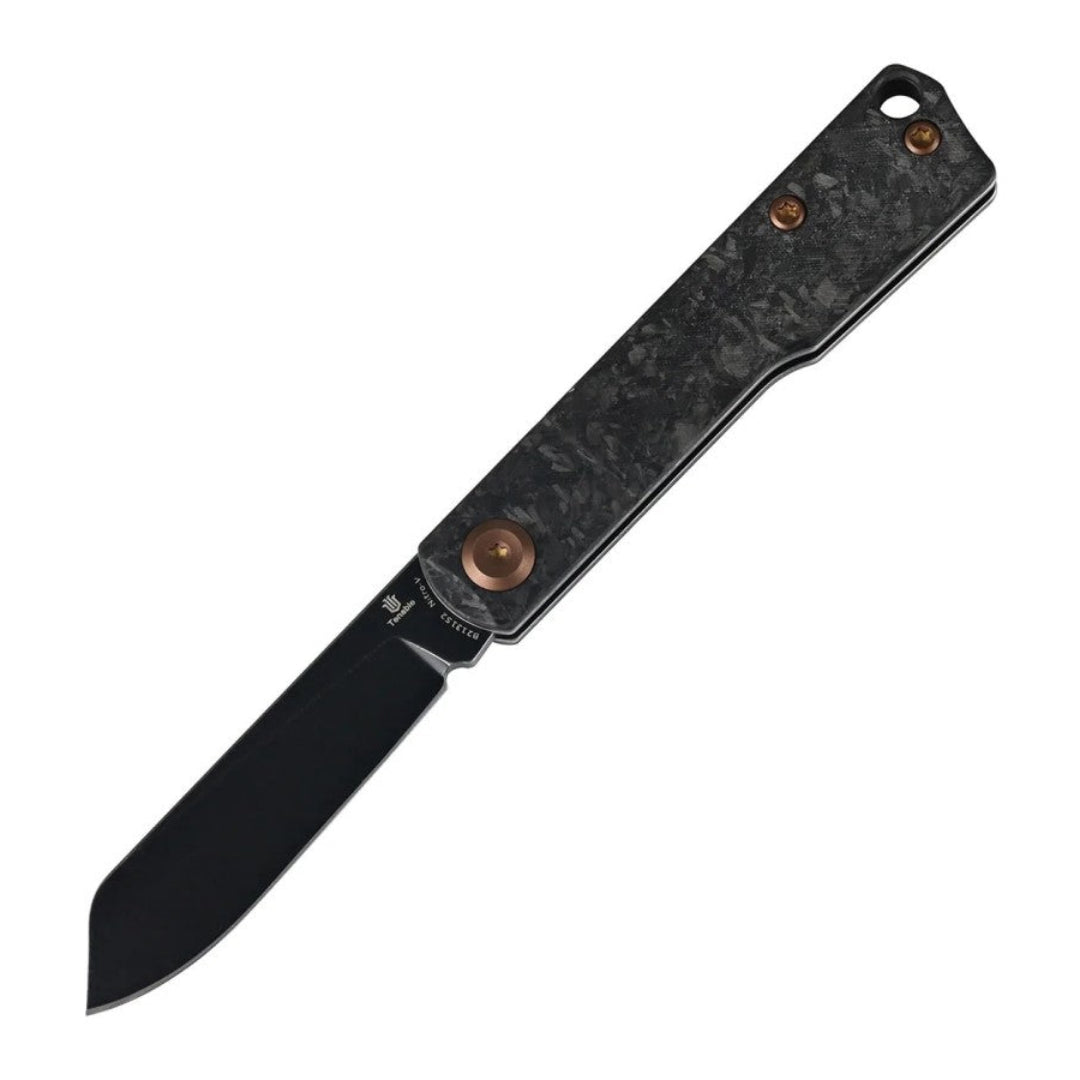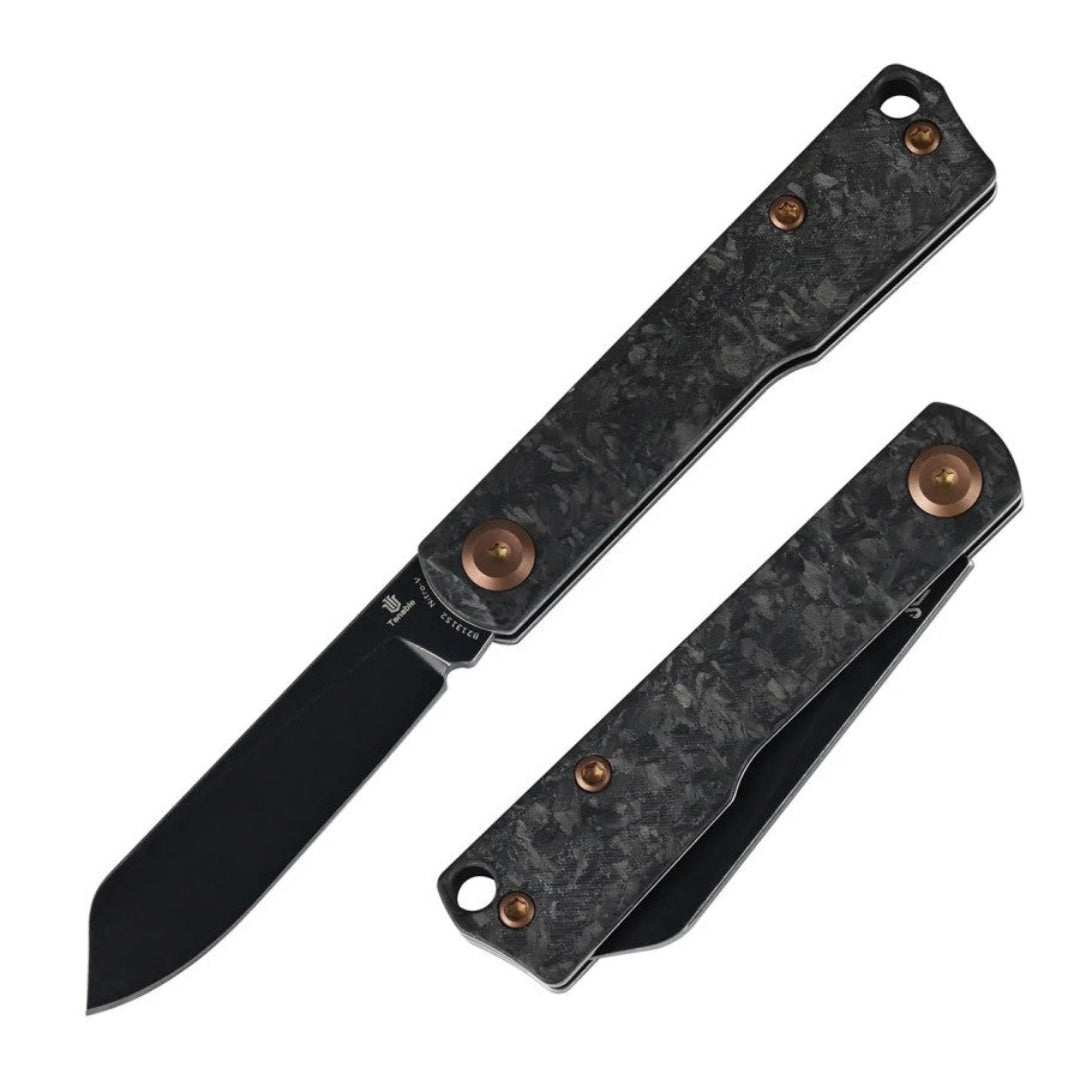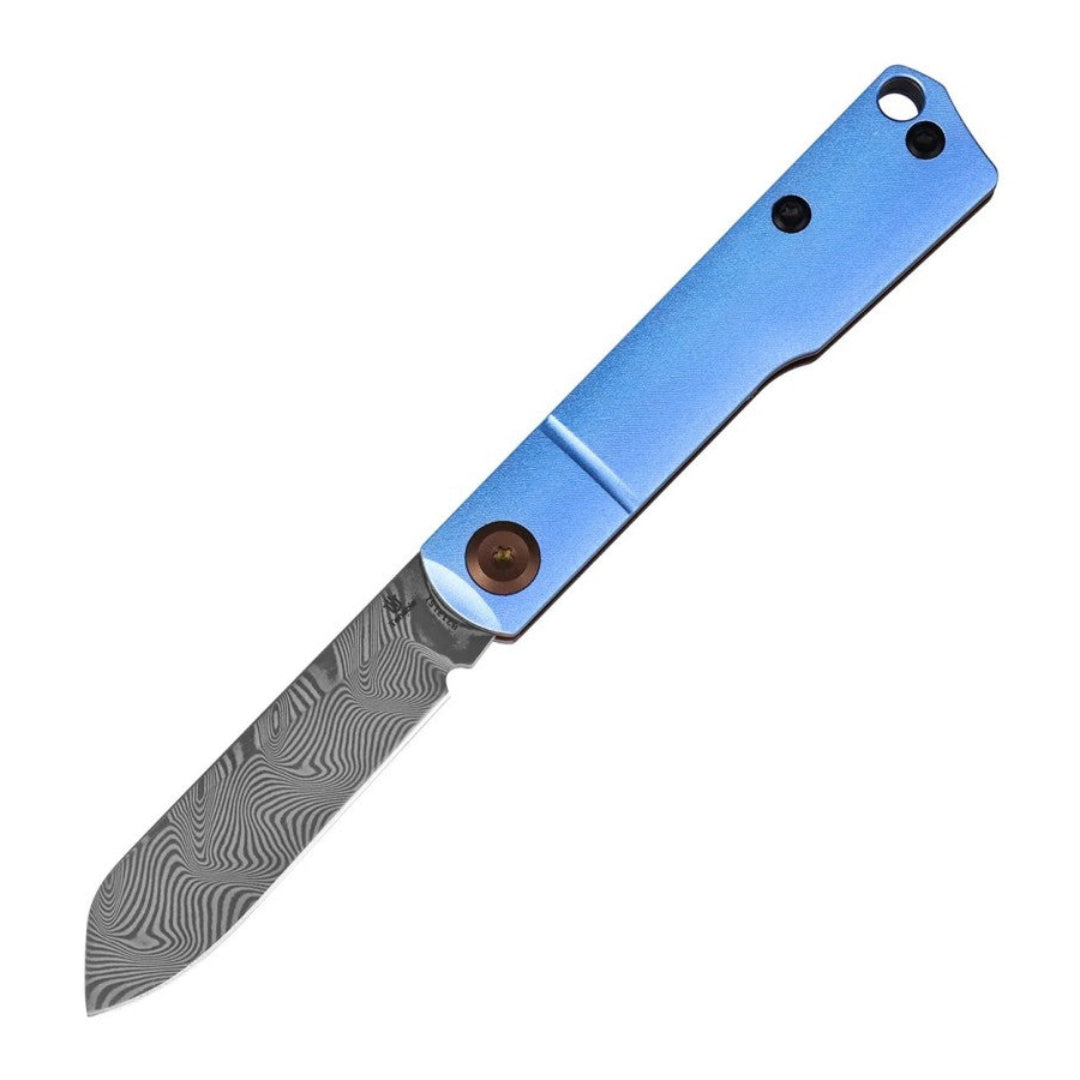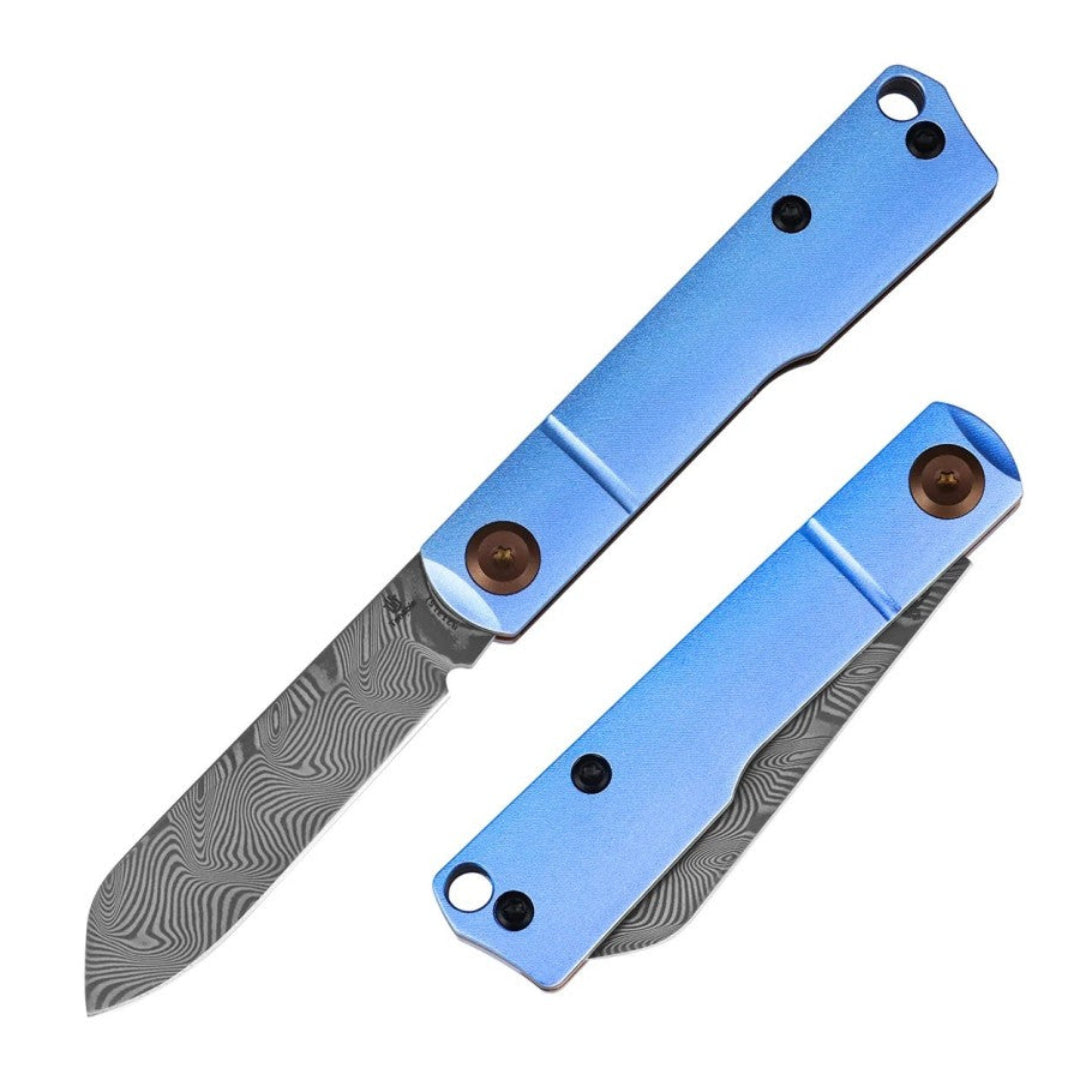
High-end production cutlery is often judged not just by the steel it carries, but by the precision of its machining and the tactile refinement of its handle architecture. When executing complex geometric angles inspired by ancient myth, manufacturing tolerances must be held to microscopic standards to avoid harsh edges or sloppy seams. The Bestech Nyrrdreki represents a masterclass in multi-axis CNC milling, transforming aerospace Grade 5 titanium into a sculpted chassis that feels completely seamless in the palm.
 Multi-Axis CNC Sculpting and Geometric Contours
Translating hand-drawn Scandinavian dragon motifs into functional, three-dimensional pocket hardware requires advanced computerized manufacturing. Designed in collaboration with Dutch artist Fabian Hobbelen, the handle frame was engineered to feature fluid structural transitions rather than simple flat slabs with beveled corners.
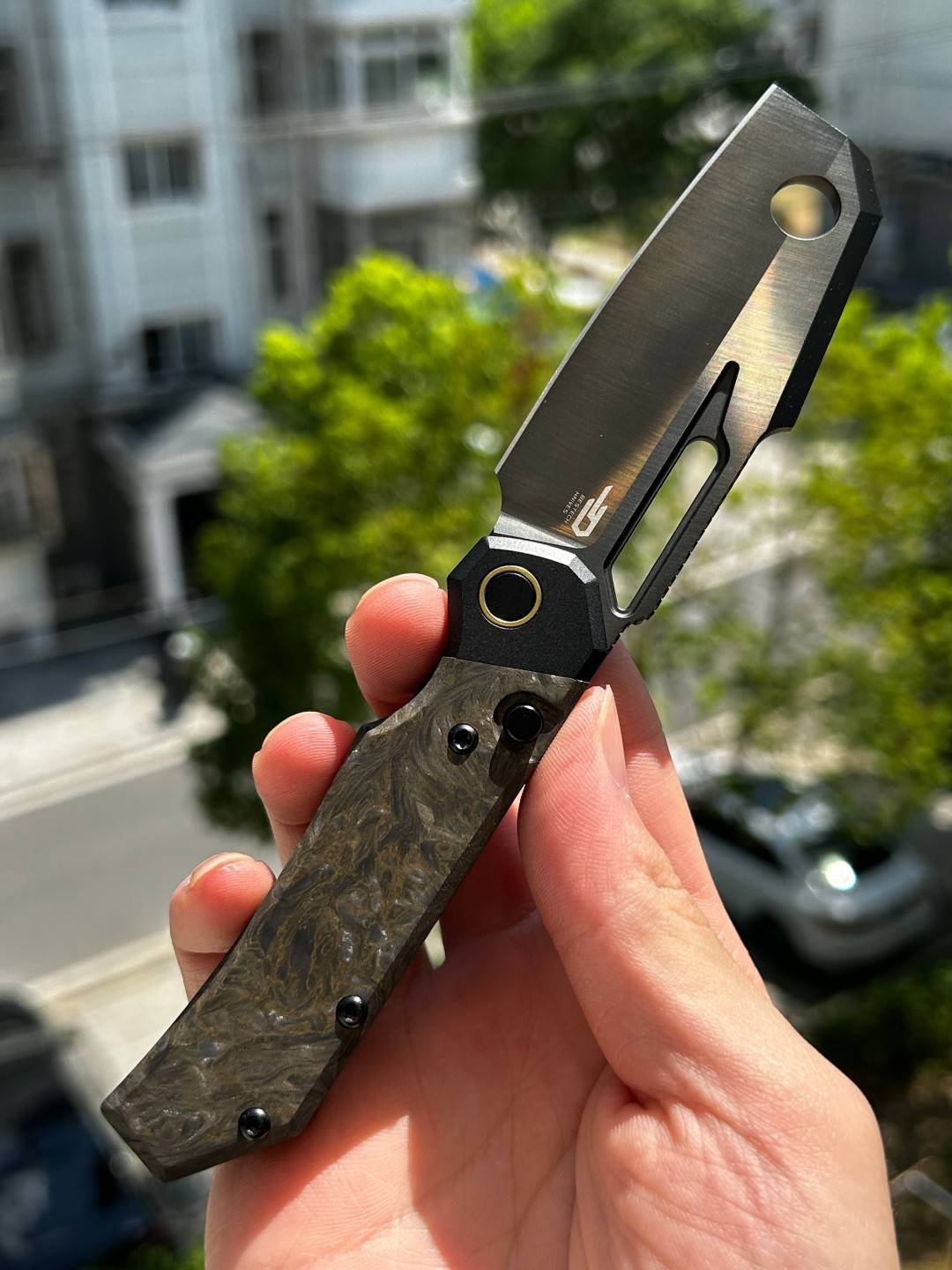
To realize this design, manufacturing partner Bestech deploys multi-axis CNC milling centers capable of cutting continuous, compound radii across the TC4 titanium billet. Every facet along the handle spine, perimeter, and finger contour is shaped through controlled tool paths that eliminate visible stepping or tool chatter. The perimeter features sweeping 3D chamfers that eliminate sharp edges, ensuring that the hand encounters only smooth, radiused titanium during heavy downward cutting pressure.
Seamless Inlay Tolerances and Component Integration
A definitive indicator of premium manufacturing quality is how cleanly disparate materials meet within a single frame. In budget production knives, scale inlays frequently suffer from uneven gaps, elevated lip edges, or inconsistent pocket depths that trap pocket lint and irritate the skin.
On the Nyrrdreki, the titanium chassis serves as an exact pocket bed for various exotic inlay materials, including natural canvas Micarta, high-density layered G10, and marbled Fatcarbon.
| Machining & Finish Element | Engineering Tolerance / Treatment | Tactile & Visual Benefit |
| Inlay Pocket Milling | Sub-millimeter CNC perimeter tolerances | Flush material transition with zero catch points |
| Titanium Frame Chamfering | Multi-angle continuous 3D contouring | Eliminates pressure hotspots during extended use |
| Pivot Collar Counterboring | Concentric high-precision boring | Eliminates lateral play in the ceramic bearing race |
| Hardware Recessing | Flush-mounted Torx screw seating | Smooth pocket glide without snagging on clothing |
The joint between the composite scale and the titanium skeleton is virtually imperceptible to the touch. This precise nesting protects the perimeter of the inlays from accidental impact chipping while creating a unified structural handle.
 Surface Finishing: Bead-Blasting and Vapor Deposition
Beyond raw cutting precision, the exterior surface treatment of titanium dictates its tactile grip, reflectivity, and long-term scratch behavior. The Nyrrdreki lineup utilizes two distinct surface finishing methods across its titanium handles.
Matte Micro-Bead Blasting
The lighter titanium variants receive a specialized fine-media bead-blast treatment. This process gently peens the outer metal surface, creating a satin-like, non-reflective matte texture. The resulting finish enhances tactile grip even with wet or cold hands, while giving the titanium an understated, industrial look that pairs naturally with the Austrian Böhler M390 blade.
Physical Vapor Deposition (PVD)
For tactical and covert builds, the titanium chassis undergoes high-vacuum Physical Vapor Deposition. A dark, wear-resistant coating is bonded directly to the titanium substrate on a molecular level. Unlike painted or dipped surface coatings that can chip or flake away around pocket clip screws, the PVD layer remains bonded to the metal, offering a deep, uniform matte black tone that resists daily pocket wear.
Internal Weight-Relief and 3D Milled Pocket Clip
A titanium handle of this thickness could easily feel overly dense in the pocket if left as a solid billet. The interior faces of the titanium slabs feature complex CNC weight-reduction pockets milled directly into low-stress regions of the frame.
Internal Skeletonization
By strategically removing excess titanium from the interior walls without compromising the structural integrity of the lock channel, the knife achieves a nimble pocket weight of under four ounces. This skeletonization preserves torsional rigidity while balancing the knife's center of gravity right behind the main pivot screw.
The Sculpted Titanium Pocket Clip
Rather than utilizing a stamped sheet-metal clip, this compact folding knife features a pocket clip sculpted entirely from a solid block of TC4 titanium. The clip follows the faceted Norse aesthetic of the handle, incorporating a smooth ramp and recessed mounting screws that slide over pocket seams effortlessly without chewing up fabric.
 The Tactile Standard for Daily Carry
The Bestech Nyrrdreki demonstrates what happens when artistic concept design is matched with uncompromising CNC execution. From the flush inlay seams and radius-chamfered frame edges to the internally skeletonized liners and sculpted 3D titanium clip, every millimeter of the handle exhibits meticulous attention to manufacturing detail.
For gear enthusiasts curating a dedicated EDC rotation, this high level of machining precision ensures that the knife is not merely an attractive visual statement, but a refined, ergonomic tool built to endure years of demanding pocket carry.