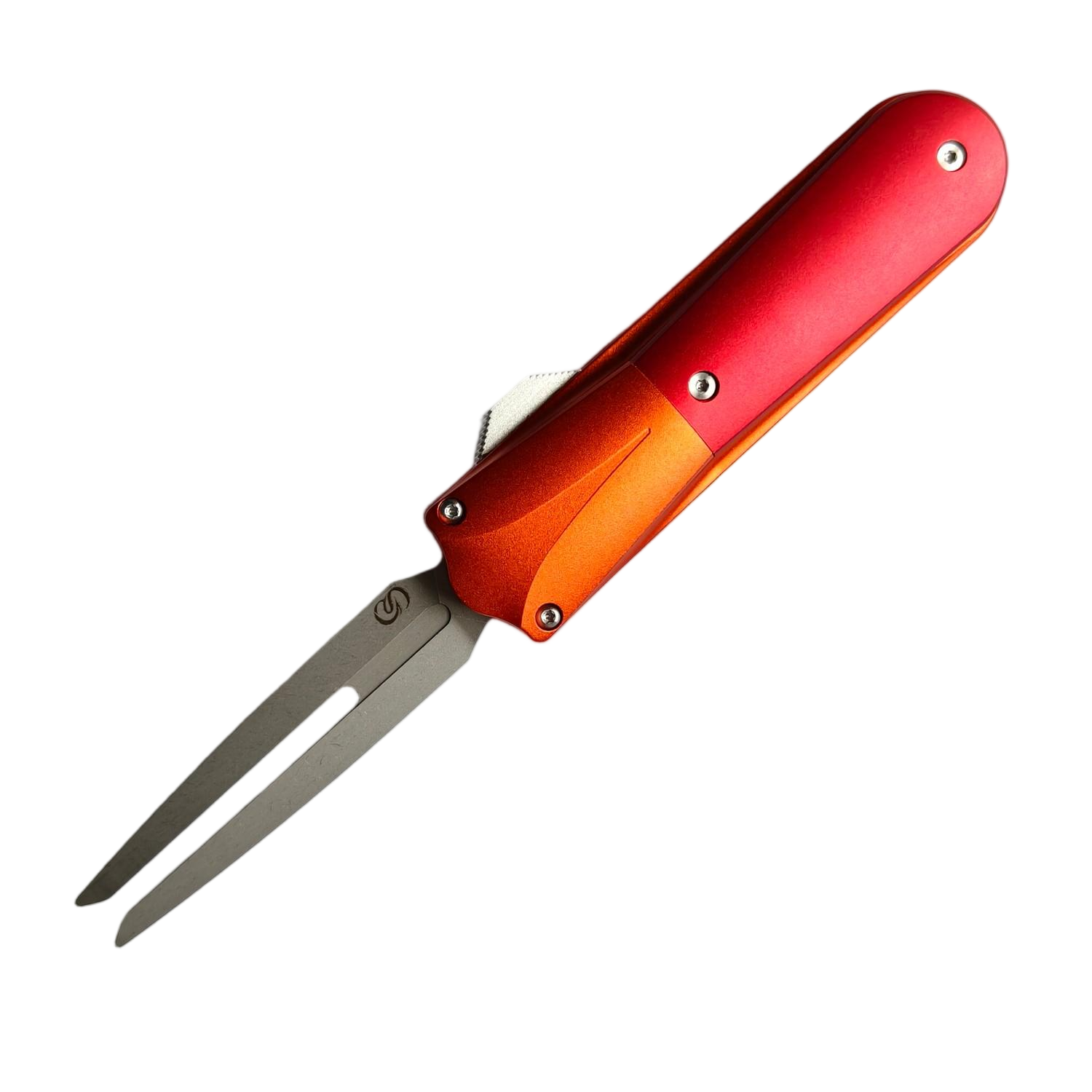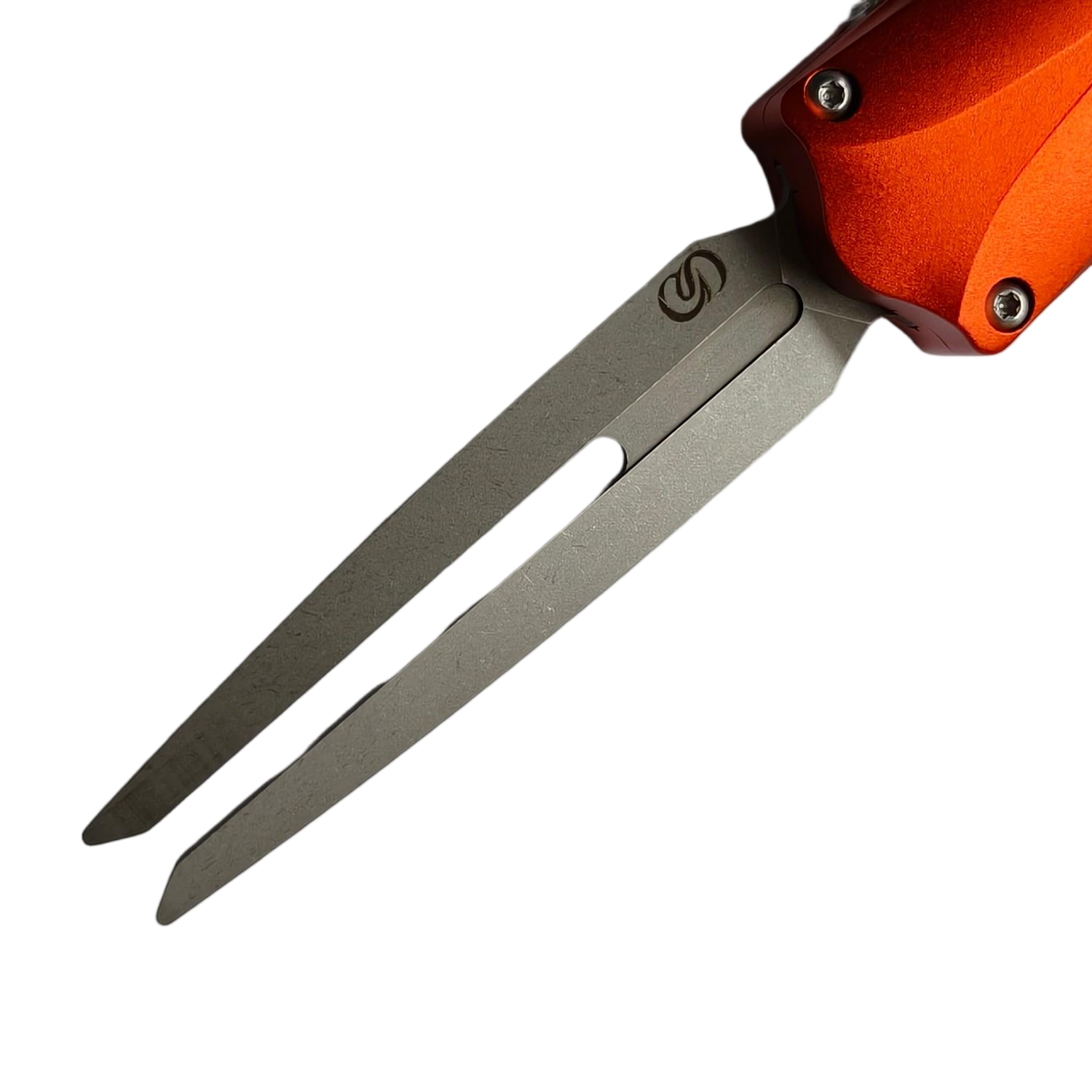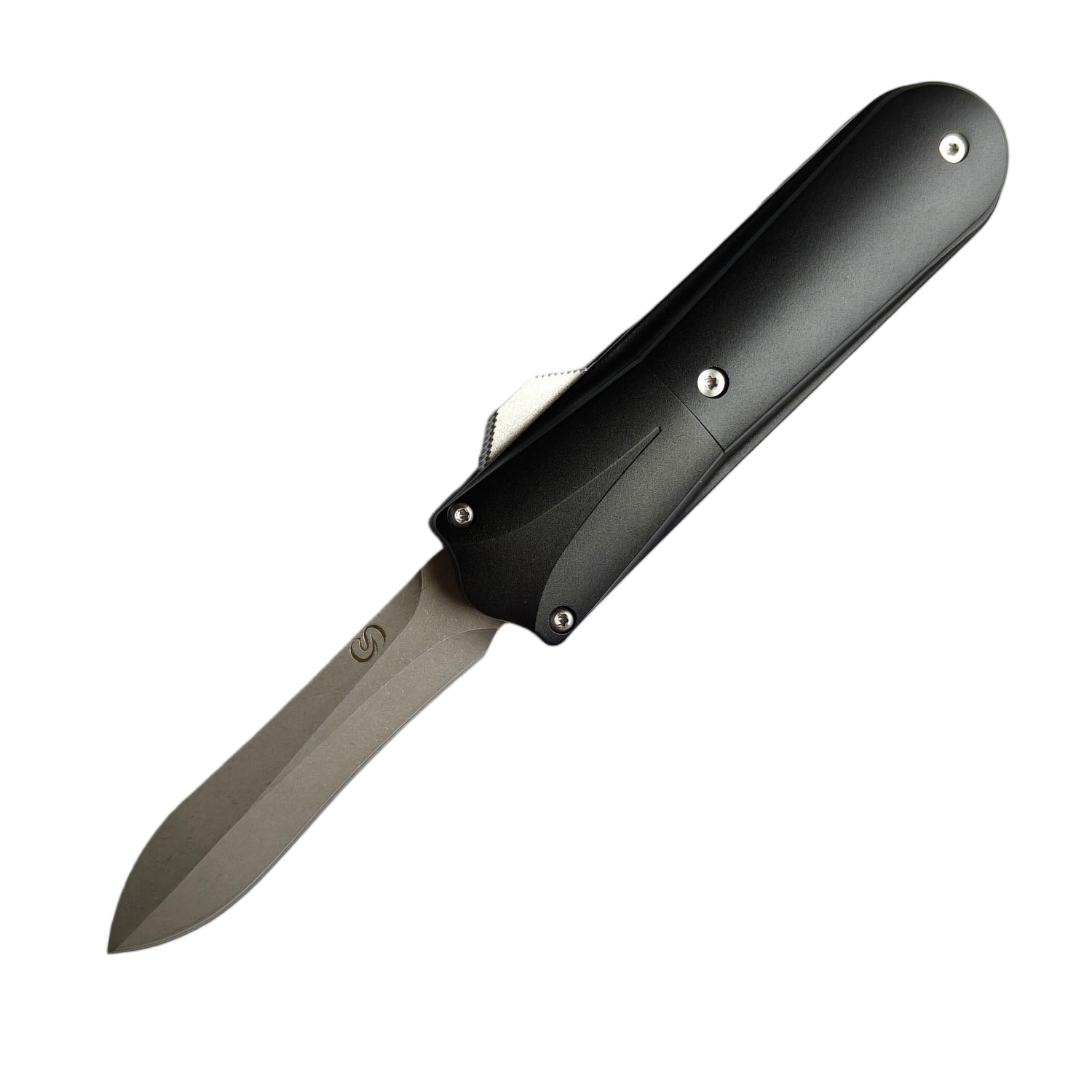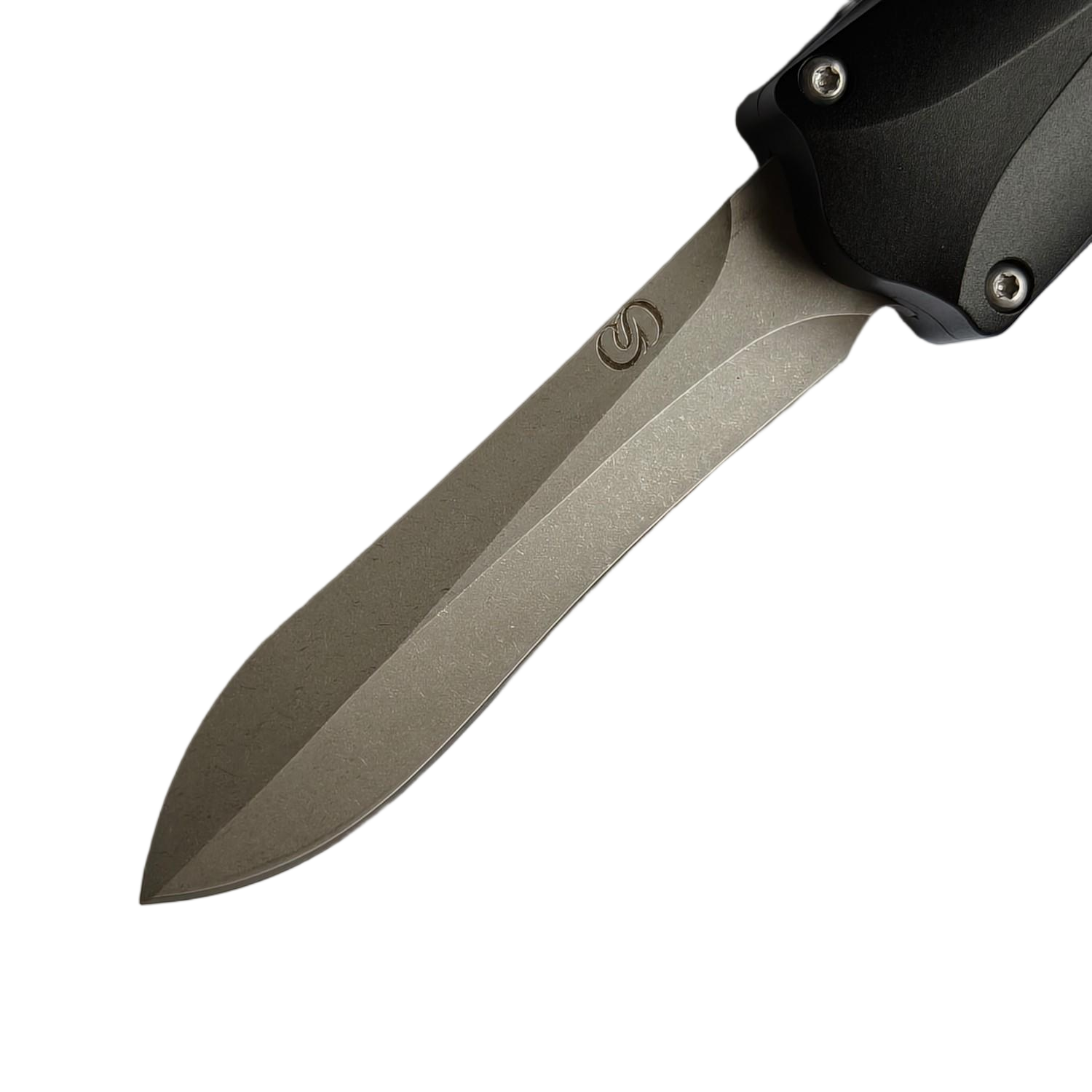
In the world of modern cutlery, discussions regarding blade steel often fixate entirely on abrasive wear resistance. However, for everyday slicing tasks, apex keenness—the structural ability of a steel to take and sustain an ultra-fine, razor-sharp edge—is what truly defines the user experience. A knife that resists wear but chips under stress or refuses to take a hair-splitting apex quickly becomes frustrating during routine utility work. The Bestechman Smuga addresses this fundamental challenge by adopting a specialized metallurgical approach. Engineered by Bestechman in collaboration with Polish custom maker Grzegorz Grabarski (Kombou), this precision folding knife harnesses the unique structural characteristics of AEB-L stainless steel to deliver exceptional cutting responsiveness for the dedicated EDC enthusiast.
 The Metallurgical Foundation of Surgical-Grade AEB-L
To understand why the Smuga cuts with such clean efficiency, one must examine the composition and purpose of its alloy. Developed by the Swedish specialty steel manufacturer Uddeholm, AEB-L was formulated specifically for high-precision cutting tools, primarily surgical scalpels and fine industrial razor blades.
Unlike high-alloy wear-resistant tool steels that incorporate massive additions of vanadium or molybdenum to create large, wear-resistant carbide clumps, AEB-L focuses on structural purity and fine chemical balance. It utilizes a refined recipe of approximately 0.67% carbon and 13.0% chromium. This balanced ratio prevents the formation of coarse, brittle primary chromium carbides during solidification, yielding a clean, homogeneous steel matrix.
Carbide Microstructure and True Apex Keenness
The physical sharpness of a blade edge is governed directly by its microscopic grain structure. When a knife edge is ground to an acute angle, the size and distribution of internal carbides dictate how fine the apex can physically become.
Fine Grain Cohesion
In conventional budget steels such as standard D2, coarse carbide clusters measure anywhere from 5 to 20 microns across. Sharpening these alloys creates an edge where large carbide boulders protrude along the cutting apex. Under lateral pressure or dense slicing, these large carbides can tear out of the softer surrounding matrix, causing microscopic chipping and premature edge failure.
The Razor-Apex Advantage
The AEB-L blade on the Smuga features sub-micron carbides uniformly distributed throughout a fine martensitic lattice. Because the carbides are minute, the steel can be ground to a sub-micron apex angle without tearing or micro-fracturing along the bevel. This fine structure enables a true push-cutting edge that glides cleanly through fibers rather than sawing through them with jagged friction.
 Cryogenic Heat Treatment and Mechanical Optimization
Chemical composition provides the raw potential, but heat treatment determines the actual cutting performance. Bestechman subjects the Smuga’s blade to a specialized cryogenic quenching cycle, optimizing finished hardness at 61–62 HRC.
Eliminating Retained Austenite
During standard heat treatment quenching, a portion of the steel can remain in an untransformed, ductile state known as retained austenite, which reduces edge stability. By subjecting the blade to deep sub-zero temperatures, the internal structure transforms entirely into hard martensite, maximizing structural rigidity behind the cutting edge.
High Impact Toughness at High Hardness
Most budget alloys become brittle and prone to fracture when pushed beyond 60 HRC. In contrast, AEB-L retains remarkable impact toughness even at elevated hardness levels. This enables the Smuga to withstand high shock loads—such as cutting hard plastic cable ties or dense wood—without suffering edge deformation or chipping.
Comprehensive Steel Performance Comparison
| Steel Type | Primary Carbide Size | Impact Toughness | Apex Keenness Potential | Sharpening Speed | Corrosion Resistance |
| AEB-L (Bestechman Smuga) | Ultra-Fine (< 1 µm) | Very High | Exceptional (Razor Apex) | Fast & Effortless | High Stainless |
| Sandvik 14C28N | Fine (1–2 µm) | High | Excellent | Fast | Very High |
| D2 Tool Steel | Coarse (5–20 µm) | Low to Moderate | Moderate (Toothy edge) | Moderate (Abrasion heavy) | Semi-Stainless |
| VG-10 | Medium (3–6 µm) | Moderate | Very Good | Moderate | High Stainless |
| 8Cr13MoV | Coarse / Medium | Moderate | Fair | Fast | Moderate |
Slicing Geometry on the Smuga Platform
The razor-sharp properties of AEB-L steel are amplified by the Smuga's blade geometry. The knife utilizes a full flat grind across its 3.55-inch drop-point profile, tapering smoothly from a 0.13-inch spine down to an acute primary bevel.
This geometry minimizes drag when parting multi-layered cardboard boxes, rope, or food items. Backed by a sturdy stainless steel Liner Lock that eliminates blade play and a caged ceramic bearing pivot for frictionless deployment, the platform provides the rigidity necessary to execute delicate draw-cuts and forceful push-cuts with total confidence.
Effortless Field Maintenance and Strop Recovery
One of the greatest functional advantages of AEB-L is its straightforward maintenance profile. Because the steel relies on a clean, fine carbide structure rather than abrasion-resistant vanadium carbides, it does not require specialized diamond stones or complex sharpening systems.
A light pass over a ceramic rod or a few strokes on a leather strop loaded with fine compound quickly re-aligns the apex, restoring a hair-popping edge within moments. This ease of maintenance ensures the knife remains at peak cutting performance throughout long-term daily use.
 Redefining Cutting Excellence for Everyday Carry
The Bestechman Smuga demonstrates that superior cutting capability is rooted in scientific metallurgy and refined grind execution. By combining the razor-sharp apex potential and impact toughness of cryo-treated AEB-L steel with a featherweight G10 chassis, the Smuga delivers slicing precision, durability, and maintenance ease that elevate everyday carry cutting tasks to a new level.