
Overview & First Impressions
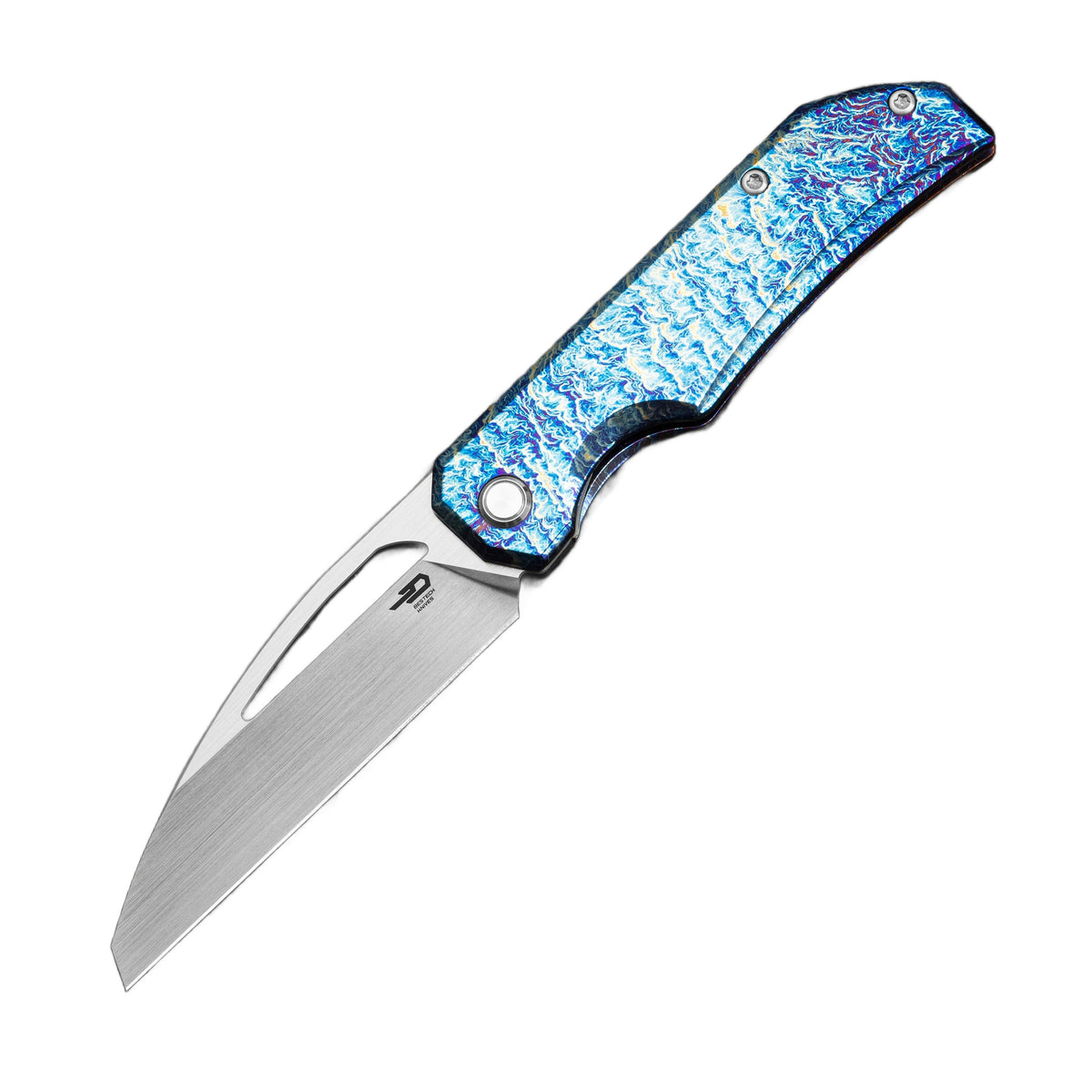
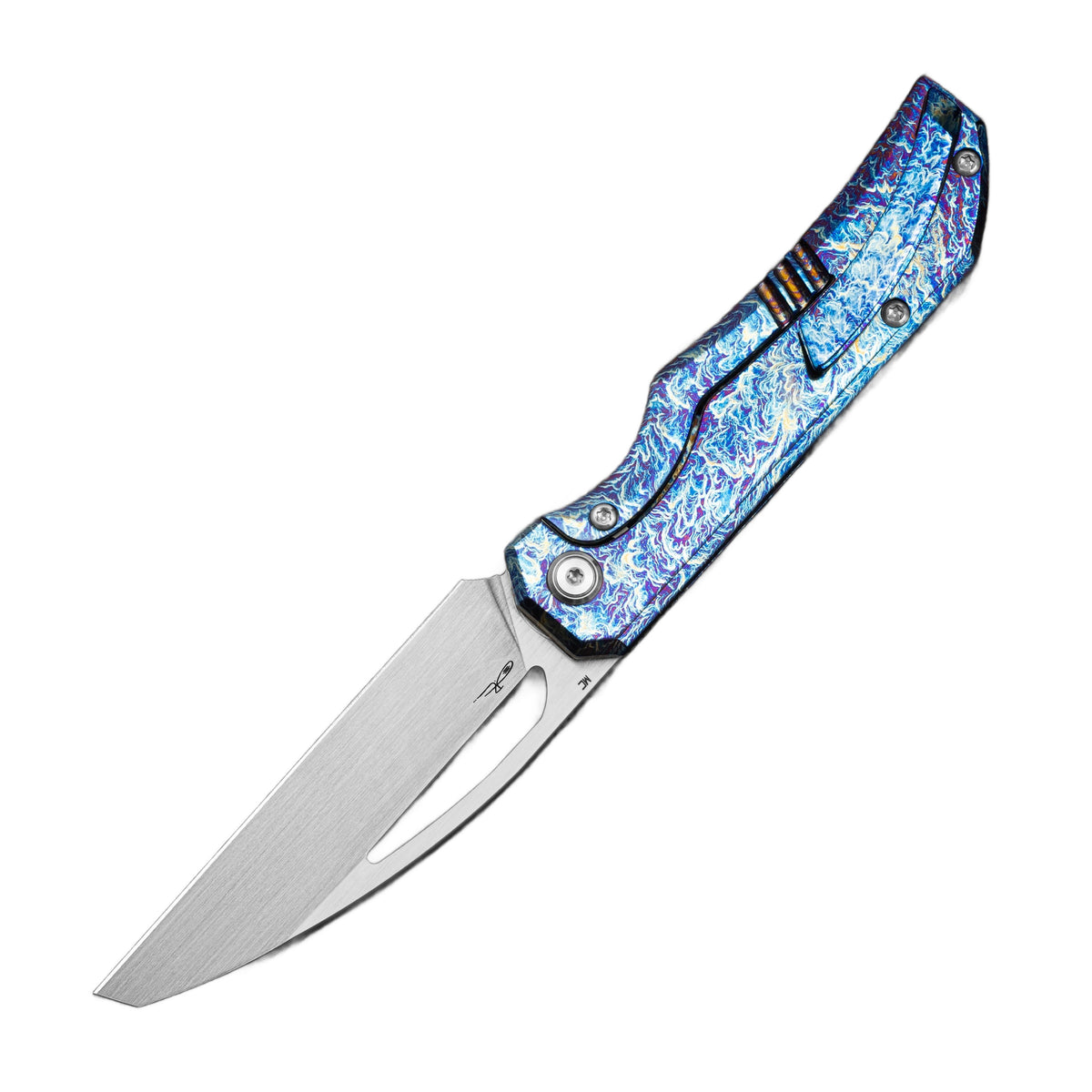
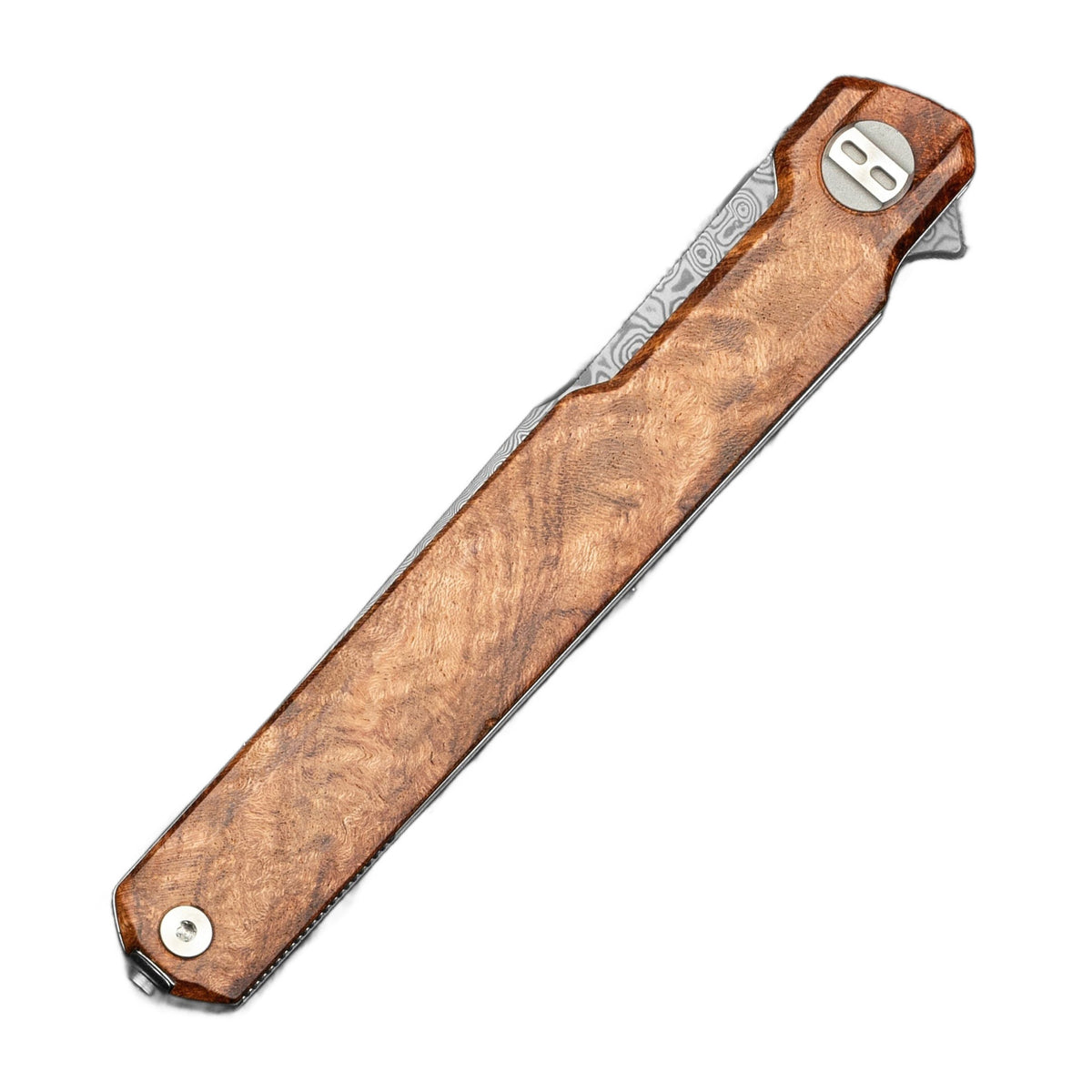
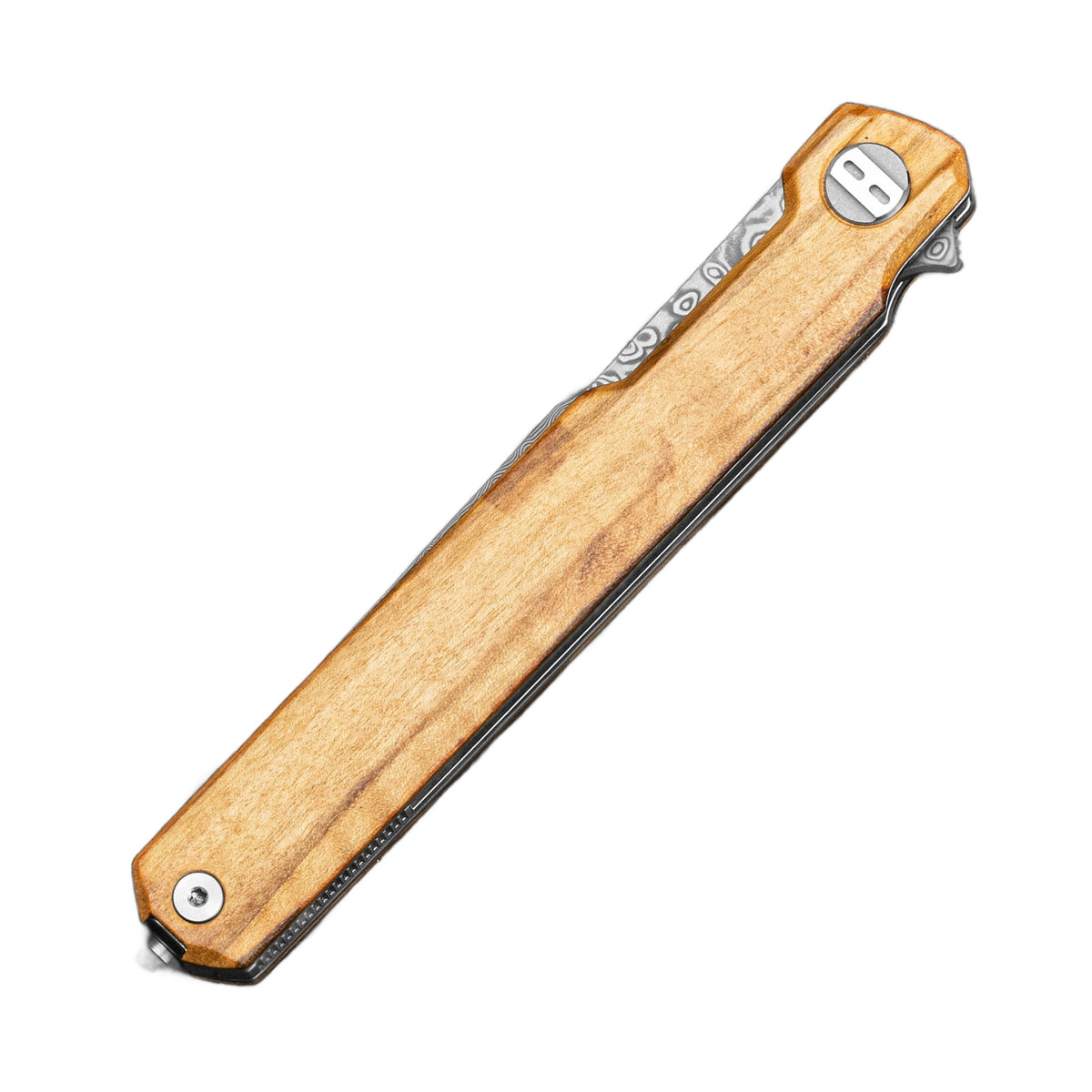
The Kamoza comes in two materials stories, and the choice between them is the most interesting decision in the whole range. Three variants run M390 for buyers who want wear resistance above all, and two run an etched Damascus blade for buyers who want a surface worth looking at. Everything else is shared: titanium frame lock, a slim handle, titanium hardware and a deep-carry clip. Pick the steel for how you cut, and pick the blade for how you feel about patina.
Materials & Construction
M390 is a powder-metallurgy stainless with high vanadium content: excellent edge retention, very good corrosion resistance, and a sharpening routine that rewards diamond abrasives. Damascus steel in this context is a layered billet, etched to reveal the fold pattern, which means every blade is slightly different and the surface is not a coating. The titanium frame is common to both, with a carbidised lock interface and a stonewash or anodised finish depending on the variant.

Design & Details
The Kamoza's blade is a slender drop point with a high flat grind and a fine tip, which suits the slim handle. The frame lock is integral to the titanium slab, and the flipper tab is sized for a thumb roll rather than a hard snap. The handle has a gentle curve, chamfered edges and a single finger groove. Hardware is titanium, the pivot runs on bearings, and the clip sits deep enough that only the top edge shows above a pocket seam.
Real-World Use
This is a knife for people who cut with intent rather than volume: opening packaging, trimming cord, slicing fruit, cutting tape along a seam. The M390 variants shrug off a month of that without attention; the Damascus variants ask you to dry the blade after wet work and oil it before storage. Neither is a pry bar. Both feel substantial in the hand for their size, and both deploy reliably with a light flipper press.

Ownership Notes
Decide your maintenance tolerance before you buy. M390 wants a diamond stone and a strop; Damascus wants a dry cloth and a thin film of oil. Titanium handles scratch, and anodised colours fade where the clip rubs. EdcMall stocks both blade options, so compare them side by side rather than ordering blind. Whichever you choose, keep the lock face clean, because grit is what makes a frame lock feel tired. If you want the same frame with a simpler steel, the M390 variants are cheaper to live with and easier to sharpen. Among Bestech knives the Kamoza is the slimmest frame lock in the mid-range, and among folding knives with a patterned option it is one of the few where the Damascus version is genuinely worth the premium.
Who Is This For?
Collectors who want a slim titanium frame lock, and buyers who appreciate a patterned blade as an object. The M390 versions suit daily users; the Damascus versions suit people who rotate knives and keep them dry. It is not the knife for a job site or a wet environment. For a display shelf or a jacket pocket it is exactly right.
Final Verdict
The Kamoza is a well-proportioned frame lock that happens to come in two very different materials. Buy M390 if you cut every day and hate sharpening; buy Damascus if you want a blade that changes with the light. Either way you get titanium, a deep clip and tolerances that hold. That is a better decision framework than picking the prettiest photo.