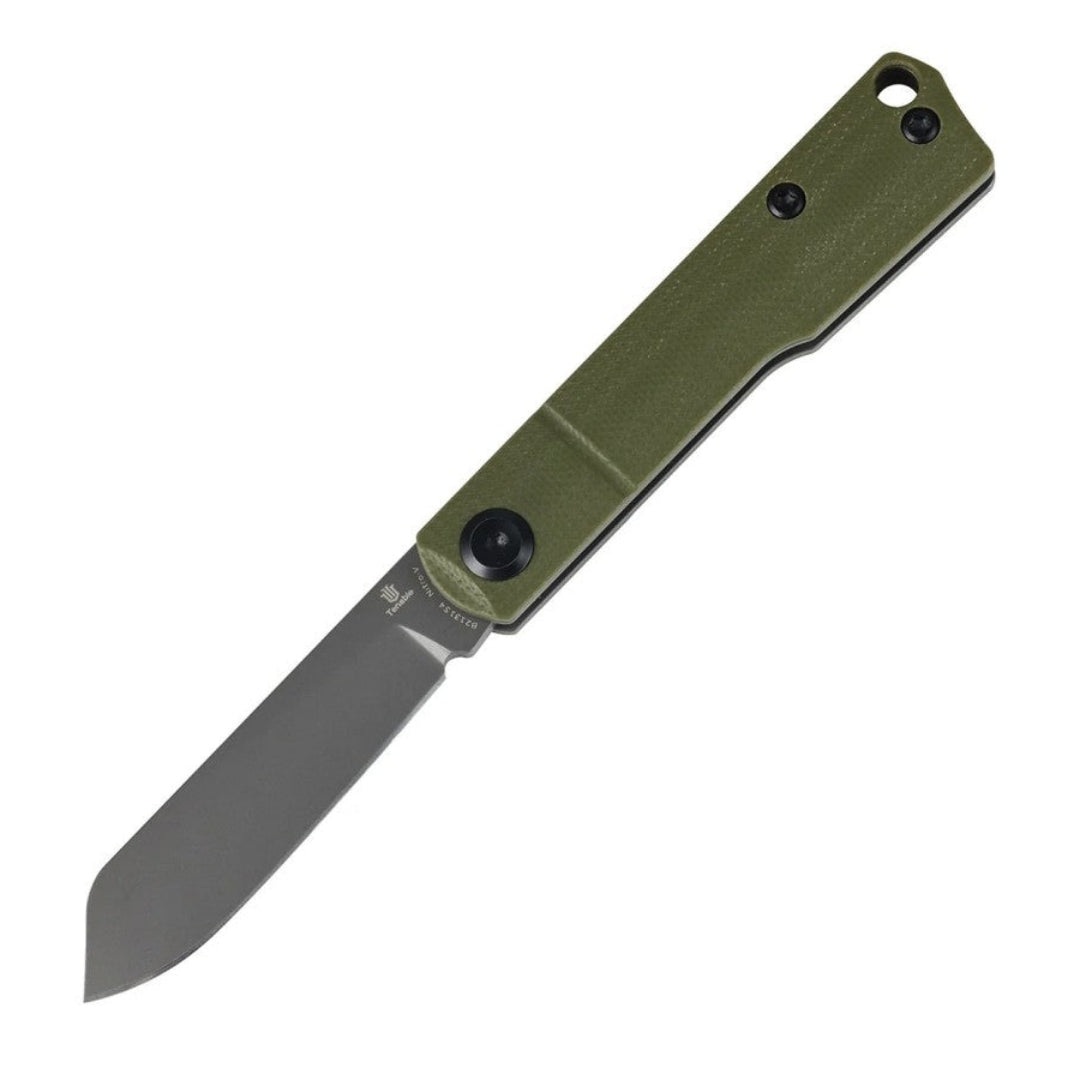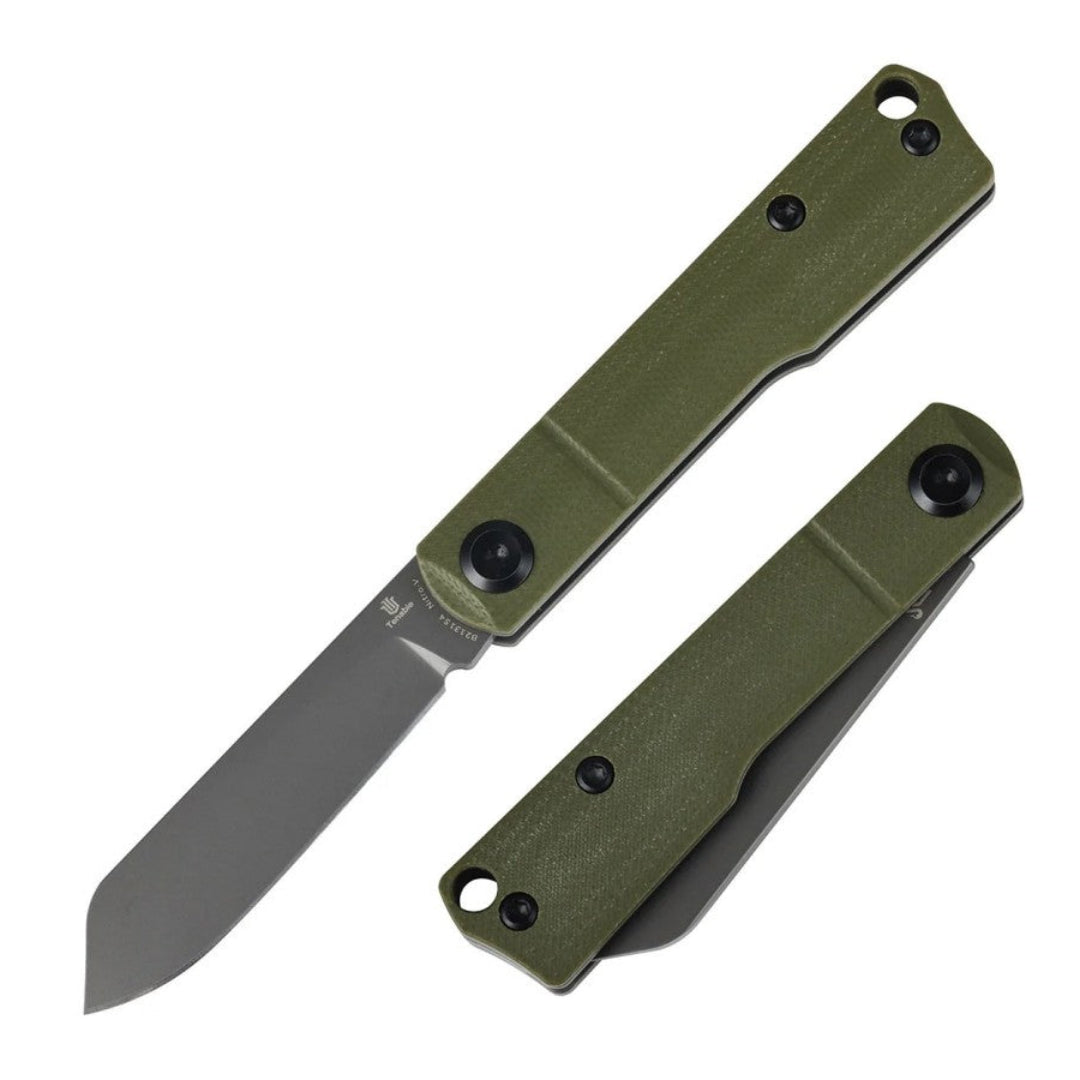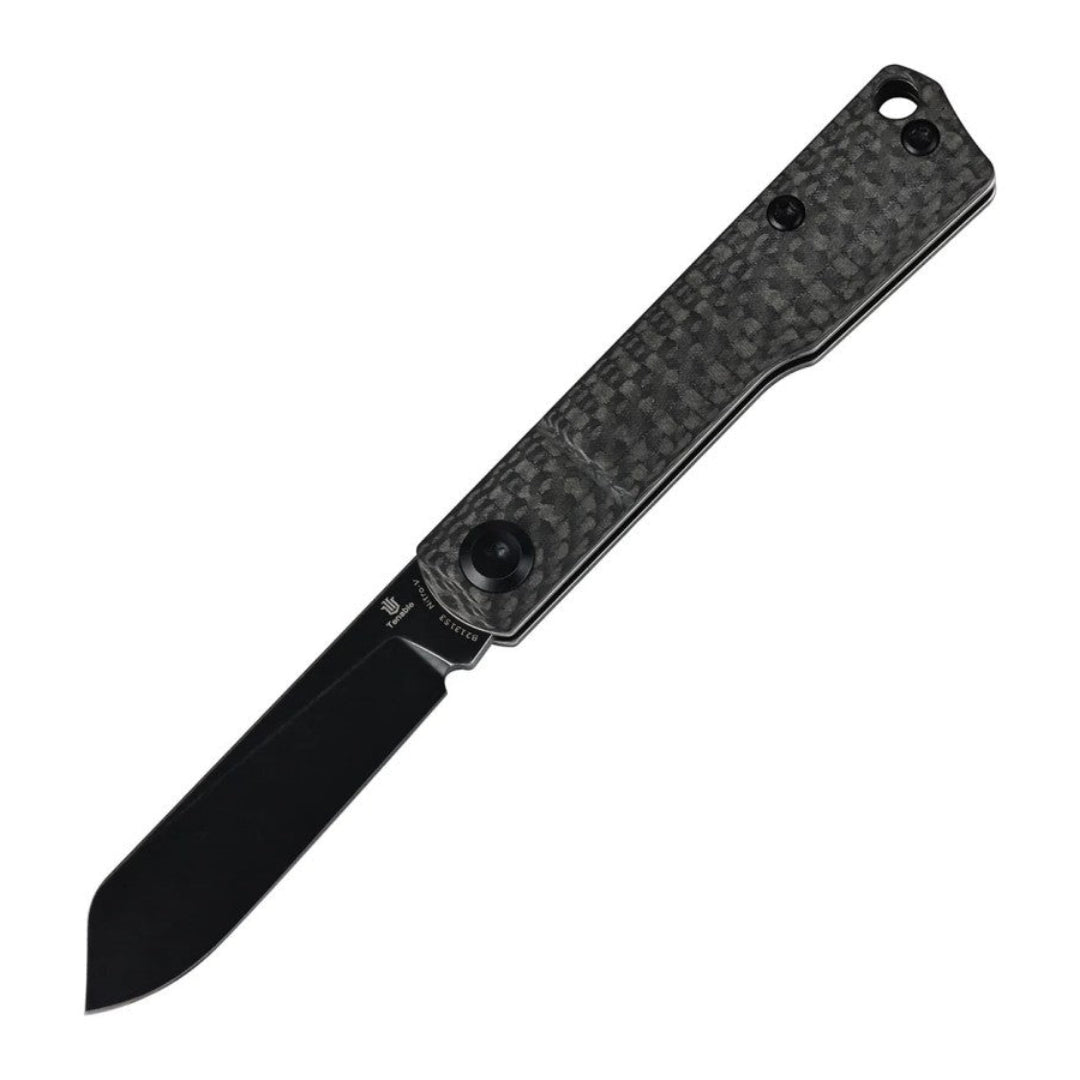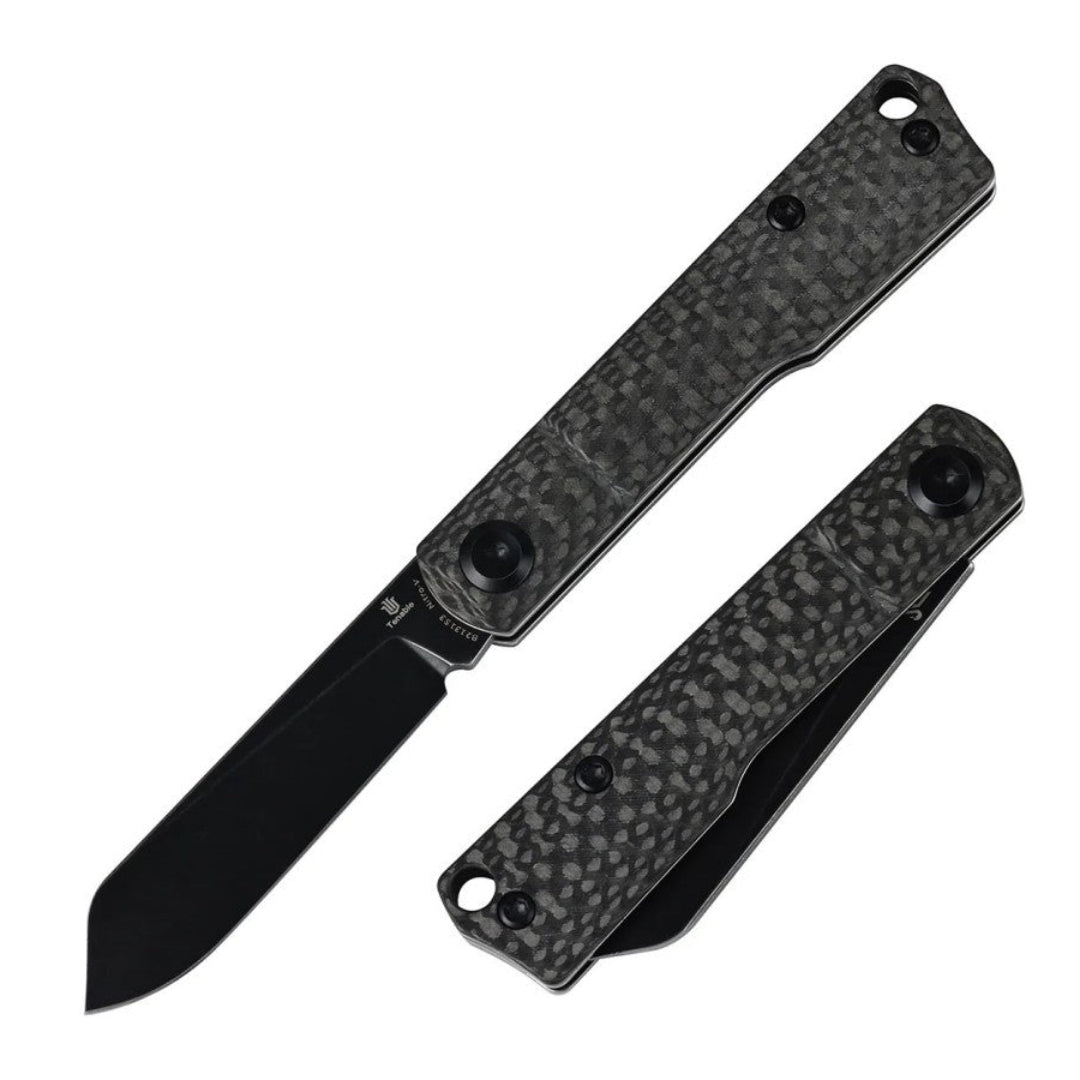

Building the perfect everyday carry (EDC) setup is all about curating tools that fit seamlessly into your lifestyle. Among those tools, a reliable pocket knife is often the centerpiece. It needs to be tough enough to handle daily workloads, compact enough to ride comfortably in a pocket, and reasonably priced so you aren't afraid to actually use it.
When searching for a high-value budget folder that checks all of these boxes, two models from QSP Knife consistently dominate online recommendations: the QSP Penguin and the QSP Parrot.
 Both knives hover around the same highly accessible budget price point, both utilize rugged D2 tool steel in their standard configurations, and both feature rock-solid structural liners. Yet, in hand and in practice, they are entirely different tools.
If you are stuck trying to choose between these two modern budget icons for your daily carry layout, this comprehensive breakdown will help you decide which one belongs in your pocket.
The Core DNA: What They Share
Before diving into the differences, it is worth noting why QSP is so highly regarded in the first place. Whether you purchase the Penguin or the Parrot, you are guaranteed a baseline of excellent quality:
-
High-Hardness D2 Tool Steel: Both knives use D2 steel as their standard base option. This steel is highly praised in the EDC community for its phenomenal edge retention. It keeps a working edge far longer than standard budget stainless steels.
-
Copper Pivot Washers: Instead of using cheap plastic washers or delicate ball bearings that trap pocket lint and dust, both models utilize phosphor bronze and copper washers. This creates a smooth, hydraulic mechanical action that thrives in dirty, real-world work environments.
-
Secure Liner Locks: Both knives rely on a robust steel liner lock mechanism that snaps firmly into place behind the blade, ensuring your fingers are safe during heavy cuts.

Design Philosophy & Blade Geometry
The primary factor when choosing between the Penguin and the Parrot is how you intend to cut things on a daily basis. The blade shapes dictate their overall utility.
The QSP Penguin: The Downward Pull-Cutter
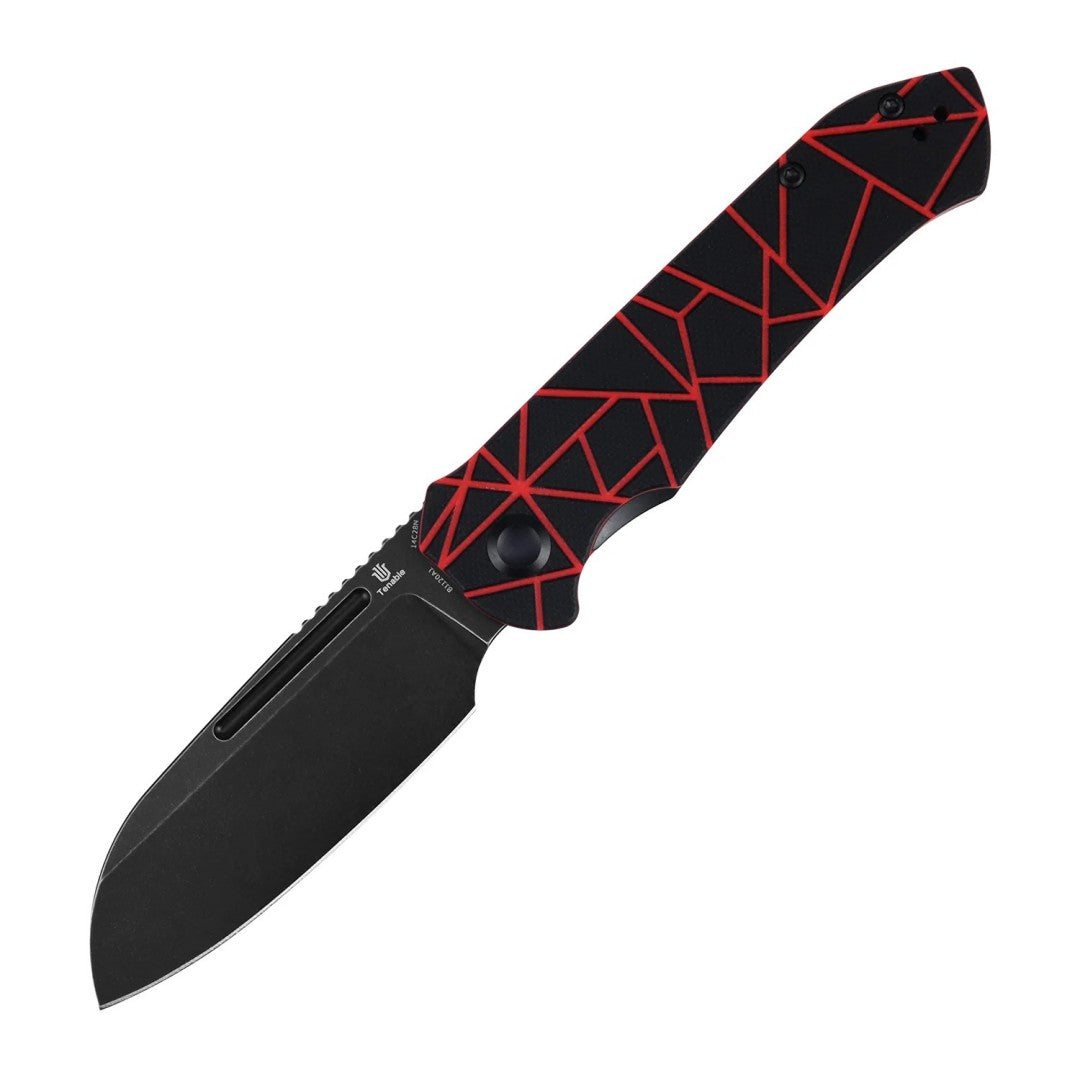
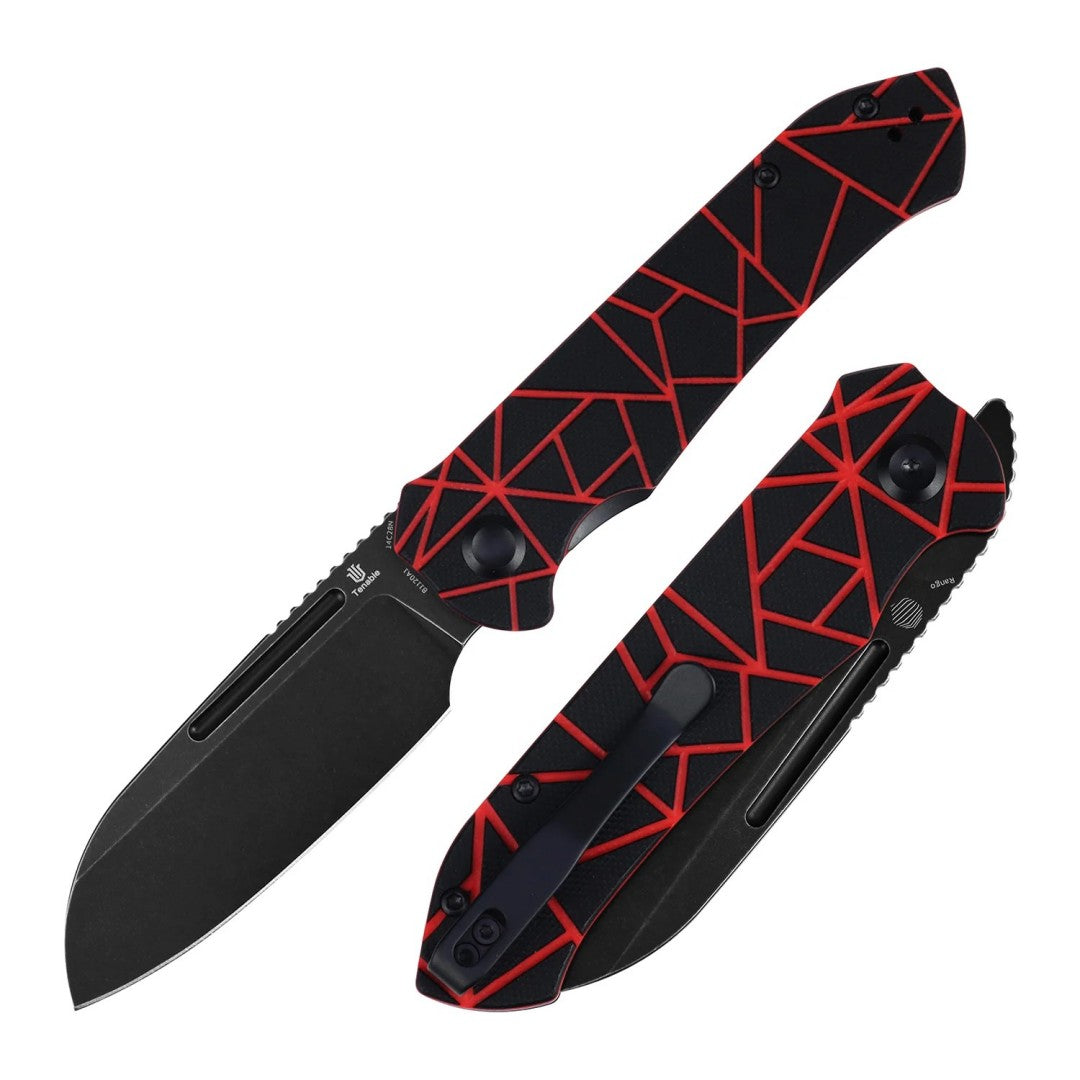
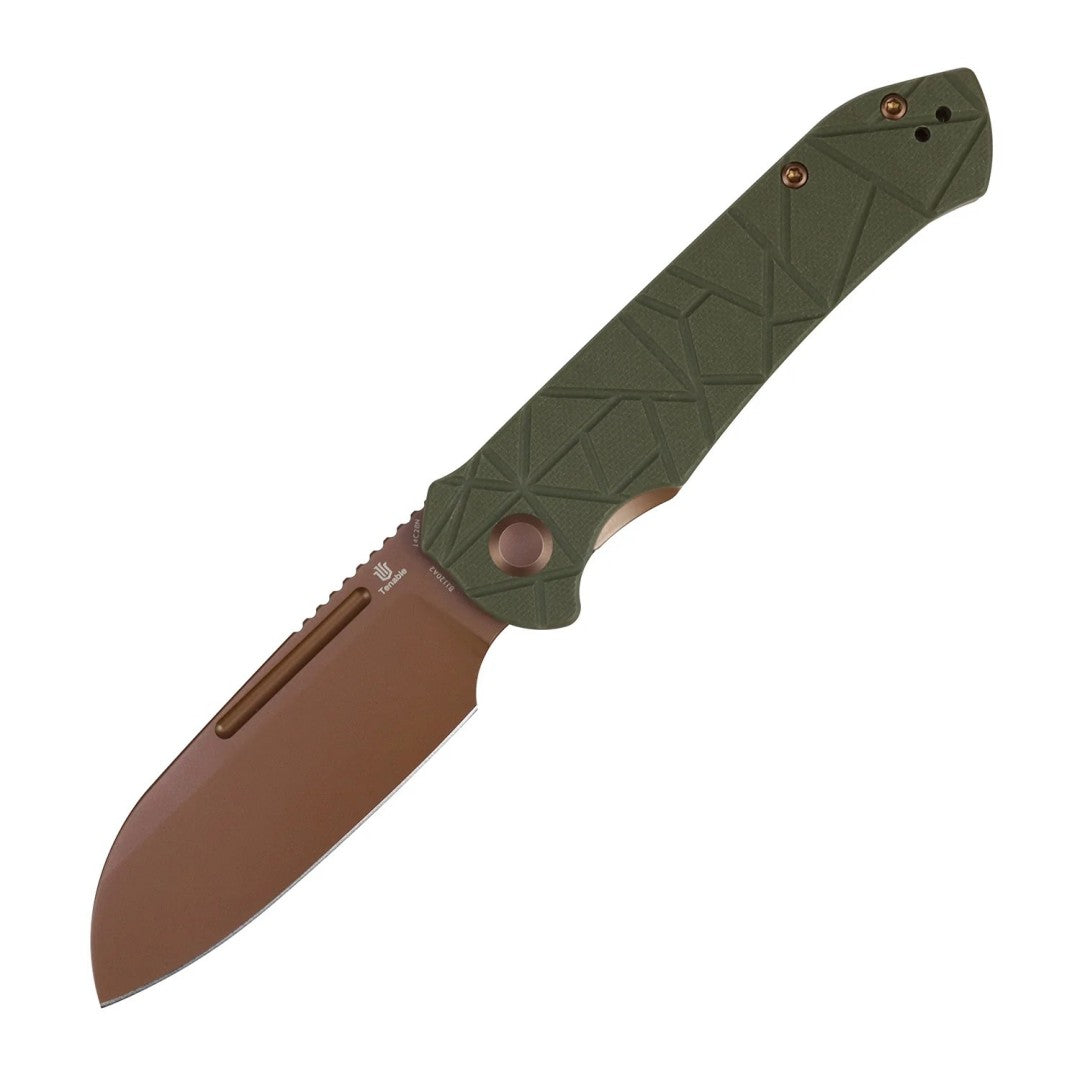
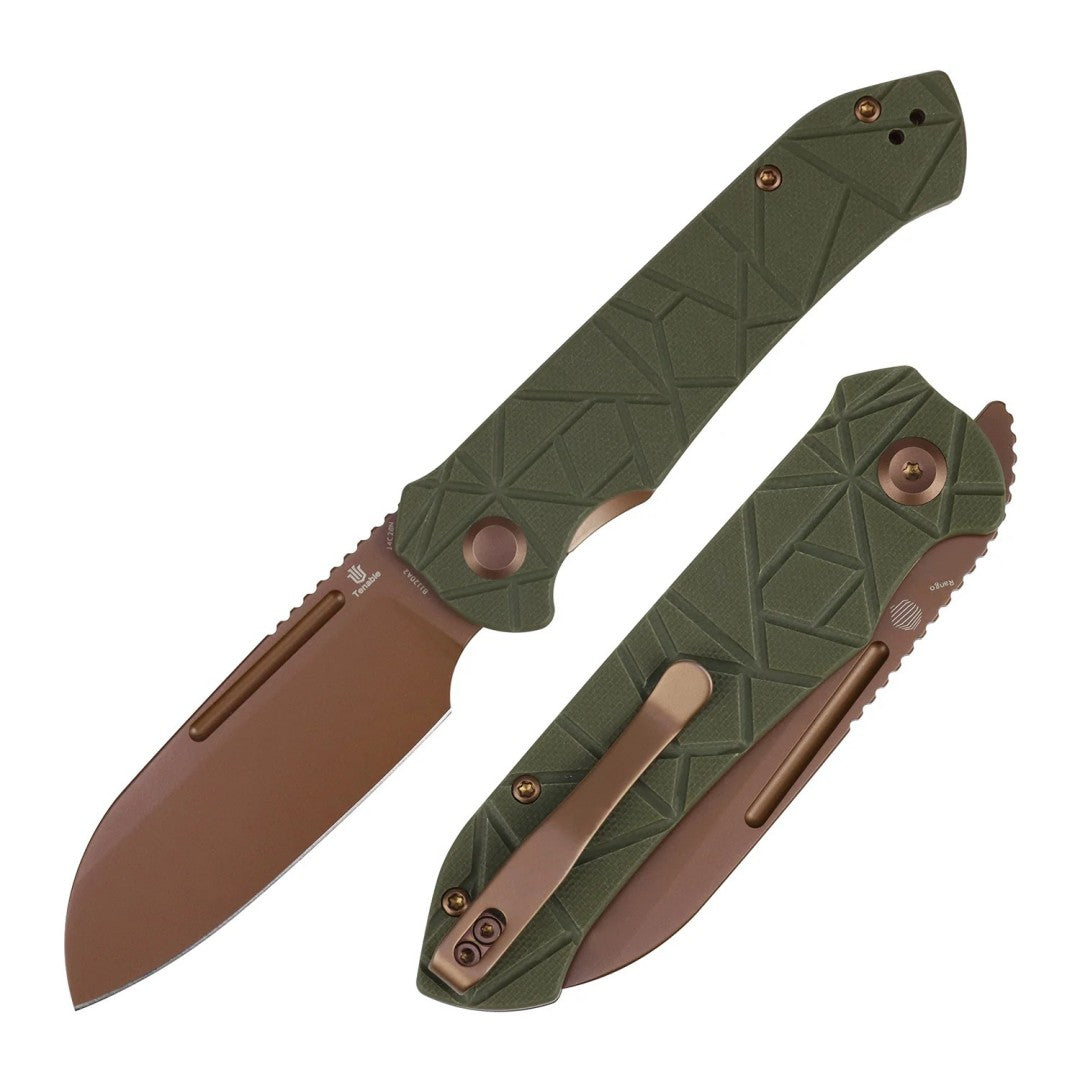
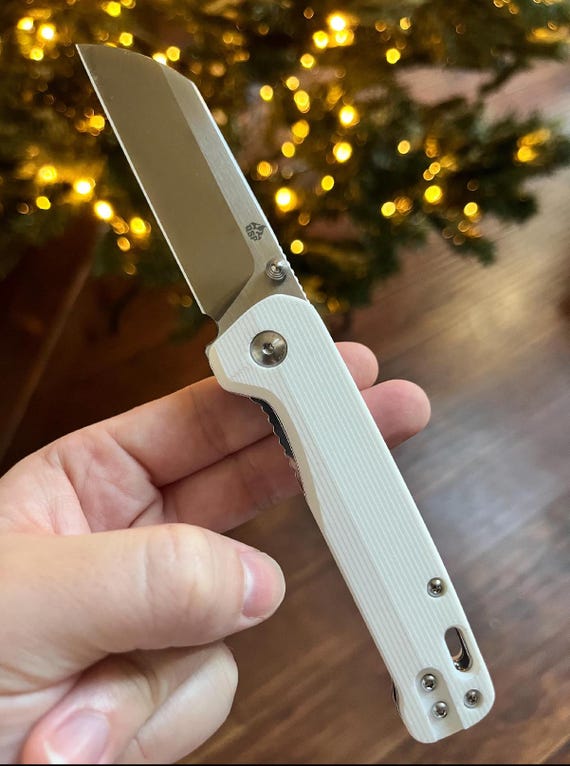
The Penguin features a straight-edged modified Wharncliffe / sheepsfoot blade shape. The spine curves downward to meet a perfectly flat cutting edge with zero belly.
When you perform downward pull-cuts—such as slicing through thick cardboard shipping boxes, cutting heavy carpet, scoring leather, or trimming heavy zip-ties—the flat edge locks the material into the cut. The material cannot slide off the tip. Because the tip points downward, it also allows for highly controlled, precise piercing and utility scraping without accidental deeper punctures.
The QSP Parrot: The Versatile Slicer
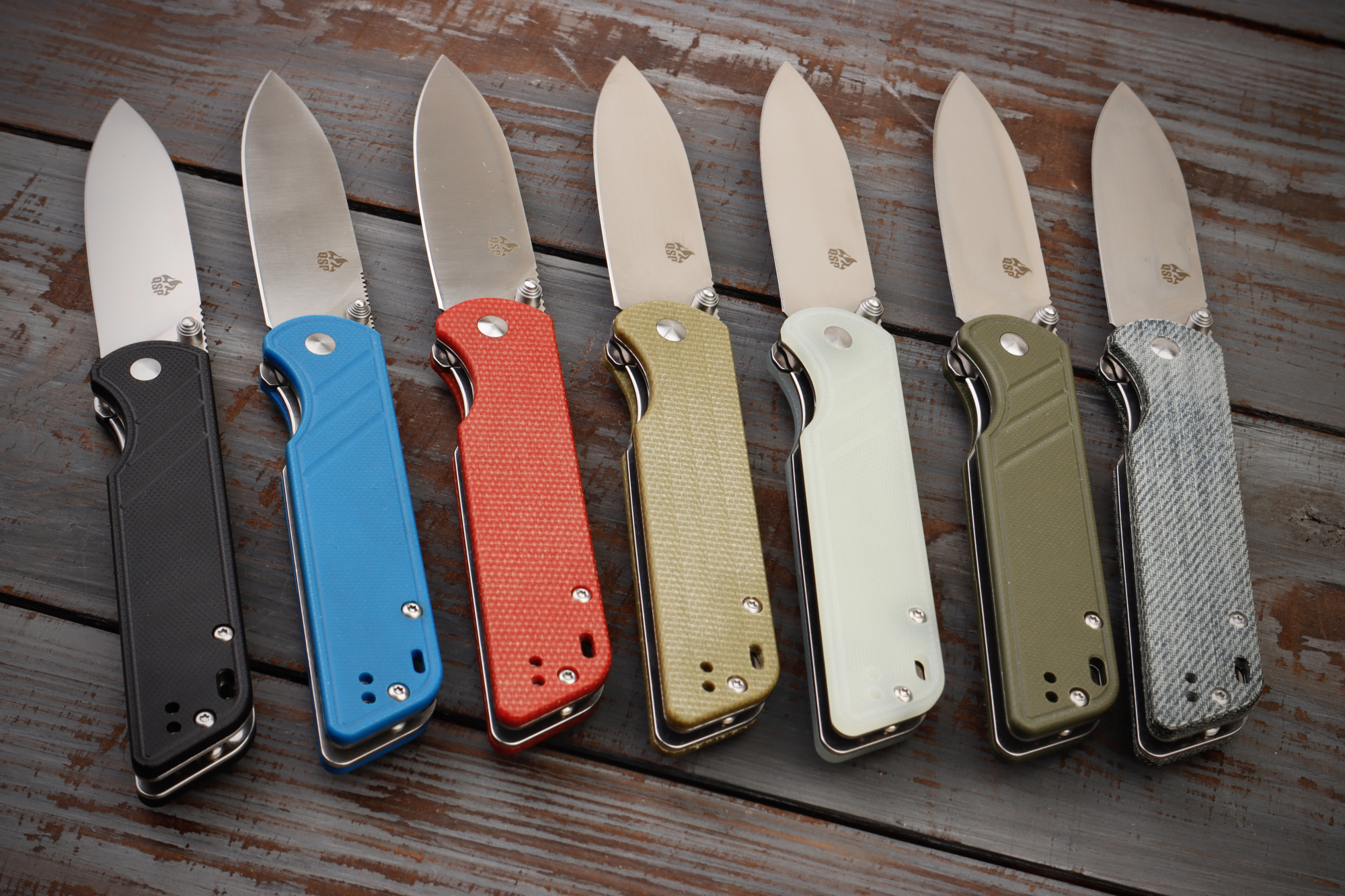
The Parrot adopts a time-tested, traditional drop-point blade shape. Unlike the Penguin, the cutting edge of the Parrot gently sweeps upward toward the tip, creating a curved "belly."
This belly is essential for classic slicing motions where you roll the blade through an object. If your daily carry tasks include preparing food on a camping trip, skinning small game, slicing an apple at your desk, or making long, sweeping cuts through soft materials, the Parrot’s geometry is much better suited for the job.
Ergonomics and Pocket Presence
How a knife feels in your hand and behaves inside your pocket determines whether it stays in your daily rotation or gets tossed into a drawer.
Handle Ergonomics
The Penguin utilizes a very neutral, blocky rectangular handle profile. There are no molded finger grooves forcing your hand into a specific position. This "neutral" grip means it fits almost any hand size perfectly. Whether you have large work hands or are wearing thick construction gloves, you can find a comfortable grip instantly.
The Parrot features a slimmer, slightly contoured handle with a distinct index finger cutout right behind the cutting guard. This locks your hand securely into the tool for high-pressure pushing tasks, preventing your hand from slipping forward onto the sharp edge. However, users with exceptionally large fingers may find the cutout slightly restrictive.
Pocket Deployment and Carry Profile
-
The Penguin Profile: The Penguin comes standard with a deep-carry pocket clip. The knife sits completely below the top lip of your pocket, making it highly discreet and low-profile for office environments. The dual thumb studs stick out just enough to allow you to easily "flick" the blade open with a fast, snappy action.
-
The Parrot Profile: The Parrot features a standard, shallower pocket clip, leaving a small portion of the handle exposed above the pocket line. This makes the knife slightly easier to grab quickly, though it is less discreet. Its thumb studs are positioned closer to the handle scales, resulting in a more deliberate, slow, and non-threatening manual opening action.
Head-to-Head Specification Table
| Feature / Spec | QSP Penguin (Standard) | QSP Parrot (Standard) |
| Blade Shape | Modified Wharncliffe / Sheepsfoot | Traditional Drop-Point |
| Blade Steel | D2 Tool Steel | D2 Tool Steel |
| Blade Length | 3.06 inches (7.8 cm) | 3.25 inches (8.2 cm) |
| Overall Length | 7.06 inches (18.0 cm) | 7.25 inches (18.4 cm) |
| Pocket Clip | Deep-Carry (Reversible) | Standard-Carry (Reversible) |
| Handle Material | Denim Micarta, G10, Carbon Fiber | Canvas Micarta, G10 |
| Best For | Box cutting, utility, office EDC | Camping, slicing, traditional general use |
Final Decision: Which One Should You Buy?
Both tools represent the pinnacle of budget everyday carry design, meaning there is no wrong choice—only a better choice for your specific lifestyle.
Go with the QSP Penguin if:
Your primary daily cutting tasks involve cardboard boxes, plastic packaging, heavy utility cords, and typical urban or office maintenance work. If you value a hidden deep-carry profile and a snappy, modern opening action, the Penguin is the clear winner.
Go with the QSP Parrot if:
You prefer a classic, outdoor-friendly pocket knife layout. If your everyday carry looks more like hiking, campsite food prep, light woodwork, or traditional general-purpose slicing, the drop-point belly of the Parrot makes it the more versatile all-around choice.
Frequently Asked Questions
Do the QSP Penguin and Parrot require frequent sharpening?
No. Because both models utilize high-carbon D2 tool steel, they possess excellent edge retention compared to cheaper stainless steel alternatives. For typical daily tasks, you will likely only need to touch up or sharpen the blade once every few months.
Are these knives fully ambidextrous for left-handed users?
Both knives are highly friendly for left-handed carry. They feature dual thumb studs for easy opening with either hand and include pre-drilled liner holes on both sides, allowing you to easily reverse the steel pocket clip using a standard T6 Torx bit.
How do I prevent the D2 steel on these knives from rusting?
D2 is a semi-stainless steel, meaning it can rust if neglected. To keep your blade clean, simply adopt the habit of wiping the blade dry after it comes into contact with moisture or fruit acids, and apply a light coat of mineral oil or knife lubricant to the steel every few weeks.