


Contact me
Telegram:https://t.me/GearBlog
Instagram:https://www.instagram.com/gearblog_cn/
China Wechat:755913834
Description
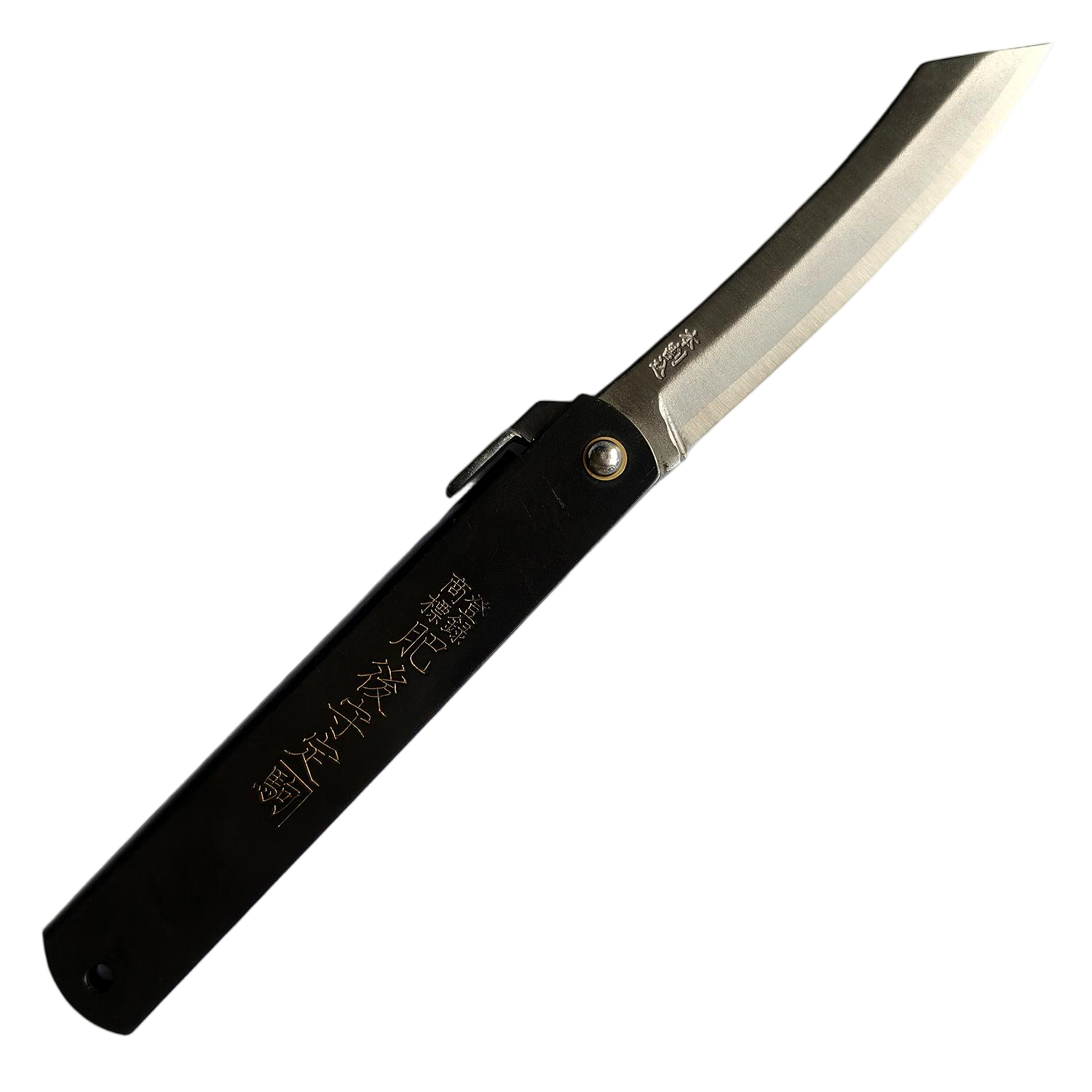
Model:Warikomi SK 120mm
Material: Hand forged 3" Blue paper steel blade
Open length: 21CM
Handle length: 12CM
Blade length: 9.5CM
Blade thickness: approximately 3.0MM
Origin:Japan
Medium handle length: 90mm(中)
Large handle length: 100mm(大)
Extra-large handle length: 120mm(特大)
Medium overall length: 16cm(中)
Large overall length: 17cm-17.5cm(大)
Extra-large overall length: 21cm-21.5cm(特大)
Blade thickness approx: 2.5 ~ 3mm
Weight: 37g ~ 60g
Blade material: SK laminated steel
Sheath material: Iron
Care Instructions:
-
The Higonokami blade has a high carbon content, so remember to oil it regularly for maintenance.
-
If the folding joint becomes loose over time, simply tap the pivot pin to restore its tightness.
-
SK steel offers good hardness at a reasonable price point.
-
Made from Japanese Industrial Standard SK steel, it delivers high hardness and excellent machinability, commonly used for blades, saw blades, and similar applications.
Brand Introduction
"Higonokami" is the undisputed king of Japanese pocket knives. Tracing its origins, the birthplace of this iconic blade lies at the Nagao Kanekoma Factory in Miki City, Hyogo Prefecture. Originally named after its hometown of "Hirata," the knife was later redesigned based on a model brought back from Kagoshima Prefecture in Kyushu. This refined version quickly won the hearts of wholesale merchants in the Higo region (the historical name for Kumamoto Prefecture, also in Kyushu), who began placing large orders en masse. The name was changed to "Higonokami," and the rest is history.
In its early days, the Higonokami featured a blade core of blue paper steel, clad in softer jigane and forged into a classic three-layer sanmai construction. The shaping, quenching, and sharpening of the blade followed the same meticulous methods used in traditional samurai swordsmithing, giving it a sharpness and strength that rivaled that of a katana. The gentle curve of the blade, reminiscent of a samurai sword, is a design element that is unmistakably Japanese. Modern Higonokami knives now utilize various steel combinations, each tailored to bring out different functional characteristics in the blade.
The Higonokami stands as a uniquely Japanese invention. Traditional Japanese craft blades can be categorized into samurai swords, hunting knives, and small utility cutters, yet all of them are fixed blades. The folding Higonokami, however, took the small utility knife and evolved it into a practical, one-handed folding knife. Easy to open and highly portable, it is widely regarded as the ancestor of the modern one-handed folder. The concept behind today's popular Western folding knives from brands like Benchmade and Spyderco can all be traced back to this humble Japanese origin.
The Nagao Kanekoma Seisakusho was founded in the 27th year of the Meiji era (1894 AD) and has a history spanning over 130 years. It remains the only workshop authorized to use "Higonokami" as a registered trademark.
Please be sure to read the following:
The blade of a Higonokami is not stainless, so it's best to apply oil after each use. Sewing machine oil is a great choice—it's affordable, effective, and easy to find. If you prefer a simpler option, petroleum jelly works too. For knives that will be used to cut food, camellia oil (also known as tea seed oil or tsubaki oil) is the ideal choice. Avoid using salad oil, and keep in mind that cooking oils are not suitable for long-term storage as they can oxidize and actually accelerate rust. Regardless of which oil you choose, apply only a thin layer—just enough to give the blade a faint sheen. The Higonokami features a thick, robust blade that can easily be brought back to a sharp edge with regular sharpening. Though the process requires some effort, this hands-on maintenance is part of what draws people back to the fundamentals of tool care—one of the reasons the Higonokami has been steadily regaining popularity in today's tech-driven world.
Many steps in the Higonokami manufacturing process are done by hand, so unlike machine-produced knives, they bear the marks of artisan craftsmanship. This is precisely what makes the Higonokami so fascinating. You could almost say that no two Higonokami knives in the world are exactly alike. If your preference leans toward flawless, precision-finished blades, we urge you to think carefully before purchasing a Higonokami—it may not meet your expectations.
Finally, the Higonokami does not feature a locking mechanism like Western folding knives, and its pivot will naturally loosen over time (though it can be tightened again by tapping the pin with a hammer). This is simply part of the Higonokami's character.
Q: Is the Higonokami blade stainless?
Q: The pivot feels loose after extended use. Is this normal?
Q: Will my Higonokami look exactly like the one in the photos?
Q: What makes SK steel a good choice for this knife?
Q: How do I sharpen the Higonokami when it gets dull?
Payment & Security
Your payment information is processed securely. We do not store credit card details nor have access to your credit card information.
Delivery and Shipping
In-stock orders will be shipped in 48 hours except weekend and holidays.
Pre-orders pls subject to the indicated Pre-order shipping dates.
From China warehouse: Estimated delivery in 15–21 business days