When it comes to premium fixed blade knives, steel selection can feel overwhelming. You've probably heard of CPM-3V—the legendary toughness champion. You're likely familiar with CPM-154—the balanced stainless workhorse. But there's another steel in the Crucible lineup that deserves your attention: CPM-4V. Often described as "3V with better edge retention," CPM-4V occupies a sweet spot that hard-use knife enthusiasts are increasingly seeking out. If you're looking for a fixed blade that combines serious toughness with above-average wear resistance for your EDC rotation or outdoor tools collection, understanding CPM-4V will help you make a confident choice.
In this guide, we'll explore what makes CPM-4V special, compare it to other popular steels, and showcase three exceptional fixed blade knives that put this impressive material to work.
What Is CPM-4V Steel?
CPM-4V is a powder metallurgy high-vanadium cold work tool steel produced by Crucible Industries in the United States. It is essentially an upgraded version of CPM-3V, designed to offer higher attainable hardness and improved wear resistance while maintaining a substantial portion of 3V's legendary toughness. The "4V" designation refers to its four primary alloying elements: carbon, chromium, molybdenum, and vanadium.
Like other CPM steels, 4V benefits from Crucible's Particle Metallurgy process, which atomizes molten steel into fine powder that is then consolidated under heat and pressure. This creates a remarkably uniform carbide distribution and fine grain structure that translates directly into real-world performance advantages—better edge stability, improved grindability, and more consistent heat treatment response.
Key Composition and Properties
CPM-4V's exact alloy composition is as follows: Carbon: 1.35%, Manganese: 0.40%, Silicon: 0.80%, Chromium: 5.0%, Molybdenum: 2.95%, and Vanadium: 3.85%. Compared to CPM-3V, 4V contains significantly more carbon, vanadium, and molybdenum, which is what gives it enhanced wear resistance and the ability to achieve higher working hardness.
Key performance characteristics include:
-
High Impact Toughness: CPM-4V offers toughness significantly higher than D2 and CPM-M4, approaching the impact resistance of dedicated shock steels like S7.
-
Excellent Wear Resistance: The high vanadium content (3.85%) forms hard vanadium carbides that provide superior abrasion resistance—substantially better than D2 and a meaningful upgrade over CPM-3V.
-
High Attainable Hardness: CPM-4V can be heat-treated anywhere from 58 HRC for maximum toughness to as high as 64 HRC for maximum wear resistance. Most production knives target 59-62 HRC for an optimal balance.
-
Moderate Corrosion Resistance: With only 5% chromium, CPM-4V falls below the threshold for stainless steel (typically 12-13%). It will develop a patina and can rust if neglected, so proper maintenance is essential.
How CPM-4V Compares to Other Popular Knife Steels
To truly understand where CPM-4V fits in the knife steel landscape, it helps to see how it stacks up against common alternatives.
CPM-4V vs. CPM-3V
This is the most direct comparison, and understanding it is key. CPM-3V remains Crucible's toughest grade—if your absolute top priority is impact resistance and resistance to chipping, 3V is still the benchmark. However, CPM-4V was developed specifically for applications where higher hardness and additional abrasion resistance are needed than 3V can offer.
In practical knife terms, this means a 4V blade will hold its edge longer than an equivalent 3V blade, especially in abrasive cutting tasks. The trade-off is that 4V is slightly less tough—it will shrug off impacts that might dent 3V, but when it finally reaches its limit, failure tends to be more catastrophic. For most users, this is a worthwhile trade for the improved edge retention.
CPM-4V vs. CPM-154
These two steels serve fundamentally different purposes. CPM-154 is a true stainless steel with approximately 14% chromium, making it the clear winner for corrosion resistance and ideal for wet or marine environments. CPM-4V, as a tool steel with only 5% chromium, requires more attentive care to prevent rust.
Where 4V shines is in toughness and wear resistance at higher hardness levels. It can be run harder than CPM-154 while maintaining better edge stability. Choose CPM-154 if corrosion resistance is your top concern; choose CPM-4V if you prioritize edge retention and toughness in dry to moderately humid conditions.
CPM-4V vs. CPM-CruWear
Both are powder metallurgy tool steels prized for hard-use applications, but they have distinct personalities. CruWear offers better corrosion resistance than 4V and is generally considered slightly tougher. However, many users report that 4V delivers noticeably better edge retention, particularly when run at higher hardness levels.
The difference comes down to alloy design: 4V's higher vanadium content produces more wear-resistant carbides, while CruWear's balanced formulation emphasizes all-around performance. Both are excellent; 4V leans more toward wear resistance, CruWear toward overall balance.
CPM-4V vs. CPM-M4
CPM-M4 is another high-performance tool steel known for exceptional wear resistance. While M4 may have a slightly higher overall carbide volume, 4V is measurably tougher. In competition cutting circles, many users have actually switched from M4 to 4V for its superior durability behind the edge.
Three Exceptional CPM-4V Fixed Blade Knives Worth Your Attention
Here are three standout fixed blades that showcase what CPM-4V can do. Each represents a different design philosophy and use case, demonstrating this steel's remarkable versatility for EDC and outdoor tools alike.
1. Spyderco Province – The Hard-Use Camp and Survival Tool
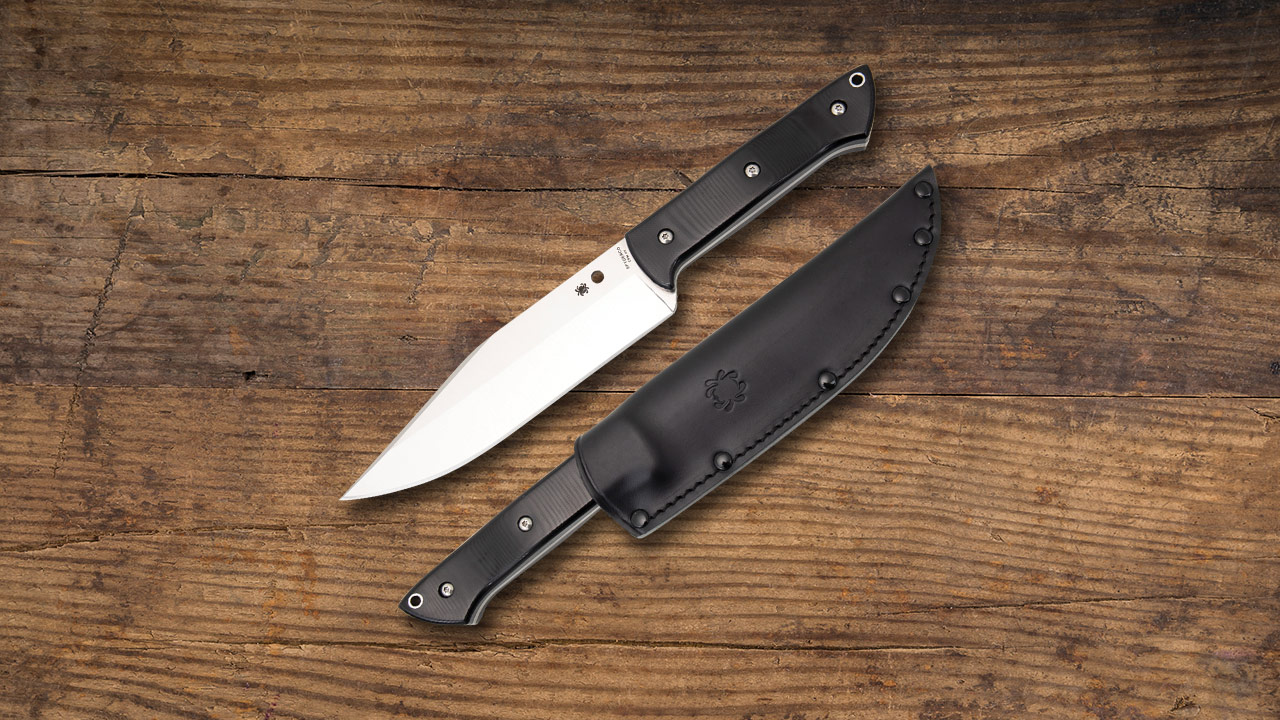
Spyderco needs no introduction, and the Province represents the company's take on a serious hard-use fixed blade. Designed by Jim Ankerson, a respected figure in blade metallurgy, this knife was built from the ground up to be used—not just admired. The Province features a 6.76-inch bowie-style blade made from CPM-4V with a satin finish and a compound saber grind that balances cutting efficiency with durability. The full-tang construction and substantial blade thickness inspire confidence for demanding camp tasks like batoning firewood, processing kindling, and general field craft. Black G10 handle scales provide a secure, hand-filling grip that stays controllable even when wet. At over 13 inches overall, the Province is not a small knife, but its excellent balance makes it feel more nimble than its size suggests. The included leather sheath with riveted construction ensures safe carry and storage. For those who demand a fixed blade that can handle backcountry abuse while holding a working edge far longer than 3V equivalents, the Province is a compelling choice.
2. Kizer Buddy – The Premium Compact EDC Fixed Blade

Kizer has built a reputation for delivering premium materials and innovative designs at accessible prices, and the Buddy is a perfect example of this philosophy. Designed by Maksim Epifantsev specifically for everyday carry, this compact fixed blade packs impressive performance into a remarkably lightweight package. The 3-inch drop point blade is forged from CPM-4V steel and finished with a polished DLC (Diamond-Like Carbon) coating that not only enhances corrosion resistance but also provides a striking black aesthetic. The Purple Haze FatCarbon handle scales are the real showstopper—a premium carbon fiber composite that's both incredibly lightweight and visually distinctive. Weighing in at just over 2.7 ounces, the Buddy virtually disappears in your pocket or on a neck carry setup. The included Kydex sheath makes carry options flexible and secure. Despite its compact size, the CPM-4V blade delivers edge retention that punches far above its weight class, making this knife ideal for urban EDC, light outdoor tasks, or as a capable backup blade. The Buddy proves that you don't need a large knife to benefit from premium tool steel performance.
3. Chris Reeve Pacific – The Professional-Grade Field Knife
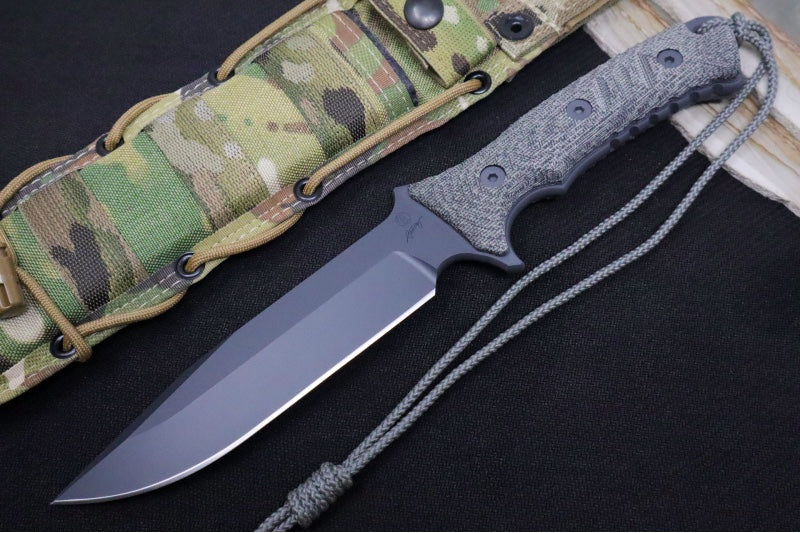
Chris Reeve Knives has been synonymous with uncompromising quality for decades, and the Pacific represents the company's vision of a no-nonsense field knife built for the most demanding users. This is the civilian version of a knife created in collaboration with renowned designer Bill Harsey, carrying forward a legacy of hard-use performance. The Pacific features a substantial 6-inch blade made from CPM-4V steel, protected by a durable Cerakote finish that provides an additional layer of corrosion resistance. Black canvas Micarta handle scales are contoured for comfort during extended use and feature grooved texturing that provides a secure grip even with gloved hands. At 11.5 inches overall and weighing approximately 11.6 ounces, this is a serious tool designed for serious work—whether that's processing firewood at camp, handling demanding field tasks, or serving as a reliable emergency tool. The full-tang construction inspires absolute confidence, and the included multi-cam sheath ensures practical field carry. Every aspect of the Pacific reflects Chris Reeve's commitment to precision manufacturing and functional design. If you're looking for a CPM-4V fixed blade that can handle anything the backcountry throws at it while maintaining the refined fit and finish that CRK is known for, the Pacific deserves your attention.
Comparison at a Glance
| Feature | Spyderco Province | Kizer Buddy | Chris Reeve Pacific |
|---|---|---|---|
| Blade Length | 6.76 inches | 3.0 inches | 6.0 inches |
| Overall Length | 13.0 inches | ~6.0 inches | 11.5 inches |
| Weight | ~12 oz | 2.77 oz | 11.6 oz |
| Blade Steel | CPM-4V | CPM-4V (Polished DLC) | CPM-4V (Cerakote) |
| Handle Material | Black G10 | Purple Haze FatCarbon | Black Canvas Micarta |
| Sheath Type | Leather | Kydex | Multi-Cam Fabric |
| Made In | USA | China | USA |
| Best For | Camp, survival, hard use | Compact EDC, light outdoor | Professional field use |
Why CPM-4V Belongs in Your EDC and Tool Collection
The resurgence of fixed blade knives in the EDC community is no accident. A quality fixed blade offers instant deployment, zero moving parts to fail, and the confidence of a full-tang construction when tasks get demanding. Pair that with CPM-4V steel—a material that combines the toughness pedigree of 3V with measurably better edge retention—and you have a tool that's ready for anything from daily utility tasks to backcountry adventures.
Industry observers note that CPM-3V and 4V are favored for hard-use knives due to the steels' toughness, while users who prioritize wear and corrosion resistance gravitate toward options like CPM S90V and 20CV. The knives featured here demonstrate that CPM-4V offers a compelling middle ground: more wear-resistant than 3V, tougher than most high-carbide stainless steels, and capable of taking a screaming sharp edge that lasts. Whether you choose the camp-ready capability of the Spyderco Province, the ultra-light EDC convenience of the Kizer Buddy, or the professional-grade durability of the Chris Reeve Pacific, you're getting a tool built around a steel that serious knife users continue to seek out.
Frequently Asked Questions
Is CPM-4V steel good for EDC?
Yes, absolutely. CPM-4V offers an excellent balance of toughness and edge retention, making it ideal for everyday carry fixed blades. The main consideration is that it's not fully stainless, so you'll need to keep the blade clean and dry, or choose a coated version like the Kizer Buddy's DLC finish, for worry-free EDC use.
How does CPM-4V compare to CPM-3V?
CPM-4V is essentially an upgraded version of 3V with more carbon, vanadium, and molybdenum. This gives 4V better edge retention and higher attainable hardness, while 3V remains the tougher of the two. Think of 4V as the choice for longer edge life, and 3V as the choice for maximum impact resistance.
Do CPM-4V knives require special maintenance?
Yes, they require more attention than stainless steels. With only 5% chromium, CPM-4V will develop a patina and can rust if left wet or stored in humid conditions. After use, clean the blade and apply a light coat of oil. Coated blades (like DLC or Cerakote) offer additional protection.
Is CPM-4V hard to sharpen?
Yes, it requires patience. CPM-4V is known for being more challenging to sharpen than many common steels due to its high wear resistance. However, with quality diamond or ceramic stones and proper technique, most users can maintain a sharp edge. The payoff is that you won't need to sharpen it nearly as often.
Are these knives good for beginners?
The Kizer Buddy is the most approachable option for newcomers due to its compact size and lightweight design. The Spyderco Province and Chris Reeve Pacific are larger, more specialized tools that are better suited for users who already have some outdoor experience and understand proper knife maintenance.
Can CPM-4V be used in wet environments?
It's possible but requires diligence. If you frequently use your knife around water or in humid conditions, consider a coated version or be prepared for regular maintenance. For truly wet environments, a stainless steel like CPM-154 or MagnaCut might be a better choice.